Walk into any supermarket in Osaka around 7 PM, and you’ll witness a silent, calculated ballet. It’s not a frantic rush, but a dance of timing and precision. Shoppers, mostly local aunties, or obachan, with eyes like hawks, circle the deli and fresh meat sections. They’re not just browsing; they’re waiting. They’re waiting for the clerks to emerge with a roll of red stickers, the sacred seals of the hangaku, or half-price discount. The moment the stickers are applied, the dancers converge, grabbing perfectly good packs of sashimi or tonkatsu for a fraction of their original price. To an outsider, it might look like mere bargain-hunting. A bit desperate, perhaps. But to understand this nightly ritual is to understand the soul of Osaka. This isn’t just about saving a few hundred yen. This is an expression of a deep-seated cultural philosophy, a concept known as shimatsu (始末).
Coming from China, I was familiar with the idea of thrift and resourcefulness, values deeply embedded in many East Asian cultures. Yet, Osaka’s approach felt different. It was more than just not being wasteful, a concept Japan famously calls mottainai. Shimatsu felt like an active, strategic game. It’s a word you hear from your landlady when she explains how to get the most out of your air conditioner. It’s the logic your coworker uses when he proudly shows you the high-spec, second-hand laptop he scored for a pittance. It’s a philosophy of managing resources from beginning to end, squeezing every last drop of value out of everything you own, use, and consume. This isn’t about being poor; it’s about being smart. In a city built by merchants, not samurai, this practical intelligence is the highest form of virtue. It dictates how people shop, cook, dress, and even communicate. To live in Osaka, and to truly thrive here, you have to learn the rhythm of shimatsu. It’s the invisible engine that powers this city’s vibrant, pragmatic, and refreshingly honest approach to life.
This pragmatic approach to value is also reflected in how the city is evolving to welcome visitors, as seen in the significant growth of luxury hospitality in Osaka.
What ‘Shimatsu’ Really Means: More Than Just ‘Mottainai’

Before you can fully appreciate shimatsu in practice, you first need to distinguish it from other Japanese concepts that sound similar. Many foreigners know mottainai (もったいない), the feeling of regret over waste. It’s the guilt pang you experience when throwing away leftovers. Mottainai represents a passive, emotional response to waste that has already happened or is imminent. In contrast, shimatsu is its proactive, strategic, and deeply logical counterpart.
The Double Meaning: Beginning and End
The key to understanding lies in the kanji that form the word. Shimatsu is written 始末. The first character, 始 (shi), means ‘beginning,’ while the second, 末 (matsu), means ‘end.’ The word literally means ‘beginning and end.’ This philosophy isn’t just about avoiding waste; it’s about managing the entire lifecycle of a resource. Someone with a shimatsu mindset doesn’t merely figure out how to use leftover carrots. They consider the process from the start: where to buy the freshest, most affordable carrots, how to use every part (greens for a side dish, peels for soup stock), and how to store them to extend their lifespan. It’s a holistic approach to consumption involving planning, foresight, and inventive problem-solving.
This makes shimatsu a far more comprehensive and demanding practice than mottainai. It reflects one’s ability to manage their affairs efficiently and effectively. In old Osaka dialect, when a parent told their child to ‘do their shimatsu,’ it meant to clean up their mess and take responsibility for the entire situation they caused. This sense of seeing things through and handling full consequences is central to the philosophy. It elevates thrift from mere money saving to a demonstration of competence and control.
It’s Not Cheapness, It’s Value
Here lies the most common misconception. It’s easy to mistake the focus on discounts as simple stinginess—what the Japanese call kechi (ケチ). However, a truly kechi person just buys the cheapest option, period. An Osakan following shimatsu does not. Their priority is a different metric: kosupa, short for ‘cost performance,’ or what we’d call value for money.
A shimatsu practitioner will invest more initially in a well-made cast iron skillet that lasts a lifetime rather than a cheap non-stick pan that needs replacing yearly. They might purchase a pricier, energy-efficient refrigerator, having calculated long-term electricity savings. Although the upfront cost is higher, shimatsu considers the ‘end’—the total cost of ownership. This reflects merchant logic, focusing on return on investment. Pride comes not from spending the least, but from securing the greatest value. An Osaka native will boast about their 10-year-old resoled shoes, highlighting their durability and the wisdom of the original purchase. This isn’t stinginess; it’s a triumph of foresight and savvy—a core aspect of Osaka identity.
Shimatsu in the Wild: How You’ll See It Every Day in Osaka
Once you attune yourself to the shimatsu frequency, you begin to notice it everywhere. It is intricately woven into the very essence of the city’s commerce and everyday life. It operates as the unwritten rule that governs the movement of goods, food, and money.
The Supermarket Safari
The nightly scramble for half-price stickers is only the beginning. The true shimatsu expert employs a multi-faceted approach to grocery shopping. They know which day the local Tamade supermarket holds its 1-yen sale. They understand which greengrocer in their neighborhood shotengai (shopping arcade) offers the best seasonal vegetable deals, thanks to direct ties with the farmers. They often visit three or four different stores on a single trip. Why purchase everything at the large, convenient Aeon supermarket when fish is cheaper at store A, tofu offers better value at store B, and store C provides the highest quality meat for the price? Time is a resource, but for the shimatsu devotee, the effort put into strategic shopping is part of the experience—a worthwhile investment that yields both savings and quality.
You’ll also observe the large quantities of products sold in bulk. Places like Gyomu Super (Business Supermarket) are filled not only with restaurant owners but also with regular families buying large, practical packages of frozen vegetables, sauces, and noodles. The reasoning is simple: buy in bulk, handle and store it yourself, and eliminate middlemen and convenience fees. This is shimatsu on a grand scale—managing household resources like a small enterprise.
The Kitchen as a Laboratory of Resourcefulness
The shimatsu philosophy is most clearly seen in an Osaka kitchen. It is a place of culinary transformation where absolutely nothing goes to waste. This principle underpins Osaka’s reputation as Japan’s kitchen, the home of kuidaore (“eat till you drop”). It seems paradoxical: how can a culture of indulgent eating be founded on such thrift? The answer is that shimatsu makes kuidaore possible. By fully utilizing every ingredient, you can afford to be lavish in your meals.
A classic case is the daikon radish. Elsewhere in Japan, the skin is typically peeled and discarded. In an Osaka kitchen, the white flesh is used in a simmered dish, the skin is julienned and stir-fried into the tasty side dish kinpira, and the green leaves at the top are chopped for mixing with rice or used in miso soup. One vegetable, three dishes. Tough outer cabbage leaves? They go into the soup pot for stock. Shrimp shells and heads? Roasted and simmered for a richly flavored bisque. This goes beyond waste avoidance; it’s about extracting maximum flavor and nutrition—a form of respect for the ingredient and a dedication to honoring its full cycle from start to finish.
Fashion and Furnishings: The Second-Hand Economy
The shimatsu mindset reaches well beyond the kitchen. Osaka boasts one of Japan’s liveliest and most down-to-earth second-hand economies. Neighborhoods like Amerikamura and Nakazakicho are renowned for their carefully curated vintage clothing shops, but the core of the culture lies in warehouse-like chain stores such as Second Street, Treasure Factory, and Book Off. There, you can find nearly new designer handbags, electronics, furniture, and kitchen appliances, all in excellent condition.
In Tokyo, while second-hand shopping exists, it sometimes carries a subtle stigma, seen as something done out of necessity rather than preference. In Osaka, it is a mark of pride. Finding a high-quality brand jacket for a tenth of its retail price is a story shared with friends—it’s a coup. This culture sustains a strong ecosystem of repair and maintenance. People don’t simply discard broken appliances; they bring them to small repair shops in Den Den Town. Shoes with worn soles aren’t thrown away; they are taken to local cobblers. This embodies the ‘end’ part of shimatsu—extending the life of an object as long as possible and valuing it not as disposable but as something worth preserving.
The Osaka vs. Tokyo Divide: A Tale of Two Mindsets
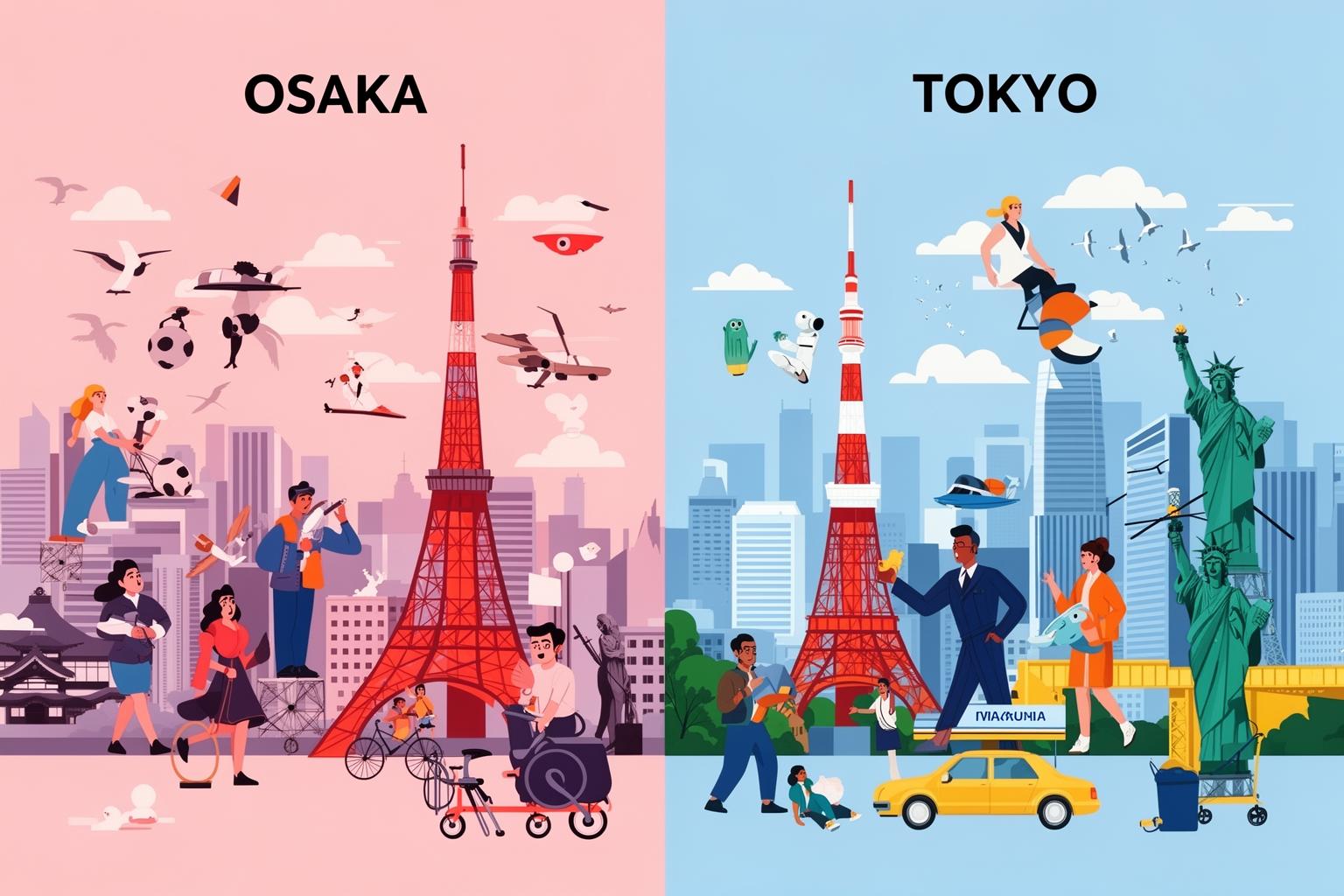
To truly understand the distinctiveness of Osaka’s shimatsu culture, it is helpful to compare it with the dominant mindset in Tokyo. This contrast arises from centuries of history and fundamentally different social structures.
Samurai Origins vs. Merchant Spirit
Tokyo, formerly Edo, was the center of the samurai government, a city of warriors and bureaucrats. During the rigid hierarchy of the Edo period, merchants were officially positioned at the bottom of the social ladder. Handling money was often regarded as beneath the noble samurai class, with a strong emphasis on appearance, form, and maintaining face (mie). This historical influence continues to shape Tokyo’s culture of consumption, which often prioritizes brand names, aesthetics, and the status they confer.
In contrast, Osaka was the economic hub, a city built and run by its merchant class. Here, financial skill was not merely practical but highly valued. Status was earned through business success, cleverness, and effective management of resources. This spirit is the origin of shimatsu. The central question in Osaka is not ‘Does it look good?’ but ‘Is it good value?’ Substance takes precedence over style, and function over form.
Take the simple act of buying a gift, for example. A Tokyoite might select a famous brand of sweets in elaborate, beautiful packaging, where presentation and name contribute significantly to the gift’s value. An Osakan, meanwhile, might pick sweets from a less famous but locally renowned shop known for delicious taste and reasonable prices. They might say, ‘This doesn’t look like much, but the flavor is top-notch, and I got a great deal!’ In doing so, they share not just a gift but the triumph of their savvy discovery.
Communication Styles and the Value of Things
This fundamental difference in values is clearly reflected in how people communicate. In Tokyo, openly discussing money, prices, and discounts in social settings can be seen as rude or impolite, as it disrupts harmony (wa). It would be uncommon to ask a Tokyo colleague how much they spent on a new coat.
In Osaka, by contrast, talking about money is not only acceptable but also a key form of communication and social bonding. Asking ‘How much was it?’ (Ikuraやったん?) is a typical follow-up after noticing a friend’s new purchase. This question is not intrusive but an invitation to share information, celebrate a good bargain, or commiserate over a bad one. Bragging about paying less for something of high quality is a respected social currency, showcasing intelligence and mastery of the shimatsu arts.
This ease with financial talk also fosters a more fluid and direct commercial environment. While Japan generally lacks a culture of haggling, neuchi kosho (price negotiation) remains much more alive in Osaka’s small shops and markets than elsewhere. A friendly request like ‘Chotto makete kureru?’ (‘Could you give me a little discount?’) from a regular customer often sparks playful banter focused as much on building the relationship as on the price itself. It’s a dance, a human aspect of commerce that has been lost in more formal, fixed-price settings.
Navigating ‘Shimatsu’ as a Foreign Resident
For a non-Japanese person settling down here, understanding and embracing the shimatsu mindset can significantly enhance your experience, both financially and socially. It’s your key to discovering the ‘real’ Osaka beyond the usual tourist spots.
Adopting the Mindset for a Better Life
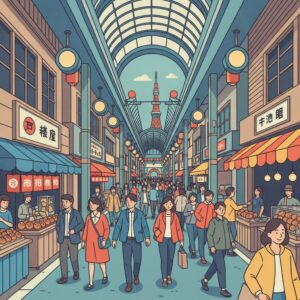
First, get to know the local shopping rhythms. Avoid doing all your shopping at the large, flashy department stores. Instead, explore the covered shotengai that wind through every neighborhood. These shopping arcades are the lifeblood of the shimatsu economy. You’ll find independent butchers, fishmongers, and greengrocers offering better prices and higher quality than supermarkets. Build relationships with them. They’ll start giving you tips on what’s freshest that day or even throw in a little extra for free (omake).
Enjoy the thrill of the hunt. Turn finding the best deals into a game. Learn the discount timings at your local supermarkets. Don’t hesitate to grab the half-price bentos for dinner. Nobody will judge you; instead, they’ll admire your savvy. Explore second-hand shops—you can furnish a whole apartment with quality pre-owned items at a fraction of the cost of new ones. This isn’t a sign of hardship; it’s the Osaka way of setting up a smart, efficient home.
Important Misunderstandings to Avoid
It’s essential not to misread these habits. Don’t confuse shimatsu with stinginess. An Osaka host serving a splendid meal has likely spent days sourcing ingredients strategically at the best prices. Their generosity is shown through the quality of the meal and the effort in preparation, not through careless spending. Their pride lies in offering such a feast so resourcefully.
When an Osaka friend shares a great bargain they found, they aren’t complaining about poverty or obsessing over money negatively. They are celebrating a success. The right response isn’t pity but admiration: “Wow, you’re so good at shopping!” (Jozu na kaimono shimasu ne!). This acknowledgment validates their skill and deepens your connection.
Lastly, realize that directness about money also applies socially. Splitting the bill, or warikan, is common throughout Japan. But in Osaka, if you’re out with a group and people consumed different amounts, don’t be surprised if the bill is calculated very precisely. It’s not about being petty; it’s about fairness—another key aspect of shimatsu—making sure everyone pays exactly for what they consumed, no more, no less.
Living in Osaka is a lesson in practical wisdom. The philosophy of shimatsu is not just a quaint tradition; it’s a living principle that makes life here more affordable, sustainable, and often more creative. It encourages you to be a conscious consumer, a resourceful cook, and a savvy manager of your own life. It teaches you to seek hidden value, appreciate the full lifecycle of objects, and find joy in efficient, clever use of resources. To understand shimatsu is to see that being smart with money in Osaka is not merely survival; it’s an art form.