You found the perfect apartment. It’s a quick walk from the station, the rent is reasonable, and the sunlight hits just right in the morning. You’ve signed the papers, moved your boxes, and are finally starting to feel at home in Osaka. Then, one evening, there’s a knock at the door. It’s an older woman you recognize from the building, holding a clipboard and a small envelope. She’s speaking quickly, a flurry of Osaka-ben, and pointing to a line on her paper next to your apartment number. You catch words like “Chōnai-kai-hi” and “kaigi,” but the meaning is lost in translation. You smile, nod, hand over a few thousand yen, and close the door in a state of mild confusion. What just happened? You just had your first real introduction to the invisible, intricate, and absolutely essential network that holds Osaka’s neighborhoods together: the Chōnai-kai, or Neighborhood Association. This isn’t some optional social club. This is the operating system of daily life in the city, a system that baffles many foreigners. It’s a world of shared responsibilities, unspoken rules, and a unique Osaka-style community spirit that is far more practical than ceremonial. Forget the tourist brochures for a moment. If you want to understand how this city actually breathes, you need to understand the social contract you sign the moment you get your keys, and it starts right here, at your doorstep. This is your guide to navigating the web of relationships, rules, and responsibilities that define what it means to truly live in an Osaka neighborhood.
For an even richer experience of Osaka’s community lifestyle, explore local workspots that reveal hidden spaces where work and neighborhood life seamlessly blend.
What in the World is a Chōnai-kai? The Neighborhood Association Explained
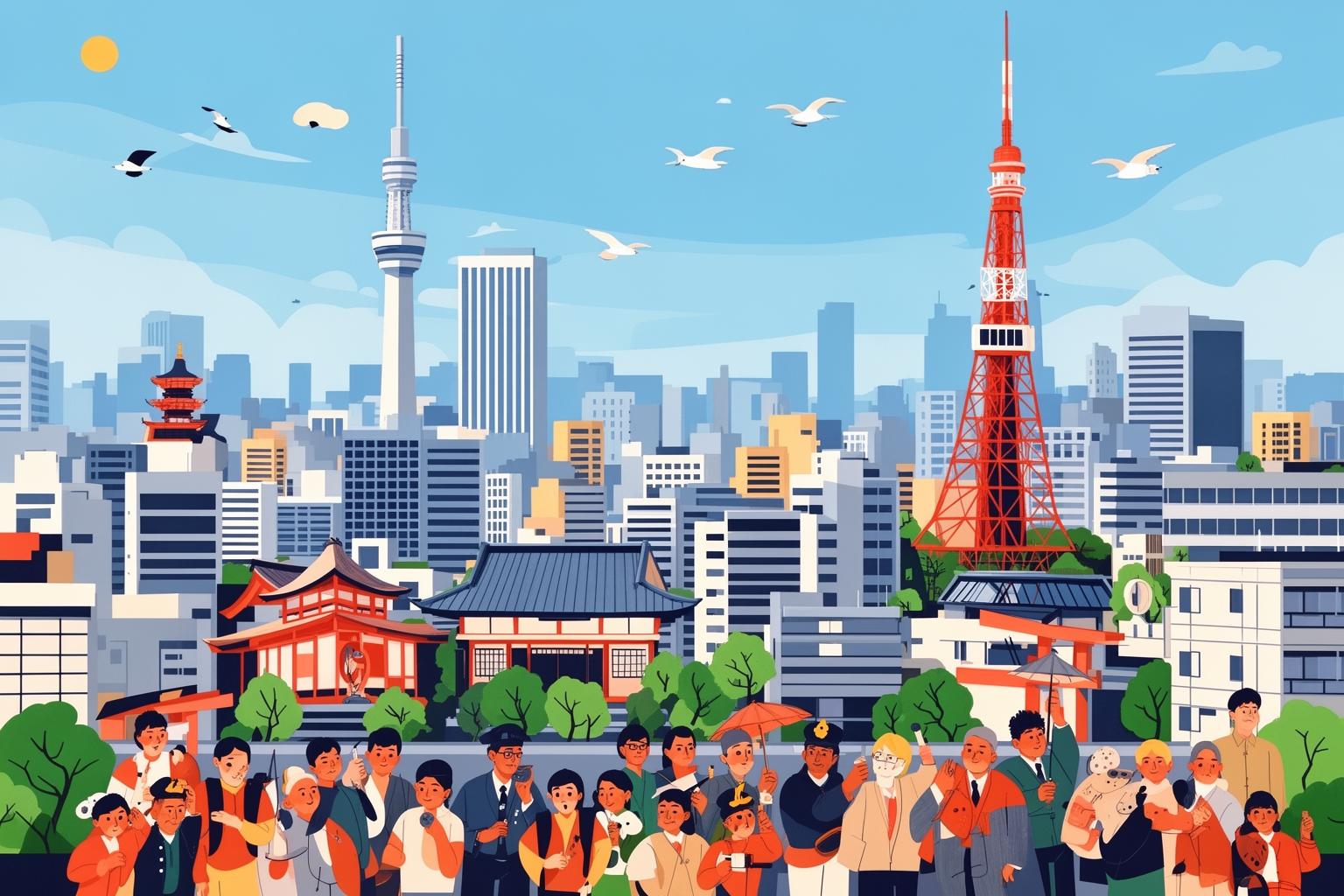
First and foremost, let’s clarify what this organization is all about. The Chōnai-kai, sometimes referred to as a Jichi-kai, is a hyperlocal, voluntary residents’ association. While I say “voluntary,” in Japan—particularly in a community-oriented city like Osaka—that term carries significant nuance. Think of it as the grassroots government of your immediate neighborhood. It’s not managed by city hall, though there is coordination on various matters. Instead, it’s run by your neighbors—the retiree in 201, the family in 304, the owner of the small tofu shop around the corner. They form the heart of neighborhood life, tackling tasks too small for the government yet too important to overlook. This system dates back centuries, evolving from Edo-period neighborhood groups into the modern structure seen today. For many Japanese, its presence is as natural as the air they breathe; for foreigners, it can feel like an unexpected secret society.
More Than Just a Social Club
So, what exactly does this association do? It’s tempting to reduce it to a group that simply organizes the local summer festival, but its duties run far deeper. The Chōnai-kai is the frontline defense during disasters. They oversee emergency supply sheds stocked with water, hardtack biscuits, and portable toilets. They coordinate drills and keep lists of elderly or vulnerable residents who might need assistance during evacuations. When a typhoon approaches Osaka, the Chōnai-kai sends volunteers to check on neighbors and remind everyone to bring in their laundry poles. They also play a significant role in crime prevention, organizing night patrols where members walk the streets with wooden clappers and flashlights—a traditional and reassuring sight. They maintain the neighborhood park, ensuring the swings aren’t rusty and the sandbox stays clean. They organize the annual “issee seisō,” a community-wide cleaning day where residents pull weeds from gutters and sweep the streets. And yes, they coordinate the local festivals that fuel community spirit. That magical summer evening with paper lanterns swaying, the scent of grilled squid in the air, and the rhythmic chants as the mikoshi (portable shrine) is carried through the streets? That’s not a city-run event—it’s the Chōnai-kai, funded by resident fees and driven by volunteer effort. It’s the tangible expression of collective community involvement.
The Money Question: Membership Fees and What They Cover
This brings us back to the envelope left at your door. The Chōnai-kai-hi, or membership fee, finances all these activities. It’s typically a modest amount, usually between 300 and 1,000 yen per month, per household. The collection method varies. In some buildings, it’s added to your monthly rent or management fees. In others, a designated neighbor—the “han-chō” (group leader) for your block or building—collects it in cash monthly or every few months. This may seem unusual in an era of digital payments, but it’s a system rooted in face-to-face interaction. The money doesn’t disappear into a black hole; it covers very specific, concrete needs. It pays the electricity bill for streetlights that brighten your way home. It covers ink and paper for community bulletin board notices. It funds supplies for the festival, garbage bags for cleaning day, and batteries for emergency radios. Essentially, you’re contributing to the upkeep and safety of your immediate surroundings. Refusing to pay isn’t just about the money—it carries the implication that you intend to benefit from shared resources without giving back, which is a significant social faux pas.
The Osaka Twist: How Community Works Differently Here
Today, every city in Japan has neighborhood associations, but the way they function in Osaka carries a unique character. There’s a certain pragmatism and straightforwardness that stands in contrast to the more formal, consensus-based style often seen in Tokyo. Osaka was founded by merchants, and that practical, results-driven mentality still influences everyday life. It’s less about following strict protocols and more about accomplishing tasks in a sensible manner, often accompanied by a good dose of humor and warmth.
Pragmatism Over Formality: The “Ē yan, sore de” Mindset
In Tokyo, a community meeting is typically a structured, quiet event where the agenda is carefully followed, and people speak in formal, measured Japanese. An Osaka Chōnai-kai meeting, by contrast, can be much livelier. There’s more laughter, overlapping conversation, and candid opinions expressed openly. The local elder might straightforwardly say, “That idea won’t work; it’s too costly,” without the usual polite softening. This isn’t considered rude; it’s seen as efficient. The objective is to find a practical solution, not to put on a flawless display of social harmony. The common Osaka phrase “Ē yan, sore de,” roughly meaning “Yeah, that’s good enough, let’s go with it,” captures this spirit. If a plan is about 80% effective and can be executed quickly, they will often prefer it over pursuing a perfect plan that would require endless discussion. This approach can be refreshing, though sometimes a bit chaotic to those used to more orderly processes. For example, at a neighborhood cleaning day, people might chat, share candies, and even finish up a little early if the area already looks clean. The task matters, but so does the social bonding that happens while doing it.
The Fine Line Between Nosy and Neighborly
One of the biggest culture shocks for foreigners in Osaka is the apparent lack of personal boundaries. Your neighbor, often an energetic woman in her sixties or seventies, might ask, “Where are you going so early?” as you leave for work. She might comment on how much recycling you’ve put out or question why your lights stayed on late. From a Western viewpoint, this can feel highly intrusive. However, it’s important to see this differently. In Osaka’s community mindset, this isn’t nosiness—it’s attentiveness. She isn’t trying to pry into your personal life; she’s establishing a baseline for your normal routine. Why? Because if you stray from that routine—if your newspapers pile up or your apartment remains dark for days when you’re usually home—she’ll be the first to notice something might be wrong. She acts as the neighborhood’s human security system. It’s a form of passive, communal care. People watch out for each other in a direct way. For instance, when I had a severe flu and didn’t put my trash out for two mornings, my downstairs neighbor came by with oranges and a sports drink. She wasn’t being nosy; she was showing concern. This is the other side of the perceived intrusiveness—a sincere, if sometimes blunt, sense of mutual responsibility. It’s a vital part of Osaka’s social fabric.
Navigating Your Role: To Join or Not to Join?

So, you now know what the Chōnai-kai is. The big question is: what role will you play in it? As a foreigner, especially if you’re only a temporary resident, getting involved in local community matters and chores can feel daunting, particularly with a language barrier. The truth is, your level of involvement is somewhat flexible, but completely opting out is usually neither realistic nor advisable.
The Pressure to Participate (and How to Manage It)
Is joining the Chōnai-kai legally required? No. Can you be forced to join? No. However, social and contractual pressures often run high. When you sign your apartment lease, there may be a clause expecting you to join and participate in the neighborhood association. Real estate agents typically present this as a standard, non-negotiable part of renting in that building. To them, being involved is a basic responsibility of residents. Choosing not to participate sends a clear message that you don’t intend to be part of the community, which can lead to subtle ostracism. Your garbage may be left uncollected with a corrective note, you might miss important utility shut-off notices, and neighbors may be less willing to help you in emergencies. This can create tension, making daily life uncomfortable. You become “the person in 402 who thinks they’re special.” In a society that prizes group harmony, this is not a comfortable place to be. The expectation is that if you live there, you belong to the collective “we.”
Simple Ways to Be a Good Neighbor
The good news is that no one expects busy foreign residents to take on leadership roles or dedicate every weekend to local activities. Showing you are a cooperative and respectful community member can come through small, consistent actions. The most important thing you can do is master the garbage rules. This really cannot be emphasized enough. Garbage management is the ultimate test of community respect. Nail this, and you’re halfway there. Beyond that, attend the annual neighborhood cleaning day. Even if you only stay for an hour, your presence will be noticed and appreciated. Learn to say “Ohayō gozaimasu” (Good morning) and “Otsukaresama desu” (a greeting for colleagues or neighbors after a long day) to people you see in your building or on the street. A simple, friendly greeting goes a long way. When the local festival takes place, you don’t have to volunteer to carry the shrine, but buying some takoyaki at their stall and thanking them for their efforts shows goodwill. These small gestures signal your willingness to be part of the community, and often, that’s all it takes.
Understanding the Garbage System: A Community Cornerstone
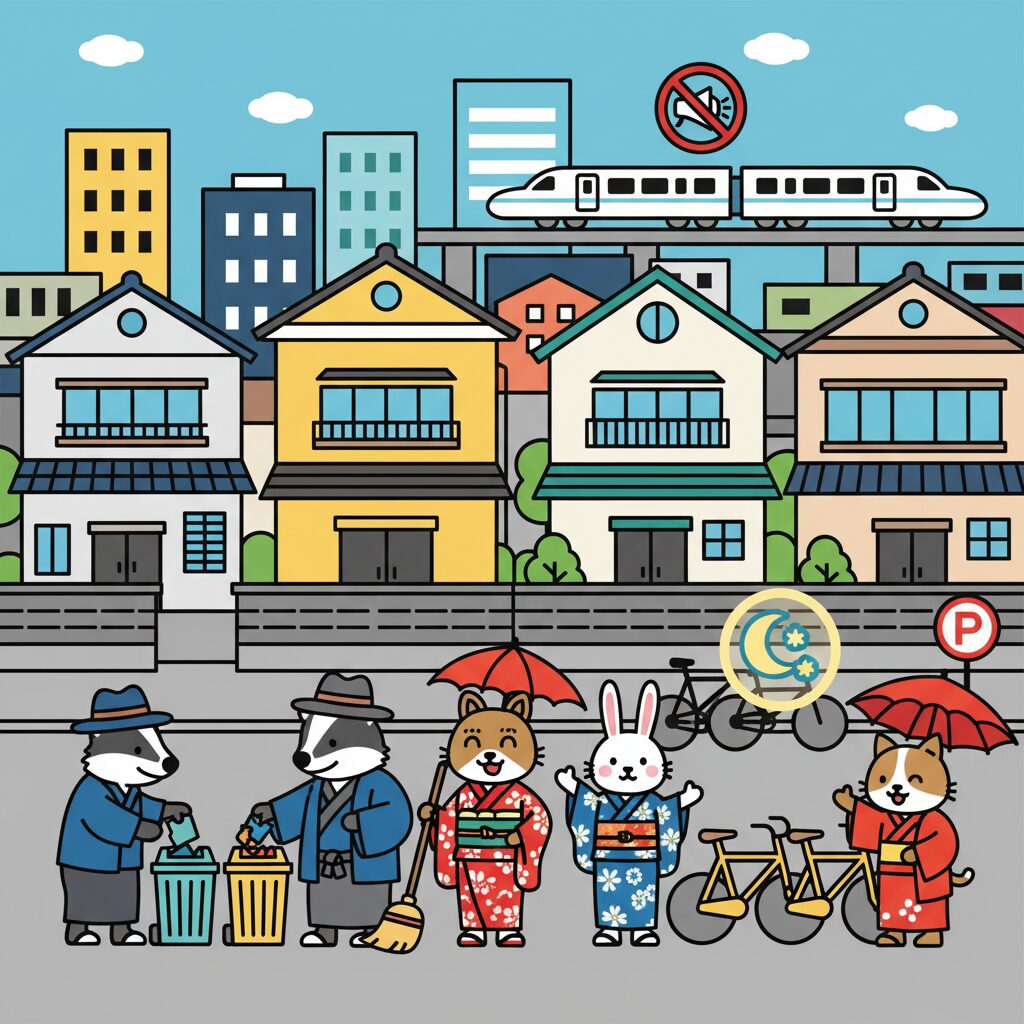
Let’s focus on garbage, as it is central to neighborhood cooperation. In many Western countries, you simply throw trash into a large bin and it gets picked up. In Osaka, however, it’s a complex, strictly regulated ritual. Each ward has its own schedule and sorting rules. You’ll have designated days for burnable trash (usually twice weekly), plastics and packaging, PET bottles, cans and glass, and non-burnable items. You must use city-approved transparent or semi-transparent bags so the contents can be inspected. Trash should be set out on the specific day, generally between dawn and 8 or 9 AM. The collection spot, or “gomi station,” isn’t just any street corner; it’s a designated area, often enclosed by a cage or marked by a net, managed communally by the Chōnai-kai. Residents take turns performing weekly or monthly duties called “gomi tōban,” which includes unlocking the cage in the morning, tidying the area, and covering bags with a net to prevent crows from tearing them open. Putting out the wrong type of trash on the wrong day is a serious offense in the neighborhood. Your bag will be left behind, usually with a large corrective sticker for all to see. It’s a form of public shaming and a clear sign that you’re not respecting the community’s shared rules.
Real-Life Scenarios and Unspoken Rules
Beyond the formal frameworks of the Chōnai-kai, everyday life is guided by numerous unspoken rules and communication methods. Understanding these signals is crucial for a smooth and peaceful existence in your Osaka apartment.
The Bulletin Board: Your Neighborhood’s Analog Social Network
In your building’s lobby or at a designated spot on your block, you’ll find a physical bulletin board, known as the “keijiban.” This serves as your main source for official information, featuring notices about upcoming building maintenance, water pipe cleaning schedules, pest control spraying, and local events. Additionally, you may encounter the “kairanban,” a clipboard with notices that is circulated door to door. You are expected to read it, stamp your hanko (personal seal) or sign your name to confirm you’ve seen it, then pass it along to your next-door neighbor. For non-Japanese speakers, these documents can be a wall of indecipherable kanji. However, ignoring them is a mistake. Here, your smartphone’s camera translation function becomes indispensable. Taking a quick photo for a rough translation can prevent you from being the only resident unaware that the water will be shut off for three hours on a Tuesday afternoon. It signals that you are attentive and responsible.
Noise, Neighbors, and the Thin Walls of Japanese Apartments
Japanese apartment buildings, especially older ones, are notorious for poor sound insulation. The concept of “meiwaku,” meaning causing trouble or inconvenience to others, is a fundamental social principle deeply influencing apartment living. This means being highly mindful of the noise you generate. Running your washing machine late at night, vacuuming at 7 AM on a Sunday, having loud phone conversations on your balcony, or letting children run and jump indoors are frequent sources of conflict. In some cities, a neighbor might complain to the building manager. In Osaka, with its more direct culture, you might simply get a knock on the door. It won’t always be confrontational; it could be a polite but firm, “Sumimasen, your television is a bit loud.” The expectation is immediate apology and correction. It’s not about personal freedom but the shared responsibility to maintain a peaceful living environment for everyone in a densely populated urban space.
The Art of the Apology Gift
Due to this sensitivity around noise, there is a strong custom of alerting your neighbors in advance. If you anticipate causing a disturbance—for instance, when moving in, hosting a small party, or tending a baby who cries frequently—it is considered polite to visit your immediate neighbors (both sides, upstairs, and downstairs) first. You introduce yourself, explain the situation, and offer a small gift as a preemptive apology. This gift doesn’t have to be expensive; a simple box of cookies, a nicely wrapped towel, or a bag of laundry detergent suffices. This small gesture, called “aisatsu,” or greeting, carries great significance. It changes you from an anonymous source of noise into a neighbor who is thoughtful of others. It builds goodwill and makes your neighbors more tolerant of the inevitable disturbances that come with daily life. It’s a modest investment in community harmony that yields significant rewards.
Why This All Matters in Osaka
It can be easy to see all these rules, fees, and duties as a burden—an outdated system of social control that infringes on your personal freedom. But that perspective misses the point, especially in a city like Osaka. This complex community network is not simply about enforcing conformity; it’s about fostering resilience. It’s a highly practical system designed for mutual survival and well-being.
Beyond Convenience: The Logic of Local Connection
Osaka, like the rest of Japan, lies in a seismically active region. The city regularly faces threats from earthquakes and powerful typhoons. When a major disaster strikes and cuts off power, water, and communication, the government cannot be everywhere at once. The first responders are, and will always be, your neighbors. The Chōnai-kai system ensures there is an existing structure for a local response. They know who lives where, who has medical training, and who is elderly and lives alone. This is not an abstract concept; it functions as the city’s immune system, operating at a grassroots level. Your monthly Chōnai-kai fee is, in a sense, the most practical insurance you can have: an investment in the people who will be there to pull you from the rubble. This pragmatic approach is at the heart of Osaka. Community is not just a warm, fuzzy feeling; it’s a finely tuned mechanism for collective support.
A Different Kind of “Friendly”
Everyone says that Osaka’s people are friendly—it’s the city’s most common cliché. But this “friendliness” isn’t the superficial, customer-service smile you might find elsewhere. It’s a stronger, more engaged, and sometimes complex form of connection. It’s the obachan who asks where you’re going. It’s the neighbor who comes knocking about the noise. It’s the community that expects you to show up and pull weeds once a year. This friendliness is born from shared space, shared risk, and shared responsibility. It can feel demanding, but it’s also deeply supportive. When you move to Osaka, you’re not just renting a unit in a building; you’re taking a place in a living, breathing ecosystem. By learning the rules, respecting customs, and making small efforts to participate, you shift from being a temporary resident to becoming a true neighbor. You become part of that messy, loud, practical, and profoundly human network. And that’s when you really begin to understand what it means to live in Osaka.