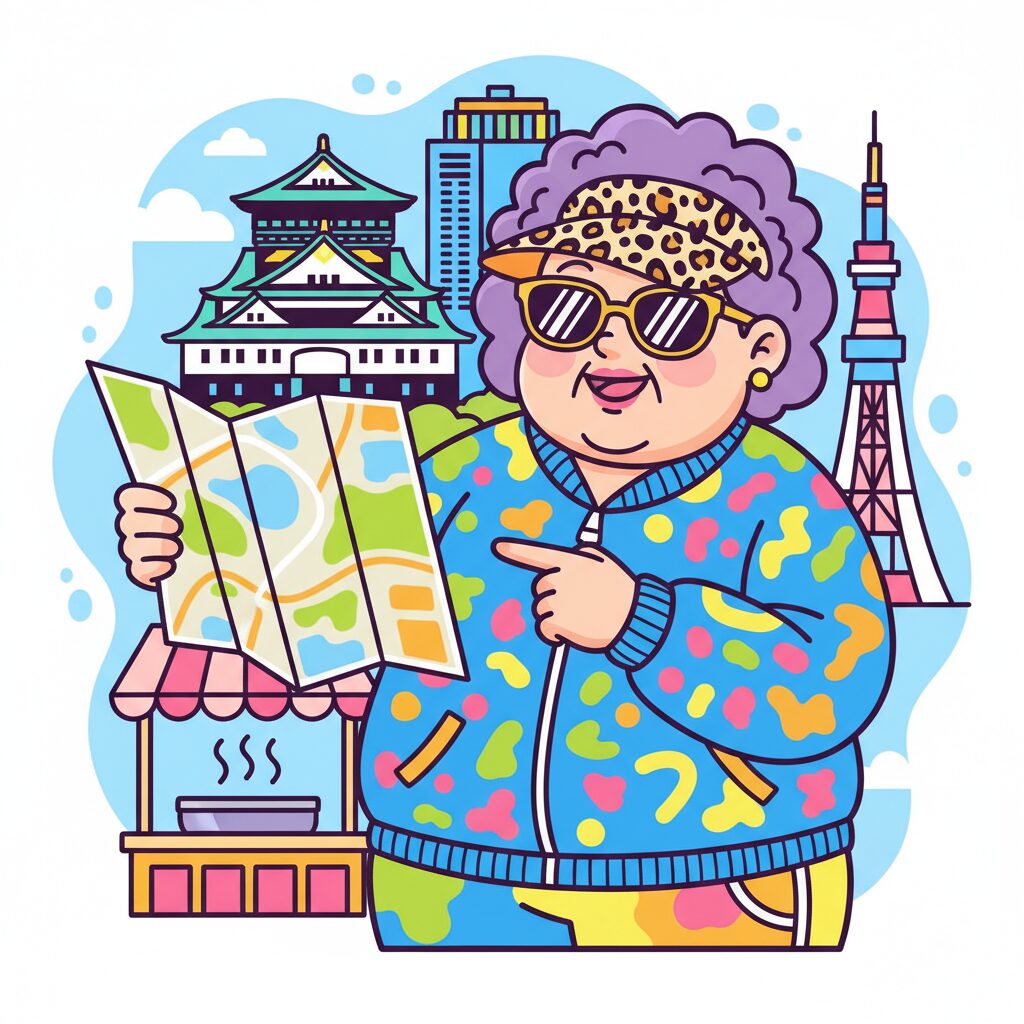
When I first moved to Osaka, I thought I had Japan figured out. I knew the bows, the polite phrases, the art of reading the air. Tokyo had trained me in the dance of respectable distance and quiet consideration. Then, I went to my local supermarket in the Tenma district. I was standing in the produce aisle, pondering a bag of onions, when a woman with a magnificent perm and a sparkly purple visor tapped my arm. She wasn’t just tapping; it was a firm, commanding rap. Before I could offer a polite, “Sumimasen,” she grabbed an onion from a different pile, thrust it into my hand, and declared in a booming, musical Osaka dialect, “Not that one, honey, this one! Better value, see? Tighter skin. Lasts longer.” Then she patted my shoulder, cackled, and wheeled her cart away, leaving me stunned and holding a superior onion. I hadn’t been robbed; I had been… adopted? Advised? Audited?
This was my first close encounter with the apex predator and supreme nurturer of Osaka’s ecosystem: the Obachan. Forget what the dictionary tells you. “Obachan” doesn’t just mean “auntie” or “middle-aged woman.” In Osaka, it’s a title, a role, a force of nature. They are the unofficial mayors of every neighborhood, the guardians of common sense, and the masters of a communication style that can feel like a delightful, bewildering mix of friendly intrusion and brutally honest life coaching. For a foreigner fresh from the polite reserve of other Japanese cities, it’s a culture shock that arrives with a free piece of candy and some unsolicited advice about your love life. But to truly live in Osaka, to understand its rhythm and its heart, you have to learn to speak Obachan. They are the gatekeepers to the city’s true soul, and their candid chatter isn’t noise; it’s the city’s vibrant, unfiltered soundtrack.
The Obachan’s spirited guidance is just one window into Osaka’s dynamic ethos, a mindset that also permeates co-working spaces in Osaka, where unspoken rules quietly steer daily interactions.
The Anatomy of an Obachan Encounter
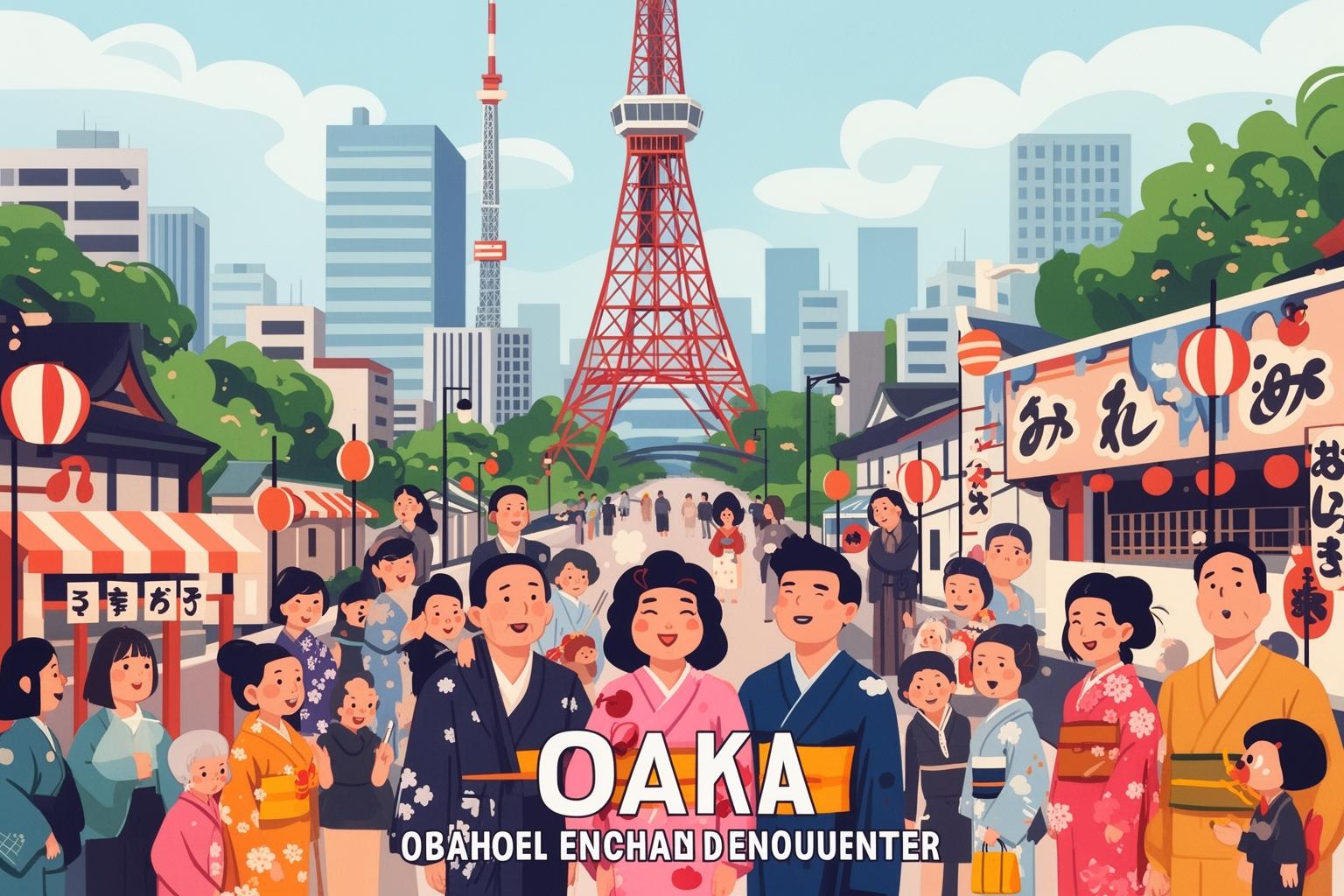
Interacting with an Osaka Obachan is seldom a planned occurrence. It happens to you unexpectedly—while waiting for a train, struggling with a vending machine, or simply buying groceries. These encounters follow a distinct, though unwritten, pattern. Understanding the stages is essential to navigating them with grace and humor.
The Opening Move: The Unsolicited Remark
Forget the slow, formal greetings you’ve rehearsed. An Obachan conversation doesn’t start with “Konnichiwa.” Instead, it begins abruptly with a candid observation. You might be standing at a bus stop when a voice beside you comments, “That bag looks heavy, dear. What have you got in there, rocks?” Or you’re browsing a clothing display when an Obachan appears to say, “That color won’t suit you. Try the blue one. It’ll make your eyes pop.”
For the uninitiated, this can feel startling, even intrusive. It seems to violate the personal space so cherished in other parts of Japan, especially Tokyo. But here’s the secret: it’s not an intrusion—it’s an invitation. This opening remark is a social probe, a way to break down the anonymity that defines modern city life. It’s a verbal signal meaning, “I see you. You’re here with me. We share this moment, so let’s connect.” Responding with a shy smile and turning away is the wrong move. The right approach is to engage, to respond. A simple, “It’s just my groceries!” or “You think the blue is better?” opens the door to a genuine, if brief, human interaction.
The Social Currency: Ame-chan
Deep inside the cavernous, often leopard-print purses of nearly every Osaka Obachan lies a secret weapon, a social lubricant, a universal peace offering: ame-chan. This isn’t just candy. In Osaka, ame-chan is a complex social tool. The “chan” suffix adds affection, turning ordinary “ame” (candy) into something cute and personal, like a little friend.
An Obachan will offer ame-chan for all sorts of reasons. Did you help her pick up a dropped orange? Ame-chan. Is your child crying on the train? Ame-chan. Did you just enjoy a brief chat about the weather? Ame-chan. It’s a way to say thank you, soothe a fuss, seal a new friendship, or simply share a small moment of sweetness. Accepting the ame-chan is crucial. Refusing it is refusing the goodwill behind the gesture. It’s a tiny ritual of community, a physical sign of a desire to connect. You take the candy, bow slightly, say “Arigato gozaimasu,” and you’ve completed an important transaction in Osaka’s social economy.
The Core: Direct Advice and Genuine Care
This is where many foreigners falter. After the initial observation and possible candy offering comes the heart of the encounter: direct, unfiltered, and highly practical advice. The Obachan who corrected my onion choice wasn’t just being picky—she was sharing vital, hard-earned knowledge. This pattern repeats. You’ll be told you’re not dressed warmly enough for the wind. You’ll get advice on the quickest train route, even if you didn’t ask. You’ll hear a detailed critique of the daikon radish you’ve picked.
In Tokyo, such bluntness might be seen as rude. Politeness there often means non-interference. But in Osaka, the reverse is true. Indifference is rude. Seeing someone make a mistake—even a small one—and not offering help is a failure of community spirit. This frankness comes from a deep sense of collective responsibility. The Obachan views the neighborhood not as strangers, but as an extended, loosely connected family. And in a family, you tell your niece to wear a warmer coat and show your cousin how to choose the best fish. It’s not about judgment; it’s about care. It’s a fierce, practical kindness prioritizing well-being over delicate social niceties. In its own way, it’s a profound expression of love.
Decoding the Obachan Dialect: Beyond the Words
Interacting with an Osaka Obachan is a full-body experience. While the language matters, the non-verbal signals, rhythm, and theatricality of the exchange are equally important. They communicate through gestures, laughter, and shared context that often surpass the need for perfect grammar.
The Power of Pointing and Gesturing
In many parts of Japan, gestures are subtle and restrained, but in Osaka, they become a dramatic spectacle. An Obachan giving directions doesn’t merely point; she enacts the journey for you. A straight road is expressed as a sharp, percussive slice of the hand through the air, often accompanied by a sound effect like “Paaaa!” A turn is conveyed with a dramatic swoop, “Guuun to the right.” An endpoint is marked by a decisive stab of the finger: “It’s right there, don!”
This isn’t just for show—it’s an effective way to communicate that transcends language barriers. It’s a physical language rich in emphasis and clarity. They use their entire body to ensure you understand, conveying not only information but also a sense of energy and urgency. Their hands, chin, and eyebrows all play a part in the conversation. For foreigners grappling with complex Japanese, this gestural dialect is a godsend—you can follow the performance even if you catch only half the words.
Laughter as Punctuation
Laughter is everywhere in Osaka, but the Obachan’s laugh is something special. It’s loud, throaty, and completely uninhibited. A sharp cackle often follows a blunt piece of advice, instantly diffusing any potential offense. It signals, “What I just said is true, but we’re all friends here, so don’t take it personally.” It turns criticism into a shared joke.
Using laughter in this way sets Osaka apart from the quieter, more reserved public demeanor found elsewhere. It builds instant rapport. Sharing a laugh over a silly mistake or an absurd situation creates an immediate bond. It breaks the ice, eases social tension, and reinforces the idea that life should be enjoyed, not endured in silence. The Obachan’s laugh is a bold declaration of her presence and joy, inviting everyone nearby to join in.
The Art of the Bargain: It’s Not About the Money
The Obachan shines brightest in a shotengai, a traditional covered shopping arcade. Watching her engage with a local vendor is a masterclass in communication. The haggling, the playful bargaining for a little extra omake (a small freebie), is pure theater—a dance of wit and friendly charm.
The Obachan might exclaim, “A little more! I’m a loyal customer!” The shopkeeper will sigh theatrically and reply, “You’ll be the end of me!” before tossing an extra spring onion into her bag. This exchange isn’t really about saving 50 yen; it’s about deepening a relationship. It’s a ritual that reaffirms their bond as members of the same community. The transaction is secondary to the interaction. This emphasis on the human side of commerce is a hallmark of Osaka’s merchant culture, and the Obachan is its most devoted practitioner. She’s not just buying food; she’s nurturing her social network.
The Obachan Mindset: Why They Are the Way They Are
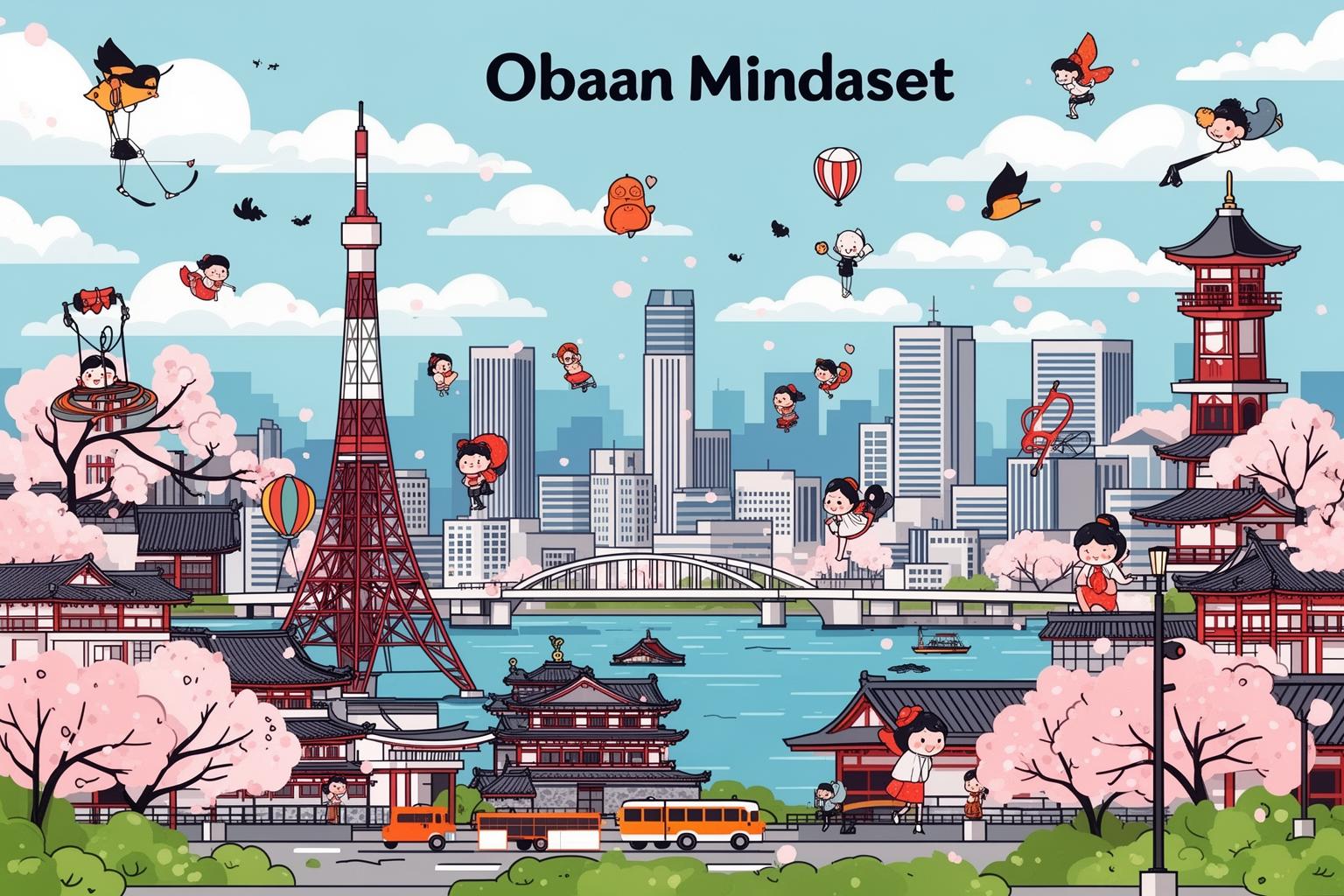
To fully appreciate the Obachan, you need to understand her origins. Her communication style is not accidental; it is shaped by Osaka’s distinctive history, geography, and social structure. She truly embodies the spirit of the city.
A Legacy of Merchant Culture
For centuries, Tokyo (formerly Edo) was the domain of samurai and bureaucrats, characterized by strict hierarchy and formal rules. Osaka, in contrast, was Japan’s kitchen, a city of merchants (shonin). In business, success relied not on family status but on wit, speed, pragmatism, and building trust. There was no room for the ornate, indirect language of the court. One had to be direct, honest, and quick to establish relationships. Time was money, and a straightforward deal was a successful one.
This merchant spirit runs deep in Osaka’s identity. The Obachan inherits this mindset today. She is practical, values common sense above all, and has a natural knack for recognizing value. Her straightforwardness in conversation reflects the same directness her ancestors used when closing deals on shipments of rice. Her warm haggling continues a long tradition of business built through personality and human connection. At heart, she is a shrewd and savvy operator.
Community as the Ultimate Safety Net
Osaka has always been a city of closely knit, lively neighborhoods where people lived, worked, and shopped nearby. In these communities, especially before modern social services, neighbors were vital. They were emergency contacts, childcare helpers, and support systems. Knowing each other’s affairs wasn’t nosiness; it was essential for communal survival.
The Obachan’s seemingly intrusive behavior echoes this deep community connection. When she asks where you’re headed or comments on your health, she’s performing a kind of wellness check. She sustains the invisible bonds that hold a neighborhood together. In the anonymous expanse of a megacity like Tokyo, one can live for years without speaking to a next-door neighbor. In Osaka, the Obachan takes it upon herself to ensure this doesn’t happen. While it can feel overwhelming, it also provides immense security. To be known by an Obachan is to be cared for.
The Aesthetics of ‘Kote-kote’ and Embracing the Loud
The visual style linked to the Osaka Obachan—the bold animal prints, bright colors, and glittery accessories—is no random fashion choice. It’s a declaration. It belongs to a broader Osaka aesthetic known as kote-kote, meaning rich, heavy, or even excessive. This is the opposite of the refined, minimalist wabi-sabi aesthetic common in Kyoto. Kote-kote celebrates being unapologetically vibrant, bold, and full of life.
This visual flamboyance perfectly matches the Obachan’s communication style. It refuses invisibility. It confidently proclaims, “I am here, I have opinions, and I’m not afraid to share them.” In a culture that often values conformity and subtlety, the Obachan’s extravagant style is a bold form of self-expression. She doesn’t blend in; she stands out—and she invites you to do the same.
Your Practical Guide to Thriving with Obachan
So, you’ve experienced your first encounter with an Obachan. How do you transition from a confused onlooker to an engaged participant? It’s easier than you might expect. It just takes a slight change in mindset and a readiness to join the interaction.
How to Respond: Embrace the Banter
When an Obachan begins a conversation with a blunt comment, the worst response is to withdraw into awkwardness as a foreigner. The best approach is to lean in and engage. Think of it as a friendly game of conversational tennis. She makes an observation about your shopping; you respond with a question.
Her: “Buying instant curry? The stuff you make from a block tastes much better.” You: “Oh really? Is it difficult? Which one do you recommend?”
This simple engagement will open the door to a wealth of useful tips, an impromptu cooking lesson in the aisle, and maybe even a new friendship. They appreciate someone who can handle a bit of teasing and respond in kind. Don’t hesitate to laugh at yourself. Show that you’re open to the chat, and you’ll be welcomed into their world. They aren’t trying to offend you; they want to connect.
The Golden Rule: Accept the Ame-chan
This cannot be emphasized enough. If offered a piece of candy, take it. See it as a cultural handshake. A simple smile and a sincere “Thank you” are all that’s needed. It’s a small, sweet gesture that shows you are part of the community. It costs nothing but generates a lot of goodwill. Keep a few small candies or snacks from your home country in your bag. While not necessary, offering one back during a future meeting is a savvy move that will earn you local respect.
When in Doubt, Ask an Obachan
Put your smartphone aside for a moment. The Osaka Obachan is the original, hyper-local, analog search engine. If you’re lost, don’t wander staring at a map; find the nearest Obachan. She won’t just know the answer but will likely suggest a more scenic, efficient, or interesting route than any app could. Need a recommendation for the best okonomiyaki or the cheapest place to buy towels? Ask an Obachan. You’ll get an honest, passionate, and detailed review.
Seeking their help shows respect for their local knowledge. They’re almost always happy to assist, as it reaffirms their role as neighborhood experts. Be ready for the response to include a few personal questions and some advice, but rest assured it will be the most dependable information you can find.
The Soul of Osaka in a Leopard Print Purse

Ultimately, the Osaka Obachan represents far more than a vibrant local stereotype. She is the fierce, humorous, and deeply compassionate core of the city itself. She embodies the values that distinguish Osaka from the rest of Japan: practical down-to-earthness, a strong belief in community, a love for direct and honest communication, and an unstoppable zest for life.
What a foreigner might initially interpret as nosiness is actually a form of radical, old-fashioned neighborliness that has been erased from many of the world’s impersonal, sanitized megacities. It’s a network of mutual support hidden within casual conversation. It’s a safety net woven from unsolicited advice and shared laughter. Living in Osaka means learning to see this. It requires shifting your perspective from “Why is this stranger talking to me?” to “This person views me as part of her community and wants to help.”
So next time a woman with a fabulous perm and a sparkle in her eye stops you on the street to fix your collar or question your choice of drink, don’t be alarmed. Smile, engage, accept the ame-chan, and listen to her advice. It’s not an intrusion. It’s an initiation. It’s your official, noisy, and wonderfully warm welcome to the true Osaka.