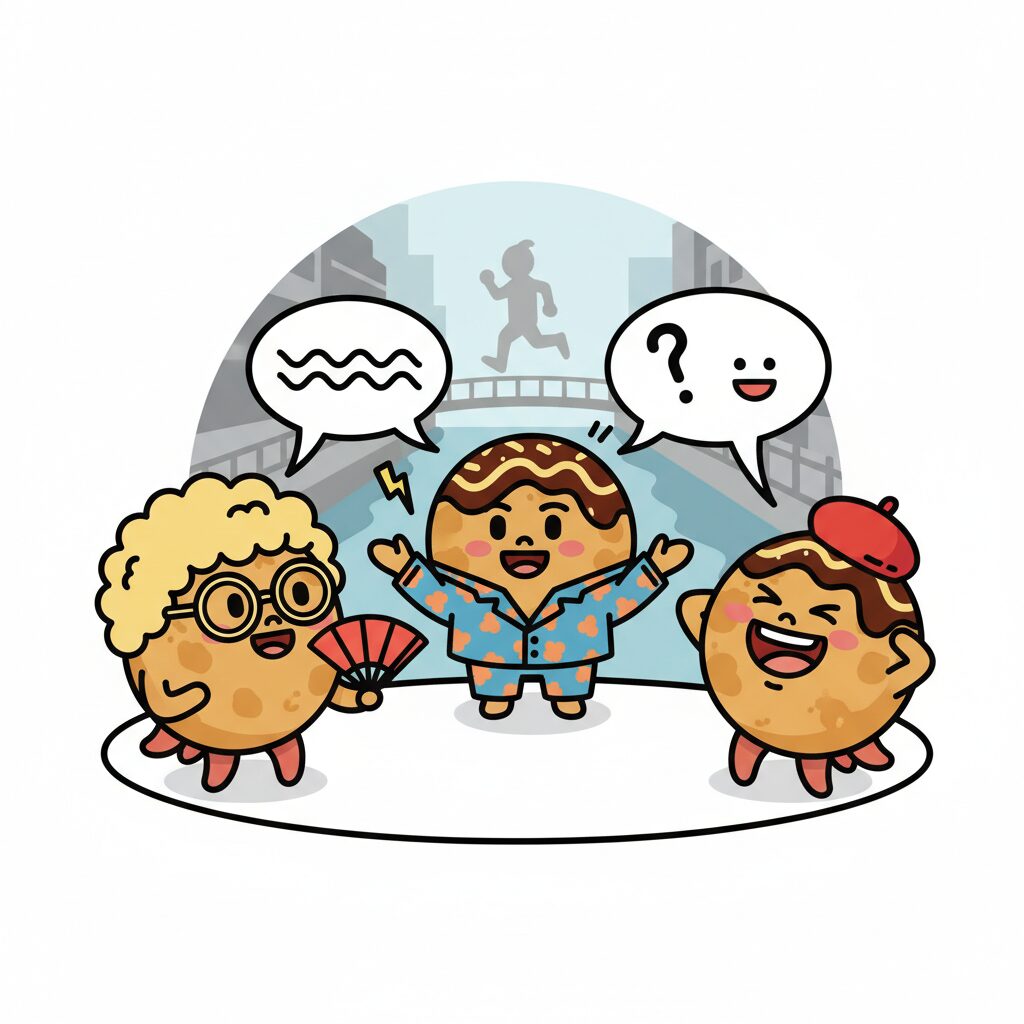
So, you’ve heard Osaka is different. You’ve heard the people are loud, they’re direct, and they’re… funny? It’s a word that gets thrown around a lot, a simple descriptor for a city that runs on a completely different social operating system than the rest of Japan. In Tokyo, conversation is a carefully constructed bridge, built with polite phrases and cautious deference. In Osaka, conversation is a fast-paced game of catch, and the ball is a joke. Throw it well, and you’ve made a friend. Drop it, and you’re left standing in awkward silence. This isn’t just about telling a few gags at a bar. Humor, here, is the very fabric of communication. It’s the grease in the social gears, the secret handshake, the password to being accepted. It’s a language within a language, and for any foreigner trying to build a life here, learning its grammar is non-negotiable. It’s a beautiful, chaotic, and sometimes baffling system that can build instant connections or create bewildering misunderstandings. The city’s obsession with comedy, or owarai, isn’t just for the stage; it’s a script for daily life played out in supermarkets, on train platforms, and in office meetings. Understanding this script is the key to unlocking the real Osaka, the one that lives and breathes behind the tourist posters of takoyaki and neon signs. It’s about figuring out why the cashier at your local FamilyMart is teasing you about the amount of instant ramen you’re buying, and knowing exactly how to respond.
To further grasp how local humor underpins everyday interactions in Osaka, consider exploring the unspoken neighborhood contract that shapes the city’s unique social dynamics.
The Bedrock of Banter: What is Owarai Culture?
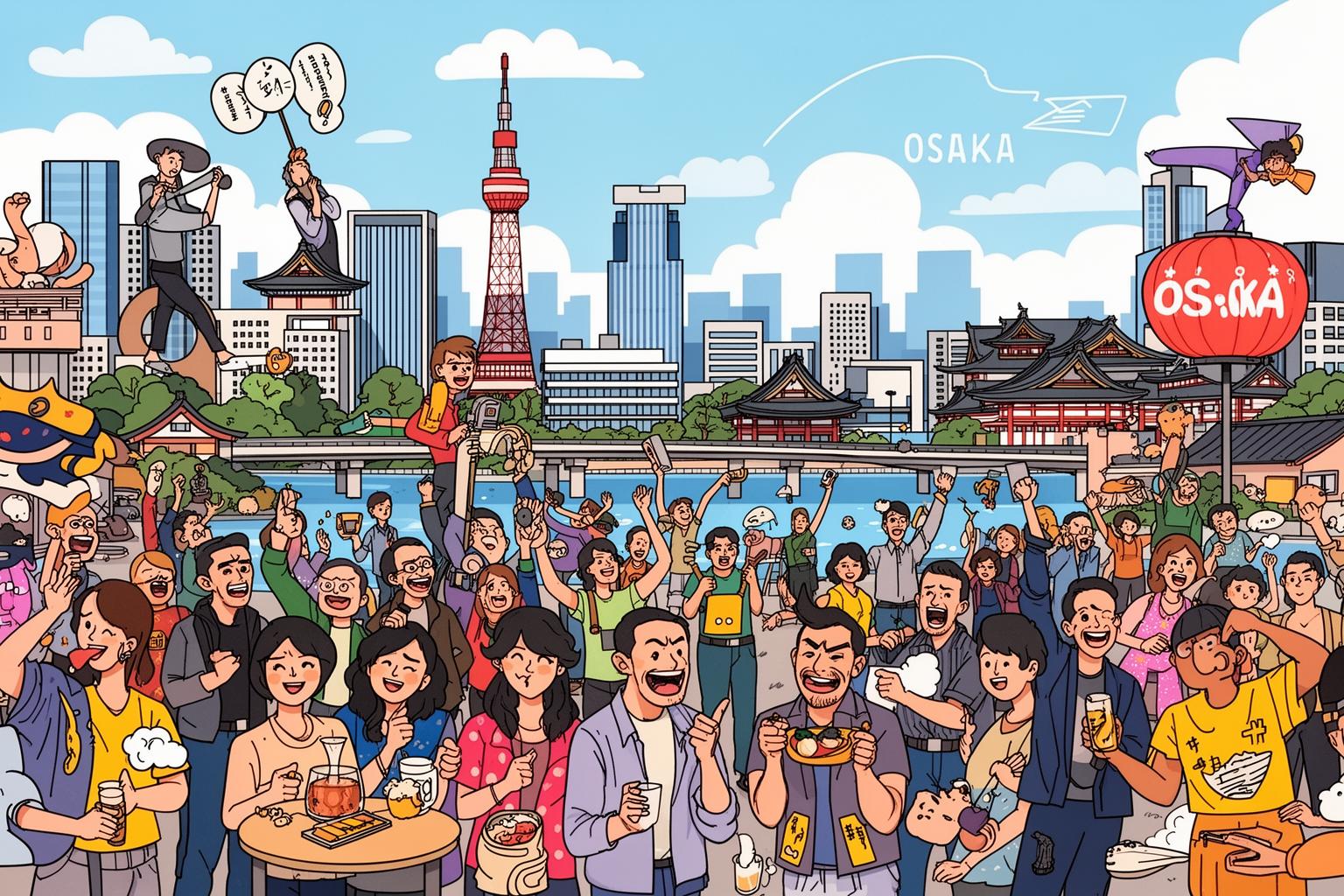
Before you can grasp the pros and cons of Osaka humor, you need to understand what owarai truly means. It translates to ‘comedy’ or ‘laughter,’ but that’s like saying sushi is simply ‘fish.’ It overlooks an entire universe of context. Owarai is an institution, a multi-billion yen industry based right here in Osaka, primarily led by the entertainment giant Yoshimoto Kogyo. This isn’t some niche subculture; it’s mainstream entertainment that dominates prime-time television. Kids grow up watching comedy duos, known as manzai acts, just as American children grow up watching cartoons. These comedians are top-tier celebrities, hosting talk shows, game shows, and news programs. Their faces appear on billboards, their voices in commercials. You simply can’t escape it.
The Manzai Blueprint: Boke and Tsukkomi
At the heart of this culture lies the dynamic of the manzai duo, which consists of two roles: the boke and the tsukkomi.
The Boke: This is the silly one, the fool, the airhead. Their role is to say or do something absurd, wrong, or just plain dumb. They might misunderstand a simple concept, forget a common word, or make a wild exaggeration. They provide the setup.
The Tsukkomi: This is the straight man, the responder. Their role is to point out the boke’s absurdity with quick wit and lightning speed. The reaction serves as the punchline. This can be a verbal jab, like the classic “Nande ya nen!” (“Why the heck!?” or “What the hell!?”), or a quick, harmless slap to the head or shoulder with an open palm.
This isn’t just a stage act—it’s a conversational template everyone in Osaka instinctively knows. People slip into these roles constantly, often without even realizing it. A friend says something silly (boke), and another instantly fires back with a witty correction (tsukkomi). It’s a rhythmic call-and-response pattern that shapes casual conversation. In Tokyo, if someone makes a factual error, the correction tends to be gentle and indirect to avoid embarrassment. In Osaka, the mistake is a gift—an open invitation for a tsukkomi to step in and get a laugh. The mistake isn’t seen as failure but as a contribution to the group’s entertainment.
More Than Jokes: A Social Currency
In Osaka, a good sense of humor isn’t just a desirable personality trait; it’s a mark of social skill. Being able to land a joke, take part in a boke/tsukkomi exchange, or even just be a receptive audience member shows that you’re on the same wavelength. It proves you’re not too stuffy or overly serious. Laughter is the quickest way to build rapport. It’s why shopkeepers banter with customers, why the person seated next to you at a ramen counter might comment on your eating style, and why business meetings may begin with rounds of self-deprecating humor. Humor is a tool to bridge the gap between people. If you can share a laugh, you’re likely trustworthy. This philosophy—that humor is the default mode of interaction—is the biggest cultural difference you’ll notice between Osaka and the rest of Japan. It’s a city that believes a shared laugh is worth more than a thousand polite bows.
The Upside: When Humor Forges Connection
Once you become accustomed to it, Osaka’s comedy-driven communication serves as a remarkably powerful tool for social bonding. It can turn ordinary daily interactions into memorable, warmly human moments and cut through the formality that often defines life in Japan. When used properly, it acts as a social lubricant that makes everything flow a bit more smoothly and warmly.
The Ultimate Icebreaker
In much of Japan, starting a conversation with a complete stranger is a rare occurrence. There’s a clear social barrier between people. Osaka breaks down this barrier with humor. The easiest way to begin a conversation isn’t by commenting on the weather, but with a playful observation or a lighthearted tease. Take a seat at a tachinomi (standing bar) in the Tenma neighborhood, and the old man beside you probably won’t ask where you’re from. Instead, he’s more likely to glance at your plate and say, “You gonna eat all that by yourself? You’ll get fat!” This isn’t meant as an insult—it’s an opening. It’s a boke-style exaggeration, inviting your tsukkomi. A simple, laughing reply like “Of course! I’m a growing boy!” is enough. The ice is broken. A conversation begins. This method disarms people, signaling that you’re friendly, approachable, and don’t take yourself too seriously. It’s an invitation to connect on a human level, bypassing stiff introductory rituals.
The Art of the Deal: Nebiki as Performance
Visit a traditional shopping arcade such as Kuromon Market or Sennichimae Doguyasuji, and you might notice a unique style of bargaining: nebiki. But this isn’t the aggressive, purely transactional haggling typical in other places. In Osaka, it’s more like a performance, a comedic routine. The customer might dramatically bemoan their empty wallet, while the shopkeeper might feign a heart attack at the requested discount. It’s a playful battle of wit. The aim isn’t only to save a few hundred yen; the aim is the interaction itself. The laughter, the mock outrage, the eventual, reluctant agreement—it’s a shared experience. A shopkeeper once told me, “If they just ask for a discount, I say no. But if they make me laugh, I’ll give them a little something.” This transforms a simple purchase into a relationship, however brief. You’re not just a customer; you’re a fellow performer in the grand theater of Osaka commerce.
De-escalation Through Laughter
Awkward moments happen to everyone. You bump into someone on a crowded train, spill a bit of coffee, or say the wrong thing in a meeting. In a more reserved culture, these situations can lead to tense apologies and deep bows. In Osaka, the preferred way to defuse tension is often a self-deprecating joke. If you stumble on the street, you might hear an Osakan mutter, “Achaa, mada yopparatenaide” (“Oops, and I’m not even drunk yet”). This immediately reassures those around that everything’s okay, breaks the tension, and invites a chuckle instead of concerned looks. By playing the boke and making themselves the target of the joke, they take control of the situation and neutralize any potential embarrassment. It’s an incredibly effective way to smooth over life’s small mishaps without lingering discomfort, transforming a potential moment of shame into one of shared, lighthearted humanity.
The Downside: When the Punchline Punches Back
Despite its warmth and charm, Osaka’s humor-driven culture has a downside. For outsiders—and even some locals—the constant pressure to be witty and the unwritten rules of interaction can be tiring, confusing, and at times painful. What is meant as a friendly joke can easily be mistaken for an insult, and the boundary between playful teasing and sincere criticism can be dangerously thin.
The Pressure to Be Funny
Picture being in a social environment where everyone is skilled at playing an instrument, and you’re perpetually handed one and expected to join in. That’s what it’s like in Osaka if you’re not naturally quick-witted or outgoing. There’s a subtle, ongoing pressure to add to the banter. Silence might be interpreted as boredom, arrogance, or disapproval. You sense the conversational ball coming your way, and anxiety builds: you must say something funny, deliver a clever comeback, fulfill your part. For foreigners still mastering the language, this pressure doubles. You’re not just translating words; you’re also trying to interpret humor, timing, and cultural nuances on the spot. Missing the joke or reacting too seriously can result in a conversational dead end, making you feel isolated and out of step with the group.
When Teasing Crosses the Line
Osaka features a unique form of humor called ijiri, which roughly means teasing or roasting. It’s a way to express affection and closeness by humorously highlighting a friend’s flaws, quirks, or recent errors. Among close friends who understand the limits, it signals intimacy. Yet, for those unfamiliar with this style, ijiri can feel like bullying. A remark about your new haircut looking “like a helmet,” your Japanese pronunciation being “strange,” or your fashion sense being “unique” might be intended as a playful jab, an affectionate tsukkomi aimed at you. But without a deep grasp of the cultural context, it can hurt. The humor is often delivered with a serious face, making it harder for foreigners to gauge intent. Is this a joke? Or does this person genuinely think I look ridiculous? This uncertainty can be profoundly unsettling.
The Aggression of the Tsukkomi
The physical aspect of the tsukkomi—a quick smack to the head or shoulder—is one of the biggest culture shocks for non-Japanese. On stage, it’s clearly theatrical. In everyday life, when a friend or coworker lightly slaps someone in response to a silly remark, it may appear as real violence to outsiders. It’s not. The gesture is highly ritualized and carries no real hostility. It serves as a physical exclamation point, a human punctuation mark. But witnessing it for the first time, especially in a workplace, can be startling. It blurs the lines between professional and personal, friendly and aggressive, in a way that can unsettle people from other cultures. Likewise, the sharp verbal tsukkomi can have a similar impact. What an Osakan perceives as a clever, witty retort might strike a foreigner as unexpectedly harsh and critical.
The “Unserious” Stereotype
Perhaps the greatest drawback for Osakans themselves is how their humor-focused culture is viewed by the rest of Japan, especially Tokyo. The stereotype portrays Osaka people as loud, unsophisticated, and not serious. Their humor is interpreted as unprofessional. An Osaka salesperson using humor to connect might be seen as frivolous by a Tokyo client. A job seeker from Osaka may feel compelled to mute their natural speech to seem more “serious” and “employable.” This creates a frustrating paradox: the very communication style that fosters community and trust within Osaka can become a disadvantage when engaging with outsiders. It’s an ongoing struggle against the belief that a good sense of humor and strong work ethic cannot coexist.
A Foreigner’s Guide to the Osaka Joke
So, how do you survive—and even thrive—in this conversational landscape? You don’t need to become a world-class comedian overnight. The key is to learn how to recognize the patterns and understand your role within them. It’s less about telling jokes and more about being a good conversational partner in a city that values laughter above everything else.
Learn to Spot the Game
First, you need to develop your radar for when the “humor game” is underway. Pay attention to the dynamic. Is someone saying something slightly absurd or exaggerated? That’s likely a boke. Then watch for the reaction. Does someone else immediately jump in with a sharp correction or a theatrical sigh of disbelief? That’s the tsukkomi. Recognizing this pattern is the first and most crucial step. When the old woman at the vegetable stand tells you a cucumber costs a million yen, she’s not trying to cheat you—she’s tossing you a boke softball. Your role isn’t to haggle; it’s to play along. A dramatic gasp and a cry of “So expensive!” followed by laughter is the perfect response. You’ve recognized the game and played your part.
You Don’t Have to Be the Tsukkomi
For a foreigner, trying to deliver a perfect, witty tsukkomi in Japanese is like playing on the highest difficulty level. It demands exceptional language fluency, speed, and cultural nuance. The good news is, you don’t have to. The easiest and safest role for a non-native speaker is to be a good audience, or even a willing boke.
Be a Good Audience: Laughing at the right moment is a huge contribution. When you witness a boke/tsukkomi exchange, just laugh along with everyone else. This shows you get it, appreciate the humor, and are part of the group’s energy.
Be the Natural Boke: As a foreigner, you’re in the perfect position to be the boke. You will naturally misunderstand things, mispronounce words, or miss certain cultural cues. Instead of feeling embarrassed by these mistakes, lean into them. When you make a mistake and someone teases you for it, that’s their tsukkomi. By laughing along with them, you create a moment of connection. You’re not the butt of the joke—you’re the setup, and you’re in on it.
Mastering the Essential Reactions
Equip yourself with a few key phrases that serve as simple but effective tsukkomi or reactions. These don’t require much wit, just good timing.
- Nande ya nen! (Why the heck!?): The classic. Use it when someone says something completely illogical.
- Uso yaろ! (No way! / You’re kidding!): Perfect when someone tells an exaggerated story.
- Honma ka? (Really?): A straightforward way to express disbelief and encourage the speaker to keep going.
- Akan wa… (Oh, that’s no good… / You’re hopeless…): A playful, sighing response to someone’s minor failure or silly remark.
Using one of these with a smile is often all it takes. It shows you understand the rhythm of the conversation and are actively engaging.
The Final Punchline
Living in Osaka means embracing communication as a full-contact sport where punchlines replace shoulder pads. It’s a city that openly displays its emotions and isn’t afraid to use humor to express them. The humor can serve as a bridge, creating an immediate and powerful connection that can make you feel part of the community in a way that might take years to develop elsewhere. It can also act as a perplexing, frustrating barrier—an unspoken set of rules you never learned, leaving you feeling perpetually excluded from an inside joke.
Ultimately, the constant humor in Osaka is neither a flaw nor a feature; it’s simply the city’s reality. It’s the chaotic, warm, and deeply human force that drives social interaction. It asks you to be a bit more resilient, a little less self-conscious, and much more willing to laugh, especially at yourself. Navigating it is challenging, but it’s also an invitation—an invitation to lower the formal shields we often carry, to connect with others on a more direct and playful level, and to realize that sometimes the quickest path to understanding isn’t polite agreement, but a shared, hearty laugh at a perfectly timed, ridiculous joke.