You see them tucked away on quiet side streets, their tall chimneys puffing gentle steam into the evening sky. You hear the faint clatter of wooden lockers and the cheerful chatter spilling out from behind a sliding door marked with the iconic ゆ (yu) symbol. This is the neighborhood sentō, the Japanese public bathhouse. For many foreigners in Osaka, it’s a source of both curiosity and serious hesitation. It’s not a flashy onsen resort in the mountains; it’s a cornerstone of daily life, a weekly ritual, and perhaps the most unfiltered window into the soul of the city. Forget what you think you know about quiet, reserved Japanese interactions. The Osaka sentō is a different world, a place where the city’s famous directness, humor, and communal spirit are on full display. It’s a place of “hadaka no tsukiai”—a naked communion where social status melts away with the steam, and you’re just another neighbor soaking in the hot water. This isn’t a guide for a one-time tourist thrill. This is your manual for cracking the code of the local sentō, for turning an intimidating experience into a genuine connection with the heart of Osaka. It’s about more than getting clean; it’s about belonging.
Embrace the local spirit further by exploring the nuances of Osaka neighborhood greetings as an essential aspect of daily life in this vibrant city.
More Than a Bath: The Sentō as Osaka’s Social Hub
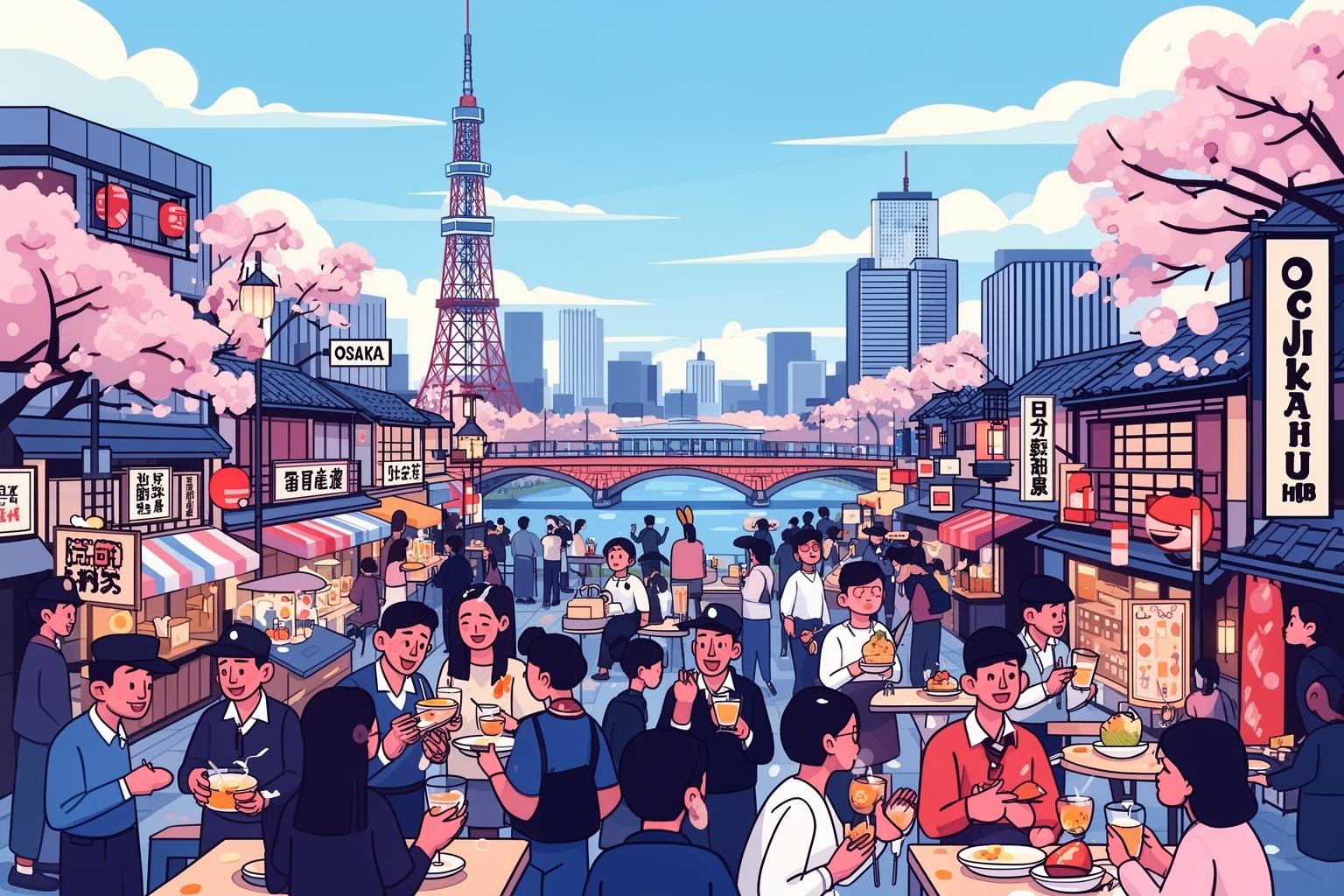
Step inside a sentō nestled in a quiet residential corner of Osaka, and the first thing you’ll notice isn’t the heat—it’s the sound. It’s a symphony of water echoing, the scrub-scrub-scrub from the washing stations, and, most importantly, the lively rhythm of Kansai-ben, the local dialect. This is Osaka’s living room, its community hub, its unofficial news network. While a sentō in Tokyo might feel like a library dedicated to quiet, personal reflection, an Osaka sentō often resembles a bustling neighborhood pub, just without the clothes. Here, the idea of “hadaka no tsukiai” is embraced wholeheartedly. The phrase literally means “naked relationship,” referring to a form of communication free from pretense, hierarchy, and formality. When everyone is sitting in the same hot water, it doesn’t matter if you’re a company president or a part-time student. This concept resonates deeply with the pragmatic and egalitarian spirit of Osaka’s people. They tend to prioritize directness and substance over strict formality, and nowhere is this clearer than in the bathhouse.
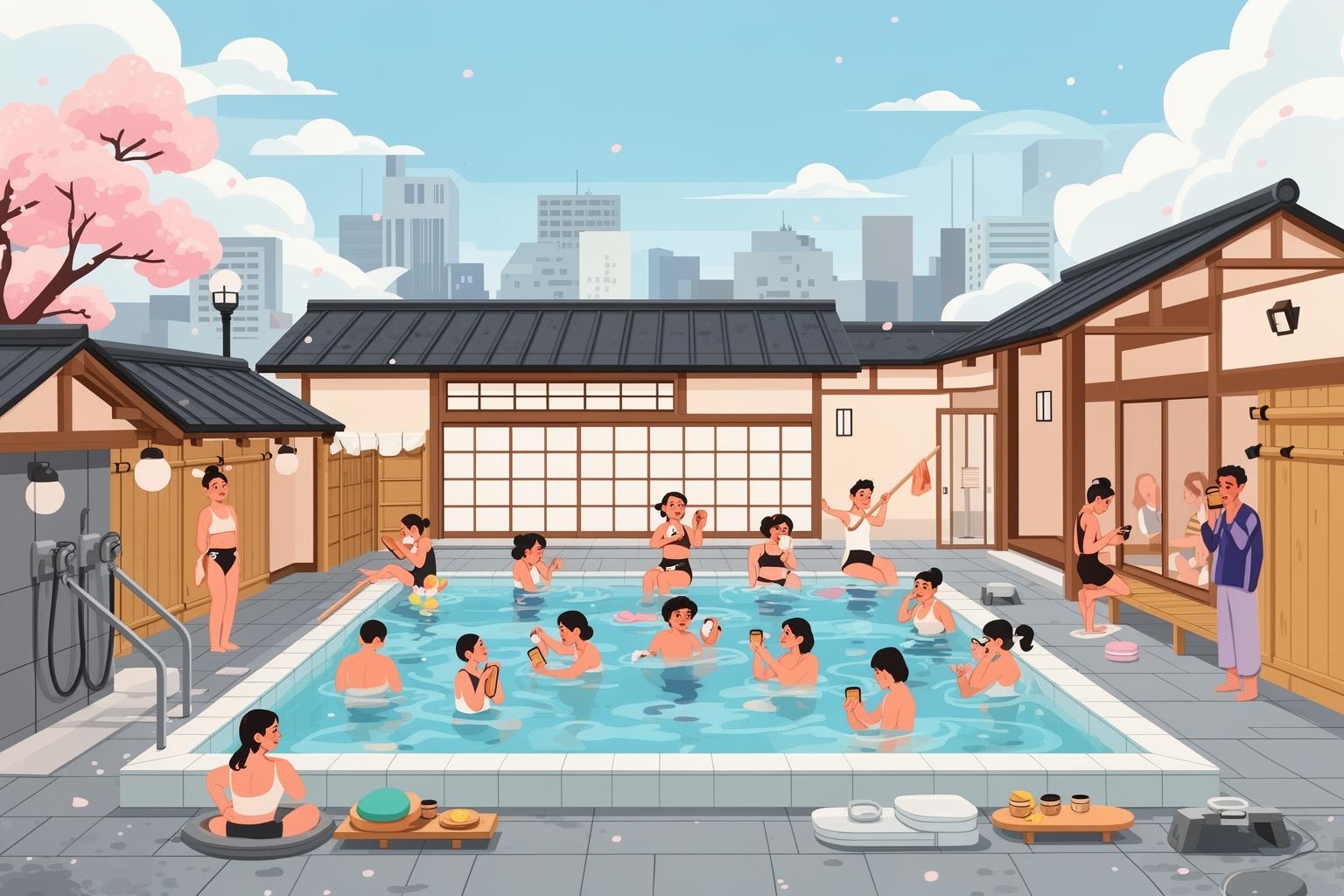
Here, you’ll encounter groups of older women, the formidable “obachan,” holding court, chatting about everything from the price of daikon radishes to neighborhood rumors and the latest Hanshin Tigers baseball game. You’ll see fathers patiently teaching their young children the proper way to wash. Local artisans and shopkeepers unwind after a long day, their conversations marked by deep, satisfied sighs as they sink into the steaming water. This is not a place for quiet whispers. It’s a place for genuine connection. The sentō functions as an essential third space, neither home nor work, where community ties are formed and sustained. For many elderly residents, it’s a vital daily source of social interaction, a defense against isolation. For families in older, smaller apartments lacking large bathrooms, it remains a practical and cherished part of everyday life. Understanding this social role is key to fully appreciating the sentō. You aren’t just paying a few hundred yen to use a large bathtub; you’re paying a small fee for temporary membership in a vibrant, hyper-local community.
The Unspoken Code: Navigating Sentō Etiquette Like a Local
The relaxed social atmosphere can be deceptive. The sentō follows a strict, if often unspoken, set of rules. These rules aren’t about being rigid; they’re about showing consideration for others and ensuring the shared space remains clean, comfortable, and respectful for everyone. Mastering this etiquette is your key to being accepted as a fellow bather rather than just a curious outsider. In Osaka, people may be straightforward in correcting you, but it’s rarely done with ill intent. It’s more of a practical, “Hey, we don’t do it this way here” kind of guidance. Follow these steps, and you’ll navigate the experience with confidence.
Before You Even Touch the Water
Your journey begins at the entrance, or genkan. Look for a shoe locker, remove your shoes, and slide them inside. You’ll take the wooden or plastic key with you. Next, you’ll approach the dividing curtain, one for men (男) and one for women (女). Behind it, you’ll find either a traditional elevated platform called a bandai, where an attendant sits overseeing both changing rooms, or a more modern front desk. This is where you pay the bathing fee, which is typically very reasonable and set by the prefectural government. If you didn’t bring your own soap, shampoo, or towel, you can usually buy or rent them here. A simple “Sentō setto, kudasai” (Sentō set, please) will get you the essentials.
Once paid, you enter the datsuijo, the changing room. Find an empty locker or basket for your clothes. The key from your locker will likely have an elastic band to wear on your wrist. Now comes the first moment of truth: getting undressed. No one is staring. Everyone is in their own world, focused on their routine. Modesty is understood, but overt shyness can actually make you stand out more. The prevailing attitude is practical. Simply undress, place your clothes neatly in the locker, and take only your small wash towel and any toiletries with you into the bathing area.
The Art of Washing (Kakeyu and Karada-arai)
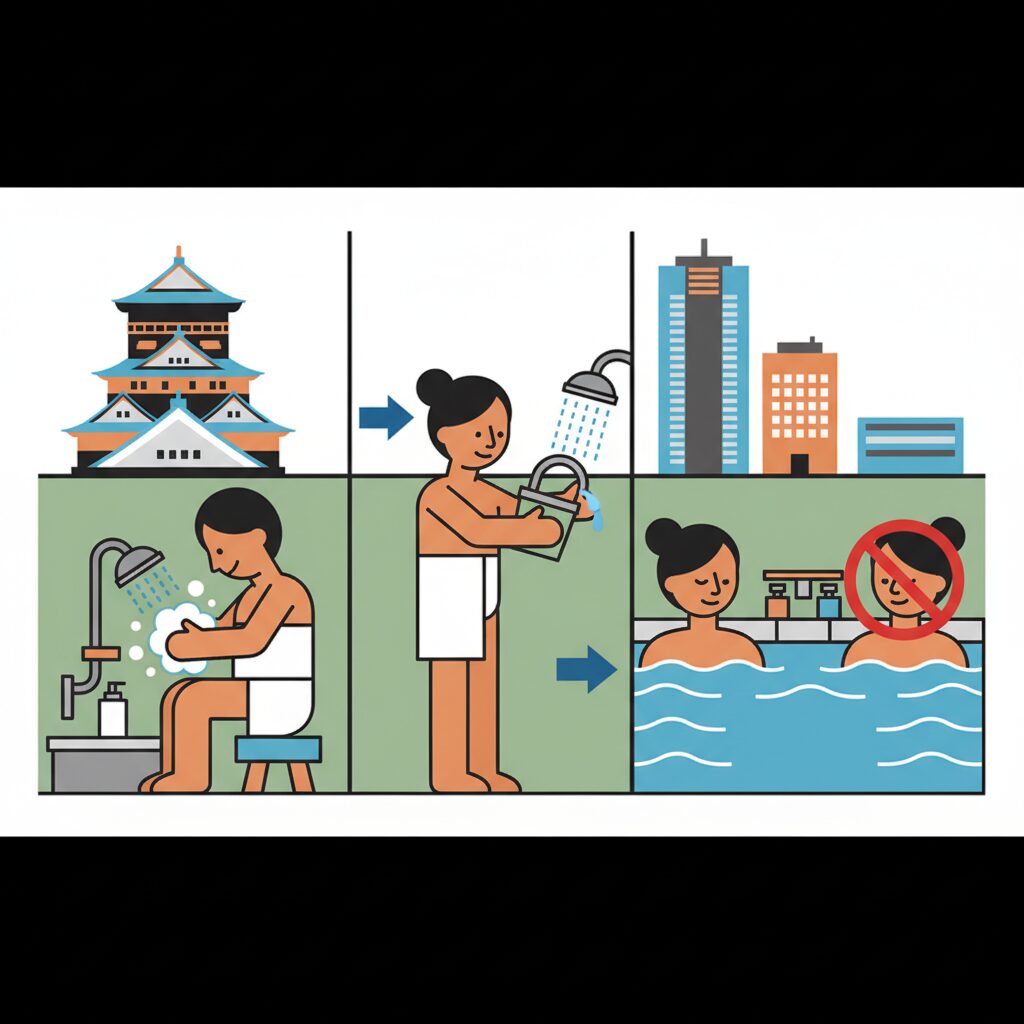
This is the most important rule of all: you must be completely clean before entering any of the bathtubs. The tubs are for soaking, not washing. To do otherwise is the gravest of sentō offenses. First, find an empty washing station. It will consist of a stool, a faucet, a shower head, and a couple of buckets or basins. Before sitting down, perform kakeyu. Use a basin to scoop hot water from the large tub or a dedicated basin and splash it over your body, starting with your feet and moving upward. This helps acclimate your body to the temperature and serves as a preliminary rinse.
Now, sit on the stool and wash yourself thoroughly. This is not a quick rinse. Lather up and scrub everywhere. Be mindful of your neighbors. This is where Osaka-style consideration comes into play. It’s a pragmatic awareness. Don’t let your shower spray hit the person next to you. Keep the suds and water contained to your own space. When you’ve finished washing, take a moment to rinse your stool and the area around you with hot water, leaving it clean for the next person. It’s an act of shared responsibility that keeps the whole system running smoothly. It’s a small gesture that says, “I’m part of this community.”
Mastering the Towel and the Tubs
Now you’re clean and ready to soak. But what about that small towel you brought with you? This tiny piece of cloth carries its own strict set of rules. It is for washing and scrubbing your body, and for a bit of modesty while walking around. It must never, ever go into the bathtub water. Doing so is considered unclean. So, what do you do with it? You can place it on your head, which also helps prevent dizziness in the hot water. Or, you can leave it on the edge of the tub, well away from the water. Just don’t let it dip in.
Most sentō have several tubs with different temperatures and features. There’s usually a main tub that’s quite hot, a colder water bath (mizuburo) for a shocking but refreshing contrast, and sometimes specialty baths like a jacuzzi-style jet bath or the infamous denki-buro (electric bath). The denki-buro has low-voltage electric currents passing through the water between two plates. Easing in between them creates a tingling, buzzing sensation designed to soothe sore muscles. It’s an acquired taste, and your first experience will likely be a mix of surprise and bewilderment. Feel free to explore the different tubs, but remember this is a place for soaking, not swimming or splashing. Move slowly and deliberately. When you exit a tub, it’s good practice to do a quick wipe-down with your small towel before walking around to avoid dripping water everywhere.
Cracking the Social Code: How to Connect with Osaka People

Now that you’ve mastered the mechanics, it’s time to immerse yourself in the culture. The Osaka sentō is a social space, and engaging appropriately—or even simply observing—will reveal a great deal about the local character.
The Gatekeepers of the Sentō: The “Obachan” Network
In the women’s bath, and similarly among the older men (ojisan) on their side, the social world is often centered around the obachan. These elder women are the heart and soul of the neighborhood. They preserve tradition, enforce etiquette, and serve as the main hubs of local information. At first, they may appear intimidating with their direct gaze and no-nonsense attitude. If you make a mistake, such as forgetting to wash properly or letting your towel slip into the tub, one of them will likely call you out. Their tone won’t be softened; it will be blunt and straightforward. “Anata,タオルあかんやん” (“Hey, you, no towel in the water”). Don’t take this as hostility. In Osaka, such directness reflects intimacy and inclusion. It signals that they consider you part of the shared space and expect you to respect its rules. A simple “Sumimasen, ki o tsukemasu” (“Sorry, I’ll be careful”) accompanied by a slight bow is the perfect response. Smile and show you understand. More often than not, this initial correction will be followed by a friendly question about where you’re from, opening the door to conversation.
To Talk or Not to Talk?
While quiet reflection is acceptable, the Osaka sentō is generally a place where conversation is welcomed. You don’t have to force it, but being open to interaction will enrich your experience. A shared observation is the easiest way to start—a simple nod to someone entering the same tub and a quiet “Ee oyu desu ne” (“This is nice hot water, isn’t it?”) can break the ice. Osaka people are famously curious and uninhibited. They’ll likely want to hear your story. Why are you in Japan? What do you do? What do you think of Osaka? Respond warmly and with a bit of humor, and you’ll be treated not as a foreigner, but as a new neighbor. This is the essence of Osaka friendliness—it’s not distant politeness but a genuine, sometimes nosy, interest in those around them. The sentō provides the perfect setting for this, as the shared vulnerability of being naked encourages honest and open conversation.
The Tattoo Question
For many foreigners, this is the greatest source of anxiety. Historically in Japan, tattoos have been associated with the yakuza, or organized crime groups. As a result, many onsen, gyms, and sentō enforce strict “no tattoo” policies. This is a practical rule, not a moral judgment. However, on the ground, the situation is more nuanced—especially in a port city like Osaka, known for its relaxed and international character. Many traditional, family-run sentō still display signs at the entrance explicitly forbidding tattoos (刺青・タトゥーお断り). You must respect this rule. Trying to sneak in will only cause an uncomfortable confrontation. However, a growing number of sentō, particularly those operated by a younger generation or known as “designer sentō,” are more lenient. Some will allow entry if you cover a small tattoo with a waterproof patch. The best approach is to be upfront. If you’re unsure, ask at the front desk before paying. You can point to your tattoo and ask, “Daijoubu desu ka?” (“Is this okay?”). You’ll receive a clear yes or no. Don’t take a refusal personally; simply find another sentō that is more accommodating. This pragmatic, case-by-case approach is, in itself, very typical of Osaka.
The After-Bath Ritual: The Final Piece of the Puzzle
The sentō experience doesn’t end the moment you leave the bathroom. The post-bath ritual holds equal importance. After your last soak, make your way back to the changing room. Before entering the datsuijo, use your small, damp towel to remove as much water from your body as possible. The aim is to prevent dripping onto the changing room floor, which is a considerate gesture towards others. Then, retrieve your large, dry towel from your locker and dry off thoroughly.
Once you’re dry and dressed, it’s time to complete the ritual in the lounge or lobby area. This space typically features old massage chairs, a large television (often showing a baseball game or a comedy show), and a variety of vending machines. Here, you’ll find the quintessential post-bath beverages: ice-cold milk, coffee-flavored milk, and fruit-flavored milk, all served in iconic glass bottles. Drinking one of these after a hot bath is a classic, almost sacred, part of the sentō experience. Find a bench, pop the paper cap off your bottle, and savor the moment. This is a time to linger. You’ll notice fellow bathers relaxing, chatting with the attendant, and fanning themselves to cool down. Leaving immediately after your bath is like departing a dinner party right after your last bite. By spending ten or fifteen minutes relaxing in the lobby, you honor the sentō’s role as a place of community and leisure, not merely a utilitarian facility. It’s the final, essential step in showing that you truly appreciate what this place represents.
Why the Sentō is the Key to Understanding Osaka
On the surface, Osaka appears as a city of bright lights, amazing food, and bold commerce. Yet, its true essence lies in the spaces between—in the daily routines and unwritten customs of its neighborhoods. The local sentō is perhaps the most significant of these places. It serves as a living museum of Showa-era architecture and a lively center of contemporary community life. It reflects the city’s most cherished qualities: pragmatism, straightforwardness, a love of engaging conversation, and a strong commitment to community. Within the sentō, the concept of “uchi-soto” (inside/outside groups) disappears. Once you enter the water, you become an insider. The external social hierarchies fade away, replaced by a simple, egalitarian code of conduct based on mutual respect and shared comfort. Visiting a sentō is more than a cultural experience; it’s a practical lesson in how to live in Osaka. It teaches you how to interpret social cues, respect communal spaces, and interact with others in a direct yet thoughtful manner. So, take a deep breath, grab a small towel, and step through the curtain. Be observant, be respectful, and be open. You may discover that the path to truly integrating into the vibrant, chaotic, and wonderful life of this city is paved with warm water and the welcoming spirit of the neighborhood bathhouse.