Step into a typical Osaka neighborhood on a Tuesday evening, and you’ll feel a certain rhythm. The sizzle from a takoyaki stand, the rumble of a bicycle on pavement, the distant chime of a train crossing. But there’s another sound, another energy, tucked away behind a modest noren curtain: the echo of laughter and splashing water from the local sento, the public bathhouse. For many foreigners, the sento is a daunting concept. It’s a place of vulnerability, of unspoken rules, and of, well, a lot of nudity. You might think it’s just about getting clean, a relic from a time before every apartment had a shower. But in Osaka, you’d be missing the whole point. The sento isn’t just a bath. It’s a community center, a therapist’s office, and a stage for one of the most fundamental aspects of Osaka culture: ‘hadaka no tsukiai,’ or ‘naked communion.’ It’s a concept that goes far beyond the simple act of bathing and cuts to the very core of how people here connect, communicate, and live together. Forget the serene, silent onsen retreats you see in travel brochures. The neighborhood sento is loud, it’s real, and it’s where you’ll find the unfiltered soul of the city.
Immerse yourself further in the city’s dynamic spirit by exploring its vibrant neon supermarket soul for an alternative perspective on Osaka’s lively community life.
The Sento Isn’t a Spa, It’s the Neighborhood Living Room
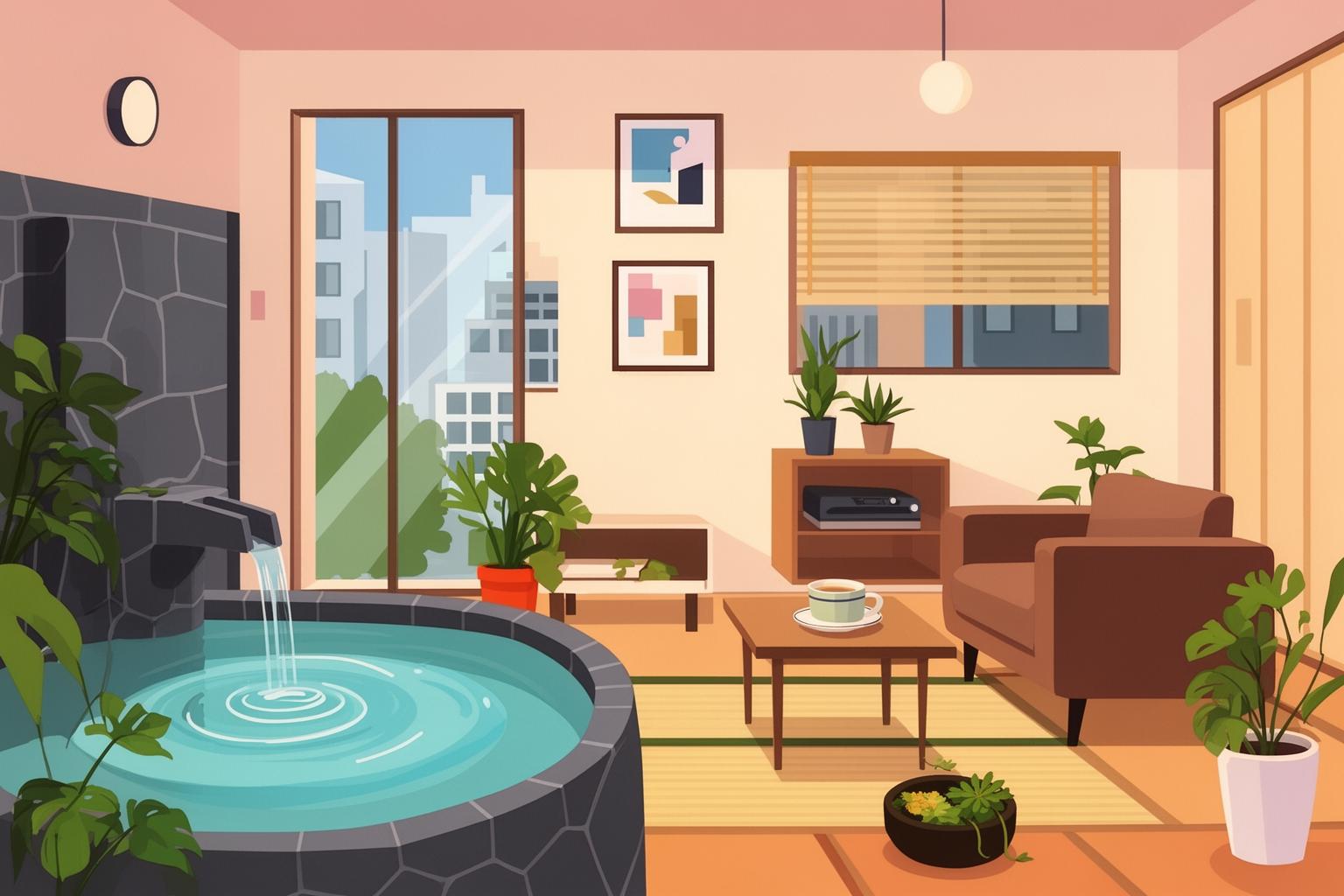
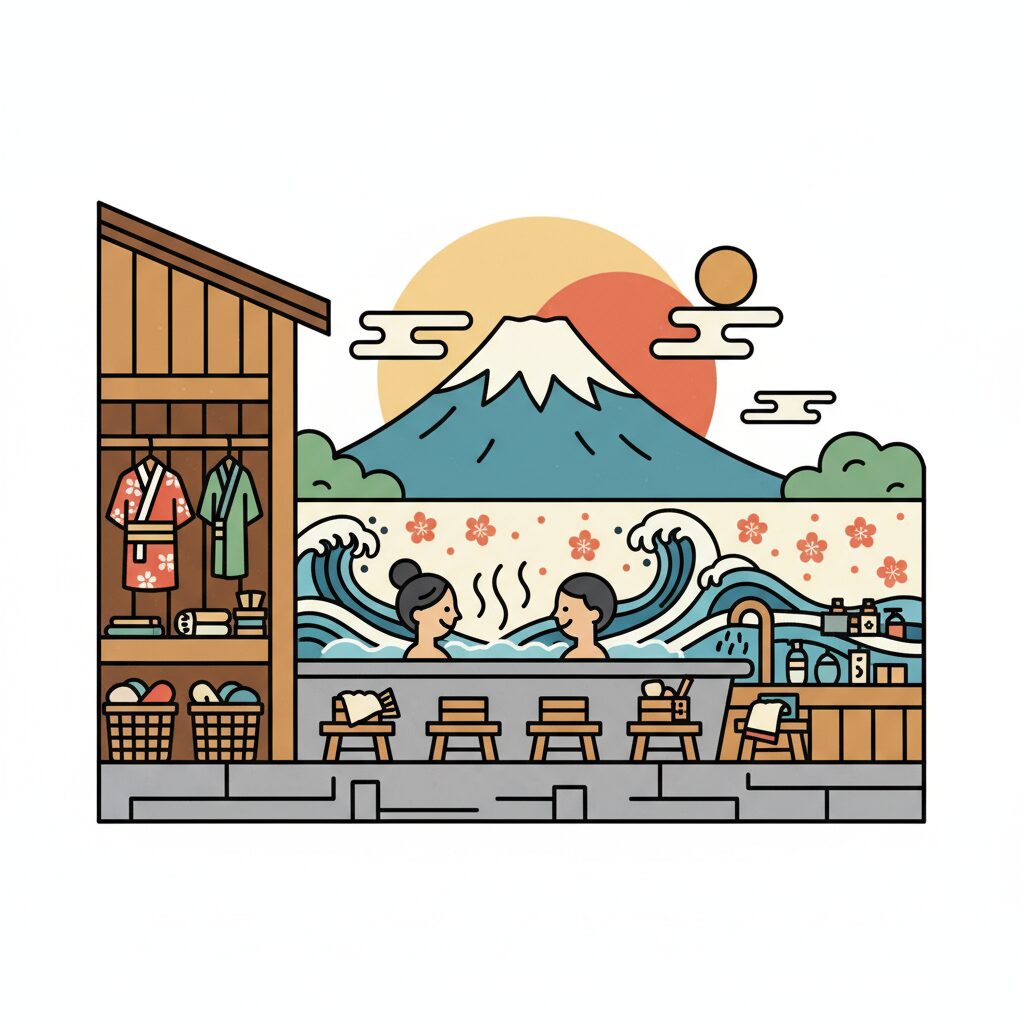
First things first, let’s clear up a common misconception. A sento is not a spa. It’s not a place for quiet reflection or indulgent pampering. Think of it less as a wellness center and more as the communal living room for the entire neighborhood. When you push open the door, you’re not welcomed by soothing ambient music but by the lively, sometimes gruff, voice of the ‘banto-san,’ who oversees the entrance from a high wooden booth. They serve as gatekeeper, treasurer, and neighborhood gossip all in one. They’ll take your 500 yen, exchange greetings with regulars, and keep a vigilant eye on everything.
The changing room, or ‘datsuijo,’ is a scene of organized chaos. Elderly men weigh themselves on vintage scales, discussing the results with anyone nearby. Children dart around wicker baskets filled with clothes. A television mounted in the corner is invariably tuned to a baseball game (Hanshin Tigers, naturally) or a boisterous comedy show. Conversations flow easily, jumping from one person to another without formal introductions. This sharply contrasts with Tokyo, where visiting a sento often feels like a quiet, anonymous experience. In the capital, the emphasis is on personal space and peaceful relaxation. In Osaka, the focus is on the ‘ba,’ the atmosphere, the shared experience. The noise, the chatter, the sense of being in a crowd—it’s not a drawback, it’s an essential feature. It’s the sound of a community living together.
‘Hadaka no Tsukiai’: What Naked Communication Really Means in Osaka
This brings us to the core of the matter: ‘hadaka no tsukiai.’ Literally translated, it means “naked association” or “naked relationship,” but this doesn’t fully convey its meaning. It’s a philosophy centered on the idea that when you remove your clothes, you also shed your social status, job title, wealth, and all other external markers that define you in everyday life. In the bath, the company CEO and the local plumber stand on equal footing: just two men trying to get soap out of their eyes. This physical vulnerability fosters a distinct kind of social and emotional equality. Pretense dissolves in the steam.
In Osaka, a city founded by merchants where directness and practicality take priority over formalities, this concept takes on extra significance. ‘Hadaka no tsukiai’ here is not merely a passive state of being; it is an active method of communication. An older man might straightforwardly tell you that you’re not scrubbing your back well enough—and then offer to help. A group of guys in the sauna might debate the best ramen spot with the intensity of a corporate board meeting, inviting you implicitly to join in. It means sharing work frustrations, celebrating a grandchild’s birthday, or simply complaining about the weather with complete strangers. There’s no ‘tatemae,’ the polite social veneer common in other parts of Japan. In the sento, it’s all ‘honne,’ your genuine feelings and opinions. This can be surprising for foreigners and even Japanese from other regions. What might come across as intrusive in Tokyo is considered welcoming in Osaka. It signals that you’ve been embraced as part of the bathhouse’s temporary, naked family.
Breaking Down the Barriers, One Hot Tub at a Time
The magic of this space lies in its ability to ease social anxiety. How do you begin a conversation? Often, you don’t have to. The setting itself serves as the icebreaker. The shared experience of enduring a painfully hot bath, the collective gasp at the icy plunge pool, the mutual enjoyment of the jet massage—these form the basis of connection. A simple nod or a satisfied sigh can open the door. Someone might ask where you’re from, not as formal questioning but out of genuine curiosity. They’ll want to know what you think of Osaka, whether you like the Tigers, or if you’ve tried the ‘denki buro’ (the electric bath) yet. Communication arises from shared physical space rather than social obligation. There’s an authentic honesty to it. You’re not trying to impress anyone. You’re simply there, soaking. And in that simplicity, true conversations unfold.
Osaka vs. Tokyo: The Decibel Level of Nakedness
To fully understand the Osaka sento experience, it helps to compare it with its Tokyo counterpart. A neighborhood sento in Tokyo tends to be a peaceful retreat. People usually keep to themselves, maintaining an unspoken personal space. Conversations, if they occur, are quiet. It’s a place for individual relaxation. An Osaka sento, by contrast, operates at a different volume, both literally and figuratively. The room hums with energy. Voices bounce off the tiled walls. It’s a shared, communal recharge. This contrast reflects the fundamental nature of each city. Tokyo is a city of systems and formalities, where interactions are often shaped by rules. Osaka is a city of people and relationships, where interactions are direct and spontaneous. In a Tokyo sento, you might feel relaxed. In an Osaka sento, you feel connected. You leave not only cleaner, but also as part of something bigger—a participant in the daily drama of neighborhood life.
Unspoken Rules for a Foreigner in an Osaka Sento
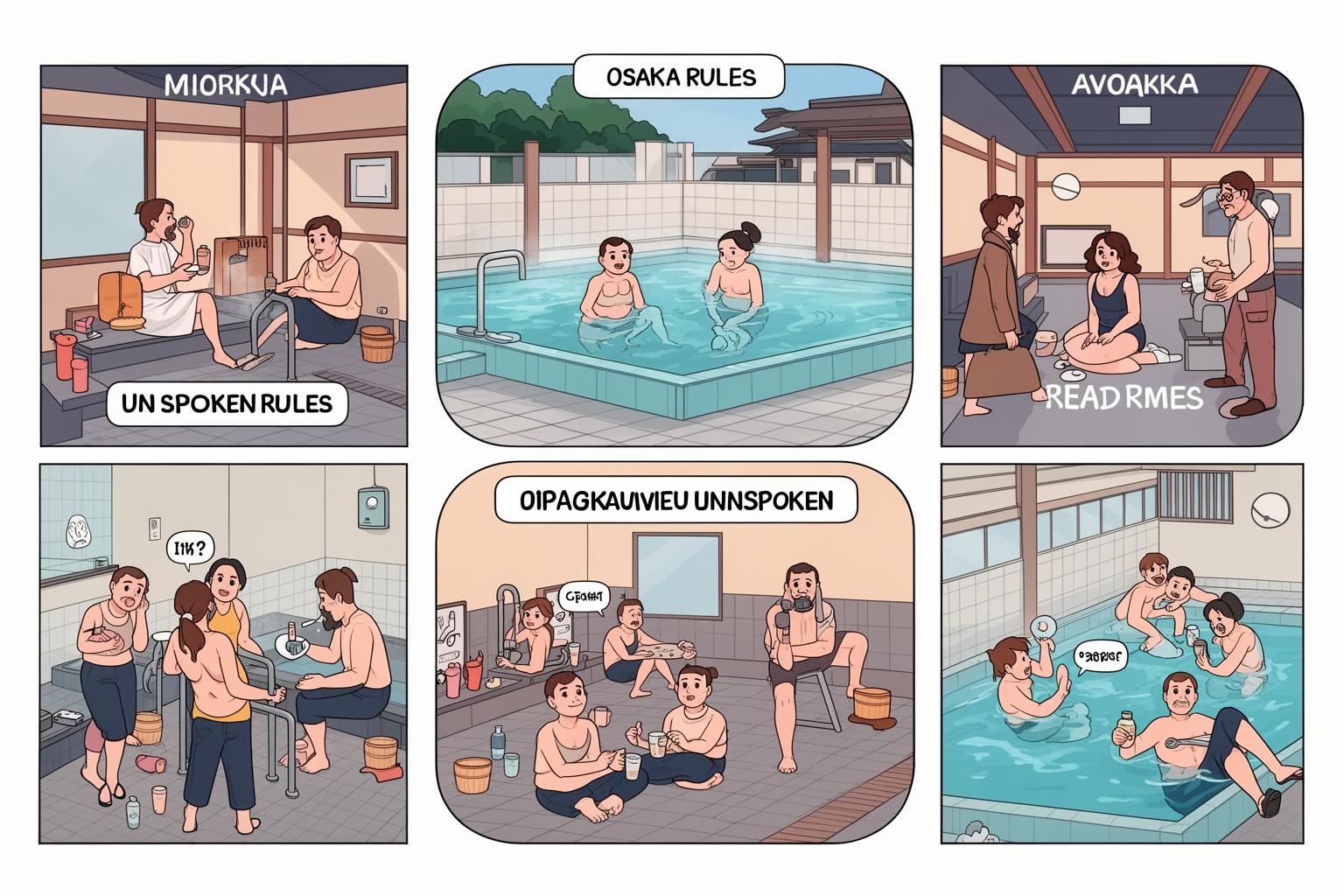
While the atmosphere is relaxed, the sento remains a place rich with deep-rooted culture and etiquette. Adhering to the rules isn’t just about politeness; it’s a way to show respect for the shared space and those around you. Doing it right is your silent way of saying, “I understand, and I’m glad to be here.”
The Washing Ritual: More Than Just Getting Clean
This is by far the most important rule. Before you even consider entering the hot water of the main baths, you must wash your entire body thoroughly. Find an empty stool and shower station, sit down (never stand and splash your neighbors), and scrub from head to toe. This isn’t a quick rinse—it’s a full wash with soap and shampoo. The rationale is simple: the bathtubs are for soaking and relaxing, not for cleaning. Since the water is shared by everyone, you enter it already clean. In Osaka, if you forget, don’t be surprised if an ‘ojisan’ (older man) points and gruffly reminds you to “wash first!” This isn’t meant to be hostile; it’s the community maintaining its standards. He’s not scolding you as an outsider but guiding you as a new member of the club. Viewing it this way turns what could be an embarrassing moment into a valuable cultural lesson.
Tattoos, Towels, and Talking
For many foreigners, tattoos are the biggest concern. While many large onsen and super-sento chains still ban them due to their links with the yakuza, small neighborhood sento in Osaka tend to be much more lenient. It’s not guaranteed, but in most local spots, a foreigner with tattoos is viewed more as a curiosity than a problem. The regulars have probably seen it all. If in doubt, asking at the front desk is wise, but chances are you’ll be fine. Your small hand towel, the ‘tenugui,’ is a vital accessory. It’s used for scrubbing in the shower area and for modesty while moving around. Never let it touch the bathtub water. People either fold it and place it on their head or set it aside near the bath. This small detail signals that you know what you’re doing. Regarding conversation, gauge the mood. If people are chatty, feel free to join in. If it’s quieter, enjoy the tranquility. The Osaka norm is friendly interaction, so don’t be shy, but don’t feel pressured to be the center of attention either.
From the ‘Denki Buro’ to the Post-Bath Milk
Embrace the sento’s unique features. Most have a variety of tubs: some infused with herbs, others equipped with powerful jets (‘jetto basu’), and then there’s the famous ‘denki buro,’ or electric bath. Two metal plates send a low-voltage current through the water, causing your muscles to tingle and contract. For those new to it, the experience can be strange and a bit intimidating. For the regulars, it’s the perfect cure for stiff shoulders. Trying it and coming through is a badge of honor. The post-bath ritual is just as important as the bath itself. After drying off, head to the vintage refrigerators in the changing room. The classic move is to grab an ice-cold milk, plain or coffee-flavored, in a traditional glass bottle. You place one hand on your hip and down it in one go. This is often when the best conversations happen. Wrapped in a towel, body still warm, you linger in the changing room, watching the baseball game and chatting with those you just shared a bath with. It’s the perfect cooldown, extending the sense of community a little longer before stepping back out into the night.
Why the Sento is the Soul of an Osaka Neighborhood
In an era focused on efficiency and privacy, the neighborhood sento serves as a symbol of a different lifestyle. It challenges the notion that a city is merely a collection of individuals living in isolated boxes. The sento emphasizes that we are a community, interconnected and responsible for one another. It is a place where generational boundaries fade. You might see a grandfather patiently showing his grandson how to wash properly. You might hear teenagers and elderly men passionately discussing the same Hanshin Tigers game. It acts as a living, breathing archive of the local dialect, concerns, and humor. After a long day hiking in the mountains of Minoo or Ikoma, nothing feels better than soaking in that hot water, muscles aching, while simply listening. You catch the raw Osaka-ben, the inside jokes, and the stories that form the fabric of the community.
The survival of these small, often family-run bathhouses stands as proof of Osaka’s persistent commitment to valuing human connection. They embody the city’s character: a bit rough around the edges, loud and direct, yet deeply warm and grounded in a strong sense of community. To truly understand Osaka, you must recognize that a visit to the sento is neither a chore nor a luxury; it is an essential, life-affirming ritual. It’s where you wash away the day’s grime and, in doing so, dissolve the barriers between yourself and your neighbors. For any foreigner wanting to see beyond the surface of this city and grasp what really makes Osaka tick, the answer awaits in the steam of a neighborhood bathhouse. Go ahead, grab a towel. The water’s perfect.