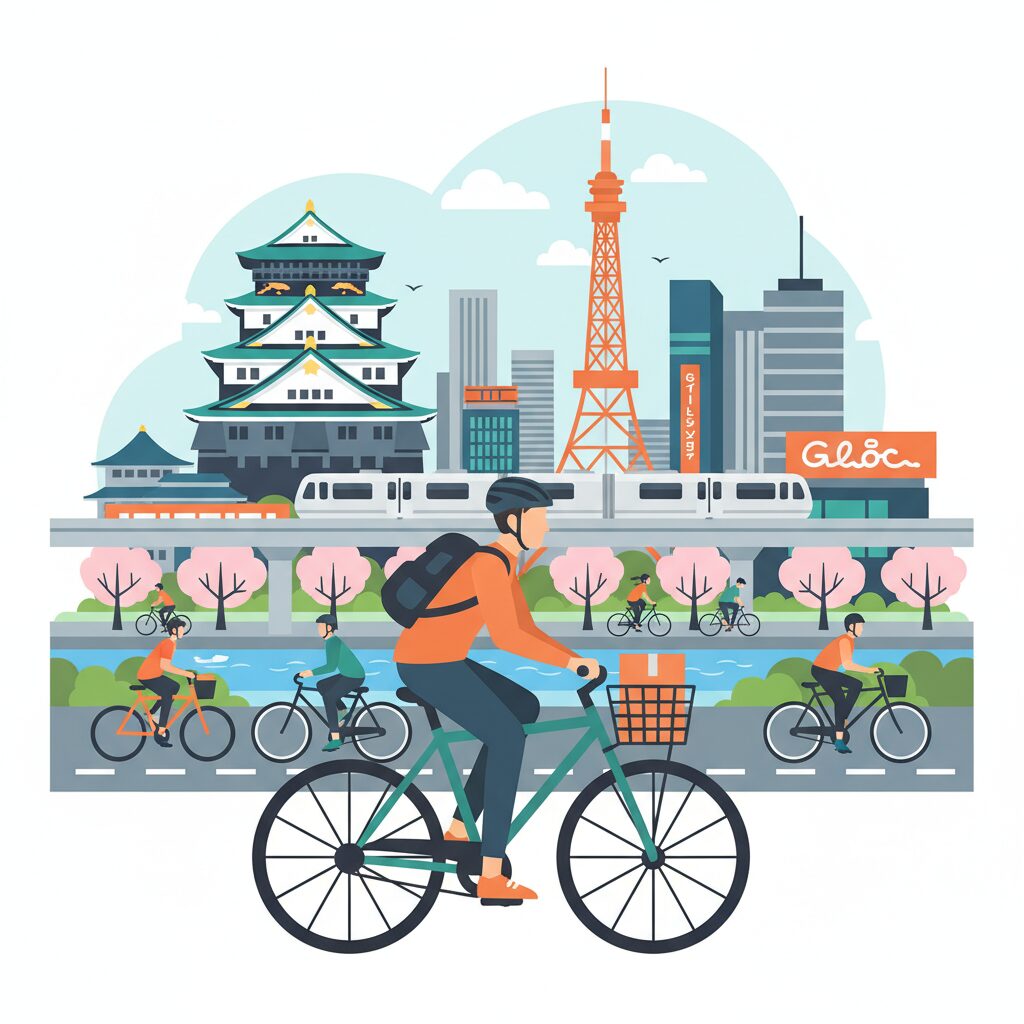
To understand Osaka, you must first understand its relationship with the humble bicycle. Forget the sleek, carbon-fiber frames you might see in other global cities. Here, the undisputed king of the road is the mamachari—the “mom’s chariot.” This sturdy, utilitarian machine, often laden with one or two child seats, a basket overflowing with groceries from the local supermarket, and a rider skillfully texting with one hand, is not merely a mode of transport. It is the lifeblood of the city’s neighborhoods, the primary vehicle of community life, and a rolling, two-wheeled embodiment of the Osakan spirit: pragmatic, a little impatient, and relentlessly efficient. Step off the train in any residential area, from the working-class streets of Tennoji to the quieter suburbs of northern Osaka, and you are immediately immersed in a slow-motion ballet of bicycles. They glide down sidewalks, weave through crowded shopping arcades, and cluster in chaotic constellations around every station entrance. For a newcomer, particularly one from Tokyo where rules are often followed with a quiet, collective determination, this scene can feel like pure anarchy. It’s a constant, low-level source of confusion and sometimes frustration for the uninitiated. But this apparent chaos is not random. It is a system, governed by a complex and unwritten set of rules, a shared understanding of space and intent that reveals the very heart of how Osaka functions. To navigate this city is to learn this system, to understand the subtle language of the bicycle bell and the unspoken hierarchy of the sidewalk. It is a journey that takes you far beyond simple transportation and deep into the city’s soul.
For those intrigued by the interplay between local bicycling routines and everyday expenses, exploring the hidden costs of a daily bike commute offers a fascinating glimpse into Osaka’s urban dynamics.
The Mamachari Republic: Why the Bicycle Reigns Supreme
Why is the bicycle so deeply ingrained in the culture of Osaka? The answer stems from a unique combination of geography, urban planning, and a distinctly Osakan mindset. Unlike hillier Japanese cities such as Kobe or certain areas of Tokyo, Osaka is uniformly, wonderfully flat. It rests on a vast alluvial plain, making cycling an easy, low-effort activity accessible to everyone, from schoolchildren to the elderly. This straightforward geographical reality forms the bedrock of the city’s entire bicycle culture.
Flat Terrain and Dense Neighborhoods
The city’s design enhances this natural benefit. Osaka consists of dense, self-contained neighborhoods, each featuring its own shotengai, or covered shopping arcade. These vibrant hubs are centers of local commerce, filled with butchers, tofu makers, greengrocers, and small clinics. For daily errands, a bicycle is clearly the best option. It’s faster than walking, far cheaper than owning a car, and more convenient than navigating the train system for short, local trips. An Osakan casually hops on their bike to grab some korokke for dinner, drop a package at the post office, and visit a friend—all in a single, seamless outing. This reflects the core of the Osakan mindset: a strong pragmatism that values efficiency above all else. Why spend ten minutes walking when you can get there in three by bike? Why buy a train ticket when you can travel for free? The bicycle is the ultimate tool for maximizing daily life.
A Tool, Not a Toy: The Utilitarian Mindset
This practical viewpoint sharply contrasts with cycling cultures elsewhere. In Tokyo, you’ll see plenty of bike commuters, but there’s also a more visible culture of recreational cycling, with Lycra-clad enthusiasts on high-end road bikes. In Osaka, the bicycle is primarily a workhorse. It’s a means to an end. This is evident in the bikes themselves. The mamachari is built for stability and carrying capacity—not speed. Its sturdy frame, upright handlebars, and built-in basket all emphasize functionality. These bikes are often cleverly modified to carry heavy, bulky loads—crates of beer, gardening tools, even small furniture. Viewing the bicycle as a tool rather than a sport or eco symbol shapes how it’s used. The goal is simply to get from Point A to Point B with minimal hassle. This focus influences riders’ choices, often favoring direct routes and speed over strict traffic law compliance—a dynamic that can seem reckless to outsiders.
Riding the Gray Zone: The Unwritten Rules of the Osaka Road
The real challenge for any newcomer lies in unraveling the complex, unwritten rules that shape Osaka’s cycling etiquette. While official laws do exist, the reality on the streets is far more flexible and negotiated. This is where Osaka’s unique character truly emerges—a readiness to bend formal regulations in favor of a more natural, community-oriented order.
Sidewalks vs. Streets: An Endless Debate
Under Japanese law, bicycles are classified as vehicles and should be ridden on the street, except in designated zones. In reality, especially in Osaka, this rule is often openly disregarded. Most cyclists, particularly on busy main roads, ride on the sidewalk. This is not out of defiance but a pragmatic assessment of risk. Osaka’s roads are narrow, and drivers can be aggressive. For a mother cycling with her child, the sidewalk feels like a far safer choice. This has resulted in a shared, though crowded, space where pedestrians and cyclists engage in an ongoing, intricate dance. Experienced Osaka cyclists develop a kind of instinct, able to anticipate a pedestrian’s sudden stop or a shopkeeper stepping out. They navigate this with the “Osaka weave,” a series of small adjustments and gentle swerves to avoid human obstacles. In Tokyo, cycling on crowded sidewalks would likely draw disapproving looks. In Osaka, it is an accepted, if occasionally grudging, reality. Pedestrians recognize the need to share the space, and a slight, almost imperceptible sidestep is the customary response to an approaching cyclist.
The Symphony of the Bell: Communication and Confrontation
In many cultures, the bicycle bell is a cheerful, almost quaint sound. In Osaka, it serves as a tool of blunt, clear communication, often far from polite. The sharp, frequent chirin-chirin-chirin! is not a friendly hello. It is a direct, unmistakable command: “I’m behind you and need to pass. Please move.” This can be startling to foreigners used to more passive-aggressive social cues. But it perfectly matches the straightforward, no-nonsense attitude of Osakans. They prioritize clarity over subtlety. While a Tokyo cyclist might wait patiently for a space to open, an Osaka cyclist will create the space with their bell. They’re not being rude; they’re striving for efficiency. This auditory barrage is part of the city’s daily soundtrack, a rhythmic undercurrent of urban life. Learning not to take it personally is crucial. The system works because everyone understands the signal: the pedestrian steps aside, the cyclist passes, and the moment passes.
The Art of the “Suma-ho Unten”: A Dangerous Modern Habit
Perhaps the most alarming and baffling aspect of cycling in Osaka is the widespread practice of suma-ho unten—using a smartphone while riding. It is illegal and hazardous, yet surprisingly common. Riders can be seen scrolling through social media, texting, and even watching videos while navigating crowded sidewalks. This behavior stems from the same relentless pursuit of efficiency, pushed to a dangerous extreme. Every minute counts. The five-minute ride to the station becomes an opportunity to answer an email or catch up on news. This results in a frightening class of “zombie cyclists,” drifting unpredictably with their attention consumed by screens. For other cyclists and pedestrians, vigilance is the only defense. This serves as a stark reminder that Osaka’s pragmatism can sometimes veer into a blatant disregard for shared safety—a modern challenge that clashes with the city’s traditional, community-minded traffic flow.
The Parking Predicament: Where Order Breaks Down
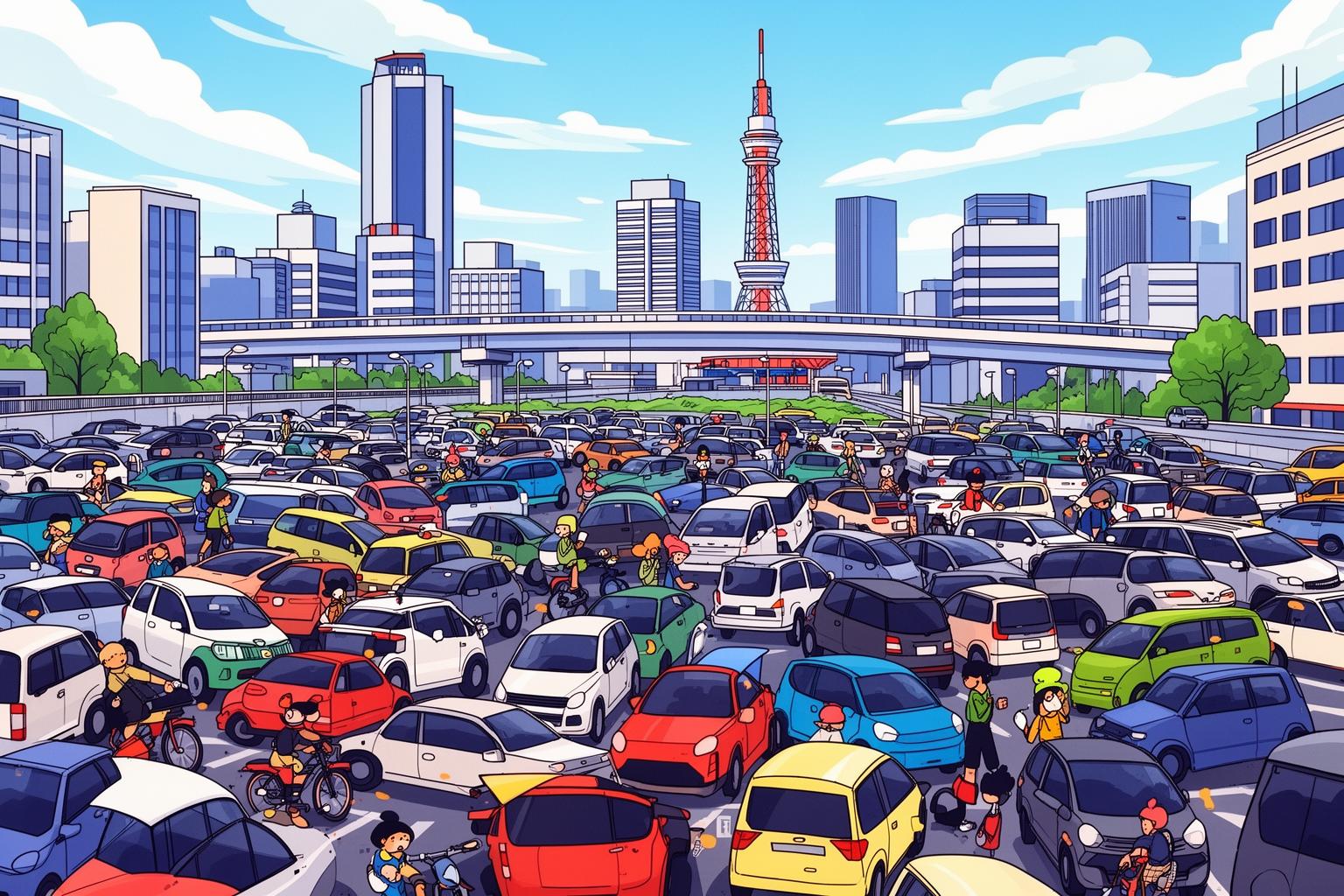
If cycling in Osaka offers a lesson in fluid dynamics, parking a bike there is an exercise in pure entropy. The area outside any major—and many minor—train stations is a striking display of organized chaos. It resembles a sea of bicycles, a metallic tide that flows and ebbs with the daily commute, occupying every possible inch of public space.
Station-Front Chaos: The Sea of Bicycles
Head toward Umeda, Namba, or Tennoji stations, and you’ll see it firsthand. Bicycles are chained to railings, leaned against walls, and crammed into dense, interlocking clusters that defy logic. This chaos arises from thousands of individual, pragmatic choices colliding. A commuter running late for their train might find the official bicycle parking lot (churinjo) two minutes away and possibly full. Leaving the bike on the nearest sidewalk is the most practical solution in that moment. The potential consequences—a parking ticket or impoundment—can be dealt with later. This “deal with it later” mindset is quintessentially Osakan. Immediate needs trump abstract rules. This dynamic fuels a constant cat-and-mouse game with city authorities. Teams of silver-vested attendants regularly sweep through, tagging illegally parked bikes with bright warning notices, a vivid reminder of the ongoing struggle between personal convenience and municipal regulation.
Understanding Bicycle Impoundment: The Walk of Shame
Eventually, every long-term cyclist living in Osaka will face the dreaded disappearance of their bicycle, replaced by a small notice left where it once stood. The bike has been impounded. Retrieving it is a bureaucratic ordeal. First, you must interpret the notice to locate the correct impound lot (jitensha hokanjo), often situated inconveniently in hidden areas such as beneath highway overpasses or within industrial districts. Upon arrival, you present your ID and the key to your bike’s lock to prove ownership. Then you pay a fee—typically around 2,500 yen—and enter a vast, dusty yard filled with hundreds or even thousands of seized bicycles. Locating your own among the crowd is the final part of this humiliating process. It’s an expensive and time-consuming lesson on the importance of legal parking and firmly establishes a resident’s awareness of the city’s covert enforcement mechanisms.
The Rise of Paid Parking and Rental Services
The city’s main response to this parking chaos is the expansion of paid churinjo. These vary from large, multi-story municipal garages to small, automated racks hidden within tiny urban lots. They are generally affordable, costing around 100 to 150 yen for several hours or a full day. Using them is the only reliable way to avoid impoundment. The automated racks showcase Japanese engineering at its finest: you roll your front wheel into a slot, a clamp secures it, and you pay at a central kiosk when you return. While community bike-share programs like HUBchari exist and serve well for occasional trips, the culture of personal ownership remains dominant. The convenience of having your own mamachari ready to go at a moment’s notice is too deeply embedded in Osaka’s lifestyle to be easily displaced.
Practicalities for the Resident Cyclist
Beyond the unwritten rules and parking frustrations, there are several practical matters every resident cyclist must address. These formal systems support the informal culture, and overlooking them can result in serious trouble.
Bicycle Registration: The “Bohan Toroku”
When you buy a bicycle in Japan, whether new or used, you are legally required to complete the bohan toroku, or crime-prevention registration. This straightforward process is typically handled by the bike shop, linking your information to the bike’s frame number. You receive a small, durable orange sticker that is attached to the bike’s frame. This paperwork is mandatory. Police conduct random bicycle inspections, and if stopped, they will verify your registration. Riding an unregistered bike, or one registered to someone else, can lead to prolonged and uncomfortable questions about theft. More importantly, the bohan toroku is your best chance of recovering a stolen bike. It is an essential part of responsible bicycle ownership in Japan.
Essential Gear and Local Habits
To fully blend into Osaka’s bicycle culture, you must adopt the local gear. The most important item is the raincoat poncho, or kappa. Osaka experiences sudden, heavy downpours, and seeing hundreds of cyclists gliding through the rain, wrapped in these colorful plastic ponchos, is a classic city image. Another popular accessory is the sasu-bii, a quilted or furry handlebar cover that shields hands from winter cold or summer sun, reflecting the Japanese attention to small daily comforts. While lights are legally required after dark, their use is often inconsistent. For your safety, equipping your bike with a bright front light and rear reflector is not only recommended—it’s essential for navigating dimly lit backstreets and inattentive drivers.
Navigating Intersections and the “Osaka Stop”
Perhaps the most unsettling habit for newcomers to observe is the flexible approach to traffic signals. Many Osakan cyclists, and even some drivers, treat stop signs and red lights more as suggestions than strict rules. They slow down, check for cross-traffic, and if the way is clear, proceed. This is commonly known as the “Osaka Stop.” It is not out of disrespect but stems from the same relentless efficiency that characterizes much of local behavior. Why wait for a light to change if no one is coming? It is a continuous, real-time risk assessment. For newcomers, trying to imitate this is a recipe for disaster. The unspoken rules determining right-of-way in these situations are highly nuanced. The best advice is to be a predictable rider: stop at red lights, obey stop signs, and let locals perform their high-speed traffic calculus while you focus on getting home safely.
The Bicycle as a Window into the Osaka Soul
Living in Osaka means cycling in Osaka; the two are inseparable. The bicycle is much more than just a convenient mode of transportation; it serves as a key to unlocking a deeper understanding of the city’s essence. The chaotic ballet on the sidewalks reveals a culture that values negotiated, communal space over strict, top-down regulations. The impatient ring of the bell reflects a directness and efficiency that may be mistaken for rudeness. The mountains of illegally parked bikes at train stations highlight a pragmatic mentality that prioritizes immediate needs over future consequences.
Learning to ride here teaches you to sense the city’s rhythm. You learn to anticipate the salaryman making a sudden turn, to give a wide berth to the elderly woman heading to the market, and to recognize that the chaotic flow follows its own internal logic. You understand that in Osaka, written laws often serve merely as suggestions, starting points for negotiating with reality. The real rules are those shared between people navigating the same space—a silent agreement to reach your destination with minimal fuss. Mastering the art of the mamachari means seeing the city not as an outsider, but as an active participant in its vibrant, energetic, and endlessly captivating daily life.