Walk through any Osaka neighborhood before 11 a.m., and you’ll see them. Hand-painted signs, faded plastic food models, chalkboards leaning against tiled storefronts, all bearing a single, magical word: モーニング. Morning. It’s short for “Morning Set” or “Morning Service,” a ubiquitous offering that, on the surface, seems like a simple, almost impossibly cheap breakfast deal. For the price of a single cup of coffee, you get the coffee itself, a slice of impossibly thick, fluffy toast called shokupan, a hard-boiled egg, and sometimes a tiny side salad or a dollop of yogurt. My first encounter was baffling. In a city obsessed with food, a culinary powerhouse known for its gluttonous motto of kuidaore (‘eat till you drop’), why was the most celebrated breakfast so… plain? I saw it as a transaction, a fuel stop. A cheap way to get calories and caffeine before the day truly began. I was completely wrong. The Morning Set isn’t about the food. It’s a social contract. It’s an entry ticket to Osaka’s living room, a slow-motion ritual that defines the rhythm of the city in a way that the frantic pace of Tokyo or the grab-and-go culture of my native America simply can’t replicate. This isn’t just breakfast; it’s a vital institution known as the “third place”—a space that is neither home nor work, but a crucial anchor for community life. To understand the Morning Set is to understand the unspoken heartbeat of Osaka itself.
Osaka’s unique community vibe is reflected not only in its beloved morning set but also in the lively spirit of its tachi-nomi culture, where casual encounters blossom into genuine local friendships.
The Unspoken Contract of the 500-Yen Breakfast
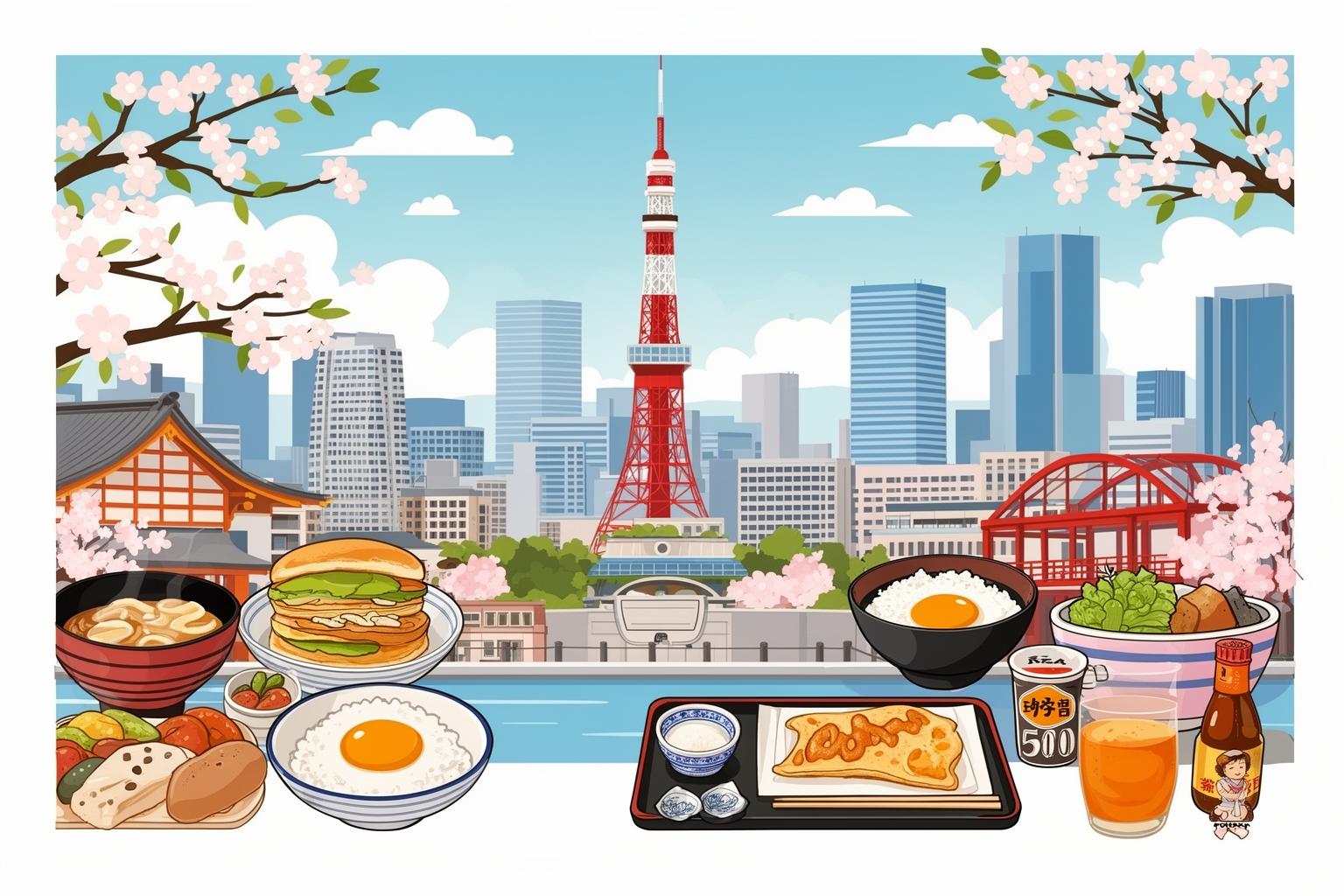
That 500-yen coin you slide across the counter isn’t merely paying for toast and coffee. It’s a fee for participation. It’s an agreement between you and the proprietor that you are now part of the morning’s ecosystem. In a city like Tokyo, where efficiency reigns supreme, a cafe often serves as a place of transit—people work quietly on laptops, turnover is quick, and lingering can feel like a social misstep. In Osaka, however, the economics of the Morning Set are completely reversed. The aim isn’t to maximize revenue per square foot per hour; it’s to build a foundation of regular customers, to nurture a space where people feel they belong. The low price acts as the welcome mat.
It’s Not a Deal, It’s an Invitation
At first, the financial logic seems flawed. How can a small, independent shop survive by almost giving food away? Because the owner, the “Master,” isn’t selling a product; they’re cultivating a community. That inexpensive breakfast ensures retirees on fixed incomes, students, and local shopkeepers can all afford to make it a daily habit. It eliminates the economic barrier and turns the coffee shop from a place of commerce into one of comfort. The Master is thinking long-term. A customer who comes every day for a 500-yen coffee over twenty years is far more valuable than a tourist who buys a 1,500-yen souvenir plate once. This embodies the soul of Osaka’s merchant culture. It’s not about a quick, flashy sale; it’s about fostering lasting relationships built on trust and mutual respect. The cheap toast isn’t a loss leader; it’s an investment in loyalty.
The “Master” and the Regulars: A Silent Symphony
Step inside a genuine neighborhood kissaten—one of these traditional coffee shops—and you’ll witness a quiet performance. Behind the counter is the Master, often an older man or woman who moves with the practiced efficiency of someone who has performed the same tasks in the same sequence for decades. They recognize every face that enters. They don’t need to ask for the order. A subtle nod is exchanged. The jouren-san, the regulars, settle into their favorite seats. One unfolds a giant newspaper, another pulls out a sports daily to check the Hanshin Tigers scores, while a group of older women quietly discuss their grandchildren. The air is thick with the aroma of dark-roast siphon coffee and often carries the lingering scent of stale cigarette smoke—a vestige of a bygone era. Communication is minimal, but the understanding runs deep. This is a different kind of Osaka friendliness. It’s not the loud, boisterous stereotype. It’s a quiet, profound sense of inclusion. You are seen, you are recognized, and your place is waiting for you. The Master is the conductor of this silent symphony, ensuring the rhythm of the morning flows undisturbed.
Decoding the Kissaten: Space, Time, and Atmosphere
The physical environment of a kissaten is just as essential to the experience as the coffee itself. These spaces aren’t sleek, minimalist settings designed for Instagram. Instead, they serve as time capsules, carefully preserved to evoke a feeling of stability and comfort. They stand as a quiet rebellion against the disposable nature of modern life.
A Time Capsule of Showa-Era Design
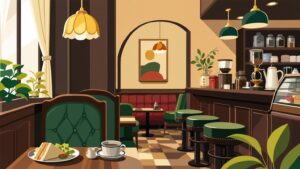
Dark, polished wood paneling. Cracked burgundy or forest-green velvet chairs. Tiffany-style lamps casting a warm, amber glow. Intricate, occasionally dusty curios lining the shelves. This is the classic kissaten aesthetic, a nostalgic nod to Japan’s Showa Era (1926-1989). The resistance to renovation isn’t due to financial constraints; it’s a deliberate decision. While the world outside may be a whirlwind of fleeting trends and advancing technology, inside the kissaten, time slows to a crawl. The consistency of the space offers a promise—that this haven will remain unchanged tomorrow, just as it was today, and thirty years ago. For its patrons, this predictability provides profound psychological comfort. It serves as a tangible connection to a shared past and a defense against an uncertain future. The unchanging decor quietly assures, “You are safe here. Nothing will change unexpectedly.”
The Luxury of Unrushed Time
Perhaps the most precious gift you receive with your Morning Set is time—undisturbed, unhurried time. In most modern cafes, there is an unspoken pressure to consume quickly and leave. You feel the watchful eyes of the staff, the queue of waiting customers. In an Osaka kissaten, that pressure disappears. After your last sip of coffee and final bite of toast, you are welcome to linger. You can spend an hour reading a novel or simply sit and gaze out the window, watching the neighborhood come to life. The Master is unconcerned. You have fulfilled your obligation. The space now belongs to you. This concept is challenging for many foreigners, who often feel compelled to order more or vacate promptly. But here, lingering is the purpose. It is a small act of defiance against the relentless obsession with productivity. The morning ritual creates a protected space to collect your thoughts before facing the demands of the day. It is a moment of calm that Osaka’s culture not only permits but actively fosters.
The Morning Set as a Social Barometer
A kissaten is more than just a business; it serves as a crucial piece of social infrastructure. It acts as the unofficial community center, the analog information network, and the neighborhood’s living room. It’s the place where the city’s rhythm can be most accurately gauged, one quiet conversation at a time.
The Neighborhood’s Living Room
Here is where you learn what’s truly happening. Forget the local news. In the kissaten, you might overhear that the Suzuki’s son has passed his university entrance exams, that the old bookstore down the street is finally closing, or that Mrs. Tanaka is seeking someone to care for the cat her daughter can no longer keep. It’s a hub for hyper-local, person-to-person information exchange. For the elderly, especially, it plays a vital role, providing a reason to leave the house and partake in daily, face-to-face interaction. It’s a frontline defense against social isolation. The Master often acts as a community caretaker, keeping a watchful eye on regulars, noticing if someone hasn’t appeared for a few days, and quietly making inquiries. It’s a social safety net woven from coffee and conversation.
Business Handshakes Over Toast and Coffee
The kissaten is not just a refuge for retirees and gossiping grandmothers. Look closely, and you’ll find the owners of the local tofu shop, hardware store, and fish market gathered at a corner table. For small business owners in Osaka’s numerous shotengai (covered shopping arcades), the kissaten serves as an informal boardroom. It’s where they convene before their own shops open to discuss suppliers, grumble about city regulations, or plan partnerships for local festivals. This is a reflection of Osaka’s famous akindo (merchant) spirit. Business here is intensely personal, built on relationships and face-to-face trust rather than impersonal emails and corporate memos. A deal struck over a Morning Set, sealed with a handshake, often carries more weight than a lengthy legal contract. It stands as a testament to a business culture where one’s community reputation is the most valuable asset.
What Foreigners Often Misunderstand

Navigating the world of the kissaten requires a shift in certain expectations. Approaching it with a Western or even Tokyo-centric perspective can cause confusion and prevent a true appreciation of the experience.
“The Coffee Isn’t Third-Wave!”
A common misconception is to evaluate a kissaten by the standards of a modern specialty coffee shop. The coffee served here is usually a dark, strong brew, often prepared with a siphon or nel drip. It is bold, sometimes bitter, and does not have the delicate, fruity notes typical of a single-origin light roast. And that’s exactly the intention. The coffee is not the centerpiece. It serves as a dependable, unchanging background. It is the steady element that enables the real experience: the ambiance, the community, the passage of time. Complaining that the coffee isn’t artisanal misses the bigger picture. You wouldn’t criticize your grandmother’s instant coffee; you visit for the comfort and familiarity she offers. The kissaten follows that same principle.
“Is it Okay to Just Sit Here?”
The second common challenge for newcomers is the hesitation about lingering. We’re taught to see ourselves as customers whose presence is justified only while consuming something. Sitting at a table for an hour after finishing a 500-yen set might feel like taking advantage of the place. In truth, the opposite is true. Leaving too quickly can come off as slightly disrespectful. It suggests your visit was purely transactional and that you were only there for the cheap food. By staying—reading your book or simply watching the world—you honor the unspoken understanding. You show that you grasp what the Master offers is more than food; it’s a place of refuge. Embrace the slow pace. Put your phone away. Your presence is the true purpose.
Finding Your Morning Set: How to Become a Regular
Integrating into this culture isn’t about discovering the “best” kissaten on a travel blog. It’s about finding your kissaten. It’s a gradual, quiet process of integration that reflects how relationships are typically formed in Osaka.
Choosing Your Kissaten
Your perfect spot is likely not the famous, architecturally notable one. It’s the modest place a few blocks from your home, hidden on a quiet side street. Look for signs of life: a bicycle parked outside, the glow of a television visible through the window, the sound of clinking cups and low murmurs. These are the cafés that serve the neighborhood, not the tourists. The less polished the appearance, the more authentic the experience probably is. The plastic food models in the window, yellowed by age, aren’t a warning—they’re a badge of honor, a testament to longevity.
The Ritual of Regularity
Becoming a jouren, a regular, is a simple yet meaningful act. You just have to show up. Consistently. Try to visit around the same time a couple of days each week. At first, you’ll be an anonymous face. The Master will be polite but distant. Order the Morning Set. Stay quiet. Read a book. Don’t try to force conversation. Just exist in the space. After a few weeks, you might receive a nod of recognition when you walk in. This is progress. A few weeks later, the Master might begin preparing your coffee as you enter. One day, you might be greeted with a quiet “Itsumo no?” (“The usual?”). This is the moment you’ve arrived. You’re no longer just a customer. You’re part of the daily rhythm of the place. Through this simple act of steady, quiet presence, you’ve shown an understanding of Osaka’s culture deeper than any language skill. You’ve demonstrated that you value community, respect tradition, and realize that the most meaningful connections are often formed not through grand gestures but through the simple, shared ritual of a morning cup of coffee.