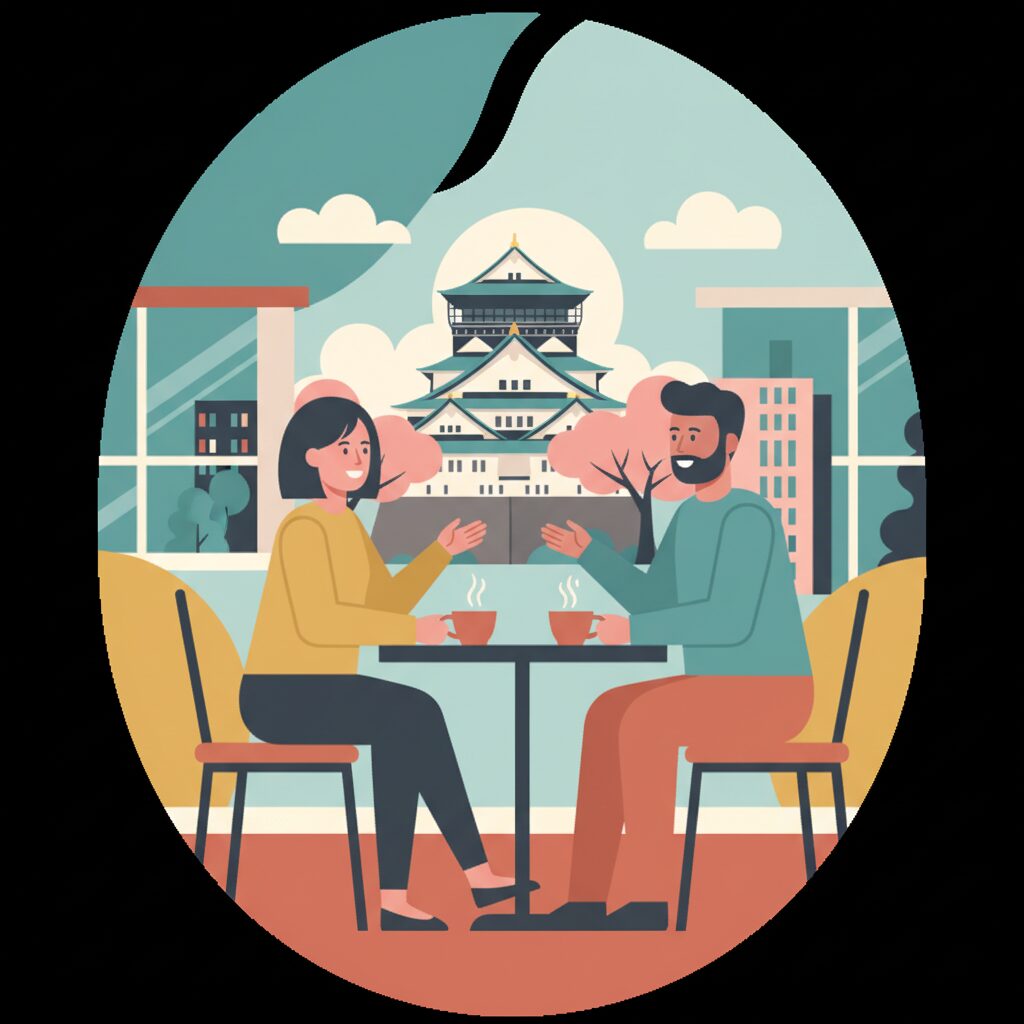
You walk into a cafe in Tokyo. It’s clean, quiet, and efficient. The barista bows, takes your order with practiced precision, and hands you a latte with a perfectly poured heart on top. You murmur a thank you, they murmur a welcome, and the transaction is complete. It’s polite, professional, and perfectly pleasant. It’s also completely anonymous. You could be anyone, and they could be anyone. The space between you is a buffer of professional courtesy. Now, imagine you walk into a cafe in Osaka. The air buzzes a little louder. The owner, wiping down the counter, looks up and says, “Hey there, welcome! Bit chilly out today, eh? What can I get for ya?” You order a coffee, and he nods, “Ah, the Brazil blend. Good choice. Got a real nutty kick to it today. You a coffee fanatic?” Suddenly, you’re not just a customer. You’re a person with taste, an opinion, a potential story. The space between you isn’t a buffer; it’s an invitation.
For many foreigners, this is the essential cultural whiplash between Japan’s two great cities. We’re often told “Osaka is friendly,” but that’s a lazy cliché. It doesn’t explain the mechanics of that friendliness or the cultural software running in the background. Is it genuine? Is it a sales tactic? Am I supposed to chat back? What if I just want my coffee in peace? The truth is, Osaka’s brand of communication is a skill, both for the person initiating and the person receiving. It’s a rhythmic dance, and once you learn the steps, you realize it’s not about being an extrovert. It’s about understanding a city that sees every small interaction as a chance to build a fleeting, but meaningful, connection. This isn’t just about cafes; it’s about how the entire city breathes. It’s a philosophy born from a merchant past where your reputation wasn’t built on a single big sale, but on a thousand little moments of trust and rapport. Let’s explore this world, starting in a neighborhood famous for its independent, talkative spirit.
Embracing this distinctive cultural rhythm, many Osaka locals kickstart their day by enjoying the morning set ritual, transforming an ordinary coffee run into a genuine community experience.
The Transactional vs. The Relational: Decoding Osaka’s Cafe Counter
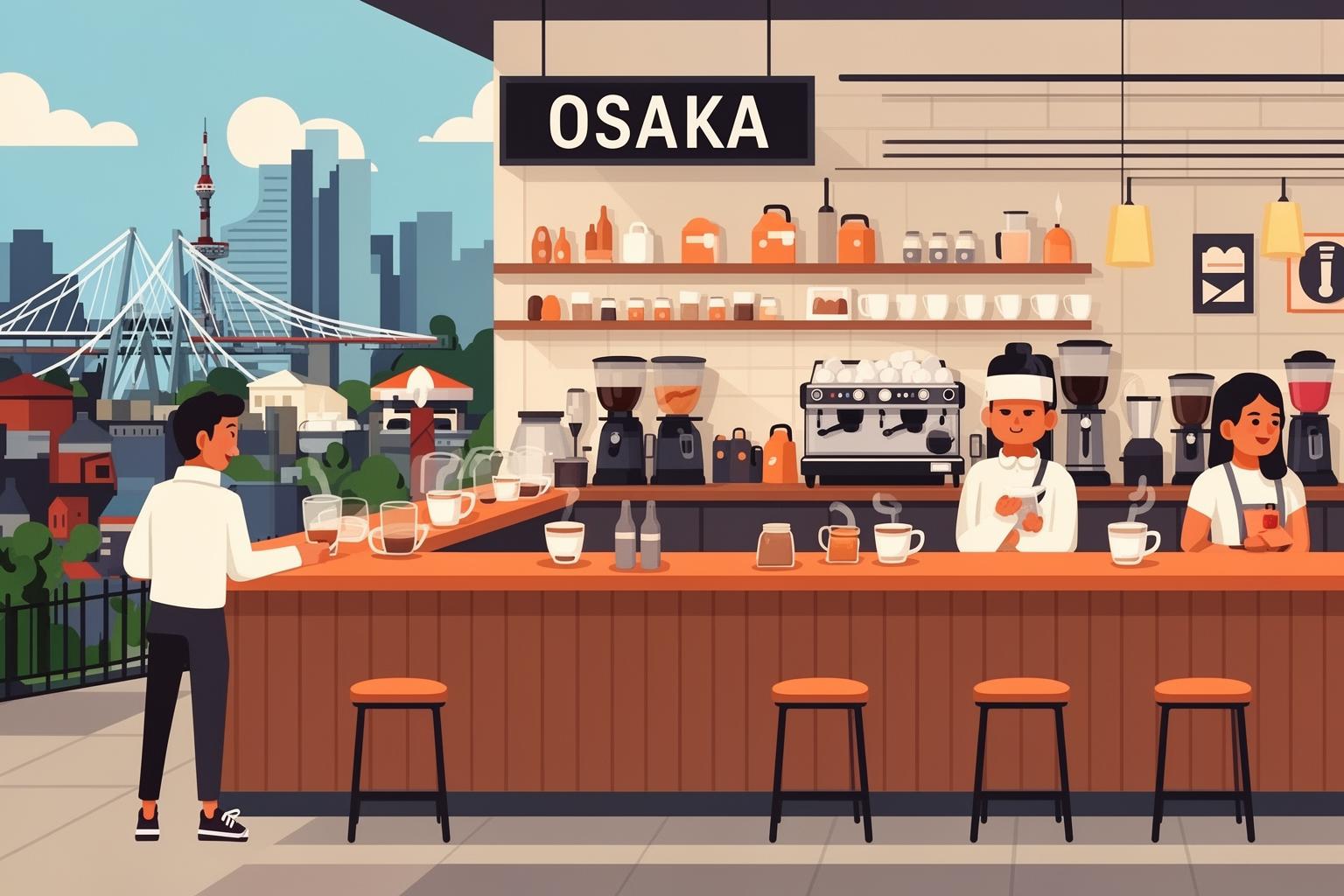
To truly understand what’s happening at a cafe counter in Osaka, you need to grasp the fundamental difference in the service philosophy compared to Tokyo. It’s not about which is better; rather, each is optimized for different goals. One emphasizes flawless execution, while the other focuses on human connection. This subtle difference extends outward, shaping the entire social atmosphere of the city.
Tokyo’s “Manual” Service Culture
In Tokyo, service often revolves around the concept of the manyuaru, or manual. Every action has a correct way, and every interaction follows a set script. The aim is to offer a smooth, predictable, and error-free experience for customers. This system is designed to remove friction and maintain a high standard of quality regardless of who serves you. The customer is o-kyaku-sama, an honored guest, treated with deep respect and professional distance. The relationship is clearly defined: you are the provider, I am the consumer. The focus is strictly on the transaction—the exchange of money for goods. Any conversation is secondary and must support the primary goal of completing the order. This creates an atmosphere of calm, cool professionalism. It’s reassuring in its consistency, yet that very consistency can sometimes feel like a polite but firm barrier that discourages genuine, spontaneous human interaction.
Osaka’s “Human” Service Culture
Osaka, in contrast, follows a different principle. While professionalism remains important, the script is regarded as a starting point, not the final goal. The purpose isn’t simply to complete the transaction but to foster a micro-relationship in the process. This approach stems directly from Osaka’s history as Japan’s mercantile hub. For centuries, shopkeepers in its bustling markets understood they weren’t just selling fish or fabric—they were selling themselves. A joke, a piece of advice, a friendly question—all were tools of the trade. They cultivated jounin, or regular customers, who returned not just for the product but for the experience. This legacy lives on in the modern cafe. The barista’s comment on your choice of beans isn’t mere small talk; it’s an extension of a centuries-old tradition of creating value beyond the product. They aim to turn a simple transaction into a memorable, relational exchange. It’s their way of saying, “I see you as a person, not just a sale.” This makes the interaction feel more dynamic, less predictable, and, to some, more vibrant.
Reading the Room: When and How to Engage
Alright, so the invitation to chat is there. But how can you tell when it has been extended? And what’s the best way to respond without feeling awkward or pressured? This isn’t about turning into a chatterbox overnight. It’s about learning to pick up on social cues that tend to be more direct and frequent in Osaka compared to other parts of Japan. It’s about realizing that you control the depth and duration of the interaction.
The Invitation: Recognizing the Cues
An Osaka service professional is a multitasking expert. They can hold a conversation while pulling an espresso shot, steaming milk, and ringing up another customer. Don’t worry about interrupting them. The invitation to talk is often seamlessly integrated into their workflow. The clearest cue is a question or comment that goes beyond your immediate order. Examples include: “Where are you headed today?” or “That’s a cool camera, are you into photography?” or the classic, “Your Japanese is really good!” These are conversational hooks, offered to see if you’ll engage. Another subtle sign is lingering eye contact. In Tokyo, eye contact tends to be brief and functional. In Osaka, a staff member might maintain your gaze a moment longer after answering a question—a non-verbal way of saying, “The channel is open if you want to continue.” Recognizing these as purposeful openings rather than random chatter is the first step.
The Follow-Up: Your Role in the Exchange
Once you notice the invitation, your response determines what happens next. A simple one-word reply or a nod politely closes the interaction. It communicates, “Thanks for engaging, but I’m happy to end it here.” Nobody will be offended. However, if you want to continue, the key is the classic conversational rule: “answer and ask.” If the barista asks where you’re from, don’t just say “America.” Instead, say, “I’m from America. I just moved to this neighborhood. Do you know any good restaurants around here?” This way, you turn a simple question into a meaningful exchange. You show you’re open to participating. Don’t worry about perfect grammar. Osakans are notably patient and forgiving with Japanese learners. They appreciate the effort and often meet you halfway by simplifying their language or using gestures to help. The effort matters more than perfect execution.
What if I’m Not in the Mood?
This is an important point. The frequent invitations to chat in Osaka do not create an obligation to respond. You have every right to want a quiet coffee and your own thoughts. The social contract is not violated if you choose not to engage in lively conversation. A polite smile, a clear “Arigatou gozaimasu,” and then turning your attention to your book or phone is a clear and universally recognized signal. The beauty of the Osaka system is that it offers the option of connection without forcing it. Staff are skilled at reading body language. If you seem busy or preoccupied, they almost always switch back to a straightforward, transactional service style. You won’t be judged or thought rude. You’ve simply declined the invitation to this particular social dance, and that’s perfectly acceptable.
The “Ame-chan” Philosophy: From Staff to Strangers
The conversational culture in Osaka goes beyond the controlled exchanges at the service counter. It extends to the tables, the lines, and the streets. To truly grasp this, you need to understand the philosophy of ame-chan. Though a small concept, it reveals a great deal about the city’s social fabric.
What is “Ame-chan”?
Ame-chan is the Kansai dialect word for candy, with the affectionate suffix “-chan.” It captures the cultural stereotype—rooted in reality—of the Osaka obachan (a middle-aged or older woman) who carries a supply of hard candies in her purse. She offers these freely—to crying children on the train, to a tired-looking young person, or even to a complete stranger she’s briefly chatted with. The candy itself is incidental. The ame-chan represents a symbol. It is a small, unsolicited gift, a gesture of goodwill intended to momentarily break the barrier between strangers. It conveys the message, “We’re sharing this space together, so here’s a brief moment of connection.” Friendly banter from a barista, a joke from a butcher, or a comment from a stranger—all these are verbal ame-chan.
The Sideways Conversation: When Customers Talk to Each Other
This is where Osaka distinctly stands apart from the rest of Japan. You’re sitting in a cafe when the elderly man at the next table leans over and, referring to your book, says, “That author is brilliant, but his last book was a real letdown, don’t you think?” Such spontaneous interactions between customers happen commonly. In Tokyo, this would be rare and might even seem slightly intrusive. In Osaka, it’s natural. The reasoning is simple: we’re in the same small space, at the same time, sharing an experience. For the next thirty minutes, we form a temporary micro-community. Ignoring each other’s presence entirely would feel inefficient and a bit cold. The shared setting offers implicit social permission to engage. Someone might remark on the rain outside, the tempting aroma of curry from the kitchen, or the poor showing of the Hanshin Tigers baseball team. It’s a way to acknowledge a shared reality.
Navigating Inter-Customer Chats
The rules of engagement mirror those with the staff. A simple smile and a nod suffice if you prefer not to talk. This politely acknowledges their comment and concludes the interaction. If you want to engage, you use the same “answer and add” approach. To the man who mentioned your book, you could reply, “Oh, really? I haven’t read his latest one. I’m enjoying this one though. What would you recommend I read next?” Just like that, a conversation is sparked. These exchanges are almost always brief. They last a few minutes before both parties return to their own worlds. It’s not about making a new best friend; it’s about the fleeting joy of a shared observation, a brief human connection before parting ways. It’s another expression of ame-chan.
Common Misunderstandings and How to Avoid Them
Because Osaka’s communication style often differs significantly from what many foreigners expect of Japan, it’s easy to misread intentions. What is intended to be friendly can sometimes come across as nosy, rude, or even insincere. Understanding the cultural context behind these behaviors is essential for navigating them successfully.
“Are they being nosy?”
A common experience for a foreigner in Osaka is being asked a fast-paced series of personal questions by a new acquaintance or shopkeeper: “Where are you from? Why did you come to Japan? How long have you been here? What do you do for work? Are you married?” In many Western cultures, this might feel like an interrogation or an invasion of privacy. However, in Osaka, this isn’t seen as nosiness. It’s a highly efficient style of conversational reconnaissance. The purpose is to quickly identify a shared interest or common ground. They aren’t trying to gather data on you; they’re looking for a topic. If they discover you’re from a city they’ve visited, work in a familiar industry, or enjoy a band they like, they’ve found the foundation for a genuine conversation. It’s a shortcut to connection, intended as a sign of sincere interest.
“Is their humor making fun of me?”
Osaka is widely recognized as Japan’s comedy capital. Humor is a crucial part of the city’s identity, often involving playful teasing or gentle ribbing. This relates to the comedic duo dynamic of boke (the funny fool) and tsukkomi (the sharp straight man) that characterizes Japanese stand-up comedy, which originated here. A shopkeeper might joke, “Just buy both! You look like you need the energy!” when you hesitate between two types of bread. This isn’t a judgment on your appearance; it’s a joke—a form of verbal slapstick. Being teased in Osaka is frequently a sign of affection. It shows the person feels comfortable enough with you to break formal barriers. They’re treating you like a local, not a fragile guest. The best response is to lean into it. Laugh and play the boke role. “You’re right! My brain is tired from all this thinking!” This completes the comedic exchange and quickly builds rapport.
“Is this genuine or just a sales tactic?”
This is the most skeptical, yet most understandable, question. Is all this friendliness simply a carefully crafted performance to encourage you to spend more money? The honest answer is that it’s not purely one or the other. It’s both, which isn’t contradictory in Osaka. The merchant culture that shaped the city never separated good business from good relationships. They are fundamentally connected. Creating a warm, welcoming atmosphere and making a customer feel seen and valued is a sales tactic—but it’s also a sincere expression of the local culture’s emphasis on human connection. The belief is that if you offer a quality product and a positive feeling, the customer will naturally want to return. It’s a holistic approach. So yes, they want your business. But they believe the best way to earn it is by treating you like a neighbor rather than a walking wallet.
Putting It All Together: A Field Guide to an Osaka Cafe
Let’s go through a full experience to see how these elements come together. You push open the door to a small, wood-paneled coffee shop tucked away in a quiet Shinsaibashi backstreet. As the bell chimes, the owner looks up from behind the counter.
Instead of a simple nod, you meet his gaze and offer a clear, friendly “Konnichiwa!” He beams. “Welcome, come on in!”
You glance at the menu board, feeling a bit overwhelmed by the choices. He notices. “Do you prefer a dark roast or something lighter?” he asks. This is your first invitation. You could just point, but you engage. “Something dark, but not too bitter,” you reply. He nods. “Okay, the Sumatra Mandheling is perfect for that. It’s earthy, smooth. My favorite.” He’s not merely taking an order; he’s offering a personal recommendation.
While he prepares your drink, you spot a strange coffee siphon on the counter. You look at it with curiosity. He catches your gaze. “That’s a cold brew dripper,” he says without being asked. “It takes about eight hours to make a batch. Super smooth.” He’s opened another conversational door.
You take your coffee and sit at a small table. A woman at the next table is sketching in a notebook. She notices you watching her drawing of the cafe’s interior. She smiles and turns the notebook slightly so you can see it better. It’s a non-verbal ame-chan. You smile back and give her a thumbs-up.
When you’re finished, you bring your cup back to the counter. Instead of just dropping it off and leaving, you say, “Gochisousama deshita. The coffee was fantastic.” The owner’s smile broadens. “Glad you liked it! You come back now, ya hear?” He uses the casual, welcoming Kansai-ben ending, “Mata kite ya!” You leave not just having had a coffee, but having briefly become part of the cafe’s life.
Beyond the Cafe: How This Mindset Shapes Osaka Life
This dance of conversation, this culture of casual interaction, is not limited to coffee shops. It is the city’s constant social background. You’ll find it at the local fruit stand, where the owner will tell you exactly which melon is best today and how to enjoy it. You’ll encounter it at a standing-only tachinomi bar, where the salaryman next to you might start a talk about work. You might even come across it while waiting for a train, when someone comments on the weather. Osaka is a city built on a foundation of countless low-stakes, high-frequency human connections.
This is what people really mean when they say Osaka is “friendly.” It’s not about everyone wanting to be your close friend. It’s about a shared understanding to treat public spaces as places for potential connection, not anonymous passage. It’s the belief that a brief chat, a shared laugh, or a simple nod makes the urban experience richer and more human. For a foreigner, learning to navigate this can be one of the most challenging yet ultimately rewarding aspects of life here. It’s not about changing who you are or forcing yourself to be outgoing. It’s about recognizing the invitations, grasping the unwritten rules, and realizing you always have the choice to join in or simply observe. Mastering this rhythm is the key to unlocking the true, vibrant heart of this wonderfully complex and deeply human city.