When I first landed in Osaka, my caffeine routine was a sterile, transactional affair. I’d find the nearest chain, a place with familiar green or blue logos, and tap my phone to pay for a predictably decent, soul-crushingly anonymous cup of coffee. It was efficient, clean, and felt completely disconnected from the vibrant, chaotic city humming just outside the double-glazed windows. I was in Osaka, but I wasn’t in Osaka. The experience felt like eating a picture of a meal—all the right components were there, but the flavor, the texture, the heart, was missing entirely. Then, one rainy afternoon in a quiet shotengai, a traditional shopping street, I ducked into a place I’d walked past a dozen times. The sign was faded, the window display was a collection of dusty plastic food models, and through the glass, I could see a haze of smoke and the silhouette of a man meticulously polishing a glass behind a dark wooden counter. This was a kissaten, an old-school Japanese coffee house, and the man behind the counter was the ‘Master.’ I didn’t know it then, but stepping through that door was the beginning of my real education in understanding this city. Forget the guidebooks and the top-ten lists; if you truly want to plug into the mainframe of Osaka life, you need to learn the art of the local cafe and the silent language of its keeper, the Master.
This isn’t a guide to finding the best pour-over or the most Instagrammable latte art. This is about finding your footing in a new city, about transforming from a transient observer into a recognized member of a micro-community. In Tokyo, the cafe scene can feel like a showcase of global trends—sleek, minimalist, and often focused on individual experiences. You plug in your laptop, put on your headphones, and the world fades away. In Osaka, the best cafes are often the opposite. They are extensions of the owner’s living room, time capsules of a specific era, and social hubs where the primary currency isn’t yen, but recognition and rapport. The goal isn’t to be left alone; it’s to find a place where you belong. At the center of this universe is the Master, a figure who is far more than just a barista. They are the proprietor, the curator, the quiet conductor of the entire experience. Learning to connect with them is learning to see the soul of Osaka itself.
As you explore deeper layers of local culture, consider engaging in some genuine cafe conversations to break the ice and connect with Osaka’s spirited community.
Decoding the Kissaten: More Than Just a Coffee Shop
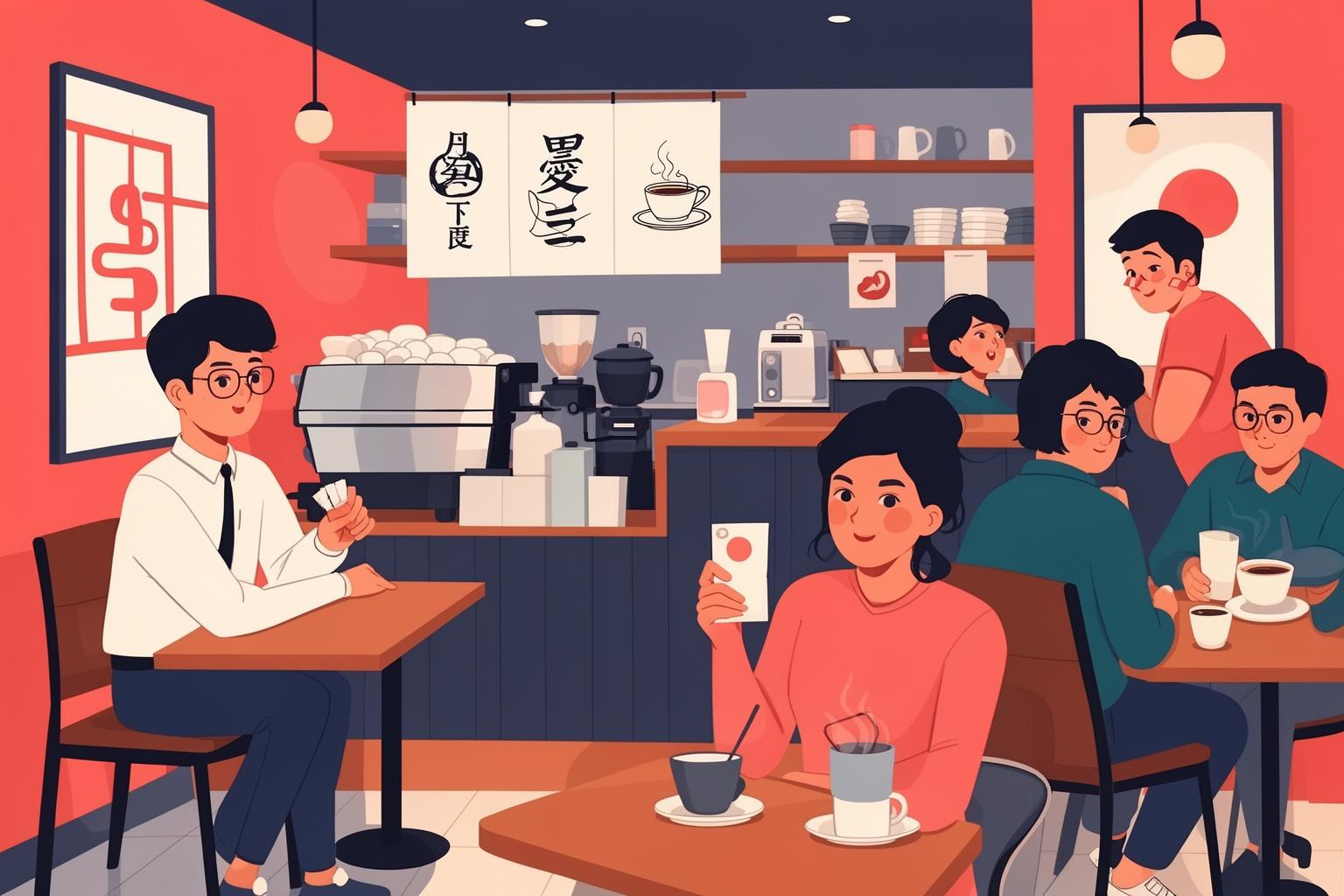
Before you can connect, you need to understand the environment. A traditional kissaten runs on a different wavelength than a modern cafe. The air feels thicker, weighed down by the ghosts of countless past conversations, cigarette smoke from decades ago, and the rich aroma of dark-roast coffee, often brewed with careful precision using a siphon or flannel drip. Time moves slower here. This isn’t a place for speed or efficiency. It serves as a sanctuary from the relentless pace of the city outside, with every detail offering a clue to its inner workings.
The Master as the Heartbeat of the Establishment
The most vital element is the Master (masutā). This term isn’t simply a quirky Japanese-English word for ‘manager.’ It represents an absolute level of dedication and ownership. The Master isn’t a mere employee punching a clock; the kissaten is their life’s work, their stage, their kingdom. Often, they are older, having operated the same establishment for thirty, forty, or even fifty years. They embody the spirit of the shokunin, the artisan or craftsman, who devotes their life to perfecting a singular skill. In this case, the skill is not only brewing coffee but the holistic craft of creating a distinct atmosphere and fostering a comfortable space where community quietly blossoms.
Picture the Master in a small cafe tucked away in the Tenma neighborhood. He’s a man in his late sixties, dressed in a crisp white shirt, with a perpetually serious expression that softens into a warm smile when a regular enters. He knows Tanaka-san takes his coffee black after his lunch of curry rice, that Suzuki-san reads the sports pages for exactly twenty minutes before heading to the office, and that the university student in the corner studies for law exams and needs a second cup around 3 PM. He doesn’t just serve customers; he curates their daily rituals. His presence is a silent, reassuring constant. This stability is the core appeal of the kissaten, a sharp contrast to the high staff turnover and seasonal menu changes at global chains. The Master is the anchor.
The Unspoken Rules of the Local Cafe
Entering a kissaten for the first time can feel like stepping into a private club. Regulars glance up from their newspapers, eyes briefly lingering. The Master offers a quiet, assessing nod. It’s not unfriendly but a clear signal that you’re entering a space with established norms. The first rule is to observe. Watch how others behave. Notice the volume of their conversations. See where they place their bags and coats.
The pace is intentionally slow. No one is in a hurry. The “Morning Set” (mōningu setto)—typically toast, a boiled egg, a small salad, and coffee at a surprisingly low price—is meant to be savored with the morning paper, which the cafe provides. Rushing through it and leaving immediately is like sprinting through a museum; you can do it, but you miss the entire point. Loud phone calls are strictly forbidden. If you must take a call, step outside. Your phone is a tool, not the center of your universe. Here, the physical space and the people around you take precedence.
Perhaps the most subtle rule is the concept of territory. Regulars, the jōren, often have favorite seats. There are no reserved signs, of course, but an unspoken social contract dictates that the corner booth by the window belongs to a group of elderly ladies who meet on Tuesday mornings, and the second stool from the end of the counter is where a local shop owner takes his afternoon break. If you unknowingly occupy one of these spots, you won’t be scolded. You might instead receive a series of quiet glances or a gentle suggestion from the Master to try a “more comfortable” seat elsewhere. It’s a subtle but unmistakable message about the established social geography of the room.
What the Decor Tells You
Every object in a kissaten tells part of the Master’s story. These spaces aren’t designed by corporate committees aiming to maximize customer flow and brand uniformity. They are deeply personal, sometimes eccentric. The decor directly reflects the Master’s passions, history, and aesthetic sensibilities. Pay attention to the details, and the cafe will reveal its story before you even place your order.
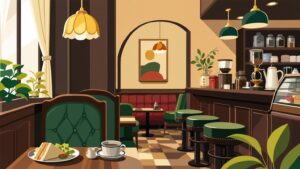
A classic Showa-era kissaten might feature dark, polished wood, slightly worn red velvet chairs, Tiffany-style lamps casting a warm amber glow, and gentle classical music or the tinkling of a wall clock. It evokes a mid-century sophistication—a quiet refuge for contemplation. In contrast, another cafe might be a chaotic treasure trove of the owner’s hobbies. Walls lined with manga, cluttered with vintage movie posters, filled with the lively sounds of 70s J-pop. This isn’t disorder; it’s a curated collection of a passionately lived life.
I discovered a place near Namba that was a dedicated jazz kissaten. The Master was a quiet man who rarely spoke, but his whole being focused on the music. His lifelong collection of thousands of vinyl records covered every inch of wall space. Towering, high-fidelity speakers stood like sentinels in the room’s corners. Customers didn’t come here to chat; they came to listen. They’d whisper their order—“Blend, please”—then settle in for an hour of deep, immersive listening. The coffee was excellent but secondary. The primary product was the experience—a public communion with the Master’s impeccable taste in music. This wasn’t a business plan; it was a life’s purpose made manifest in a small, smoke-filled room.
Breaking the Ice: How to Connect with the Master
Understanding the environment is one thing; becoming part of it is another. Building a connection with the Master is a delicate process, a gradual journey of developing familiarity and trust. It demands patience, careful observation, and a willingness to move beyond the transactional mindset of a typical customer. You are not merely purchasing a product; you are seeking entry into a community, and you must demonstrate that you understand and respect its values.
The Art of Becoming a Regular (常連, jōren)
Becoming a jōren is a status earned over time. It doesn’t happen during your first visit, or even after five. It’s about showing your dedication to the space. The initial step is consistency. Try to visit at roughly the same time of day, a few times each week if possible. This repetition places you on the Master’s mental map. You are no longer a random face; you become “the person who comes on weekday afternoons.” Keep your order simple at the start. The house blend is always a safe choice. This signals your trust in the Master’s core offering.
The next step is expressing appreciation. When you pay, a straightforward and genuine “gochisousama deshita, oishikatta desu” (“Thank you for the meal, it was delicious”) works wonders. It elevates the exchange from a simple transaction to an expression of gratitude. If you truly enjoy something, mention it. “This cup is beautiful,” or “I really like the music you play.” These small compliments show you are paying attention, recognizing the care and personality embedded in every detail. You are not just consuming; you are engaging with the experience.
Conversation will arise, but you must let it grow naturally. Don’t force it. The Master, particularly an Osaka Master, is often the one to initiate. After several visits, they might ask a simple question: “Where are you from?” or “Do you work nearby?” Your response should be polite and brief. This is not the time to share your life story. It’s a conversational opener, a small test of connection. Keep it light, return a simple question, then let the moment pass. The aim is to cultivate a comfortable, low-pressure familiarity. Over weeks and months, these small exchanges will accumulate, forming the foundation of a genuine relationship.
Osaka-Specific Communication Styles
This is where Osaka’s character truly stands out and differentiates itself from the rest of Japan. While a Tokyo Master may maintain a professional, respectful distance indefinitely, an Osaka Master tends to be more direct, more curious, and more prone to playful banter. They might present a gruff exterior, but it often masks a warm and inquisitive spirit. Don’t mistake their directness for rudeness; it’s a local communication style that values honesty and humor over strict formality.
Humor is a vital part of Osaka’s social repertoire. A Master might tease you about your improving (or stagnant) Japanese skills or joke lightly about your choice of cake. “Still studying that tough language, huh?” or “Another slice of cheesecake? You’ll get fat!” This isn’t an insult. It’s a sign of affection and familiarity. It’s their way of saying, “I notice you, I recognize you, and we’re comfortable enough to joke with each other.” Responding with a laugh and a quick witty comeback is the perfect way to join in and strengthen the bond.
The physical layout of the café also shapes the social dynamics. The counter serves as the frontline of communication. If you want to interact with the Master, always choose a seat at the counter. It’s an unspoken signal that you’re open to conversation. Opting to sit at a table, especially in the back, sends the opposite message: you prefer privacy and want to be left alone. Understanding this spatial cue is essential for navigating the social atmosphere of the kissaten.
What Not to Do: Common Foreigner Faux Pas
Adapting to a new culture inevitably involves a few mistakes. In a kissaten, certain behaviors that are normal in Western cafés can be seen as disrespectful or ignorant. One of the most common errors is treating the café like a personal office. While some modern cafés are designed for working, a traditional kissaten is not a co-working space. Setting up your laptop, charger, and notebooks and staying for four hours on a single 400-yen coffee is a significant breach of etiquette. The business model relies on a steady, though slow, turnover. If you need to work, find a place that explicitly welcomes that.
Another misstep is requesting complicated customizations. The menu represents the Master’s expertise and philosophy. The “Blend Coffee” is their signature creation, refined over decades. Asking for a “decaf, oat milk, extra-hot, no-foam latte” is not only often impossible but also suggests their carefully honed offering isn’t sufficient for you. You’re there to appreciate their craft, not to impose your own preferences. Stick to the menu.
Finally, be mindful of conversational limits. While Osaka people are generally more open, the Japanese approach to building relationships gradually still holds. Don’t overwhelm the Master with personal details on your second visit. The relationship is not that of therapist and client. It’s a slow, gentle unfolding of mutual respect. Let the Master set the pace of conversation. If they’re busy or seem distracted, enjoy the quiet atmosphere. The goal is to become a comfortable presence, not a demanding one.
The Payoff: Why Bother Connecting?
This may all seem like a lot of effort just for a cup of coffee. Why bother navigating these intricate social norms when you can simply go to a chain where the rules are straightforward and universal? The reason is that the payoff is much more than mere caffeine. By dedicating time and energy to becoming a regular, you gain something far more meaningful: a sense of belonging, a community anchor, and an authentic glimpse into the city’s soul.
Your Cafe as a Community Anchor
Once you move from being a “customer” to a “jōren,” the Master and the cafe itself become invaluable resources. The Master turns into a neighborhood concierge. Looking for a good, no-frills izakaya? The Master knows the best spot and might even be acquainted with the owner. Received a perplexing letter from the city office? The Master can likely help you make sense of it. They become a friendly, trusted presence in what might otherwise feel like an anonymous urban environment. They might introduce you to other regulars, pulling you further into the local social fabric. One conversation leads to another, and before long, you’ll find yourself familiar with the butcher, the baker, and the florist down the street.
The cafe becomes your “third place”—a concept coined by sociologist Ray Oldenburg to describe essential community hubs beyond home and work. It’s a steady, dependable spot where you are known and welcomed. On days when you’re feeling lonely or overwhelmed by the challenges of living abroad, simply stepping into your local kissaten and receiving a familiar nod from the Master can be an incredibly reassuring gesture. It’s a simple signal that says, “You belong here.” You won’t find that in a chain store.
A Window into Authentic Osaka
Sitting at the counter of a local kissaten is like having a front-row seat to a documentary of daily life in Osaka. You’ll hear the genuine, unfiltered Osaka-ben—the city’s famously lively and vibrant dialect—in all its charm. You’ll observe the subtle and not-so-subtle social dynamics that shape the community. You’ll see local business owners striking deals over coffee, elderly couples sharing quiet moments over toast, and friends catching up amid bursts of gossip and laughter. This is where you see the city when its guard is down.
This is also how you come to truly understand the oft-repeated cliché that “Osaka people are friendly.” This friendliness isn’t the superficial, customer-service smile you encounter everywhere. It’s a deeper, richer warmth built on shared context and familiarity. It is earned. The gruff Master who now saves the morning paper for you, the other regulars who greet you warmly—that’s the genuine hospitality of Osaka. Once accepted, this community will look out for you in small but meaningful ways.
Beyond the City Center: Finding Your Own Spot
While classic kissaten can be found in the bustling hubs of Umeda and Shinsaibashi, the real magic happens as you explore the city’s residential neighborhoods. The true spirit of this culture thrives in the side streets and covered shotengai shopping arcades of places like Tenjinbashisuji Rokuchome, Nakazakicho, Karahori, and even farther afield in the city’s southern areas. Part of the joy of living in Osaka is the journey—the search to find your spot.
Don’t depend on blogs or lists. The best places are often those stumbled upon by chance. Wander through your own neighborhood. Peek inside cafes that seem a bit old-fashioned or intimidating. Take a risk. The quest for “your” kissaten is a rite of passage for any long-term resident. When you find it—the one with the right vibe, the right coffee, and a Master you connect with—it feels like planting roots. It’s a sign you’re no longer just visiting Osaka; you’re beginning to make a home here.
The Master’s Perspective: A Business of Passion, Not Profit

To fully appreciate the kissaten, it helps to understand the economic and personal philosophy that sustains them. These establishments often defy conventional economics, operating on principles that puzzle many modern business school graduates. They stand as testaments to passion and perseverance in a world increasingly obsessed with disruption and scalable growth.
An Economic Anomaly
How does a small cafe with only ten seats, serving 400-yen coffee, survive in a major metropolitan city? The answer lies in their unique definition of “success.” Many of these Masters have owned their property for decades, freeing them from crippling rent costs. The business is usually a one-person operation, removing labor expenses. The objective isn’t to maximize profit or expand into franchises. Instead, it’s to earn enough to support a modest lifestyle while continuing to hone their craft in a space they’ve carefully nurtured. This is a model based on stability rather than growth.
This philosophy is deeply ingrained in a distinctive Osaka mindset that prioritizes practicality and sustainability over flashiness and glamour. While Tokyo chases the latest trends, Osaka holds a deep appreciation for things that endure, for businesses that have served their communities over generations. The local kissaten embodies this spirit. It doesn’t aim to compete with Starbucks; it operates within an entirely different universe, adhering to a different set of values. It’s a legacy, not a startup.
The Passing of an Era?
There is, however, a certain bittersweetness to the classic kissaten experience. Many of the Masters are now in their 70s or 80s. Their children, pursuing different careers, often have little interest in inheriting the long hours and modest income of the family business. As this generation retires, many of these cherished institutions are closing their doors for good. Each visit to a classic kissaten becomes an opportunity to cherish a unique cultural form that may be gradually fading.
Yet, this is not solely a story of decline. A new generation of young coffee artisans is emerging in Osaka. They are opening specialty coffee shops inspired by global third-wave coffee culture but infused with the same shokunin spirit as their predecessors. Their spaces may be brighter, the music might be indie rock rather than jazz, and the brewing methods might highlight an AeroPress instead of a siphon. Still, the core principle remains: the cafe is a direct expression of the owner’s passion, and the experience centers on the quality of their craft. The spirit of the Master endures, just in a new form. The fundamental Osaka longing for a place with character, run by a passionate individual, is as strong as ever.
Your Field Guide to Osaka’s Cafe Culture
Now that you have the map, it’s time to embark on your own journey. Osaka’s world of independent cafes is rich, rewarding, and ready to be discovered. It might feel intimidating at first, but with the right mindset, you can unlock one of the most authentic and fulfilling experiences of life in this city. It all starts with shifting your perspective from that of a mere consumer to a respectful participant.
Putting Theory into Practice
Let’s review the key steps. Begin by exploring. Walk through your neighborhood. When a place catches your attention, step inside. Take a seat at the counter if you can. Order the house blend. Put your phone away. Notice the rhythm of the room. Listen to the conversations around you. Absorb the atmosphere that the Master has cultivated over a lifetime. When you leave, offer a genuine word of thanks. Then, return. Repeat the process. Allow familiarity to grow naturally.
Don’t be discouraged if the first few spots don’t feel quite right. Finding “your” place is like making a new friend; it requires a bit of chemistry. The ultimate goal isn’t to get a discount or special treatment. It’s to build a sincere human connection, however small, that enriches your daily life. It’s about discovering a place where the simple act of ordering coffee is imbued with meaning, history, and community.
The Real Taste of Osaka
The coffee at a great kissaten is, of course, delicious. It reflects decades of refinement and stands as a testament to the Master’s skill. But as you sit at the counter, sipping a rich, dark brew from a beautiful, decades-old Noritake cup, you’ll realize you’re savoring more than just coffee. You’re tasting the city itself.
The true flavor of Osaka isn’t only found in its famous street food, but in these quiet moments of connection. It’s in the shared laughter with a regular over a silly newspaper headline. It’s in the quiet satisfaction of watching the Master work with an economy of movement that borders on artistry. And, above all, it’s in the simple, knowing nod you receive when you walk through the door. That nod is an acknowledgment. You are no longer just a visitor passing through. You are seen, you are recognized. You are, in your own small way, part of the neighborhood. You’re home.