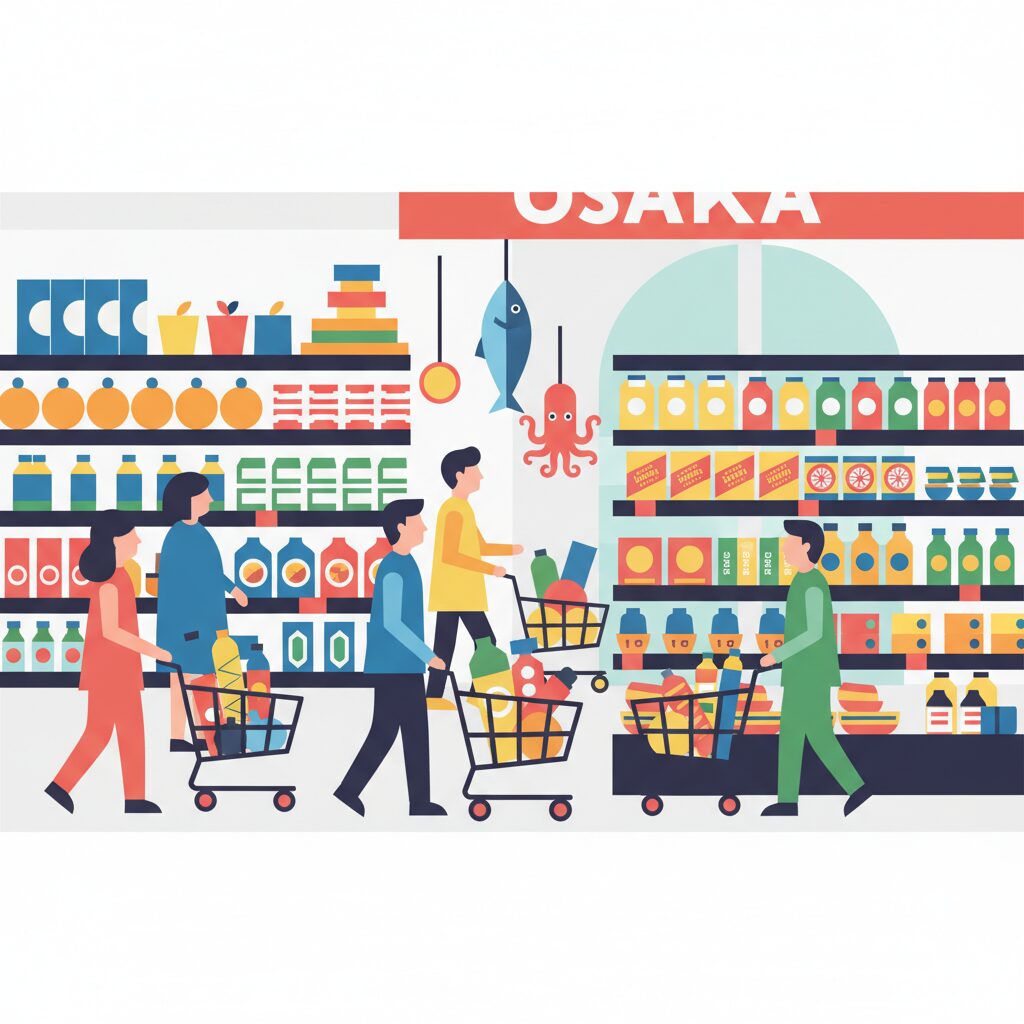
Walk into a Super Tamade for the first time, and your senses will short-circuit. It’s not just a grocery store; it’s a pachinko parlor that sells produce. Neon lights pulse with a frantic energy, a relentlessly cheerful jingle drills into your skull, and impossibly bright yellow signs scream prices that feel like typos. One yen for a carton of eggs? One hundred yen for a bento box that would cost five times that in Tokyo? Your brain struggles to compute. You might think it’s a gimmick, a tourist trap, or just plain weird. But you’d be wrong. This, in all its chaotic, fluorescent glory, is a direct portal into the soul of Osaka. Forget the castles and the tourist-packed food streets for a moment. If you truly want to understand how this city breathes, how its people think, and what they value, you need to go to the supermarket. It’s where the real Osaka, the city of merchants, pragmatists, and deal-hunters, comes alive. In Tokyo, a supermarket can be a boutique, a curated gallery of artisanal soy sauces and perfectly polished apples. It’s often quiet, pristine, and ruthlessly efficient. In Osaka, it’s a battleground. It’s a community hub. It’s a daily ritual that says more about the local culture than any museum exhibit ever could. This isn’t just about stocking your fridge; it’s about participating in a city-wide obsession with value. Not just cheapness, but the thrill of getting the absolute most for your money. It’s a mindset forged over centuries in the merchant capital of Japan, and it plays out every single day under the buzzing lights of the grocery aisle. So grab a basket, brace yourself, and let’s go shopping. You’re about to learn the unspoken rules, decode the local legends, and see why a simple yellow grocery bag can be a badge of honor in this town.
Moreover, for a deeper look into what fuels Osaka’s merchant spirit, you can explore the evolution of its unique maido practices that enrich the city’s bustling markets.
The Day-Glo Heart of Osaka: Decoding Super Tamade

No conversation about grocery shopping in Osaka can start anywhere else. Super Tamade stands as an icon, a landmark, and a cultural institution all wrapped into one eye-catching package. Foreigners often view it as a quirky novelty, a spot to snap a few photos of its wild storefronts and low prices before moving on. Locals, however, appreciate it on a much deeper level. It represents the most extreme, unapologetic expression of Osaka’s core economic principle: value above all else.
More Than Just a Meme
Make no mistake: Tamade’s aesthetic is an intentional assault on the senses. The flashing LED signs, garish color schemes, and nonstop loop of its signature theme song are all crafted to mimic the high-energy, overstimulating atmosphere of a pachinko parlor. The message is clear and powerfully effective: this is a place of excitement, luck, and hitting the jackpot. Your jackpot just happens to be steep discounts on instant noodles and frozen gyoza. The stores are often cramped, the floors sometimes sticky, and the product arrangement can appear chaotic. This isn’t the calm, orderly experience of a high-end Tokyo grocery store—it’s a treasure hunt. The chaos is a feature, not a flaw. It fosters a sense of urgency, the feeling that amazing deals are waiting to be found if you’re sharp enough to spot them. The famous bright yellow plastic bags are a ubiquitous sight around the city, carried like trophies by shoppers who have successfully navigated the chaos and emerged victorious. In a city that prides itself on being unpretentious, Tamade embodies the ultimate rejection of form over function.
The Psychology of the 1-Yen Sale
At the core of the Tamade legend lies the 1-yen sale. Yes, you can literally purchase items for a single yen—whether it’s a pack of tofu, a bunch of bean sprouts, or a can of coffee. Of course, there’s a catch: you typically must spend at least 1,000 yen on other items to qualify. Rationally, it’s just a discount. Psychologically, though, it’s brilliant. It taps directly into the Osaka akindo (merchant) mindset. It’s not just about saving money; it’s about the thrill of the deal, the feeling of outsmarting the system. You didn’t just buy groceries; you executed a strategy. You won. This idea is often misunderstood by outsiders who may interpret it as a sign of poverty. That’s a fundamental misreading. People from all backgrounds shop at Tamade. It’s not about lacking the means for more expensive options; it’s about the principle of never paying more than necessary. It’s a form of fiscal savvy that holds deep respect in Osaka culture. Wasting money on fancy packaging or store ambiance when you can get the same product cheaper elsewhere is seen as foolish. Tamade is the champion of that philosophy.
A Practical Guide to the Tamade Haul
So what should you actually buy there? Tamade reigns supreme for staples and fast-moving goods. It’s unbeatable for beverages—canned coffee, tea, soft drinks, and alcohol are often priced rock-bottom. The snack aisle is a haven for affordable senbei, potato chips, and chocolates. It’s also surprisingly reliable for certain fresh items, especially seasonal vegetables like daikon, cabbage, and onions. However, you need to shop wisely. The quality of meat and fish can be inconsistent. This isn’t the place for a prime steak cut for a special occasion dinner. Instead, it’s where you pick up a huge block of Brazilian chicken for your weekly meal prep. The prepared foods, or sozai, are another highlight. Bentos, onigiri, and fried items are famously cheap, especially later in the day. A late-night trip to Tamade can score you a feast for just a few hundred yen. The key is to understand its role in the shopping ecosystem: it’s the volume player, the backbone of your weekly shop, allowing you to save your budget for high-quality items elsewhere.
The Everyday Battlegrounds: Your Neighborhood Chains
While Tamade may be the most well-known, it’s not where the majority of people do all their shopping. Daily life in Osaka involves a strategic mix-and-match, a carefully planned rotation among several key supermarket chains, each with its own unique character and purpose. Your supermarket choice silently reflects your priorities for the day: Are you after the lowest price, a balance of quality and cost, or a large bulk purchase? Your answer guides your destination.
Life: The Reliable All-Rounder
If Osaka supermarkets were family members, Life would be the dependable older sibling. It’s ubiquitous, consistent, and handles the task efficiently without any fuss. Life strikes an ideal balance between price, quality, and variety. The stores are clean, well-lit, and logically arranged—a sharp contrast to the deliberate chaos of Tamade. Many Life outlets have multiple floors, with groceries on the ground level and clothing, home goods, or small electronics upstairs, making it a convenient one-stop shop for many families. Their private label, marked with a bright “SMILE LIFE” logo, offers solid quality everyday essentials at lower prices. Life embodies the stable, practical side of Osaka. It’s where you go for your weekly shopping when you want no surprises. The produce is fresh, the meat selection dependable, and there’s often a respectable bakery section. It’s the workhorse of Osaka’s grocery scene, the standard by which all others are judged.
Mandai: The Feisty Local Favorite
Mandai is pure Osaka through and through. Founded and rooted in the prefecture, it operates with a spirited, competitive energy unmistakably local. When you walk into a Mandai, you can sense the buzz is a step above Life. The aisles tend to be narrower, the stores busier, and the staff move with brisk efficiency. Mandai fights hard on price, especially with its daily specials, earning a devoted customer base. Every Osakan knows the Mandai jingle by heart; it’s part of the city’s shared soundscape. Shopping here feels purposeful. Shoppers navigate crowds with practiced resolve, clutching bargains as they go. Mandai excels in fresh produce and fish, often sourcing locally. It captures the fast-paced, no-nonsense spirit of the city. The focus is less on a leisurely shopping experience and more on quickly securing the best products at the best prices. It’s the city’s commercial hustle embodied as a grocery store.
Gyomu Super: The Bulk-Buy Hidden Gem
Gyomu Super, which means “Business Supermarket,” is Osaka’s ultimate life hack. Originally designed to supply restaurants, izakayas, and other food businesses, it’s open to the public, and savvy locals long ago discovered it as the key to big savings. The atmosphere is minimalistic. Products are frequently displayed in the cardboard shipping boxes. The vibe is pure warehouse. But the prices are remarkable. The real draw of Gyomu Super is its frozen food section: huge bags of frozen vegetables, karaage, gyoza, and hash browns at a fraction of typical prices. It’s also a goldmine for imported goods. You can find everything from Belgian waffle cookies to Italian pasta and Thai curry paste at prices that beat specialty import shops. Gyomu Super caters to the resourcefulness of Osaka—a city of small business owners and home cooks skilled at stretching their budget. It’s the secret weapon for families, students, and anyone who appreciates the advantage of a well-stocked freezer. Shopping here is less about daily trips and more about smart monthly stock-ups.
The Other Side of the Coin: Specialists and High-End Havens
Osaka’s focus on value doesn’t imply the city lacks an appreciation for luxury. In fact, the opposite holds true. The same person who will travel across town for a 10-yen discount on cabbage will gladly spend a significant amount on a perfectly marbled piece of beef or a rare bottle of sake. The key, once again, is value. Osakans are willing to pay for premium quality, but only if they believe it’s worth the cost. This creates an intriguing contrast in the city’s grocery scene, where no-frills discounters stand just blocks away from upscale food emporiums.
Ikari and Hankyu Oasis: The “Tokyo” Experience
If you ever find yourself missing the curated, immaculate aisles of a high-end Tokyo supermarket, Ikari or Hankyu Oasis is your refuge. These are the premium players in the Osaka market. Entering an Ikari is a soothing experience. The lighting is gentle, the aisles wide, and the products beautifully displayed. Here you’ll find imported cheeses, artisanal breads, organic produce, and a carefully selected range of fine wines. Hankyu Oasis, associated with the Hankyu department store, offers a similarly upscale environment. This is where you shop for special occasions, when hosting a dinner party, or when you crave ingredients you can’t find elsewhere. These stores are essential to understanding the Osaka mindset. They show that local culture is not merely about being kechi (stingy), but about being selective. An Osakan sees no contradiction in purchasing their 80-yen tofu at Tamade and their 3,000-yen bottle of olive oil at Ikari. Each fulfills a distinct purpose and delivers a unique kind of value. The ability to appreciate both defines a true Osaka shopper.
Don Quijote: The Chaotic Hybrid
No overview of Japanese retail would be complete without mentioning Don Quijote, or “Donki.” While it’s a nationwide chain, its chaotic, dense, and somewhat overwhelming atmosphere fits perfectly with Osaka’s vibe. Donki is not strictly a supermarket, yet its food and drink sections are substantial and a major part of its attraction. Shopping at Donki is an adventure. You weave through towering, narrow aisles packed from floor to ceiling with a bewildering variety of goods, from cosmetics and electronics to novelty items and, of course, groceries. It’s the master of impulse purchases. You might enter for a bag of chips and leave with a Halloween costume and a new rice cooker. For groceries, Donki excels in snacks, drinks, and shelf-stable products at competitive prices. Its greatest advantage is the late hours; many locations operate 24/7, making it a go-to spot for late-night cravings or emergency grocery trips. Donki embodies another side of Osaka culture: an enthusiasm for density, novelty, and the excitement of discovery in a lively, chaotic environment.
The Unspoken Rules of the Osaka Supermarket Aisle
Beyond the stores themselves, there exists a unique culture and an unwritten set of rules that shape the grocery shopping experience in Osaka. These subtle rituals and behaviors reveal the true rhythm of daily life in the city. Learning them is essential to shopping like a local.
The Evening Discount Dance
As evening falls, a quiet, city-wide ritual unfolds in every supermarket. It’s the chase for the prized discount stickers, called mikiri-hin or o-benkyo price tags. Staff members come out from the back rooms with a sticker gun, and a captivating dance begins. Shoppers, who had been casually browsing, start to circle the prepared foods section: bento boxes, sushi, sashimi, and salads. It’s a test of patience and timing. Hover too close, and you appear desperate. Wait too long, and the best items will be gone. There is a shared understanding among those taking part. No one pushes or acts aggressively, yet an undeniable tension fills the air. When the staff places a 20%, 30%, or the coveted 50% off sticker on an item, a hand will quickly and politely reach out to claim it. This practice isn’t about poverty; it’s a deeply rooted cultural habit of avoiding waste and valuing thrift. Taking part in the evening discount rush is a rite of passage for residents and a beautiful illustration of Osaka’s practical mindset.
Bicycle and Shopping Cart Tetris
Maneuvering through an Osaka supermarket, especially during busy times, demands a unique spatial awareness. The aisles can be narrow, and personal space is fluid. You’ll observe an elaborate ballet of shoppers, carts, and baskets, with people squeezing past one another while saying “suimasen” (excuse me). The real skill, however, is visible outside. The parking zones are often filled with the quintessential Japanese vehicle: the mamachari, or “mom’s bike.” These sturdy bicycles, outfitted with a front basket and a rear child seat, serve as Osaka’s minivans. The way shoppers load these bikes is impressive. Bags hanging from each handlebar, the front basket overflowing, and more bags strapped to the back with bungee cords—it’s a masterclass in balance and physics. This scene perfectly captures Osaka’s practicality. Why use a car when a bike can carry a week’s groceries with a bit of cleverness?
The Art of the Quick Chat
While Tokyo’s checkouts are known for their quiet, almost robotic efficiency, the experience in Osaka can feel a bit more personal, especially in smaller, neighborhood stores. It’s common to hear brief, friendly exchanges between cashiers and regular customers. They might comment on the weather, inquire about family members, or share a quick joke. The classic Osaka merchant greeting, “Mokarimakka?” (“Making money?”), followed by the usual response, “Bochi bochi denna” (“So-so”), is less frequent in supermarkets now, but its spirit remains. There’s an underlying warmth and sense of community that can be felt in these daily interactions. This small touch of human connection reminds us that even in a bustling city, commerce is fundamentally about people. It’s a subtle yet significant difference that makes Osaka feel less anonymous and more like a network of interconnected villages.
What Your Supermarket Says About You
In Osaka, choosing a supermarket is more than just about convenience; it acts as a tribal identifier. The assortment of grocery stores in a neighborhood reveals much about its character and its residents. Mention where you shop to an Osakan, and they can often make a surprisingly accurate guess about your lifestyle and priorities. A neighborhood anchored by a lively Mandai and a Gyomu Super typically exudes a down-to-earth, family-focused, and budget-minded atmosphere. It’s a place grounded in practicality, where residents aim to maximize their spending power. Conversely, a neighborhood centered around a sleek Hankyu Oasis or Ikari suggests a wealthier, perhaps older, population that values quality, careful selection, and a more leisurely shopping experience. And if you live within a five-minute walk of a Super Tamade? You’ve embraced the city’s bold, value-first spirit. You’re not afraid of a bit of chaos in the chase for a great deal. This supermarket landscape forms the city’s unwritten social map, shaping the texture of everyday life and influencing everything from the local dining scene to the overall pace and atmosphere of the streets.
Final Thoughts: The Grocery Bag as a Cultural Compass
Ultimately, the supermarkets of Osaka represent much more than mere places to purchase food. They are vibrant, living stages of the city’s culture. They embody a merchant spirit refined over centuries. They are where the abstract ideas associated with Osaka—its pragmatism, energy, warmth, and passion for a good bargain—come to life. The contrast between the neon chaos of Super Tamade and the quiet sophistication of Ikari isn’t a contradiction; it is Osaka. It’s a city that recognizes value in many forms, where being wise with your money is the highest virtue. Set aside the guidebooks for a day. The true stories of this city unfold on the price tags in the vegetable aisle and in the silent, knowing glances exchanged over half-price sushi. The next time you spot someone walking down the street with that unmistakable bright yellow Tamade bag, know that you’re not just seeing someone who bought cheap groceries. You’re seeing someone who understands. They carry a badge of honor, a small, crinkly flag that declares their membership in a city that will forever and always celebrate the art of the deal.