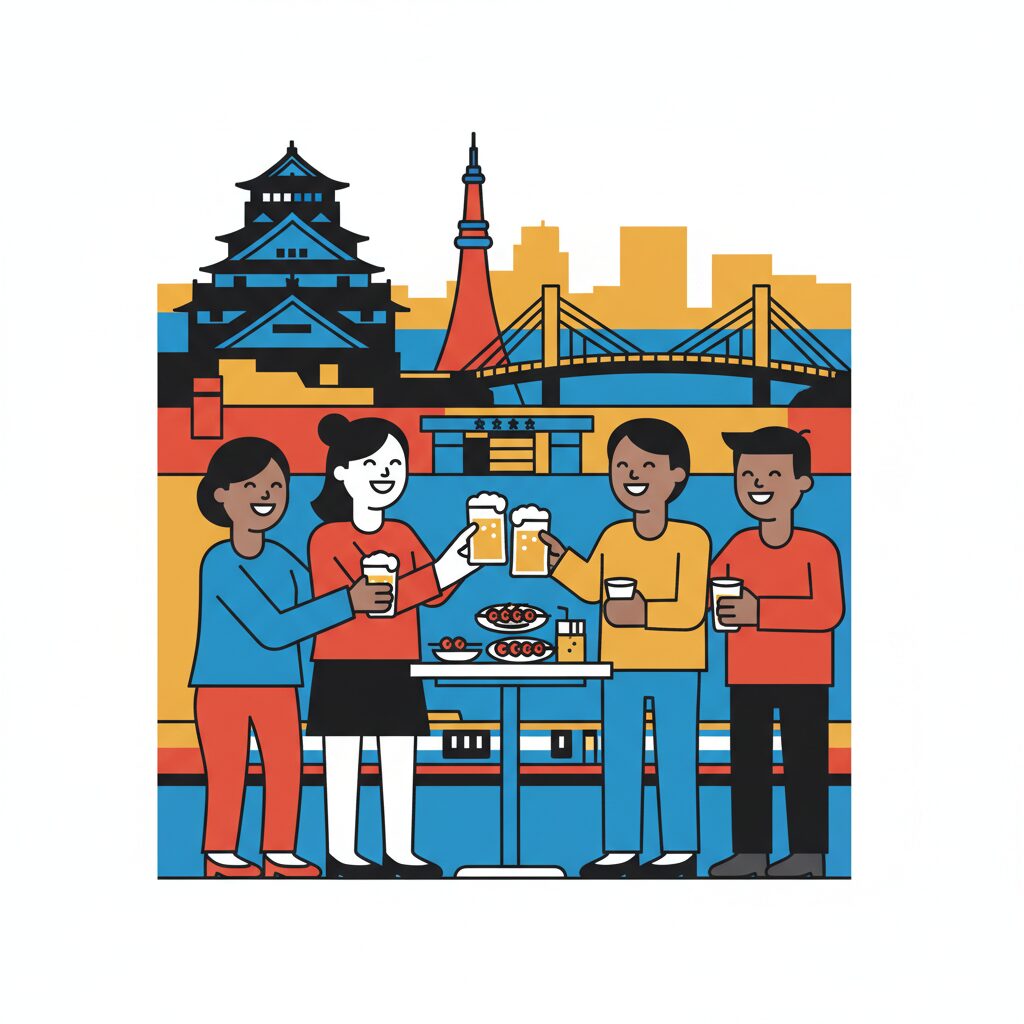
Step off the train at Kyobashi or Tenma after 6 p.m. on a Tuesday, and you’ll feel it. It’s a low hum of chatter, the clinking of glasses, the sizzle of something on a griddle, all spilling out from behind weathered plastic curtains. You peek inside and see a wall of people, mostly men in loosened ties, packed shoulder-to-shoulder under fluorescent lights, holding glasses of beer and talking with an energy that seems too potent for a weeknight. There are no chairs. There is no pretense. This is the tachinomi, the standing bar, and for many non-Japanese residents, it’s one of Osaka’s most intimidating yet intriguing social puzzles. My first few encounters were hesitant fly-bys. I saw a cheap, fast, and smoky world that seemed utterly impenetrable. It felt like a private club where the only membership requirement was a lifetime of shared experience I simply didn’t have. But the longer you live here, the more you realize that the tachinomi isn’t a barrier; it’s a doorway. It’s a raw, unfiltered look into the city’s true personality, a place where the core values of Osaka life—pragmatism, community, and a healthy dose of playful irreverence—are poured into every glass. Forget the quiet, contemplative sake bars you might imagine. This is different. This is about understanding Osaka not through its landmarks, but through its daily rituals of release and connection. It’s about learning the unwritten rules of a space that is, in many ways, a perfect microcosm of the city itself.
Osaka’s vibrant urban life challenges you in more ways than one, as even everyday tasks can resemble a test of resilience akin to the garbage gauntlet.
More Than Just a Bar: The Tachinomi as a Social Hub
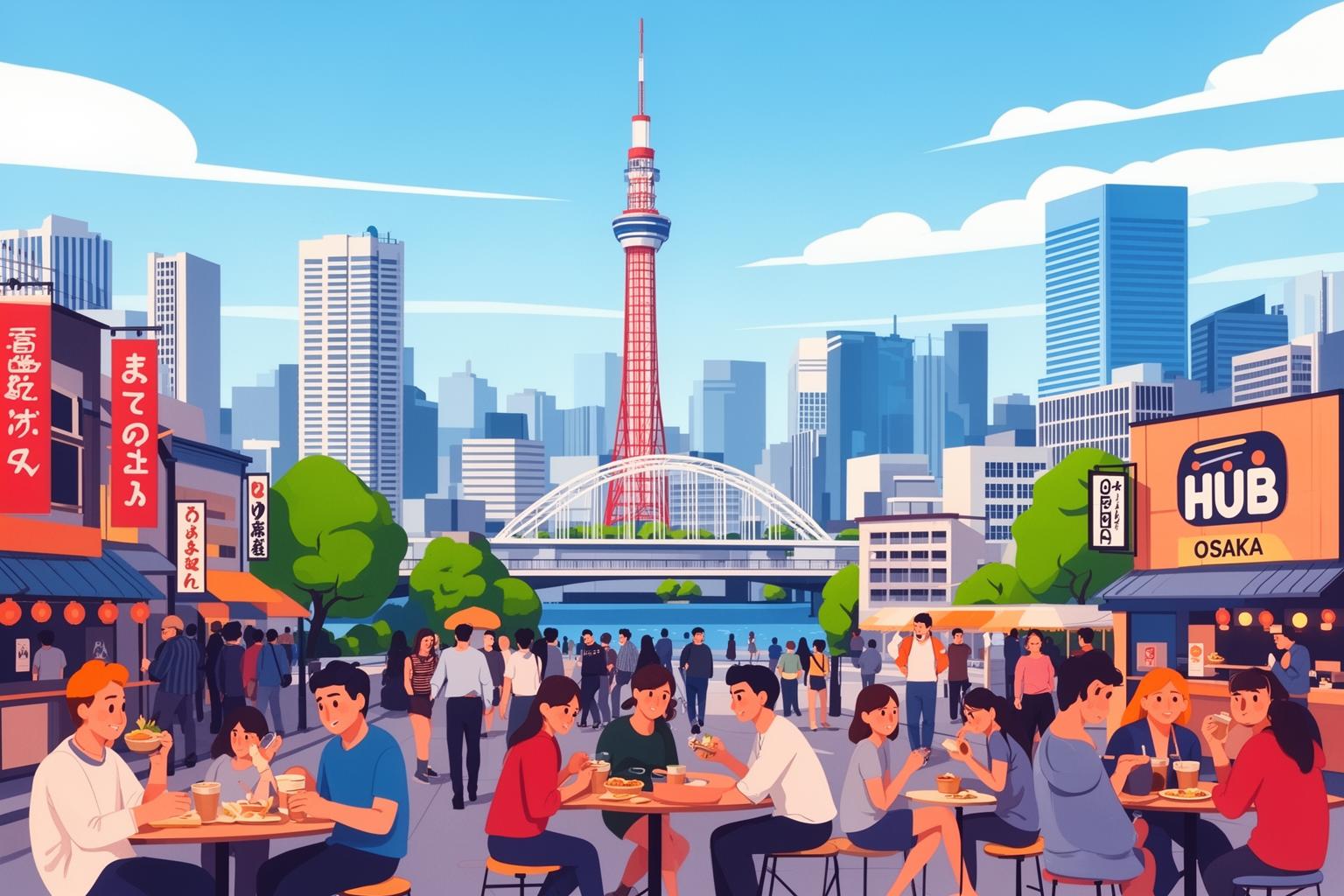
To someone unfamiliar, a standing bar might seem like a spot you visit only when all other places are full. In truth, the lack of chairs is intentional. It’s a design element that shapes the entire social atmosphere. In Osaka, where every yen counts and every minute matters, the tachinomi represents the pinnacle of social efficiency. It’s more than just a drinking venue; it’s a vital part of the city’s social fabric, a third place that fills a very specific role in the daily routines of its residents.
The “1,000 Yen Buzz” (Senbero) Mentality
First, it’s important to grasp the concept of senbero—a blend of sen yen (1,000 yen) and berobero (drunk or tipsy). The aim is straightforward: enjoy a pleasant buzz for less than a thousand yen. In Tokyo, a night out can feel like a spectacle, with meticulously designed aesthetics and matching prices. In Osaka, senbero is a matter of pride, a challenge, a mark of skill in finding the best value. This isn’t about being cheap just for the sake of it; it’s about being clever. It embodies the merchant city’s fixation on kosupa, or cost performance. Why pay for the luxury of a chair and fancy decorations when that money could be spent on another highball and a plate of doteyaki (slow-cooked beef sinew)? The tachinomi distills the drinking experience to its core: good drinks, good food, and good company, all delivered quickly and affordably. This practicality captures the essence of Osaka. The value lies not in the ambiance but in the transaction, the satisfaction of securing a great deal. It’s a small, everyday triumph in a city that honors savvy consumers.
A Third Place for the Everyday Person
The tachinomi is the quintessential “third place”—that vital space between the stresses of home and the demands of work. It serves as a decompression zone for the city’s workforce. Step into any standing bar in neighborhoods like Umeda or Namba, and you’ll witness a diverse cross-section of society. There are salarymen in suits, construction workers in their gear, local shopkeepers taking a break, and retirees enjoying a mid-afternoon beer. At the counter, age and job titles seem to vanish. The standing setup fosters a fluid, transient atmosphere. It’s a place to pause for thirty minutes on the way home, share grievances about your boss with a stranger, gulp down a beer, and then vanish back into the night. It’s not about settling in for a long night; it’s a quick recharge, a reset button for the soul after a long day. This function is often misunderstood by outsiders, who may dismiss it as just a dive bar. For regulars, it’s as indispensable as the train they ride to work.
The Unspoken Rules of the Standing Bar
Entering a tachinomi for the first time can feel like crashing a party where you don’t know the host. There are rules, but they aren’t written on the walls. Instead, they’re conveyed through subtle gestures, glances, and a shared understanding of how to navigate a crowded space. Learning this etiquette is the key to fully enjoying the experience.
Mastering the Art of Personal Space
In a city of millions, Osakans excel at maneuvering through crowds, and the tachinomi is their advanced lesson. Your personal space is essentially the width of your shoulders. That’s it. You don’t spread out or place your jacket on an empty spot beside you. Your bag belongs either on the shelf above your head or a hook beneath the counter—never on the bar or floor where it could be a tripping hazard. The goal is to make yourself as compact as possible. When you need to pass someone, a quiet “sumimasen” (excuse me) and a slight bow as you slip by is the way to go. It’s a delicate dance of shared consideration. Everyone silently agrees to minimize their footprint so one more person can fit in. This isn’t about being unfriendly; it’s a practical, mutual understanding of shared space. In Tokyo, people tend to keep a more rigid personal bubble. In an Osaka tachinomi, that bubble shrinks, fostering a kind of brief, physical closeness that lowers the barrier to social interaction.
The Ordering Flow: Quick, Decisive, and Clear
A tachinomi has its own rhythm that you need to catch. You don’t stand around deliberating over the menu for ten minutes. The pace is fast. Find a spot at the counter, make eye contact with the staff, and order your first drink—that’s always the first step. “Nama-biru, kudasai” (a draft beer, please). While sipping, you can decide on food. Orders tend to be small—a skewer here, a small plate of pickles there. Many traditional establishments use a cash-on-delivery system called kyasshu on. You receive a small tray where you place a few thousand-yen bills. When you order, the staff takes the precise amount from the tray. This is Osaka efficiency at its best—no waiting for a bill, no confusion about who paid. When your money is gone, or you’re ready to leave, you simply go. This method keeps things moving and highlights the transient nature of the bar.
Reading the Menu: From Tuna Guts to Fried Goodness
Food at a tachinomi is designed for speed and simplicity. It’s meant to accompany your drink, not to steal the spotlight. Staples include kushikatsu (deep-fried skewers of meat and vegetables), doteyaki (the rich, savory beef sinew stew that’s a classic of Osaka), and surprisingly fresh sashimi. Many places showcase a case of pre-made small dishes (obanzai) you can simply point to. Don’t be shy about trying the unfamiliar. Items like shiokara (fermented squid guts) or horumon (grilled offal) are beloved drinking snacks. The cuisine is hearty, straightforward, and affordable. It fuels conversation and keeps you grounded as the drinks flow.
Breaking the Ice: How to Connect with Osakans
Here lies the core of the matter. People often say “Osakans are friendly,” but that’s a lazy cliché that doesn’t clarify the mechanics behind how they show their friendliness. The tachinomi is the ideal place to grasp the difference between Tokyo’s polite reserve and Osaka’s lively engagement.
The “Nani Nomu?” (What’re Ya Drinkin’?) Opening
The close quarters of a standing bar make conversation almost unavoidable. It’s common for the old man next to you to glance at your glass and ask, “Nani nomu?” (What are you drinking?). This isn’t an interrogation. It’s an invitation. It’s a simple recognition of your shared space and time. He’s not necessarily trying to become your lifelong friend; he’s just being social in the moment. In Tokyo, starting a chat with a stranger in a bar can be met with surprise or suspicion. In Osaka, it’s standard. The key is to grasp the nature of this interaction: it’s temporary camaraderie. A brief answer and a smile suffice. You’re sharing a fleeting experience, and that’s enough to spark a brief connection.
The Art of the Comeback (Tsukkomi)
To truly connect, you need to understand Osaka’s comedic exchange of boke and tsukkomi. Boke is the fool or the joker, while tsukkomi is the straight man delivering the witty comeback. Conversation in Osaka is a performance, a sparring match. Someone will say something slightly absurd (boke), hoping you’ll respond with a sharp-witted retort (tsukkomi). For instance, if the old man says, “You’re drinking beer? You should be drinking sake, it’s better for you!” A polite, Tokyo-style reply might be a non-committal laugh. An Osaka-style tsukkomi would be to grin and say, “I’m building up to it. Gotta warm up first!” or “At your age, you should be drinking water!” (Of course, delivered in a friendly tone). This playful banter, this verbal sparring, is a sign of affection and respect. It shows you’re attentive, quick-witted, and willing to play along. It’s the fastest way to earn a local’s nod of approval.
Misunderstandings to Avoid
While Osakans are open, certain boundaries should be respected. First, don’t overstay your welcome. A tachinomi is meant for a quick stop. One or two drinks, maybe three, over about an hour is typical. It’s a high-turnover space. Lingering for hours is considered rude. Second, don’t act like a tourist. Although the scene is fascinating, avoid taking intrusive photos of patrons. You’re there to be part of the atmosphere, not to document it like a zoo. Finally, manage your expectations. Conversations are often light and superficial—the Hanshin Tigers baseball team, the weather, the high price of vegetables. It’s about sharing a moment, not exposing your soul. This isn’t a shortcoming; it’s the purpose of the space. It offers low-pressure social interaction without the weight of deep emotional involvement.
Tachinomi Hotspots: Beyond the Guidebooks
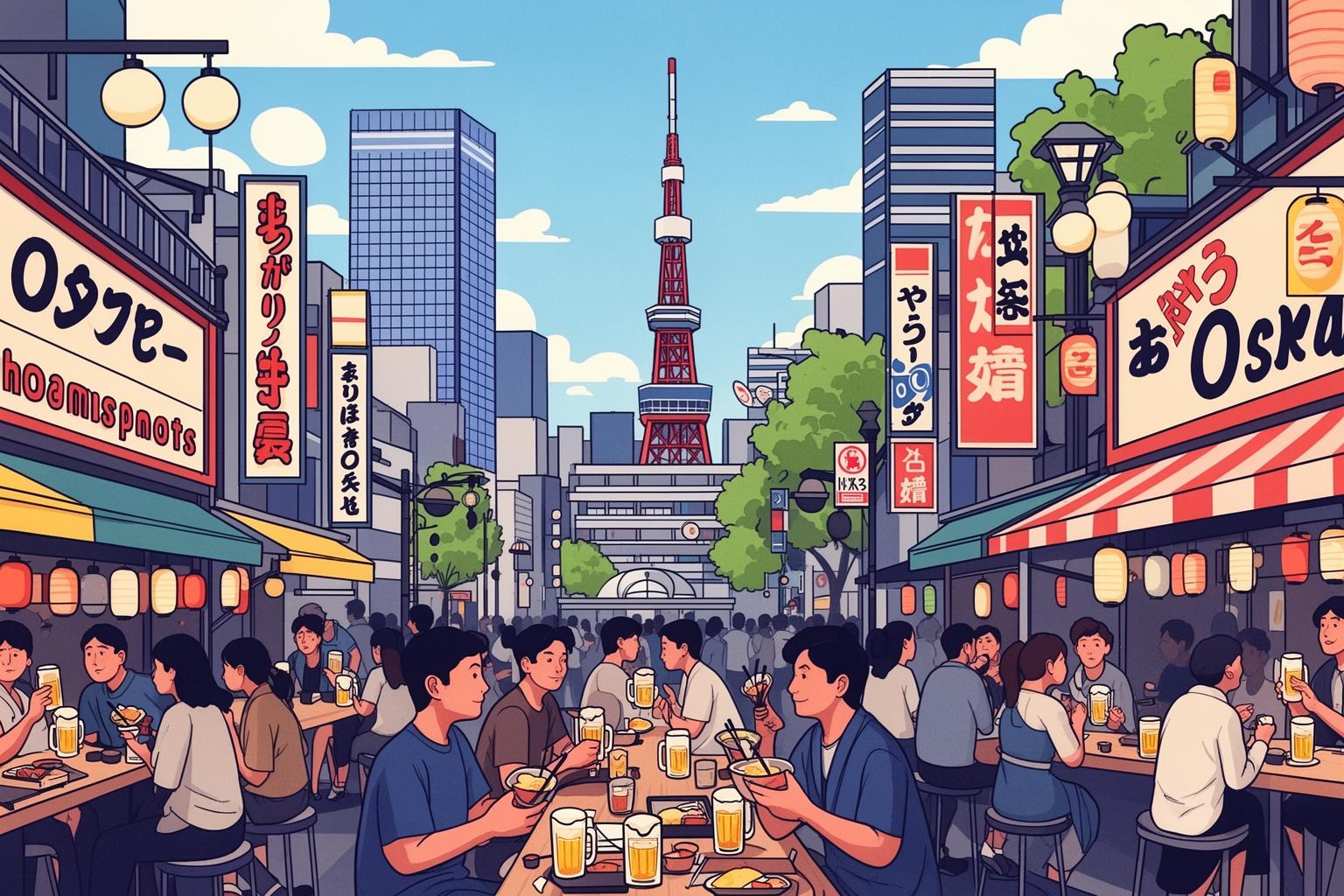
Rather than suggesting specific bars that inevitably become crowded, it’s more helpful to grasp the unique character of the city’s main tachinomi districts. Each district offers a slightly different take on the standing bar experience.
Tenma: The Labyrinth of Libations
The area surrounding Tenma Station stands as the undisputed heart of Osaka’s tachinomi culture. It’s a vast, chaotic maze of covered shopping arcades and narrow back alleys, each filled with dozens of standing bars. The atmosphere here is electric and somewhat overwhelming. You’ll find everything from traditional sake establishments to trendy bars focusing on Italian cuisine and wine, all in the standing bar format. Tenma invites you to get lost, hopping from one bar to another, enjoying a drink and a dish at each. It’s a lively, youthful, and endlessly thrilling reflection of Osaka’s passion for variety and abundance.
Kyobashi: The Salaryman’s Sanctuary
If Tenma is a sprawling celebration, Kyobashi is the gritty, straightforward core. Located at a major commuter hub, the tachinomi scene here is older, cheaper, and firmly rooted in the after-work rituals of Japanese salarymen. The bars feel less refined, the smoke thicker, and the conversations louder. This is where you witness the culture in its rawest form. It’s less about discovery and more about purpose. For many regulars, tachinomi in Kyobashi isn’t a novelty; it’s an essential part of their daily routine.
Namba’s Back Alleys: A Different World
Away from the bright lights of Dotonbori, Namba’s back streets, such as Hozenji Yokocho and the alleys behind the Misono Building, conceal a treasure of smaller, more intimate tachinomi spots. These venues can be a bit more intimidating to enter, often featuring just a single counter with space for only a few patrons. Yet the payoff is frequently a more personal experience. The bar masters (owners) are often colorful characters, and the regulars form a close-knit, if temporary, community. It’s a great place to visit once you’ve moved beyond the larger, more anonymous bars of Tenma and Kyobashi.
The Takeaway: Why Standing Matters
So why stand? Because standing acts as a great equalizer. When everyone is on their feet, hierarchies disappear. The company president and the junior employee stand side by side, sharing the same counter space. It creates a temporary democracy fueled by beer and good cheer. Standing also sets the pace. It’s naturally temporary, encouraging you to have your drink, share a laugh, and move on, making room for the next person. This efficiency and constant turnover are the lifeblood of a city that has always valued commerce and forward momentum. The tachinomi is Osaka in a nutshell: pragmatic, communal, efficient, unpretentious, and always ready for a quick chat and a cheap laugh. It’s where you learn that being friendly isn’t just about smiling—it’s about making space for one more person at the counter and knowing how to fire back when they joke at your expense. To understand the standing bar is to understand the warm, beating heart of this wonderfully complex city.