Step off the Shinkansen at Shin-Osaka, navigate the human currents to the local lines, and before you’ve even figured out which exit to take at Umeda, someone will ask you. Maybe it’s a new colleague, a landlord, or the friendly owner of the standing bar where you’ve sought refuge. The question comes, casual but loaded, a conversational sorting hat for this city. “So, are you a Kita person, or a Minami person?” To a newcomer, it’s a geographical query. North or south. Simple. But to an Osakan, it’s a personality test, a style profile, and a cultural alignment all rolled into one. It’s the fundamental binary that defines the city’s rhythm, a divide more felt than seen, more psychological than physical. This isn’t just about choosing a neighborhood; it’s about choosing your tribe.
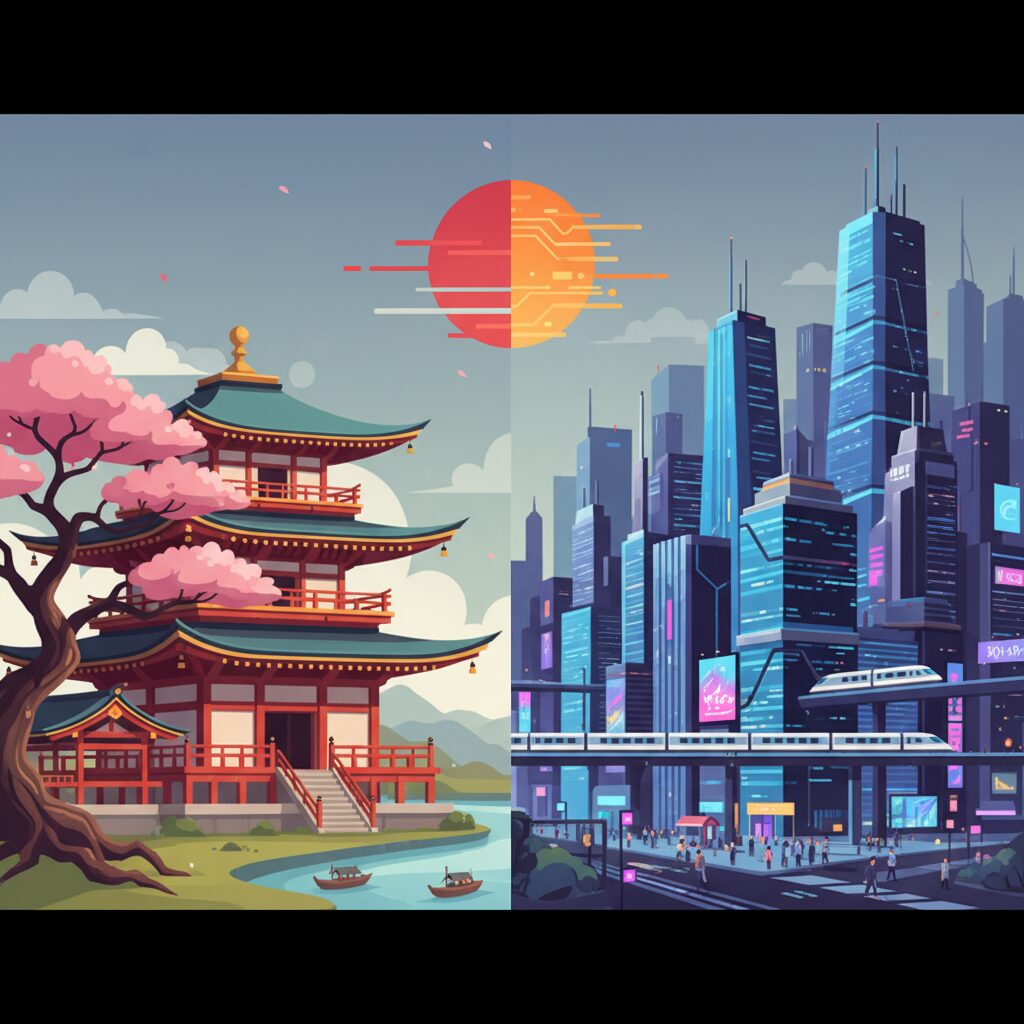
To really grasp this urban duality, you have to unlearn Tokyo. In Tokyo, identity is a sprawling constellation, a glittering loop defined by the Yamanote Line. You might be a Shibuya person, a Ginza person, a Shinjuku person—each a powerful, self-contained universe with its own dress code, soundscape, and social currency. Life there is about navigating this orbit of specialized hubs. Osaka doesn’t orbit. Osaka has an axis. A spine. The city’s identity isn’t scattered around a ring; it’s polarized along a single, pulsing artery—the Midosuji subway line. This creates not a mosaic of lifestyles, but a direct, dynamic tension between two opposing poles: the polished, corporate North (Kita) and the raw, chaotic South (Minami). Understanding this north-south pull is the key to unlocking the real, everyday Osaka, the city that lives and breathes far from the tourist trail.
The city’s pronounced cultural divide is echoed in the Nakanoshima and Kitahama duality, which offers another lens into Osaka’s multifaceted urban character.
The Yamanote Line Analogy: A Ring vs. a Spine
Tokyo’s Decentralized Orbit
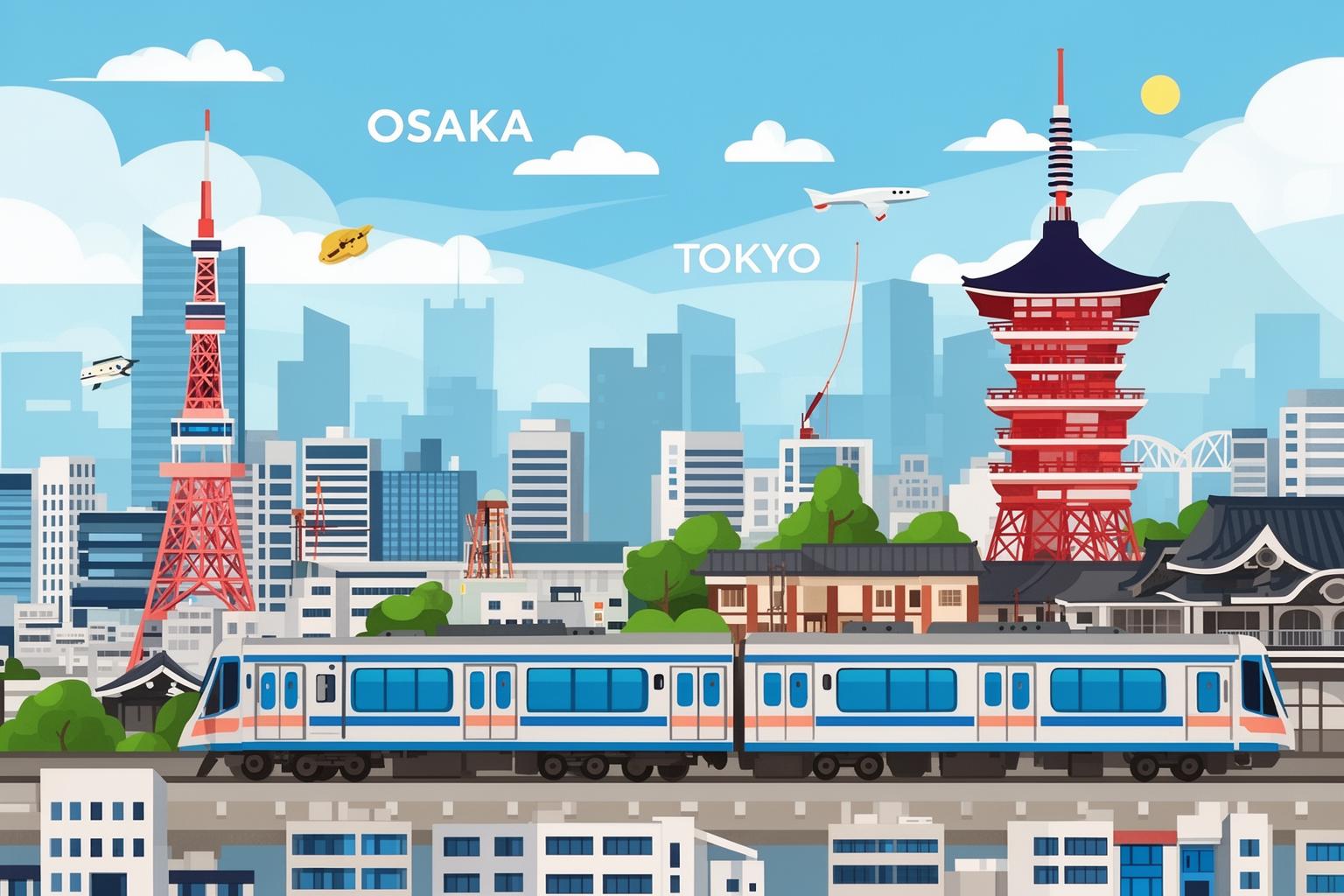
Imagine the Yamanote Line as a necklace, each station a uniquely cut, distinct gem. Shinjuku is the diamond of commerce and chaos, its western side a wall of skyscrapers housing corporate giants and the Tokyo Metropolitan Government, while its eastern side is the neon-lit maze of Kabukicho. Shibuya shines as the vibrant, energetic opal of youth culture, where trends emerge and fade in the blink of a crosswalk light. Ginza is the flawless pearl, radiating an aura of old wealth, timeless luxury, and art galleries where silence is the most prized treasure. Akihabara serves as the circuit board, a pixelated realm of electronics and otaku enthusiasm. Each station is its own destination, a self-contained ecosystem. A Tokyoite’s identity often centers around their favorite hub, yet their daily life involves moving between these worlds. They visit Shibuya for fashion, Ginza for special occasions, and Shinjuku for work. The city is a mosaic of capitals, and navigating it is an art of curation, selecting the right scene to suit the moment. The energy is dispersed, decentralized throughout the loop.
Osaka’s Midosuji Axis
Osaka completely rejects this concept. Its heart is a straight line, a vector. The Midosuji line, the city’s first and most vital subway, acts as a central nervous system running directly from north to south. It links the city’s two urban cores—Umeda in Kita and Namba in Minami—through an eight-minute, high-stakes journey. This isn’t a leisurely orbit; it’s a direct confrontation. The city’s energy pulses up and down this axis, creating a distinct polarity. You’re either heading uptown or downtown, and your direction reveals everything. This linear design encourages a mentality of comparison and contrast. It’s not about an array of choices; it’s about a fundamental decision. The result is a city with two contrasting faces constantly in conversation, continually defining themselves against one another. This dynamic tension fuels Osaka’s internal energy, shaping its business, culture, fashion, and even the way its people speak.
Kita (North): The Polished Face of Commerce
To truly grasp Kita, position yourself within the vast, sunlit atrium of Grand Front Osaka. Observe the shine of polished steel, the discreet efficiency of boutique stores, and the determined pace of individuals in tailored suits. This is Kita. Anchored by the extensive, maze-like Osaka-Umeda Station complex, Kita serves as the city’s official gateway. It is where Shinkansen travelers arrive, where multinational corporations establish their headquarters, and where significant capital drives major development. The aesthetic is modern, sleek, and aspirational. It features broad, tree-lined boulevards like Midosuji, towering glass skyscrapers, and upscale department stores—Hankyu, Hanshin, Daimaru—that act as temples of consumerism. The atmosphere is somewhat more refined, the rhythm a bit brisker and more professional. This is Osaka in its Sunday finest, presenting an image of sophistication and global competence. It stands as the city’s counterpart to Tokyo’s Marunouchi or Shinjuku business district—a space designed for commerce, convenience, and making a strong first impression.
The Kita Uniform
Fashion in Kita communicates status and subtlety. It prioritizes projecting an image of success and refined taste over personal expression. For men, this means sharp suits, typically in navy or charcoal, paired with crisp white shirts and high-quality leather shoes. For women, it involves elegant blouses, tailored trousers or skirts, and the ubiquitous trench coat during spring and autumn. Brands matter but are worn with restraint—a classic Burberry scarf or a finely crafted leather handbag from a reputable Japanese or Italian label. The color scheme is understated, favoring beige, black, navy, and cream. The overall look is polished, coordinated, and international. It is the uniform of the global professional—someone ready to transition seamlessly from an office in Umeda to one in London or New York. The intention is not to stand out but to blend in effortlessly and elegantly.
The Language and Mannerisms
Although the distinctive Osaka-ben dialect remains audible, the tone in Kita tends to be softer and more moderated. In the lobbies of international hotels and boardrooms such as those in the Umeda Sky Building, the dialect often shifts toward more standard Japanese (hyojungo) for business purposes. Interactions are courteous, efficient, and adhere to formal conventions. Service in the high-end department stores is flawless, a precise choreography of bows and honorifics. The vibrant energy of Osaka persists here, but it is a corporate energy—the ambition of a young executive seeking promotion, the focused intensity of a team finalizing a major contract. The energy is concentrated and purposeful, driving the economic engine of western Japan behind gleaming glass facades.
Minami (South): The Raw, Beating Heart of Culture
The Vibe: Chaotic, Colorful, and Unfiltered
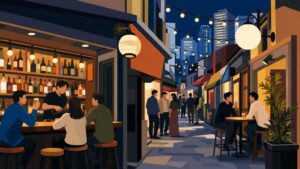
Take the Midosuji line eight minutes south to Namba. Stepping out of the station is like a physical jolt. The air is thick with the aromas of grilled octopus and kushikatsu. The sounds form a chaotic mix of pachinko parlors, shouted greetings from shopkeepers, and a dozen competing J-pop songs blasting from storefronts. This is Minami—a glorious, sensory overload, a district that refuses to be subdued. Centered around the Dotonbori canal with its iconic Glico Running Man sign and including the shopping arcades of Shinsaibashi and the youth-culture hub of Amerikamura, Minami is Osaka’s historical playground and merchant heart. It’s noisy, crowded, and unapologetically authentic. If Kita is the city’s polished showroom, Minami is its bustling, chaotic backroom, where the real life unfolds. There’s a grit here, a lived-in energy that sleek skyscrapers simply can’t match. It’s a world of narrow alleys, tiny stand-up bars, vintage clothing shops, and comedy clubs where the city’s soul is fully exposed.
The Minami Uniform
In Minami, the idea of a uniform is completely abandoned. Fashion is loud, proud self-expression. In Amerikamura (“Amemura”), every imaginable Tokyo subculture can be found, often with a distinct Osaka twist—more color, more humor, more boldness. Vintage reigns supreme, with kids rummaging through racks of ’90s American sportswear and ’70s rock tees. You’ll encounter streetwear enthusiasts in the latest Japanese and international brands, goth-lolita outfits posing for photos, and older Osakans confidently sporting flamboyant animal-print clothes—that’s pure Minami. Style here isn’t about blending in; it’s about broadcasting your identity. It’s experimental, individualistic, and ever-evolving. The only rule? There are no rules.
The Language and Mannerisms
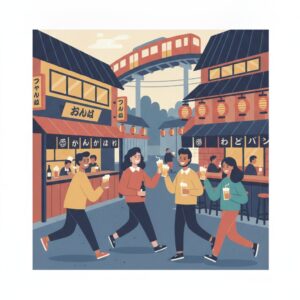
This is the heartland of pure, unfiltered Osaka-ben. The dialect is fast, loud, and theatrically expressive. It’s direct, earthy, and full of humor. Strangers might comment on your shoes, the takoyaki vendor will tease you as they cook, and chatting with the person next to you at a bar isn’t just possible—it’s expected. The formality of Kita disappears here. It’s a culture of tsukkomi and boke—the classic straight man and funny man routine of Japanese comedy—unfolding in daily interactions. The hustle is personal and face-to-face. It’s the shop owner in the Shinsaibashi-suji arcade hustling to make a sale, the street performer drawing a crowd, the chef in a tiny ramen spot who knows all his regulars by name. It’s this unfiltered, human-to-human connection that underpins Osaka’s legendary reputation for friendliness.
Beyond the Stereotypes: Where the Lines Blur
The In-Between Zones: Hommachi and Yodoyabashi
Naturally, no city can be reduced to a simple binary. The stretch along the Midosuji line between Umeda and Namba represents a compelling hybrid zone. Yodoyabashi, known for its grand European-style architecture, including Osaka City Hall and the Bank of Japan branch, serves as the city’s financial and administrative core. It exudes the corporate seriousness of Kita, combined with an air of old-world gravitas. Hommachi, historically the center of the textile trade, is a district of wholesalers and offices that feels more grounded and subdued than its northern neighbor. These neighborhoods form the city’s functional core, where the bustling energies of Kita and Minami converge in the daily work routine. The people here reflect a blend—they may work in formal offices but express their true Minami spirit after 5 PM. Additionally, neighborhoods near this central axis resist straightforward classification. Horie, just west of Shinsaibashi, is technically part of Minami but has developed into a stylish hub of designer furniture shops, minimalist cafes, and independent fashion boutiques, attracting those who appreciate Minami’s creativity yet prefer Kita’s refinement.
The Generational Shift
The sharp divide between Kita and Minami is also becoming less distinct among younger generations. A 22-year-old might hold a part-time job in a sleek LUCUA department store in Kita, spend their earnings on vintage treasures in Amemura, and spend evenings at the dive bars of Uranamba. Social media has fostered a city-wide dialogue on style and culture that transcends geographical boundaries. Cool, independent coffee shops and art galleries, once exclusive to artsy Minami neighborhoods, are now emerging in residential areas around Kita, such as Nakazakicho—a labyrinth of old wooden houses now home to bohemian cafes and shops. For many young Osakans, the choice is no longer “either/or,” but “both/and.” They navigate the entire city, selectively embracing the best of both worlds to create their own distinctive Osaka lifestyle.
The Foreigner’s Perspective: Choosing Your Tribe
So, what does this mean for you, a non-Japanese resident trying to find your way? The Kita-Minami divide provides a useful framework for making life choices. If convenience, modern living spaces, and easy access to the Shinkansen and multiple train lines for work or travel are your priorities, living in or near Kita makes great sense. Neighborhoods like Fukushima or Temma offer excellent food scenes while remaining just a short walk or one train stop from the Umeda hub. The lifestyle here is orderly and comfortable. If you seek immersion, spontaneity, and a vibrant street life, then Minami is your spiritual home. Living near Namba or its surrounding neighborhoods places you in the midst of the action, with endless options for food, entertainment, and social connection right outside your door. The lifestyle is lively, occasionally gritty, but never dull. Ultimately, the question “Are you a Kita person or a Minami person?” reflects your own personality. Do you thrive in structure or chaos? Do you prefer polish or patina? The beauty of Osaka is that it offers both, in equal and powerful measure.
The Deeper Meaning: What the Divide Says About Osaka
A City of Merchants, Not Samurai
This entire north-south dynamic is deeply rooted in Osaka’s core identity. Tokyo, once known as Edo, was the samurai capital, the seat of the military government. It was a city structured around power, hierarchy, and formality. In contrast, Osaka was the tenka no daidokoro—the “nation’s kitchen.” It was a city of merchants, artisans, and entertainers. Its strength lay not in politics, but in economics. Its culture was not defined by stoic warrior codes, but by practical, streetwise commerce. This merchant spirit, the akindo seishin, forms the city’s DNA, with the Kita-Minami divide as its contemporary expression. Kita embodies the evolution of this spirit into large-scale, international corporate business. It is the refined, global face of the merchant class—the front office. Minami, meanwhile, represents the raw, unfiltered heart of that same spirit. It’s the lively marketplace, the entertainment district designed to part a working man from his earnings, the culture of kuidaore (“eat till you drop”). It’s the shop floor, where bargaining is loud and the humor sharp.
Embracing the Contradiction
Ultimately, Osaka’s true identity is not found solely in Kita or Minami. It lies in the tension and interplay between them. It’s reflected in Osakans’ ability to switch codes, donning a sharp suit for a business meeting in Yodoyabashi by day, then changing into streetwear for a raucous night out in Namba’s back alleys. Unlike Tokyo’s collection of distinct lifestyle spheres along the Yamanote loop, Osaka’s identity is a vibrant, ongoing dialogue between its two poles. The city embraces both the aspiration for global success and a fierce pride in its gritty local culture. Osakans grasp this duality instinctively. They can enjoy the luxury of a Kita department store while also knowing where to find the best and most affordable takoyaki in a Minami backstreet. This acceptance of contradiction is what makes the city and its people endlessly resilient, resourceful, and human. The city doesn’t force a choice; it invites you to understand the whole, to navigate the line, and to discover your own place within its vibrant, pulsating, two-hearted soul.