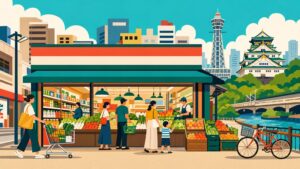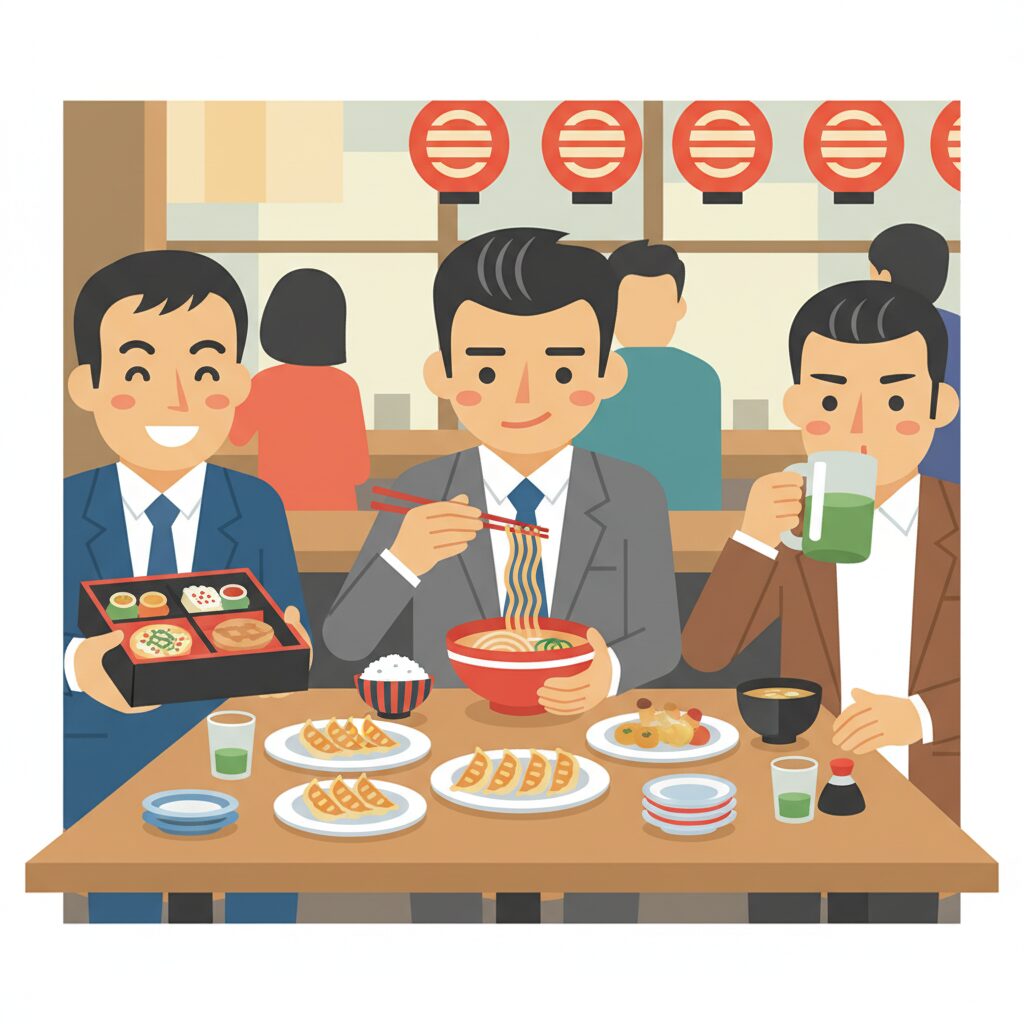
Walk through Umeda, Yodoyabashi, or Honmachi any weekday at the stroke of noon, and you’ll witness a daily migration. A river of black, grey, and navy blue suits floods out of the towering office buildings, a silent, purposeful army on a one-hour mission. You might think you know the destination: a meticulously packed bento box waiting at a desk, or perhaps a leisurely, collegial meal at a proper restaurant. This is the image Japan often projects—one of order, patience, and aesthetic detail.
But this is Osaka. And in Osaka, the reality of the midday meal is a different beast entirely. Forget the stereotype of the elaborate, multi-tiered bento lovingly prepared at dawn. While some folks certainly bring their own lunch, the beating heart of the Osaka salaryman’s lunch hour is found in the crowded, steaming, and brutally efficient eateries that cram the city’s commercial arteries. This isn’t a break from the hustle; it’s a high-speed pit stop that fuels the hustle. It’s a masterclass in the city’s core philosophy: maximum value, minimum fuss. To understand how this city’s white-collar warriors refuel is to understand the pragmatic, merchant soul of Osaka itself. It’s a culture forged in the crucible of commerce, where time is currency and a good deal is the highest form of art. So let’s follow that river of suits and see where it leads, deep into the heart of Osaka’s workday ritual.
The vibrant rush of the midday meal mirrors the city’s intricate urban pulse, hinting at how Osaka’s morning service culture quietly sets the stage for its relentless pace.
The Holy Trinity: Fast, Cheap, and Delicious
In the world of an Osaka office worker, the ideal lunch follows an unwritten yet universally acknowledged trinity of virtues: it must be quick, affordable, and undeniably delicious. This isn’t merely a preference but a survival tactic. The standard lunch break is a strict sixty minutes, starting the moment you leave your desk and ending when you return. When factoring in the elevator ride down, the walk to the restaurant, and the return trip, the actual time left for eating drastically shrinks. This leaves no space for hesitation, leisurely meals, or anything that doesn’t serve the primary goal of recharging for the afternoon’s challenges.
The Gospel of ‘Kosupa’
To fully understand the Osaka mindset, one must grasp the concept of `kosupa`, a Japanese blend of “cost performance.” In Osaka, however, `kosupa` transcends being just a consumer metric and becomes a near-religious principle. It isn’t, as outsiders often assume, simply about being cheap. Anyone can find an inexpensive meal. True `kosupa` is about value. It is the deep satisfaction of paying a low price for something that seems like it should cost much more. It’s the 800-yen `teishoku` (set meal) featuring a perfectly grilled piece of fish, a mound of glossy rice, a hearty miso soup, crunchy pickles, and perhaps even a small portion of tofu. Eating it feels like a victory. You’ve outsmarted the system. This feeling drives the Osaka lunch economy.
This approach sharply contrasts with Tokyo’s lunch culture. There, lunch can be a status symbol, an experience, or an opportunity to visit a trendy cafe or a magazine-featured restaurant. The ambiance, branding, and Instagram appeal can be as crucial as the food itself. In Osaka, however, value is almost entirely on the plate. The restaurant’s decor may be outdated, seating cramped, and service brisk and efficient rather than overly polite—but none of that matters if the food delivers exceptional flavor at a fair price. An Osaka salaryman might proudly share with colleagues about the 700-yen katsudon he discovered in a dingy basement that outshone a dish twice the price at a department store. That is the `kosupa` victory story, told every day throughout the city.
The Speed Imperative
With only minutes to spare, speed is essential. The entire lunch infrastructure in Osaka’s business districts is designed for maximum efficiency. This is evident in restaurant layouts, menus, and the behaviors of staff and customers alike. Many places use a ticket machine (`kenbaiki`) at the entrance. This is the first step in a highly optimized system. You insert your money, press a button for your chosen meal—something you’re expected to decide before entering—and receive a small plastic ticket. This single step eliminates the need for a waiter to take your order and process payment later, removing variables and streamlining the experience. You give the ticket to the kitchen staff, find a seat, and often your food arrives before you finish your glass of water.
This emphasis on speed shapes the types of food that flourish here. Ramen, udon, soba, curry rice, and various donburi (rice bowls) reign supreme. These dishes can be prepared in bulk and assembled swiftly. A bowl of kitsune udon, with its sweet fried tofu atop thick noodles in savory dashi broth, can be served in under ninety seconds. The system is a finely tuned dance of efficiency. Chefs move with precise economy of motion honed by years of repetition. There is no wasted time or idle talk. The goal is simple: get the delicious, life-sustaining food into the hands of busy office workers as quickly as possible so they can eat, pay, and leave, making room for the next person in line extending out the door.
The Salaryman’s Lunch Arenas
This fast-paced, high-value lunch culture doesn’t just appear on any street corner. It thrives in particular urban ecosystems—purpose-built environments designed to meet the specific needs of office workers. These are not the polished, tourist-oriented spots of Shinsaibashi or Dotonbori. Rather, they are the gritty, functional, and often hidden spaces where the real business of lunch takes place. Navigating these areas reveals a side of Osaka that many visitors—and even some locals—completely overlook.
The ‘Tachigui’ Temple: Standing Room Only
The most extreme representation of Osaka’s efficiency-driven mindset is the `tachigui`, or standing-eating, restaurant. Usually, these are tiny storefronts located inside or near train stations, featuring just a long counter and no seating. This concept may seem surprising at first. Why would anyone choose to stand while eating? The answer is straightforward: it’s the fastest way to have a meal. The lack of chairs isn’t a design flaw; it’s intentional. It discourages lingering, maximizes customer turnover per square foot, and emphasizes that eating here is purely a functional act of refueling.
A classic `tachigui` experience involves a soba or udon shop. You step inside, insert your coins into a ticket machine, and take a spot at the counter. Within a minute, a steaming bowl is placed in front of you. Shoulder to shoulder with a dozen others—mostly men in suits—you all share this ritual. The only sound is a chorus of slurping—the accepted, even expected way to eat noodles in Japan. Conversation is minimal or absent. You focus on your bowl, finish your noodles in five to ten minutes, place the empty bowl back on the counter, and leave. The entire process, from entry to exit, takes less than twelve minutes. It’s the culinary equivalent of a Formula 1 pit stop: a perfect blend of speed, tradition, and practicality that is quintessentially Osaka.
The Underground Labyrinth: Ekimae Buildings and Chikagai
If the `tachigui` is a quick skirmish, the true battleground for the salaryman lunch lies underground. Osaka is famous for its extensive `chikagai`, or underground shopping arcades, which link major train stations and office complexes. These subterranean corridors form a world of their own, protected from weather and time. Here, within these fluorescent-lit passages, you’ll find some of the city’s best-value food.
This is especially evident in the legendary Osaka Ekimae Buildings. Located just south of JR Osaka Station, these four massive, somewhat drab buildings—imaginatively named Daiichi, Daini, Daisan, and Daiyon (First, Second, Third, and Fourth)—are a haven for the city’s office workers. From the outside, they resemble generic, aging office blocks, but their basements house a sprawling, chaotic maze of tiny restaurants, each competing for the salaryman’s lunch budget. The air is thick with the aromas of curry, frying oil, and dashi broth. Signage is old, decor minimal, and crowds intense. It can be overwhelming, but it’s an ecosystem sustained purely by `kosupa`.
Here you’ll find a curry shop serving the same recipe for fifty years, a Chinese restaurant where a large plate of fried rice and gyoza costs less than a cup of coffee at a high-end café, and multiple `teishoku` eateries all striving to offer the most food for the least yen. Menus are often small and highly specialized. A shop might sell only one dish—katsudon, for instance—but have perfected it over decades. This is where Osaka’s true merchant spirit shines. These aren’t trendy pop-ups; they are legacy businesses passed down through generations, thriving by consistently delivering honest, delicious food to the city’s working people.
The One-Coin Wonders
Within this system, a special place is reserved for the “one-coin lunch.” This meal costs just a single 500-yen coin. Offering quality at this price point is a source of great pride for restaurateurs. It’s a statement of their dedication to `kosupa`. A one-coin lunch isn’t a sad convenience store bento. In the Ekimae Buildings, it might be a hearty bowl of ramen, a plate of curry with pork cutlet, or a daily set meal with a main dish, rice, and soup. Finding these bargains is a favorite pastime for many office workers, who exchange tips and recommendations like insiders on the stock market. The one-coin lunch symbolizes Osaka’s food culture: a satisfying, hot meal is not a luxury but a right for anyone who works hard, no matter their rank or income. It’s a deeply democratic and practical approach to food rarely found with such intensity in other Japanese cities.
Unspoken Rules of the Midday Rush
Successfully navigating the salaryman lunch scene requires more than simply knowing where to go. It involves understanding the unspoken social contract that governs these bustling spaces. These are not formal rules, yet they are observed with a discipline that keeps the entire system running smoothly. For a foreigner, paying attention to these subtle behaviors is essential to blending in and gaining a deeper appreciation of the local culture. It’s a dance of mutual respect, where everyone implicitly agrees to a set of principles aimed at getting everyone fed as quickly as possible.
Eat, Pay, Leave: The Social Contract
The single most important rule is this: do not linger. A busy lunch spot between 12:00 PM and 1:00 PM is not a social club; it’s a processing plant for hungry people. Once your food is finished, your place in the seat is done. Sitting and chatting with a colleague, scrolling leisurely through your phone, or slowly sipping water for another ten minutes is a cardinal sin. You are occupying a valuable resource—a seat—that others waiting in line desperately need. This isn’t seen as rudeness from the restaurant wanting you to leave; rather, it’s considered rude on your part for not recognizing the collective necessity for efficiency.
The rhythm is clear. You eat with focus and purpose. As you take your last bite, you are already thinking about payment. If you pay at the register, you stand up immediately and head there. If you pay at the table, you have your wallet at the ready. The transaction is swift. You say a quick `gochisousama` (“thank you for the meal”) and exit. This efficient turnover is the lifeblood of these establishments. Operating on thin margins and high volume, respecting this flow means you are not just a good customer, but a good citizen of the lunch-hour ecosystem. It’s a beautiful example of the Japanese concept of considering others, applied in a very pragmatic, Osakan way.
The Art of the Solo Dine
Another aspect that might surprise those from more communal dining cultures is the commonality of solo dining. It’s very typical to see office workers eating lunch alone, with absolutely no social stigma attached—in fact, it’s often preferred. Coordinating lunch plans with multiple colleagues can be a time-consuming hassle, as everyone has different tastes, budgets, and schedules. Dining solo removes that friction entirely.
Eating alone maximizes efficiency. You can go to exactly the ramen shop you’re craving, eat at your own brisk pace, and maybe use the leftover time to run a quick errand at the bank or post office. The restaurants are designed for this. Long counters are much more common than large tables, creating perfectly self-contained spaces for individual diners. For a foreigner who might feel self-conscious sitting alone in a restaurant back home, this experience can be incredibly liberating. In Osaka’s business districts, a solo diner is not an object of pity; they are a model of efficiency. They understand the purpose of the lunch hour and are executing their mission with precision. You are not just accepted—you are the norm.
What It Says About Osaka’s Soul
This entire daily ritual—the search for `kosupa`, the reverence for speed, the standing-only eateries, and the basement labyrinths—represents more than just a set of eating habits. It directly reflects Osaka’s history, identity, and core character. The way a city eats lunch reveals its true values. In Osaka, these values are pragmatism, community through shared purpose, and a deep respect for honest, hard work.
A City Built on Business, Not Ceremony
Osaka has long been Japan’s merchant capital, a city forged by traders, artisans, and financiers. Unlike Tokyo, the seat of the shogun’s power, or Kyoto, the imperial court’s home, Osaka’s identity was never shaped by aristocracy or elaborate ritual. It was shaped by the marketplace. In business, results matter more than appearances. A deal is judged by its value, not by the elegance of the contract’s calligraphy. Time is money. These core principles are woven into the city’s fabric and are perfectly reflected in its lunch culture.
For the salaryman, lunch is a business transaction. The customer pays money, and the restaurant provides nourishment. The terms are straightforward: the food must be tasty and filling, and the service must be swift. An earthy, blue-collar pride runs through the city’s food scene, even among white-collar workers. It’s a rejection of pretension in favor of substance. The celebrity chef or trendy interior designer holds far less influence here than the third-generation owner of a small udon shop who has perfected his dashi broth. This is what makes Osaka unique. It’s a city that honors the craft of delivering real value to real working people.
Beyond the ‘Kuidaore’ Cliché
Tourists visiting Osaka are often introduced to the idea of `kuidaore`, colorfully translated as “to eat oneself into ruin.” This slogan, plastered all over Dotonbori, evokes images of extravagant feasts featuring takoyaki, okonomiyaki, and fugu. But this caricatures the city’s real food philosophy. For locals living and working here, `kuidaore` is not about gluttonous excess. It’s about being discerning, demanding, and appreciative of food. It’s about having a meaningful, everyday relationship with what you eat.
An Osaka salaryman who discovers a spot with an outstanding bowl of curry rice for 650 yen embodies the `kuidaore` spirit far more authentically than a tourist splurging on a novelty meal. He uses local knowledge and refined taste to achieve maximum culinary satisfaction at a fair price. This is the heart of the city’s spirit. It’s not just friendliness, as the stereotype suggests. Osaka’s version of friendliness is grounded in straightforward, honest dealings and mutual benefit. The restaurant owner aims to make a living by serving excellent food; the office worker wants a great meal without being overcharged. When that deal succeeds, it builds community and trust.
So, next time you find yourself in the middle of Osaka’s business district at noon, don’t just watch the flow of suits from afar. Follow it. Let it lead you away from the main streets and down a narrow staircase into a bustling, fluorescent-lit basement. Locate a crowded little shop with a ticket machine outside and a line of patient yet orderly customers. Point to a menu picture, hand over your ticket, and settle at the counter. As you slurp noodles or dig into your rice bowl, look around. This isn’t a show for tourists. This is the genuine, unfiltered, and incredibly efficient rhythm of daily life in Osaka. You won’t just be eating lunch; you’ll be taking a masterclass in the city’s soul.