You step out of the humid Osaka summer night, the cicadas buzzing a high-frequency chorus, and push through a heavy wooden door under a blue noren curtain. The air inside shifts instantly—warm, steamy, smelling of soap and something ancient, like cedar and minerals. This isn’t a sleek, silent spa. This is a neighborhood sento, a public bathhouse, and it’s one of the most honest places in the entire city. Forget the curated politeness of department stores or the performative energy of Dotonbori. The sento is where Osaka lets its hair down, sheds its clothes, and reveals its true, unfiltered self. It’s a place that can feel intimidating at first, a world of unwritten rules and naked strangers. But if you want to understand what makes this city tick, what daily life really feels like beyond the tourist trail, you have to understand the social rhythm of the bathhouse. It’s where community is built, one splash and scrub at a time. It’s a living, breathing piece of neighborhood culture that tells you more about Osaka’s soul than any guidebook ever could. Before we dive in, here’s a look at a classic spot that keeps the tradition alive in the heart of the city.
Venturing out from the refreshing atmosphere of Osaka’s public baths, you might also notice how a bicycle unlocks Osaka’s financial and cultural secrets to further illuminate the city’s vibrant character.
The Bathhouse Isn’t a Spa, It’s the Neighborhood Living Room

The first and most essential thing to understand is the function of the sento. Foreigners often compare it to a spa, a place for quiet reflection and personal indulgence. However, an Osaka sento is quite the opposite. It serves as the neighborhood’s communal living room, just with more water and less furniture. The soundscape alone tells the story: the sharp clatter of small plastic stools on tiled floors, the steady rush of water from chrome-plated faucets, and above it all, the lively hum of conversation. In Tokyo, a sento visit might be a quieter, more solitary experience, marked by polite nods between strangers engaged in their own ritual. In Osaka, silence feels unusual. Here, the bath is a social occasion.
This is the physical expression of the concept called hadaka no tsukiai, or “naked communion.” It represents the idea that once you shed your clothes, uniforms, brand names, and business cards, everyone stands on equal ground. The company president bathes beside the construction worker, and the retired grandmother next to the young student. In the steam, all the usual social hierarchies of Japan dissolve. This philosophy aligns closely with the famously practical and straightforward Osakan mindset. Status matters less here than your ability to laugh heartily and speak frankly. The sento is the ultimate equalizer—a place where you are judged not by your title, but by whether you rinse your stool after use. You’ll find groups of friends catching up, families spanning generations, and solo bathers who nonetheless become part of the ambient chatter. It’s a slice of life, unfiltered and genuine, and it’s gloriously, unapologetically noisy.
The Unspoken Rules of the Water
While the atmosphere feels relaxed, the sento is governed by a strict set of unspoken rules. These aren’t mere suggestions; they form the essential pillars of hygiene and mutual respect that keep the whole system functioning. Break one, and you won’t just receive a side-eye like you might in Tokyo. Instead, you’re likely to get a direct, frank, and possibly loud correction from a grandmother who has been bathing here long before you were born. Don’t take it personally; it’s simply the Osaka way of maintaining order—clear, direct, with no room for passive aggression.
Before You Even Touch the Tub: The Kakeyu Ritual
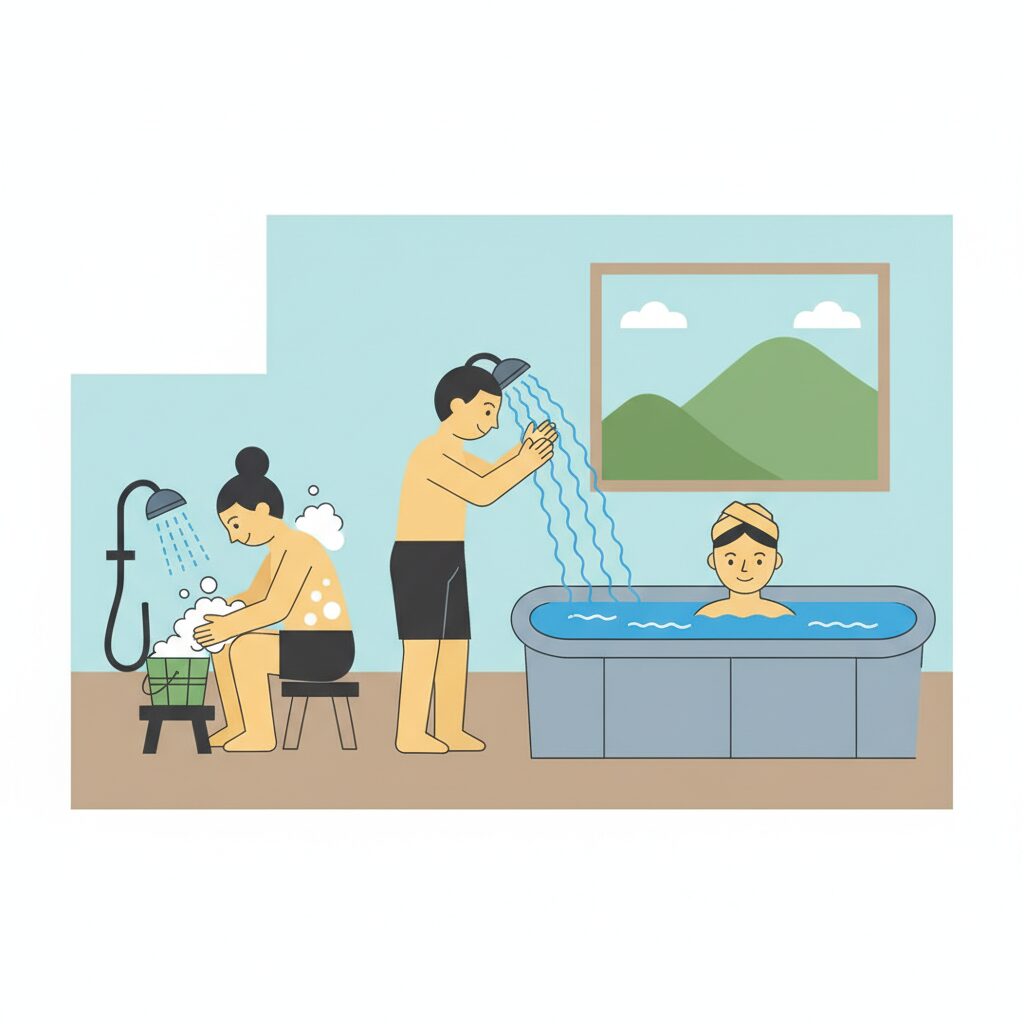
After undressing in the changing room and entering the main bathing area, your first instinct might be to slip into that invitingly hot pool. Resist this urge with all your might. The main tubs are for soaking, not for cleaning. Since they contain shared water, the cardinal rule is that you must be completely clean before entering. Locate a washing station—a faucet with a stool and a bucket. Sit down and give yourself a thorough wash. This isn’t a quick splash-and-dash; it’s a full, soap-lathering, hair-washing scrub down. You are washing away the entire day. The logic is simple and profound: you are showing respect for everyone else who will use the water and contributing to the cleanliness of the shared space. Skipping this step is the biggest faux pas you can make. It’s perceived as selfish and disrespectful, and in Osaka’s direct culture, someone will almost certainly call you out.
The Towel Conundrum: On Your Head, Not in the Water
When you enter a sento, you’re given two towels: a large one for drying off in the changing room, and a small, thin one resembling a washcloth. This small towel is your versatile companion inside the bathing area. You can use it to scrub your body and for a bit of modesty while walking around. Its one absolute rule is that it must never, ever enter the bathwater. Even after washing yourself, the towel is considered unclean and a potential contaminant to the pristine soaking tubs. So what do you do with it while you soak? You’ll quickly notice the local custom: people fold it neatly and place it on their head. It might look a bit odd at first, but it’s the most elegant solution—keeping the towel clean, out of the water, and easily accessible. Alternatively, you can leave it on the side of the tub, well away from the water’s edge.
Claiming Your Space (But Not Too Much of It)
Washing stations operate on a first-come, first-served basis, and when you use one, you are expected to be mindful of your surroundings. This is a fundamental principle of living in a densely populated city like Osaka. Sit on the stool to wash; standing and showering causes water to splash everywhere and is considered poor manners. Keep your soap, shampoo, and bucket confined to your immediate area. Splashing the person next to you is a serious etiquette violation. When finished, the unspoken rule is to rinse everything—your stool, bucket, and surrounding floor area—with hot water, leaving it clean for the next user. Don’t leave shampoo bottles to “reserve” your spot while you soak. The space is communal and fluid. This reflects a microcosm of Japanese social grace: use shared resources respectfully and leave them in better condition than you found them.
Decoding the Osaka Sento Conversation
If the rules are the grammar of the sento, then conversation is its soul. This is where Osaka’s character truly shines, especially through the influential figures who anchor the entire social scene: the obachan, the older women of the neighborhood.
The “Obachan” Network: The Heartbeat of the Bathhouse
In an Osaka sento, the obachan reign supreme. They take great pride in their neighborhood, possess deep knowledge of local events, and aren’t afraid to speak their minds. As a foreigner, you become a subject of friendly curiosity. Expect direct questions and ongoing commentary, often delivered loudly. “Your skin is so white!” “Are you not cold?” “You use a lot of shampoo!” This isn’t meant to be rude or intrusive; it’s a form of engagement, an opening move in conversation. In a culture that can often seem reserved, this is Osaka’s way of being welcoming: straightforward, inquisitive, and completely without pretense. They are the guardians of sento culture, correcting improper etiquette and greeting newcomers with gruff affection. Listening to them talk is like tuning into the neighborhood’s private radio station, filled with gossip about shop sales, who’s getting married, and whose grandchild just started school. It’s lively, it’s genuine, and it’s the true voice of the city.
“Maido” and the Feeling of Belonging
Notice the greetings. When you pay your fee at the entrance, the person behind the counter—often the long-time owner—will likely greet regulars with a hearty “Maido!” This classic Osakan merchant greeting is a warm and familiar way of saying “Welcome” or “Thanks for your continued patronage.” It’s a small gesture, but it shows this is more than just a transaction—it’s a relationship. If you frequent the same sento, that formal “Irasshaimase” might turn into a “Maido.” You’ll start recognizing faces in the bath, and they’ll recognize you. A nod will lead to a brief chat. This is how you become part of an Osaka neighborhood. You show up, participate, and become woven into the local fabric. The sento is one of the fastest ways to feel less like a visitor and more like you truly belong here.
The Elephant in the Room: Tattoos and Other Anxieties
For many foreigners, the main sources of sento-related stress are tattoos and general body awareness. Let’s address these issues directly with some practical, Osaka-specific advice. The tattoo issue is complicated, linked to a historical association with the yakuza, Japan’s organized crime groups. For many older Japanese, tattoos are not viewed as self-expression but as a symbol of a criminal lifestyle. Sento owners, especially at older, family-run establishments, ban tattoos to ensure their regular, elderly customers feel safe and comfortable. This is rarely a personal judgment against you; it’s a business decision aimed at not alienating their core clientele.
So, what’s the reality on the ground? It varies widely. Many traditional sento display signs near the entrance explicitly banning tattoos. It’s always best to respect these rules. However, Osaka’s pragmatic attitude sometimes creates a gray area. Some smaller places might overlook tattoos, especially for non-Japanese visitors with smaller ones. But you can’t rely on this. A safer option is to look for larger, more modern facilities known as “super sento,” which often have more relaxed policies or are openly tattoo-friendly. The best approach is to check their website in advance or simply visit, being prepared for the possibility of a polite refusal. Regarding body anxiety, leave it behind in the locker. The sento is a judgment-free zone. You’ll encounter every kind of body—varied types, shapes, ages, and sizes. Nobody is watching, and nobody cares. People come to get clean, relax in the hot water, and socialize. The focus is entirely on the shared experience, not on individual appearances.
After the Soak: The Second Act of the Sento Experience
The ritual doesn’t conclude once you towel off. The second act unfolds back in the changing room, the datsuijo. This area functions as a post-bath lounge. Don’t rush to leave just yet. It’s here that the sensation of being completely, bone-deep clean and refreshed—sukkiri shita—truly settles in. You’ll notice people lingering in their underwear or a cozy yukata, fanning themselves in front of a large electric fan. There’s almost always a television mounted on the wall, often tuned to a Hanshin Tigers baseball game, with the collective groans and cheers providing a shared atmosphere.
Then there’s the post-bath drink, a sacred tradition. Look for the vintage-style refrigerator, frequently stocked with small glass bottles. The ultimate prize is fruit milk (furutsu gyunyu) or coffee milk (kohi gyunyu). Nothing beats chugging a cold, sweet, creamy drink after soaking in near-scalding water. It’s a small, perfect pleasure that completes the entire experience. Here, you might continue a conversation started in the tub or simply sit in contented silence, feeling the day’s stress melt away. It’s an affordable, accessible luxury that forms an essential part of the weekly, or even daily, routine for many Osakans. It’s wellness, community, and tradition—all for the price of a few hundred yen and a bottle of milk.