You’ve made the leap. You live in Osaka. You’ve navigated the ward office, mastered the train system, and found your favorite corner ramen shop. But then, the end of the month rolls around, and you stare at your bank account. You look at the receipts from the big, brightly lit supermarket down the street—the one with the pristine aisles and perfectly shrink-wrapped apples. The numbers add up, and they add up fast. You find yourself wondering, “Is this it? Is living in Japan just… expensive?” This is a quiet confusion many newcomers face, a friction between the dream of life in Japan and the daily reality of the grocery bill. In a city like Tokyo, this might be the end of the story. You accept the high cost of convenience as the price of admission. But this is Osaka, and in Osaka, there’s always another way. A louder, more chaotic, more human way. It’s a way that doesn’t just save you money; it plugs you directly into the city’s vibrant, beating heart. I’m talking about the neighborhood shotengai, the covered shopping arcades that crisscross the city’s residential districts like arteries. Forget what you’ve seen on travel blogs. We’re not talking about the polished, tourist-centric arcades of Shinsaibashi or the gastronomical theme park that Kuromon Market has become. We are talking about the working-class, life-sustaining shotengai where grandmas haggle over the price of daikon radishes and the air is thick with the sizzle of freshly fried croquettes. These places are the secret weapon of the savvy Osaka resident. They are the physical embodiment of the city’s core philosophy: value, community, and a healthy dose of cheerful pragmatism. Using them correctly is a skill, a shift in mindset that transforms the chore of grocery shopping into an adventure, cutting your monthly food expenses while deepening your connection to the city you now call home.
Enhance your authentic Osaka experience by exploring not only shotengai bargains but also the city’s spirited side through our guide to drinking like a local in Osaka’s liquor stores.
The Supermarket Illusion: Why Your Grocery Bill is Higher Than It Should Be
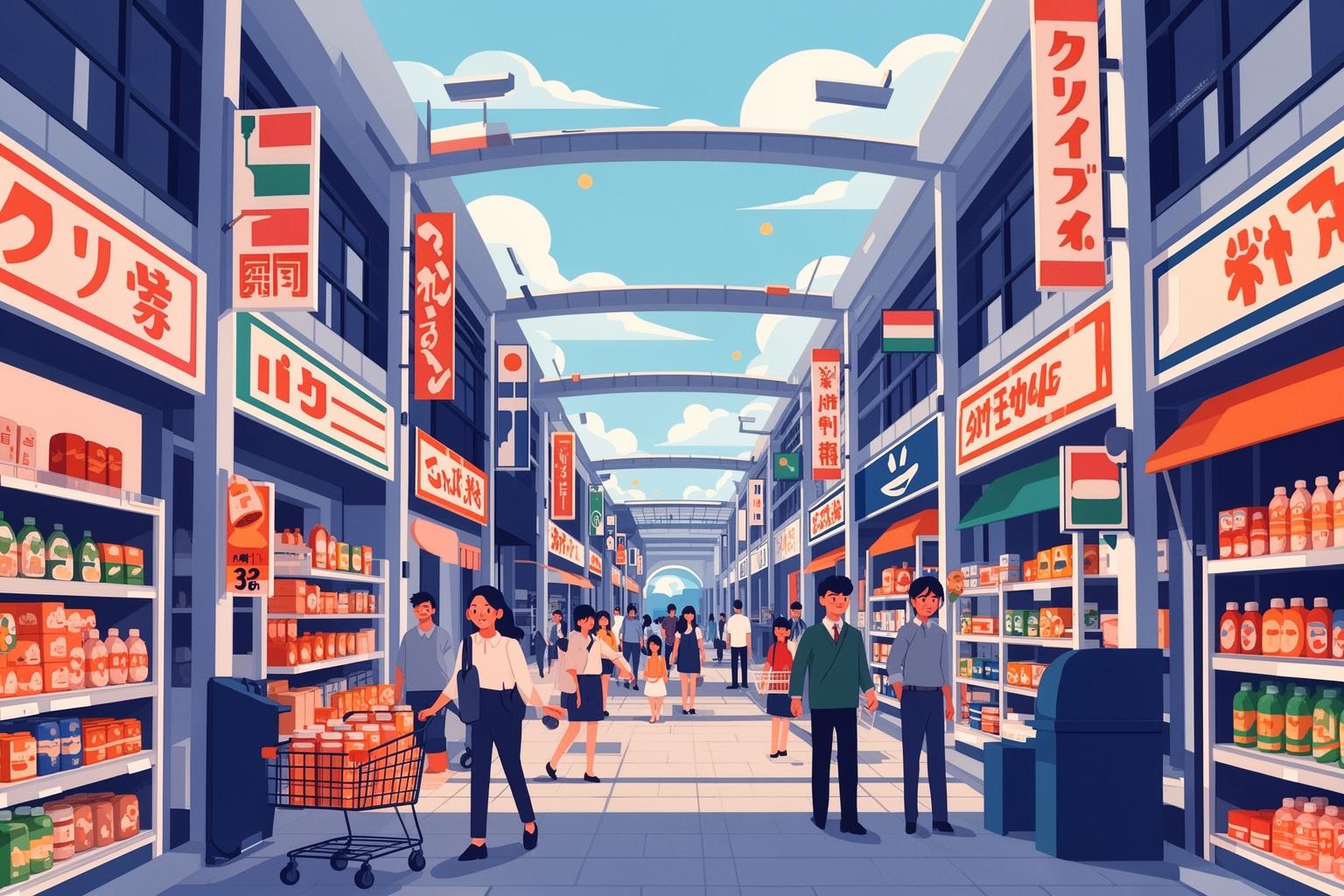
The modern Japanese supermarket is a showcase of order and convenience. Chains such as Life, Mandai, Aeon, and Kohyo provide a clean, quiet, and predictable shopping environment. Everything is available under one roof. You can pick up your milk, bread, imported pasta, and laundry detergent in one quick, efficient visit. The vegetables are washed and pre-packaged, the meat is neatly arranged in styrofoam trays, and the lighting is designed to make everything appear exceptionally fresh. This is the convenience trap, and it comes with a significant premium.
Every uniformly perfect carrot and every plastic-wrapped bunch of three bananas carries an unseen cost. You’re covering the store’s vast real estate expenses. You’re paying for the marketing team, the corporate headquarters in Tokyo, and the complex logistics required to keep thousands of products in stock at once. You’re paying for the aesthetic of flawlessness—the illusion that food is produced in standardized, spotless units. This model caters to a lifestyle that values saving time and predictability above all else. It’s a system that functions well, but it’s not designed to prioritize your budget.
The key difference lies in the business model. A supermarket is a generalist. It strives to be adequate at everything but expert in nothing. Its produce section is large, but the connection to the actual farm is often distant. Its fish counter is clean, yet the fish might have passed through several distribution centers before reaching the shelf. This generalization creates inefficiencies and overhead costs that are passed directly to you, the consumer. In Osaka, a city known for its shrewd merchants and discerning shoppers, many recognize this model for what it is: a convenient yet ultimately costly choice, best suited for household essentials like toilet paper and cooking oil, but not for the core ingredients of daily meals.
Deconstructing the Shotengai: A Symphony of Specialists
A shotengai, at first sight, can feel overwhelming to the senses. It’s a bustling mix of signs, sounds, and aromas. Bicycles weave through the crowds, shopkeepers call out daily deals, and the air buzzes with commercial energy. It stands in stark contrast to the calm supermarket. Yet beneath this disorder exists a deep and efficient logic. A shotengai isn’t a single store; it’s a living network of dozens of small, highly specialized, family-run businesses. Each shop focuses on one thing, and they excel at it. Understanding the shotengai means seeing this network not as a single entity, but as your personal, decentralized pantry. It means moving away from the one-stop-shop mindset and adopting a more flexible, multi-stop strategy for gathering your food.
The Yaoya (八百屋) – The Vegetable Virtuoso
This vegetable stand is the foundation of any budget-conscious kitchen in Osaka. The yaoya is worlds apart from the supermarket produce aisle. Vegetables are often stacked in cardboard boxes or wicker baskets, exposed to the open air. They’re not uniform. You’ll find crooked cucumbers, large daikon radishes, and slightly misshapen tomatoes. This is a mark of authenticity, not imperfection. The yaoya owner likely wakes up before dawn to select the best, most seasonal produce at the local wholesale market. Thanks to their short and direct supply chain, prices are often much lower. They buy what’s abundant and in season, offering it at a bargain. Over time, your cooking habits naturally shift to the seasons — asparagus in spring, tomatoes in summer, sweet potatoes in fall. Plus, you buy exactly what you need. Want a single onion? You can buy just one, without being forced into a plastic bag of five. This reduces both food waste and unnecessary costs. The real secret of the yaoya is the mikiri-hin (見切り品). Later in the day, any produce that’s slightly bruised or close to its peak is bundled and sold at a deep discount. A bag of assorted vegetables perfect for curry or stir-fry might cost only 100 or 200 yen. This embodies the Osaka mindset: waste not, want not. A savvy shopper knows a soft tomato is ideal for making sauce.
The Sakanaya (魚屋) – The Fishmonger
For many foreigners, buying fresh fish in Japan can be daunting. Supermarkets provide safe, pre-cut fillets, but the sakanaya in the shotengai offers freshness and value on another level. The owner is an expert who can tell you what arrived from the port that morning and what the finest catch is. You see whole fish, with clear eyes and shiny scales, proof of their freshness. Seasonal fish like sanma (Pacific saury) in autumn or aji (horse mackerel) in summer cost a fraction of supermarket prices. Yet the true value lies in the tailored service. You can buy a whole fish and ask the fishmonger to prepare it exactly as you like. “San-mai ni oroshite kudasai” (Please fillet into three pieces). “Sashimi ni shite kudasai” (Prepare for sashimi). “Shioyaki you ni” (For salt-grilling). They gut, scale, and fillet the fish in seconds—a skilled performance that’s both fascinating and practical. This personalized service is something supermarkets can’t match. You’re not just purchasing fish; you’re receiving expert advice and preparation included in the price.
The Nikuya (肉屋) – The Butcher
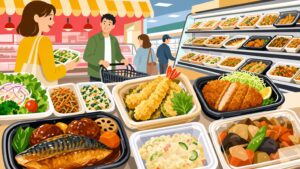
Like other specialists, the local butcher (nikuya) provides quality, customization, and value exceeding big chains. You can buy meat by the gram, specifying the exact amount needed — 150 grams of minced pork or 300 grams of thinly sliced beef for sukiyaki. The quality is often superior, sourced from trusted suppliers the owner has worked with for years. The true highlight of the nikuya is its deli counter. Almost every butcher in a shotengai sells freshly made fried foods, called sozai, as a side business. This is where Osaka street food’s soul lies. Golden, crispy potato croquettes (korokke) for 80 yen. Juicy, flavorful fried chicken (karaage) sold by weight. Breaded pork cutlets (tonkatsu) ready to be the centerpiece of your meal. These treats are incredibly affordable and delicious. On a busy day, you can prepare a great meal for two under 500 yen by grabbing some korokke and a cutlet from the butcher, plus rice and a simple salad from the yaoya. It’s the ultimate budget-friendly life hack in Osaka.
The Tofuya (豆腐屋) and Other Specialists
Beyond the core trio, the shotengai hosts even more specialists. The local tofuya produces fresh tofu, aburaage (fried tofu puffs), and ganmodoki (tofu fritters) daily, often in a small workshop at the back. The difference in taste and texture compared to supermarket tofu, which tends to be mass-produced and water-logged, is striking. A block of fresh, creamy tofu might cost the same, but the quality is far superior. You’ll also find shops specializing in tsukemono (pickled vegetables), kamaboko (steamed fish cakes), and kombu (dried kelp). Each shop is a master of its craft. By visiting them, you are not simply purchasing ingredients—you’re tapping into generations of tradition and expertise. Your pantry becomes a collection of items thoughtfully curated by local experts, each chosen for its quality and value.
The Osaka Mindset: It’s Not Cheap, It’s Smart
Shopping in a shotengai is more than just a way to save money; it’s a direct reflection of the Osaka worldview. This is a city of merchants, where shrewdness and value are sources of pride. A common phrase you’ll hear when someone lands a great deal is, “Meccha mo-katta,” which roughly means “I made a huge profit.” This doesn’t imply they cheated anyone; rather, it signifies they were a savvy shopper who found exceptional value. This delight in the art of the deal is a core part of the city’s identity.
This perspective values substance over style and function over form. A Tokyo shopper might pay a premium for a perfectly shaped strawberry in an elegant gift box, while an Osaka shopper will gladly buy the slightly misshapen yet equally tasty strawberries for half the price. They aren’t concerned with polished floors or fancy lighting in a department store basement. Their focus is on the freshness of the fish, the sweetness of the cabbage, and the crispiness of the korokke. Outsiders often misinterpret this pragmatism as mere “cheapness,” but that misses the essence. It’s not about spending as little as possible; it’s about getting the greatest value for every yen spent. It’s a form of intelligence and a game played with pride and good humor.
The social element is equally significant. Shopping at a supermarket is an anonymous, quiet transaction, often ending at a self-checkout register. Shopping in the shotengai is a performance. The shopkeepers, or taisho, are lively personalities. They shout, joke, and exchange banter with customers. They remember your face. “Maido!” (Thanks for your continued patronage!) they call as you approach. They might include an extra spring onion or a handful of bean sprouts for free—a gesture called omake. This isn’t about traditional haggling; it’s about forging a relationship. You are not just a data point in a corporate sales report; you are a neighbor. This daily, low-stakes human interaction is the glue holding Osaka neighborhoods together. It’s why the city feels grounded and personable compared to Tokyo’s often impersonal efficiency. Here, you support a local economy where your money goes directly to the family running the shop, not a distant corporate office.
A Practical Guide to Conquering Your Neighborhood Shotengai
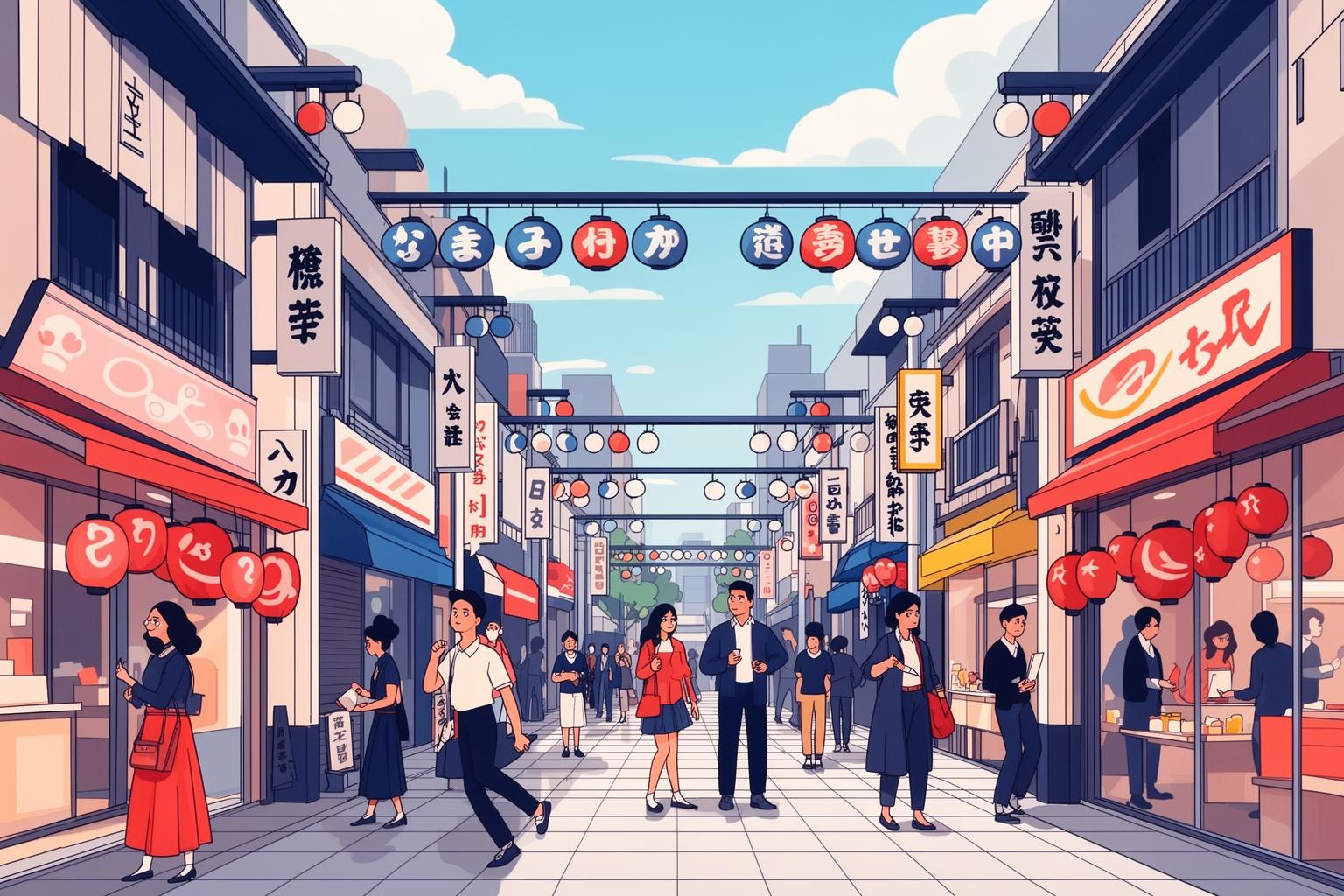
For a newcomer, taking the first trip can seem intimidating. The noise, the crowds, and the language barrier may feel overwhelming. However, breaking into this world is easier than you might think. It only requires a slight shift in your approach and a willingness to step outside your comfort zone.
First, conduct a reconnaissance mission. Spend an afternoon strolling through your local shotengai without any intention of buying. Take your time. Observe what sorts of shops are there. Notice the flow of people, when it’s busy, and when it’s quiet. Listen to the vendors’ calls. This simple observation helps demystify the experience and turns the unfamiliar into something known.
Second, equip yourself with a few key phrases. You don’t need to be fluent in Japanese. The language of commerce is universal. Your best tools are a smile and a readiness to point. Still, knowing a few words will make things easier.
- “Kore, kudasai.” (This one, please.) — Point to your desired item.
- “Ikura desu ka?” (How much is it?) — Prices are often clearly marked or shown on a calculator.
- “Hitotsu / Futatsu / Mittsu” (One / Two / Three) — Useful when specifying quantities.
- “Arigatou gozaimasu.” (Thank you.) — The most important phrase of all.
Third, come prepared. Many small shops are cash-only. Although this is gradually changing, it’s wise to carry cash. Also, bring your own reusable shopping bag, or eco-baggu. It’s standard practice and helps you blend in. Since shopping involves many small transactions, having cash and a bag ready makes the process smooth.
Fourth, adopt a multi-stop approach. Forget about buying everything in one place. Plan your route. Begin at the yaoya for vegetables, then head to the nikuya for protein, and finish at the tofuya. View this not as a hassle, but as a pleasant walk through your neighborhood. This short journey becomes part of your routine, offering some light exercise and a chance to observe your community.
Finally, be mindful of the time of day. The shotengai follows its own rhythm. Mornings bring the freshest produce and fish. Lunchtime is when the sozai delis are busiest. But for bargain hunters, the best time is late afternoon to early evening—usually after 4 or 5 PM. This is when taimu sēru (time sales) begin. Shopkeepers mark down items they need to sell before closing and call out deals. This is your opportunity to get fantastic bargains on everything from sashimi to pre-made bento boxes. Learning the timing of your local shotengai’s sales is the final step to becoming a true master of Osaka-style shopping.
Case Study: Three Shotengai for Three Lifestyles
Osaka is home to hundreds of shotengai, each with its own distinct character. To give you a clearer picture, let’s explore three unique examples that highlight the diversity of this urban institution.
Tenjinbashisuji Shotengai (天神橋筋商店街)
With an impressive length of 2.6 kilometers, Tenjinbashisuji holds the title of Japan’s longest shotengai. It stretches across three different subway stations. Due to its size and popularity, it functions as a hybrid: part tourist attraction, part essential neighborhood hub. For newcomers, this is the ideal place to start. It’s large, bustling, and offers an extensive range of shops, from traditional fishmongers to modern drugstores and chain coffee shops. You can find amazing bargains here, like the famous 80-yen korokke at Nakamura-ya, which often has a line. The intense competition among the hundreds of shops keeps prices low. It’s a wonderful spot to experience the lively energy of a shotengai while still enjoying the comfort of familiar chain stores. You can hone your shopping skills here in a vibrant, welcoming atmosphere.
Sembayashi Shotengai (千林商店街)
If Tenjinbashisuji is the expansive capital, Sembayashi is the gritty, bargain-hunting core. Situated in the Asahi ward, Sembayashi is widely known as one of the cheapest shopping areas in all of Osaka. It is unapologetically local, slightly rough around the edges, and completely devoid of tourist-oriented pretension. This is where you go when your main goal is to stretch your yen as far as possible. The motto here might well be “Why pay more?” Shops frequently advertise “100 yen sales,” and vendors engage in lively but friendly price wars with their neighbors. Sembayashi embodies the Osaka spirit of value. It shows you that quality doesn’t need to come with a high price tag. Visiting Sembayashi is a masterclass in frugality and offers a direct glimpse into the economic engine that supports the daily lives of many Osaka families.
Komagawa Nakano Shotengai (駒川中野商店街)
Located in the southern Higashisumiyoshi ward, Komagawa Shotengai exemplifies the classic neighborhood arcade. It may not be the longest or most famous, but it is deeply woven into its community’s fabric. This covered L-shaped arcade is always bustling with local residents doing their daily shopping. It boasts an excellent variety of specialists: multiple high-quality butchers, fishmongers with sparklingly fresh seafood, and fruit stands with beautiful seasonal displays. Komagawa feels like a community living room. Shopkeepers chat with customers they have known for decades. The pace here is a bit slower and more personal than the larger arcades. Visiting Komagawa reveals that a shotengai is more than just a shopping spot; it’s a vital social space that fosters belonging and connection. It’s the kind of place that makes a large city feel like a small town.
The Real Return on Investment
Ultimately, learning to navigate and shop at your local shotengai will definitely reduce your monthly grocery expenses. You’ll eat fresher, more seasonal food, and you’ll have extra money left over at the end of each month. That is the practical, tangible benefit. However, the true reward for this investment of time and effort is much greater.
By stepping out of the sterile supermarket and into the bustling, vibrant shotengai, you are choosing to actively engage with the culture of your new home. You move beyond a superficial expatriate experience to become a genuine resident in every sense. Each purchase, no matter how small, becomes a moment of connection. Every greeting from a shopkeeper is a subtle affirmation that you belong here. You come to learn the rhythm of the seasons not from a calendar, but from the changing offerings at the yaoya. You understand the local economy not from the news, but from the price of mackerel at the sakanaya.
This is how a foreign city begins to feel like home—not by seeking out the familiar, but by learning to appreciate what’s different. The shotengai is a gateway into the authentic, unfiltered, and delightfully practical world of Osaka. It’s a place where value reigns, community is currency, and a freshly fried croquette can brighten your day. Overcoming initial hesitation and immersing yourself is one of the most rewarding choices you can make. It’s a decision to live in Osaka not just as a resident, but as an Osakan.