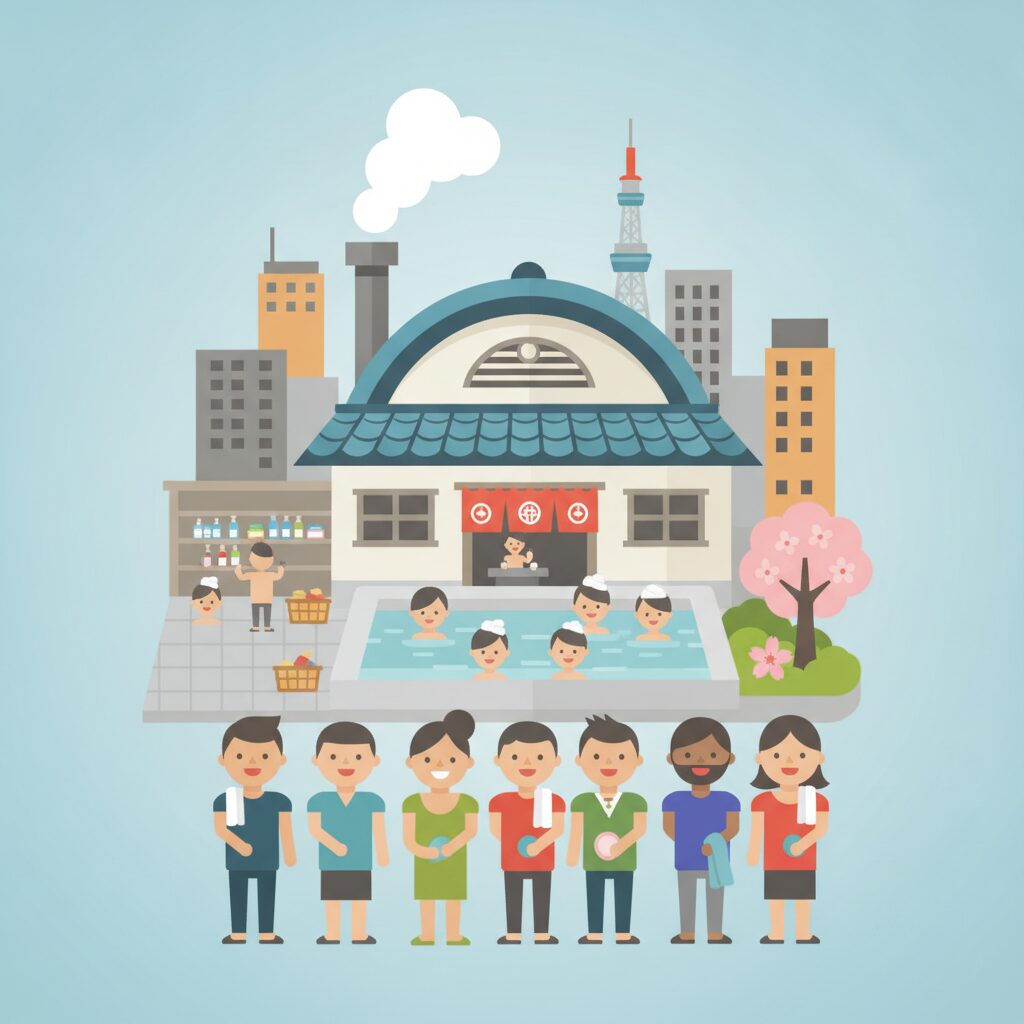
Walk down any residential street in Osaka, away from the neon blaze of Dotonbori and the high-rises of Umeda, and you’ll eventually see it. A tall, slender smokestack, a subtle wisp of steam curling into the sky. Below it, a building with a curtained doorway marked by the unmistakable hiragana character ゆ (yu), for hot water. This is the neighborhood sento, the public bathhouse. And if you’re like most modern city dwellers, your first thought is probably, “Why?” In an age where every apartment, no matter how small, has its own bathroom, why would anyone schlep down the block with a little basket of soap and a towel to bathe with strangers? The question isn’t just about convenience. It’s about community. In Tokyo, a sento might be a quiet escape, a place for personal reflection. In Osaka, it’s something else entirely. It’s the neighborhood’s unofficial meeting hall, its therapy couch, its gossip exchange, and one of the most unfiltered windows into the soul of the city you’ll ever find. Forget what you think you know about quiet, contemplative Japanese bathing. The Osaka sento is a full-contact social sport, and it explains more about this city than a dozen guidebooks ever could.
For travelers wishing to broaden their cultural journey, a day trip to Nara offers an artful escape from Osaka’s neighborhood rhythm.
The Roar of the Bath: Trading Serenity for Connection
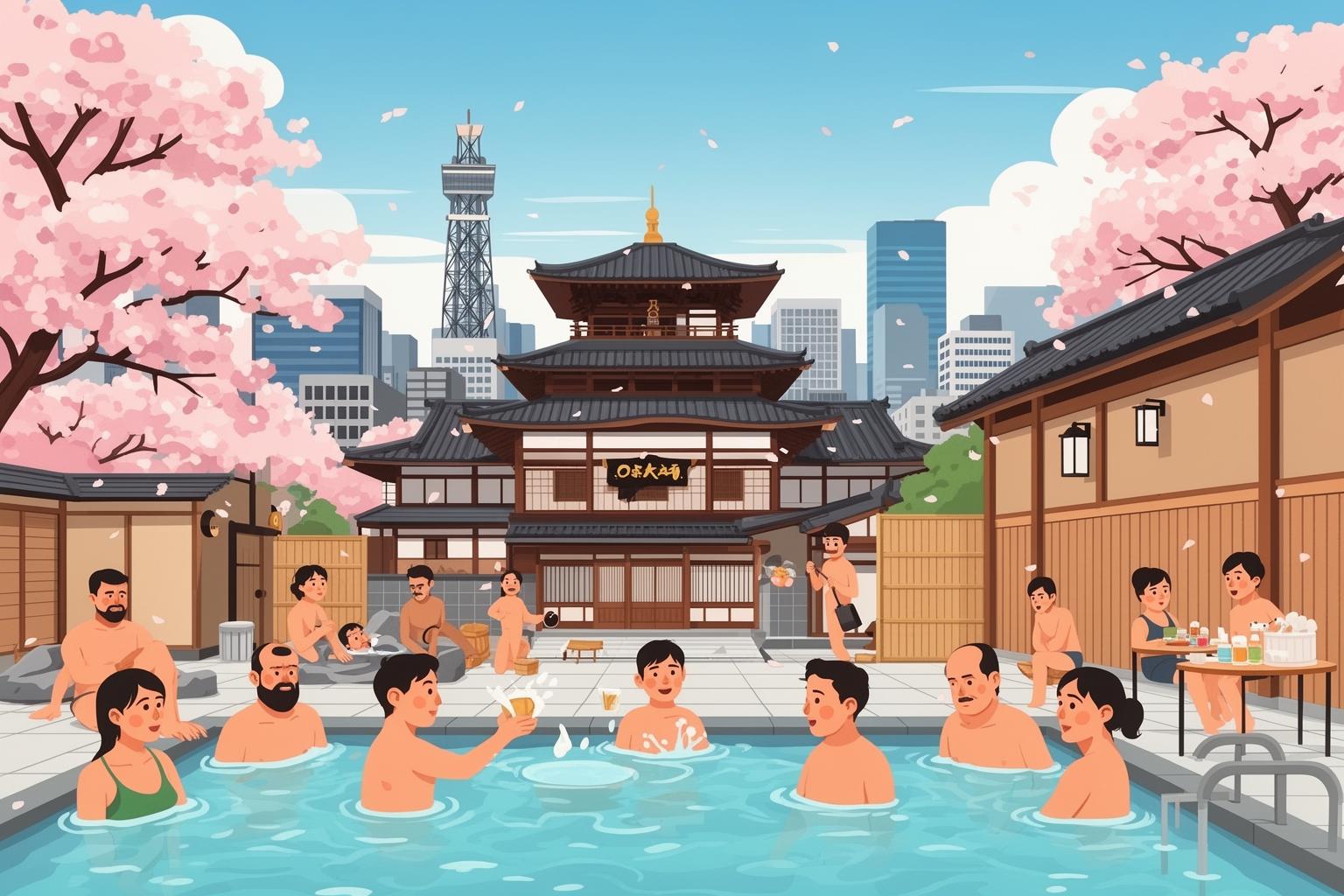
First, let’s clarify one thing: the neighborhood sento is not an onsen. It’s not a spa, nor is it a zen retreat nestled in the mountains. There are no carefully arranged bamboo fountains or softly playing koto music. The soundtrack of an Osaka sento is the clatter of plastic stools on tiled floors, the thunderous echo of showers against the walls, and a constant, bubbling hum of conversation. It’s loud. It’s steamy. It’s intensely human. My first visit was a jolt to the system. I expected quiet reverence, a place to soak in meditative silence. Instead, I entered a room buzzing with energy. Two elderly women were having a lively discussion about the price of cabbage, their voices bouncing off the high, steam-filled ceiling. A father patiently explained to his young son why the cold plunge pool isn’t a submarine dock for bath toys. In the corner, a group of men who looked like they’d just finished a construction shift were passionately dissecting the Hanshin Tigers’ latest game like seasoned sports analysts. This isn’t rudeness; it’s life. In many parts of Japan, especially Tokyo, public spaces operate under a quiet, unspoken agreement to maintain personal bubbles. On the train, in a café, even in parks, people tend to keep to themselves. The Osaka sento shatters that convention. Here, the shared space is genuinely shared. It’s an extension of home, a communal backyard where boundaries blur and the noise is simply a sign that the community is alive and thriving.
The Rules of the Naked Room: More Than Just Hygiene
This lively, talkative atmosphere doesn’t imply a free-for-all. There are rules, but they focus less on rigid procedure and more on a social contract that helps everyone feel at ease. The basic rule is universal: wash yourself thoroughly before entering the tubs. Sit on the small plastic stool, scrub completely, and rinse off fully. This practice isn’t just about cleanliness. It’s a physical way of saying, “I respect this shared water. I respect you.” It’s the price of admission to the community pool. Beyond that, you begin to notice the subtle social choreography. You spot the small “modesty towel,” used for washing and, for the shy, as a discreet cover while moving around. You learn the quick, polite nod or bow of the head to acknowledge someone entering the tub. You understand that while direct staring is a major faux pas, brief, friendly eye contact and a nod show good neighborliness. What foreigners often miss is that the nudity itself is incidental. It’s not the main point. The point lies in the leveling effect it creates. When everyone is stripped of their clothes, they’re also free of uniforms, business suits, and brand labels. The CEO and the plumber become just two people soaking in hot water. This idea, called hadaka no tsukiai or “naked communion,” is a Japanese ideal, but in Osaka, it feels less like a philosophical notion and more like a tangible reality. It’s a social equalizer that smooths the flow of communication, making it easier for one person to simply be a person talking to another.
Overheard in the Steam: Osaka’s Unfiltered Social Network
Once you’ve relaxed in the hot water, that’s when the magic begins. The Osaka sento is where the city connects with itself. It’s like a living, breathing social media feed—without filters or curated posts. The conversations you catch are a masterclass in the local dialect and mindset: direct, practical, and often hilariously blunt. I’ve learned more about life in Osaka by listening to chatter in the sento than anywhere else. I’ve heard an older woman give a younger one unsolicited yet incredibly detailed advice on how to properly pickle ginger. I’ve listened to two men debate the merits of various local ramen shops with the seriousness of world leaders negotiating a treaty. Someone might complain about their boss. Someone else will brag about their grandchild. Another will offer a tip on where to get your bike fixed cheaply. It’s never about deep, philosophical talks. Instead, it’s about the texture of everyday life. The key is that you’re never obligated to join in—you can simply soak and listen. But the invitation is always there. A simple question, “Oyu, atsui desu ne?” (“The water’s hot, isn’t it?”) can spark a conversation. Osakans are famously less reserved than their Tokyo counterparts and often happy to engage, share opinions, and enjoy a laugh. This is the essence of what people mean when they say Osaka is “friendly.” It’s not an aggressive, in-your-face friendliness; it’s a casual, low-stakes openness. The sento creates the perfect setting for this to thrive. There are no expectations, no agenda. It’s just people sharing a space and a moment in time.
A Community’s Heartbeat: Reading the Neighborhood Sento
A sento is more than just a building; it reflects the character of its neighborhood. By stepping through its curtain, you can glean much about the area. An old Showa-era bathhouse with slightly faded tile art and a dedicated clientele of elderly regulars indicates a neighborhood with deep roots, where families have lived for generations. In contrast, a newly renovated “designer sento” featuring craft beer in the vending machine and modern art on the walls may suggest a younger, more transient population settling in. Notices taped in the changing room serve as a community bulletin board, displaying posters for local summer festivals, flyers for nearby chiropractors, or campaign posters for city council candidates. The brand of milk in the classic glass bottles in the cooler sparks local pride—whether it’s the famous Naniwa Coffee Milk or a smaller, local dairy. These small details are the lifeblood of the neighborhood. Visiting various sento throughout Osaka is like taking a core sample of the city’s diverse communities. The working-class grit of a sento in Nishinari feels worlds apart from the quieter, family-focused vibe of one in the northern suburbs. Each sento has its own rhythm, personality, and unspoken code. They stand as anchors of local identity amid a rapidly evolving urban landscape.
Taking the Plunge: Your First Trip to the Osaka Sento
If you live in Osaka, visiting your local sento is an essential rite of passage. It may feel a bit intimidating at first, but the experience is definitely worth the brief awkwardness. Here’s a practical guide to help you get started.
What to Bring
Many people bring their own small baskets, called furo oke, containing their preferred soap, shampoo, and washcloth. However, it’s not necessary. Almost every sento offers a tebura setto (“empty-handed set”) for a few hundred yen, which usually includes a rental towel, a small bar of soap, and a single-use shampoo packet. This is the ideal choice for your first visit.
The Tattoo Question
This is the biggest concern for many foreigners. Historically, tattoos have been linked to the yakuza, and many onsen and gyms still enforce strict “no tattoo” rules. Sento, however, tend to be more lenient, especially in a tolerant city like Osaka. Attitudes are gradually shifting. Many neighborhood sento don’t have strict policies, or they may overlook tattoos, especially on foreigners. The best approach is to be discreet and respectful. If you have large, extensive tattoos, it’s a good idea to call ahead or check their website if one exists. But for smaller tattoos, you will most likely be fine. The key is to behave like a respectful neighbor, not a tourist trying to make a statement.
The Process
You’ll pay at the front desk (the bandai), often run by a friendly grandma or grandpa. They’ll give you a key for a locker in the changing room (men and women are, naturally, separated). Undress, store your belongings in the locker, and bring only your small towel and washing supplies into the bathing area. Find a free washing station, sit on the stool, and wash thoroughly. After rinsing off completely, feel free to explore the tubs. Most sento have several baths: a standard hot bath, a jacuzzi-style one with jets, and sometimes an electric bath (denki buro) that passes a low-level current through the water—try it at your own risk! When finished, quickly wipe yourself down with your small towel before returning to the changing room to minimize dripping. Dry off fully, get dressed, and don’t forget to grab a cold drink from the vending machine on your way out. That post-bath bottle of coffee milk is one of life’s simplest pleasures.
The Warmth of Water, The Warmth of People
Ultimately, the neighborhood sento persists because it provides something your spotless, private bathroom never can: casual, effortless, human connection. It serves as a third space, neither work nor home, where the community can simply be itself. It acts as a powerful remedy to the isolation that can easily infiltrate modern city life. Foreigners living in Japan often find it challenging to break out of the “expat bubble” and build genuine relationships with locals. The sento offers a gateway into that world. It’s a place where you’re not seen as a foreigner or a tourist; you’re just another neighbor, sharing the same hot water. So next time you spot that smokestack, don’t just pass by. Grab a towel, a few hundred yen, and step inside. Soak in the warmth, listen to the conversation, and you might find yourself understanding this lively, practical, and wonderfully human city much better.