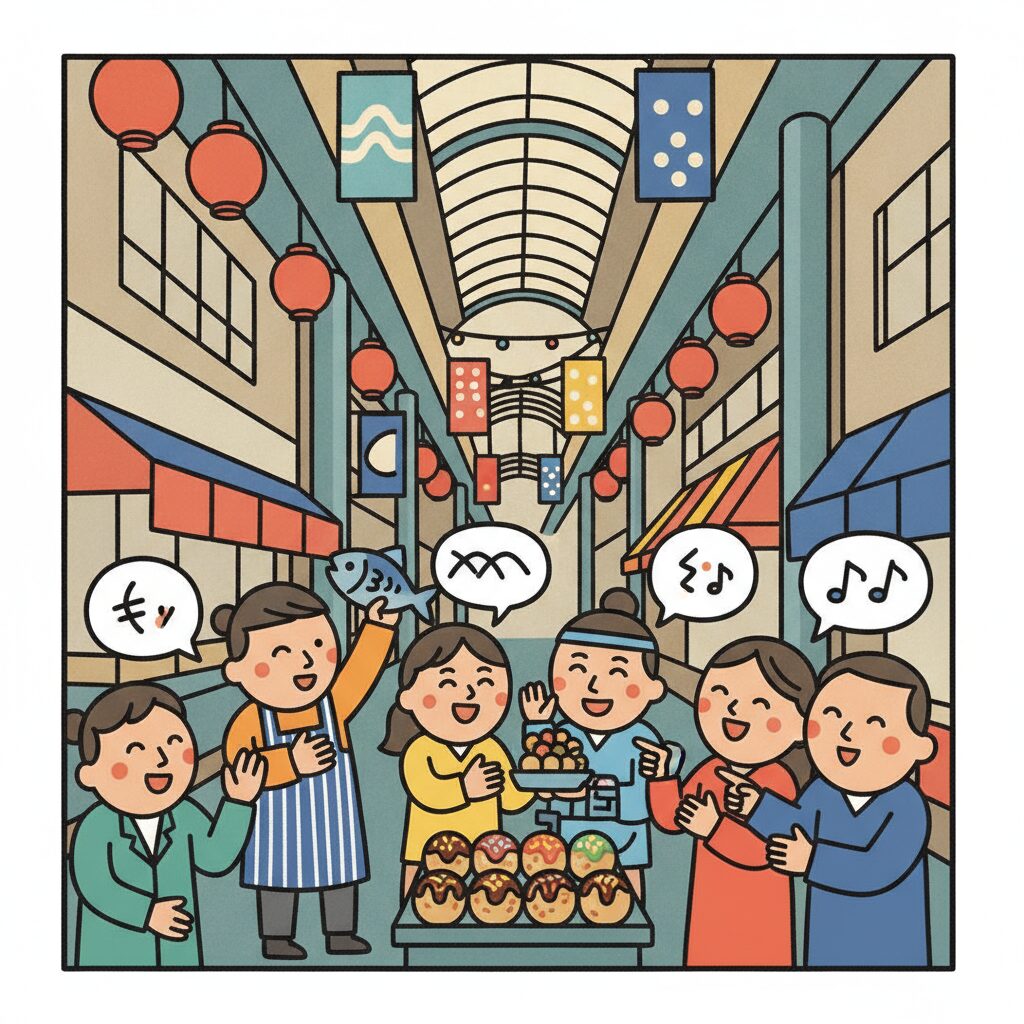
Step into an Osaka shotengai, a covered shopping arcade, and your senses get a jolt. It’s not the polite, hushed reverence of a Tokyo department store. It’s a symphony of noise, a current of organized chaos that pulls you along. Fishmongers shout the day’s catch with the gravelly pride of rock stars. A woman selling pickles thrusts a sample at you, not with a quiet offer, but a direct command: “O-neechan, tabete mi! Kore wa umai de!”—”Hey sis, try this! It’s seriously good!” You’re not just a customer here; you’re an actor pushed onto a stage, and the script is an unwritten, fast-paced dialogue of commerce and comedy. For anyone used to the clean, transactional nature of shopping elsewhere in Japan, it can feel overwhelming, maybe even a little aggressive. You might find yourself wondering, “Am I supposed to haggle? Are they making fun of me? What are the rules here?” The truth is, you’ve just stumbled upon one of the most defining aspects of daily life in Osaka. This isn’t just about buying groceries. This is communication. This is community. This is a performance where the price tag is only part of the story. Forget the idea of quiet, deferential service. Here, the best service is a good conversation, a hearty laugh, and the feeling that you’re more than just a wallet passing through. This is the heart of Osaka’s merchant culture, a tradition of human connection forged over centuries of trade, and understanding it is key to understanding the city itself.
Osaka’s vibrant shotengai experience seamlessly connects with the city’s broader cultural rhythm, where exploring the role of neighborhood shrines and matsuri provides yet another fascinating glimpse into its unique community spirit.
The Anatomy of an Osaka Greeting: More Than Just a Welcome
Throughout most of Japan, a shopkeeper’s greeting is a crisp, standardized “Irasshaimase!” It’s polite and welcoming, yet also creates a barrier. It clearly defines the roles: you are the customer, they are the staff. In Osaka, however, that barrier is knocked down from the very first word. The initial interaction is meant to reduce the distance between you and the seller, drawing you into their world right away.
“Mokarimakka?” – “Bochibochi denna.”
Walk by two shop owners chatting in a shotengai, and you’ll almost certainly overhear this familiar exchange. One asks, “Mokarimakka?” which literally means “Are you making a profit?” The other waves a hand dismissively and replies, “Bochibochi denna,” or “Yeah, so-so.” To an outsider, this might sound extremely intrusive, as in many cultures, asking about someone’s income is a major social taboo. But here, it’s not a literal question about finances. It’s the Osaka merchant’s way of saying “How’s it going?” This coded greeting carries multiple layers of meaning: it acknowledges their shared identity as businesspeople, incorporates a bit of self-deprecating humor, and serves as an icebreaker that establishes a familiar, down-to-earth tone. This simple phrase captures a central Osaka mindset: business isn’t a detached, sterile part of life; it’s intertwined with daily living, conversation, and community. Talking about it, joking about it, and connecting through it is perfectly natural.
The Art of the Nickname: “O-nii-chan,” “O-nee-chan,” “Okusan”
Notice how you’re addressed. You’re unlikely to hear the formal “Okyakusama” (customer). Instead, a middle-aged woman at a fruit stand might give you a once-over and call out, “O-nii-chan, ii mikan haitteru de!”—”Hey, big brother, got some good tangerines in!” If you’re a woman, you might be called “O-nee-chan” (big sister), and a married woman might be addressed as “Okusan” (madam). These aren’t random nicknames—they are intentionally chosen to place you within a social, almost familial context. The seller quickly casts you in a familiar, close role. It disarms you. You’re no longer a stranger; for a moment, you’re the neighborhood’s big brother. This simple act of naming is a powerful device. It removes the usual formal distance often found in Japanese customer service and replaces it with a casual, personal warmth. In Tokyo, such familiarity from a stranger might feel unsettling, even inappropriate. In Osaka, it’s the standard approach to building a connection.
The Transaction as a Performance: A Dialogue, Not a Monologue
Once the initial connection is established, the transaction unfolds like a brief, improvised performance. The seller is far from a passive observer waiting for your choice. They take an active role—as a guide, a comedian, and a consultant. Their aim is not merely to sell you something but to involve you in an experience.
The “Unsolicited” Advice
You find yourself staring blankly at a row of daikon radishes, uncertain which to choose. Before you can feel overwhelmed, the shop owner appears by your side. “You makin’ oden tonight?” she might ask. “If so, you want this one. See how it’s thick at the bottom? It’ll soak up the broth real nice. That skinny one? Nah, that’s better for grating.” This isn’t the pushy, sales-driven upselling you might expect. It comes from a place of shokunin (artisan) pride. They know their products inside and out and see it as their responsibility to help you use them properly. They are the expert, sharing their knowledge as a gesture of good service and care. Over time, this fosters a deep trust. You stop seeing them as just a vendor and begin to view them as a trusted advisor, a neighborhood consultant for your kitchen. This is a relationship a sterile supermarket aisle could never replicate.
The Tease and the Comeback: Osaka’s Comedy Roots
Osaka is the undisputed birthplace of Japanese stand-up comedy, especially a style known as manzai. This two-person routine features a rapid-fire exchange between a boke (the funny, air-headed character) and a tsukkomi (the quick-witted straight man). This comedic rhythm extends beyond the stage; it’s woven into the fabric of everyday conversation, particularly in the marketplace. A seller might catch you hesitating over an expensive-looking piece of tuna and grin as they say, “Nani-i? Takai ka? O-nii-chan no kao mitara, sore gurai harareruやろ!” — “What’s that? Too pricey? Judging by your face, I bet you can afford it!” In Tokyo, this would come off as a harsh insult. In Osaka, it’s a playful tease, an invitation to banter. The boke sets up a joke, expecting the tsukkomi to respond—not with offense but with a witty comeback. You might laugh and say, “Meccha iu yaan! Honma wa karappo ya de!” — “You talk a big game! Honestly, my wallet’s empty!” The seller laughs, you laugh, and the tension dissolves. The interaction itself becomes entertainment. Foreigners often mistake this straightforward, teasing style for rudeness, but in reality, it’s the opposite: it’s a sign of genuine engagement. Silence and distance are rude; playful banter shows they consider you worth joking with.
“Omake” – The Little Extra That’s More Than a Freebie
After you’ve completed this verbal exchange, paid for your purchases, and are ready to leave, you might encounter one of the most heartwarming traditions of Osaka commerce: the omake. While packing your goods, the seller might casually slip in an extra potato, another chicken skewer, or a handful of spinach. “Kore, omake,” they’ll say. “This one’s a little extra.”
It’s Not a Discount, It’s a Relationship Marker
It’s important to recognize that omake is not a discount you can request. It doesn’t come from successful bargaining. It’s a gift given by the seller as a sign of goodwill and a mark that a relationship has been established. It’s their way of saying, “I see you, I like you, and I appreciate your business.” It embodies the positive social interaction that just occurred. This small, often modest item carries significant symbolic meaning. It turns a purely commercial transaction into a moment of human connection. It’s a loyalty program far more meaningful than any point card because it’s personal. It encourages you to return, not for the free potato, but for the feeling of being acknowledged and valued.
How to “Earn” Omake (Without Asking)
So, how do you reach this special status? You can’t demand it. You earn it by being a good customer in the Osakan sense. This means immersing yourself in the culture of the shotengai. Become a regular. Make sure they see your face often. Don’t just point and pay; interact with them. Ask about their products: “What’s in season now?” or “How do you recommend cooking this?” Join in their banter. You don’t have to be witty, but a smile, a laugh, or a simple friendly response goes a long way. Show sincere appreciation. When they offer advice, thank them. When they tease you, laugh with them. By putting a bit of your personality into the interaction, you signal that you understand the dynamic. The omake is their quiet way of acknowledging that you’ve been accepted into their community.
The Osaka vs. Tokyo Shopping Experience: A Tale of Two Cities
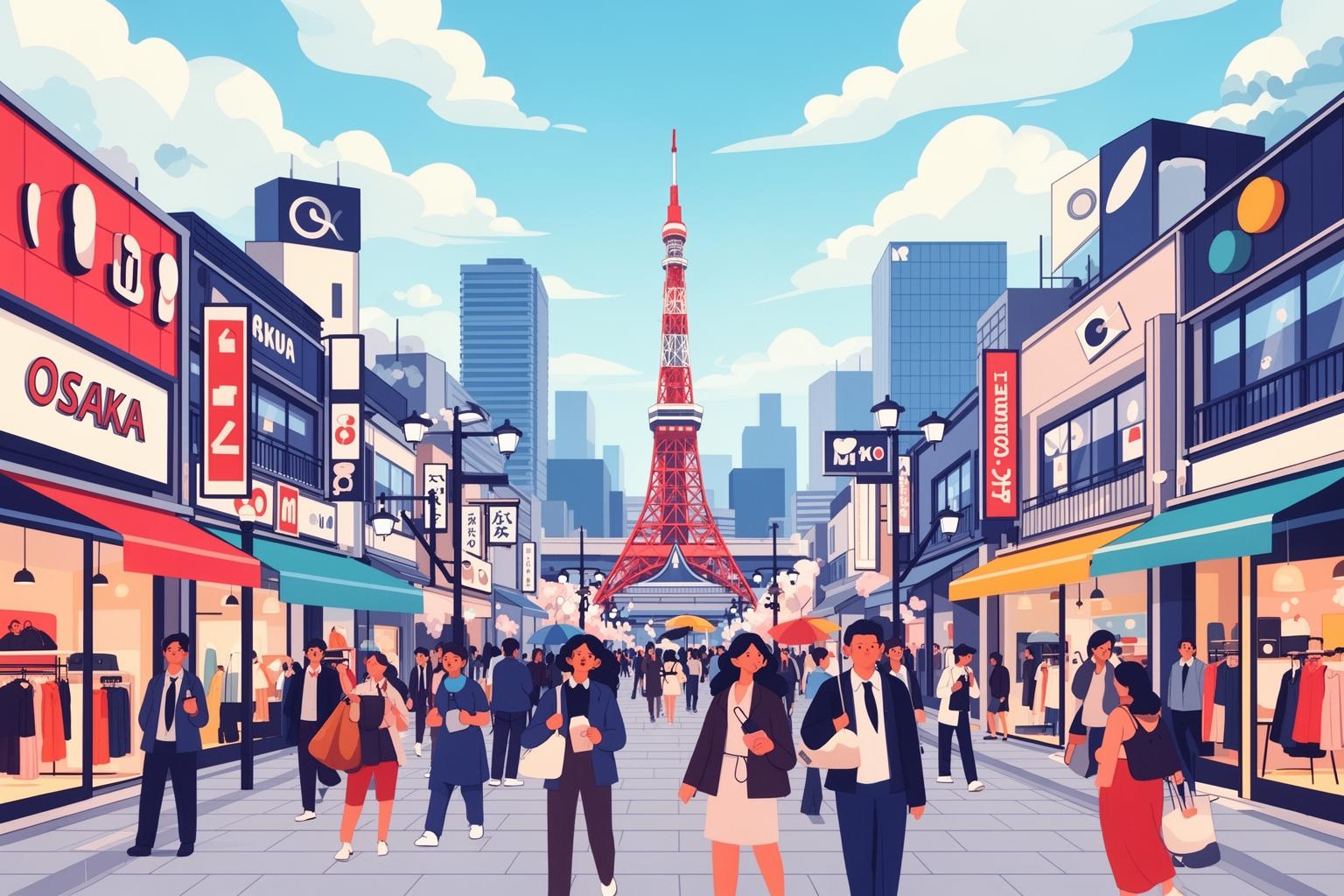
To truly understand the distinctiveness of shotengai culture, it helps to compare it with its complete opposite: Tokyo. The difference goes beyond accent or attitude; it reflects a fundamental contrast in the philosophy of what constitutes “good service.”
Tokyo: The Quiet, Effortless Transaction
Shopping in Tokyo, especially in its polished department stores and stylish boutiques, is an exercise in sublime, smooth efficiency. Staff are impeccably polite, bowing with precise formality. They speak softly, using honorific language. Their movements are elegant and efficient. They anticipate your needs without intrusion. The entire experience is crafted to make you, the okyakusama (the honored customer), feel esteemed. The goal is to ensure a seamless process with no social friction. Personal conversation is considered unprofessional. Jokes are rarely heard. The relationship remains strictly, respectfully, and impersonal in nature. The customer is treated like a deity—revered from a safe and silent distance.
Osaka: The Warm, Unpolished Interaction
Osaka abandons that entire philosophy. Here, friction is central. The interaction is meant to be a bit messy, a bit loud, and deeply human. Good service is not about invisibility; it’s about being unforgettable. The vendor wants to hear about your day, what you’re cooking for dinner, and your thoughts on the Hanshin Tigers‘ prospects this year. The ideal isn’t a smooth transaction but a meaningful connection. The philosophy shifts from “the customer is god” to “the customer is my neighbor.” You’re not just an abstract source of income; you’re a person, and they’re a person, sharing a genuine moment for a few minutes. This is why Tokyoites may find Osaka merchants brash and unrefined, while Osakans might see Tokyo’s service as cold and robotic. They are simply operating with two entirely different understandings of what it means to serve a customer.
Navigating the Banter: A Practical Guide for Residents
For a non-Japanese resident, stepping into this world can feel intimidating. However, it’s also one of the most fulfilling ways to engage with the local culture. The key is to let go of your inhibitions and join in.
Don’t Be Afraid to Engage
The biggest mistake you can make is to respond to their energy with silence. When a shopkeeper calls out to you, make eye contact and smile. If they ask a question, answer it. If they suggest a product, show interest. You don’t need fluent Japanese or quick humor. A simple “Oishisou!” (“Looks delicious!”) or “Kore, kudasai” (“I’ll take this, please”) said with a smile is often enough to show your openness to interaction. They value the effort much more than perfect grammar. Remember, their directness is a form of friendliness, an invitation to connect. Your willingness to meet them halfway is all that’s needed.
Reading the Room: When Banter is Welcome (and When It’s Not)
It’s also crucial to understand the specific context of this culture. This lively, personal banter characterizes the shotengai, local fresh markets, and small family-run shops. You should not expect this kind of interaction at a 7-Eleven, a Starbucks, or the Uniqlo in a major shopping mall. In those corporate settings, service tends to follow the standardized, polite, and impersonal Tokyo style. Attempting to joke with a cashier at a convenience store will likely be met with confused silence. The key is to seek out places with history, with independent owners who proudly stand behind their counters. That’s where the true Osaka experience thrives.
The Goal Isn’t Always a Cheaper Price
Lastly, it’s important to separate the banter from the idea of bargaining. While playful back-and-forth over price can be part of the interaction, the ultimate aim for the Osakan shopper is seldom to reduce the total cost by a few yen. Trying to haggle aggressively, as you might in a tourist bazaar elsewhere, misses the point entirely and can be seen as rude. The negotiation is a dance, not a battle. The real reward isn’t the discount; it’s the relationship. It’s the shared laugh with the butcher, the cooking advice from the fishmonger, and the extra croquette the deli lady slips into your bag. It’s the sense of belonging to a community, even if just for an afternoon. In Osaka’s shotengai, you pay with your money but gain a connection.