When I first moved to Osaka, I walked past them every day. Tiny shrines, tucked between concrete apartment buildings and humming vending machines. Some were little more than a stone lantern and a small wooden structure, dwarfed by the urban sprawl. They were quiet, serene, almost forgotten. I saw them as historical footnotes, picturesque relics of a time long past. For months, they were just part of the scenery on my way to the supermarket, silent observers of the city’s relentless forward motion. I figured they were important, but in a distant, academic way. A place for a quick, solitary prayer, perhaps, but hardly the epicenter of modern life.
Then came summer. The air grew thick and heavy, and a different energy began to stir. Paper lanterns, white and red, appeared overnight, strung across shopping arcades and residential streets. Banners with unfamiliar characters were unfurled. A low, rhythmic drumming began to echo through the neighborhood in the evenings. The quiet little shrine at the end of my street was suddenly a hive of activity. Elderly men in matching happi coats were hauling bamboo poles and wooden planks, assembling what looked like a stage. Women were sweeping the grounds, laughing and chatting. The air, once still, now crackled with anticipation.
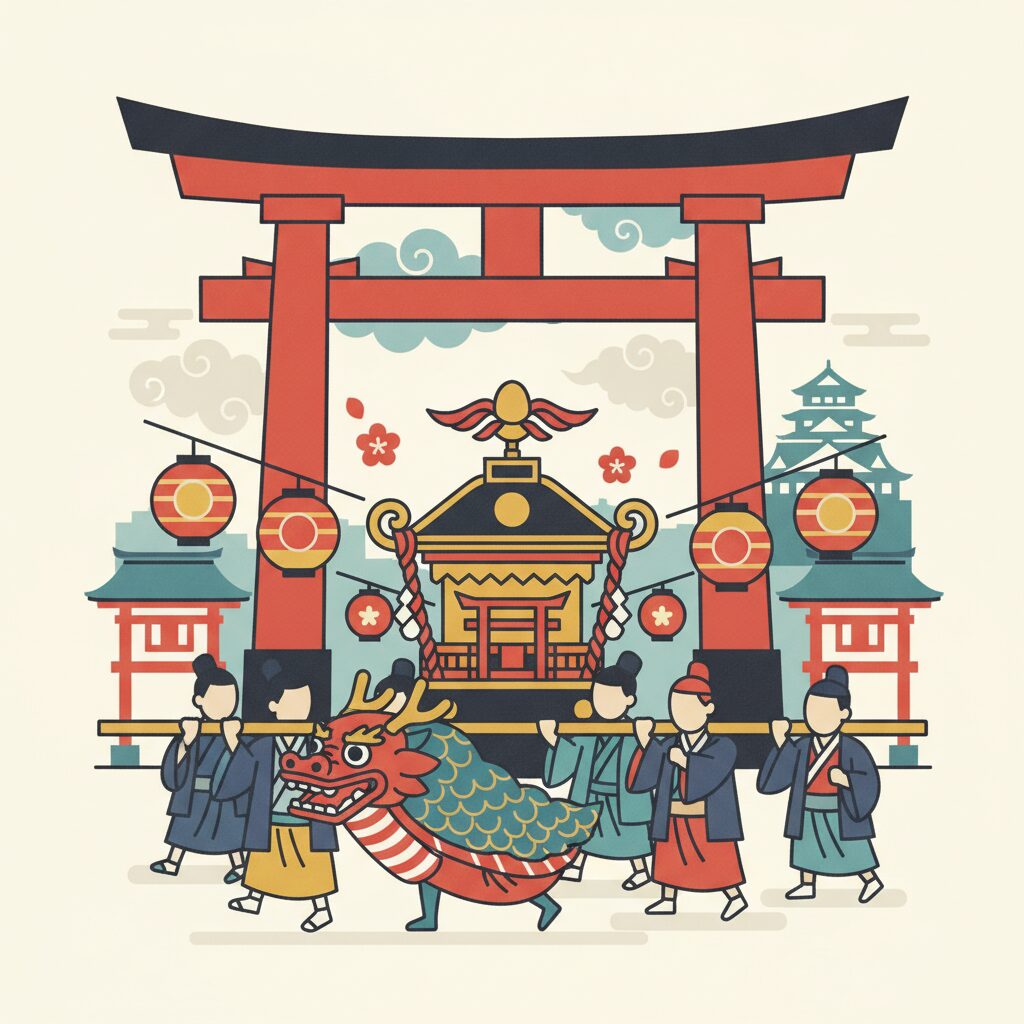
My first neighborhood matsuri, or festival, was a revelation. The tranquil space was transformed into a riot of sound, smell, and color. The scent of grilled squid and sweet soy sauce hung in the air. The thundering beat of taiko drums vibrated in my chest. Kids with sticky fingers ran around with prizes from ring-toss games. And at the center of it all was the mikoshi, a massive, ornate portable shrine, hoisted on the shoulders of dozens of chanting, sweating men and women from the neighborhood, parading their local deity through the streets. This wasn’t a relic. This was alive. This, I realized, was where you could find the true pulse of Osaka.
Foreigners often hear that Osaka is “friendly” and “down-to-earth,” usually in contrast to the perceived formality of Tokyo. But these are just clichés until you understand the mechanism that creates that atmosphere. It’s not something in the water. It’s built, year after year, in events like these. The neighborhood shrine and its annual matsuri aren’t just a religious observance or a fun party. They are the fundamental building blocks of community in this city. They are the engine of Osaka’s social life, the reason your neighbors aren’t strangers, and the invisible framework that makes this sprawling metropolis feel like a collection of small, interconnected towns. Understanding this system is the key to understanding Osaka itself.
Embracing a different side of local life, exploring Osaka’s after-work tachinomi culture provides another vivid demonstration of how community ties are nurtured in every corner of the city.
The Shrine on Your Corner: More Than Just a Landmark
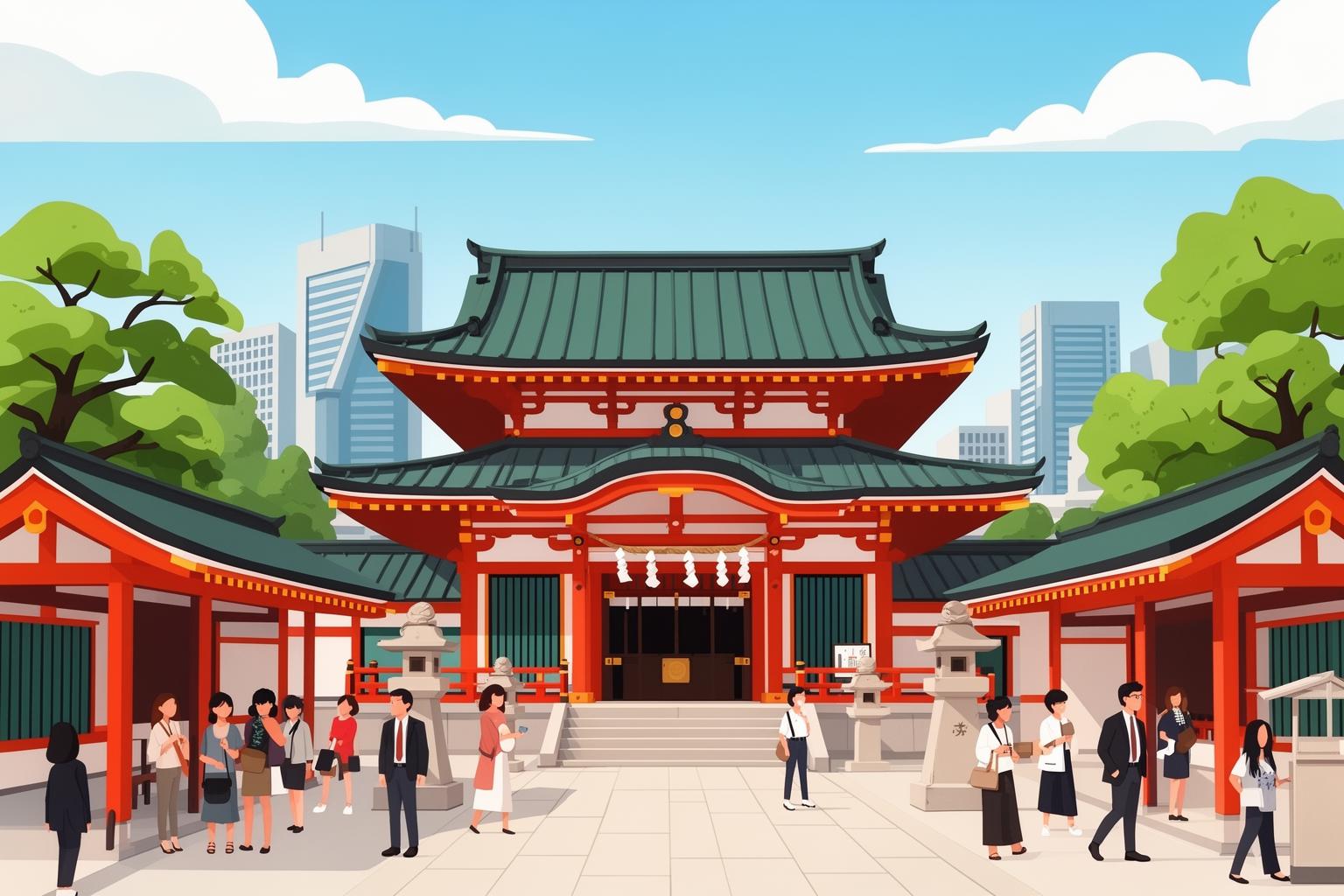
Before you can truly grasp the festival, you need to understand the stage. In Japan, your local shrine isn’t something you choose; rather, it chooses you. This idea often eludes Westerners, who are accustomed to selecting a church or community center based on denomination or personal preference. Here, it’s a matter of geography. The concept of an ujigami refers to a guardian god or spirit tied to a specific place, and the ujiko are those living under its protection—literally, the “children of the clan.” When you move into an apartment, you automatically become an ujiko of the local shrine, whether you’re aware of it or not.
For most people today, this isn’t necessarily a deeply spiritual bond; it’s a social one. It defines your neighborhood, your jinmoto. It gives you a shared reference point with those around you. The elderly woman who runs the dry cleaners, the young family in the apartment above, the salaryman who takes the same train—you all, in a way, belong to the same team. You share the same protector.
This fosters a subtle yet powerful sense of belonging that’s woven into everyday life. The shrine grounds serve as a neutral, public space, neither commercial nor governmental. It’s the community’s shared backyard. You’ll see parents watching their toddlers take their first steps on gravel paths, elderly men resting on benches and observing the day pass by, or a high school student pausing for a quick prayer before an important exam. It’s a quiet, ever-present part of life.
In Tokyo, especially in the central wards, neighborhoods can feel transient. People move in and out for work, and community ties can be fleeting. Life often unfolds between your apartment and the train station. In Osaka, however, that sense of jinmoto pride feels deeper, more palpable. People will speak of their local shrine with a casual sense of ownership. “Uchi no jinja,” they say—“Our shrine.” This isn’t about religious zeal; it’s about local identity. The shrine stands as a physical anchor in a rapidly changing world, a reminder that you belong to a particular place with its own history and spirit.
Deconstructing the Matsuri: It’s Not Just a Spectacle, It’s a Group Project
If the shrine serves as the anchor, the matsuri is the annual storm that stirs everything up, blending people together and renewing social ties that may fray over the course of the year. The large, famous festivals like Osaka’s Tenjin Matsuri are spectacular shows, but they are meant for an audience. They are polished productions. The true magic, the real community-building, takes place at the hundreds of smaller, unassuming neighborhood festivals.
These events are not managed by professional organizers. Instead, they are enormous, year-round, volunteer-driven group efforts. The key force behind them is the chonaikai, the neighborhood association. Here, the community’s unspoken power dynamics come to light. Preparations begin months ahead of time, in stuffy community halls over lukewarm tea and rice crackers. Who will be in charge of stringing lanterns? Who will organize the mikoshi carriers? Which local shops will sponsor the festival or run the food stalls (yatai)?
The Unspoken Rules of Participation
This is where the true work of community-building happens. It’s in the long meetings, the logistical discussions, the rehearsal sessions. The local butcher, the noodle shop owner, the real estate agent—they all set aside their professional roles and become members of the festival committee. This mindset marks a core difference in Osaka’s approach. Business and community are not separate worlds. Your business is part of the neighborhood, and you have a responsibility to help keep it vibrant. Taking part in the matsuri is an essential part of that.
In the weeks before the main event, you can hear the sounds of preparation. The rhythmic chanting of men and women practicing carrying a test-weight for the mikoshi. The pounding of taiko drums, as neighborhood children learn the festival rhythms from an elder. There is a slow, steady buildup of collective energy. Everyone has a role. The older generation holds the expertise—they know the right way to tie the mikoshi ropes and the proper order of the procession. Middle-aged business owners provide resources and organizational skills. Younger families bring energy and volunteer for the heavy lifting. It’s a multi-generational effort, a living transmission of culture.
What outsiders might misunderstand is that this is not merely “volunteering.” It’s a deeply embedded system of social obligation and mutual support. You contribute because you belong to the group. And by contributing, you secure your place within it. It’s your entry to being a true community member, not just a resident. Jumping in is encouraged. In Osaka, there’s less of the polite hesitation you may find elsewhere. If you show willingness to help, someone will quickly assign you a task. They’d rather have an eager, slightly awkward helper than a polite, distant observer.
The Mikoshi: A Metaphor for the Community
At the center of most summer festivals is the mikoshi. This portable shrine is believed to carry the ujigami into the neighborhood to bless residents and businesses. It is also incredibly heavy—sometimes weighing up to a ton—and requires dozens of people working flawlessly together to carry it.
Watching the mikoshi procession is like witnessing a community in miniature. It’s not a gentle or solemn parade. It’s a raw, physical, and coordinated effort. The carriers chant in unison—“Wasshoi! Wasshoi!”—a rhythmic roar that mixes encouragement with exertion. They heave and sway, their faces strained from the effort. The leaders, often seasoned veterans of the neighborhood, shout instructions to maintain rhythm and steer the massive weight through narrow streets.
This shared challenge is a powerful bonding experience. Carrying a mikoshi requires setting aside your ego. You must submit to the group and move as one. Everyone leans on the person next to them, and they lean on you. The sweat, strain, and unified chanting dissolve social awkwardness and create a primal sense of solidarity. Together, you accomplish something impossible alone.
Afterward, as everyone shares a beer and rubs sore shoulders, the barriers come down. You’re no longer just Tanaka-san from the third floor; you’re a fellow warrior. This experience creates lasting connections long after the festival ends. It physically embodies the Japanese ideal that the group is more important than the individual, and in Osaka, this ideal is embraced with a lively, unpretentious spirit.
The Osaka Flavor: Commerce, Communication, and Chaos
Every region in Japan has its own festivals, but Osaka’s are infused with the city’s distinctive character—a blend of merchant pragmatism, straightforward communication, and a love for lively chaos.
The Business of Celebration
Osaka has been a city of merchants for centuries, and its festivals embody this heritage. They are openly commercial, but in a way that strengthens the community rather than weakening it. The food stalls perfectly illustrate this. They aren’t operated by anonymous catering companies; they are run by local businesses themselves. The takoyaki stall is staffed by the owner of the takoyaki shop down the street. The ice-cold beer is served by the proprietor of the neighborhood liquor store. The grilled corn comes from the local greengrocer.
This forms a beautiful, self-sustaining ecosystem. When you attend the festival and purchase food and drinks, you directly support the local businesses that are the lifeblood of your community. In return, these same businesses contribute money and time to fund the festival and participate in the chonaikai. It’s a virtuous circle. Commerce here isn’t a dirty word; it is an essential part of the community’s social fabric. Showing up, participating, and serving your neighbors during the matsuri is just as important as the sales you make. It’s a form of marketing that doubles as a civic responsibility.
This is worlds apart from the sterile, corporate-sponsored events you might find elsewhere. The charm lies in its authenticity. The signs are hand-painted, the service a bit chaotic, but the bond between seller and customer is genuine. You’re not just a consumer—you’re a neighbor supporting another neighbor.
“Nani Yattennen!”: The Sound of Osaka Community
Stroll through an Osaka matsuri, and you’ll be taken by the sound. It’s loud. Not just the drums, but the people. The communication style is famously direct, a sharp contrast to the more reserved way of speaking found in other parts of Japan. Sellers call out to you, teasing and joking. Elders shout to each other across the crowd. The air is thick with the Osaka dialect, known for its distinctive rhythm and earthy expressions.
Someone might yell, “Neechan, kore oishii de!” (“Hey sis, this is delicious!”) or tease a friend, “Nani yattennen!” (“What the heck are you doing?!”). To an outsider, or someone used to Tokyo’s polite distance, this can seem abrupt, even slightly intimidating. It’s easy to mistake this directness for rudeness. But actually, it’s the opposite. This is Osaka’s way of being inclusive. It’s an active invitation to engage. Silence and polite distance form barriers; boisterous, direct banter says, “You’re one of us. Let’s talk.”
This is a city where communication is valued more than quiet reserve. People aren’t afraid to interact, to close the gap. They may ask where you’re from, compliment your yukata, or offer you some of their food. This friendly chaos is the sound of a community comfortable with itself, where social exchanges are smoothed by humor and a lack of formality. The matsuri is the ultimate expression of this spirit—a place where everyone is encouraged to let down their guard and join the celebration.
What This Means for Daily Life: The Ripple Effect of the Matsuri
The energy of the matsuri doesn’t simply disappear when the last lantern is taken down. Its influence extends throughout the year, shaping daily interactions and reinforcing the neighborhood’s social safety net.
From Festival Acquaintance to Neighborhood Friend
The matsuri acts as a great social equalizer. It’s your yearly opportunity to see your neighbors beyond their usual roles and connect with them on a personal level. The stern-looking man you always notice waiting for the bus is suddenly revealed as the lead chanter for the mikoshi, a respected community figure. The quiet woman from the apartment downstairs turns out to be a master at the ring-toss game, winning prizes for the local children. The festival offers a fresh perspective on the people around you.
Importantly, it also gives you a reason to engage with them afterward. The next time you meet, you share a common experience to reference. “Your voice was amazing during the procession!” or “Thanks again for helping with the cleanup.” These small moments are the threads that bind a community. Anonymity fades away. The guy who runs the corner store becomes more than a clerk; he’s the person who gave you extra ginger on your yakisoba. What was once a collection of strangers living nearby begins to feel like a true neighborhood. This is increasingly rare in large cities, but in Osaka, the matsuri helps keep it alive.
The Neighborhood Safety Net
This network of relationships, renewed yearly at the matsuri, creates a strong, informal social safety net. Because neighbors know each other, they look out for one another. They notice when the elderly woman on the corner hasn’t collected her mail. They recognize which kids belong to which family. In the event of a typhoon or earthquake, this pre-existing network proves invaluable. The leaders of the chonaikai and the festival committee are the same people who check on residents and coordinate aid.
This is the practical, life-saving result of all the chanting and celebrating. Community isn’t just an abstract ideal; it functions as a system of mutual support. In an aging society like Japan’s, this is more vital than ever. The neighborhood festival is a joyful, chaotic, and incredibly effective way to ensure no one is left behind. It reinforces the idea that everyone is in this together, responsible for their small part of the city and the people within it.
How to Engage (Without Being a Tourist)
For foreign residents, the local matsuri offers one of the best chances to connect with your community. However, there is a right and a wrong way to approach it. The key is to shift your mindset from being a spectator to becoming a participant, even if only in a small way.
Start by locating your local shrine. Don’t focus on the famous, large ones; instead, find the smaller one in your neighborhood. Check bulletin boards or ask a local shop owner about when its festival takes place. When you attend, leave your big camera at home. Your aim isn’t to document the event like a photojournalist but to experience it.
Begin by engaging with the commercial side. Purchase food from the yatai. Make eye contact, smile, and use your best Japanese, even if it’s just “Kore, kudasai” (This one, please) and “Oishii!” (Delicious!). They will value your effort. Spend your money there rather than at a convenience store on the way. This supports the event directly.
Observe the social interactions. Watch how people communicate. Listen to the friendly exchanges. Don’t be intimidated if someone starts a conversation; they’re just being friendly in the usual Osaka manner. If you live nearby, mention it. Saying “Kono hen ni sunde imasu” (“I live around here”) is a magic phrase. It instantly shifts your role from tourist to neighbor.
If you feel confident and plan to stay in the area long-term, consider getting involved. You can often inquire about the chonaikai at your ward office. Even volunteering for simple tasks like setting up tables or cleaning up afterwards is a significant gesture of goodwill. It shows you see yourself as part of the community and are willing to contribute. This is the quickest way to earn respect and build genuine connections. Remember, this has nothing to do with religion; it’s about being a good neighbor.
Conclusion: The Unseen Foundation of Osaka Life
Osaka’s identity is often characterized by its spectacular food, lively nightlife, and the boisterous, comedic nature of its people. However, these are only the surface layers. The true foundation of life in this city rests on something much older and more essential: the close-knit communities centered around countless neighborhood shrines.
These shrines serve as anchors, and the local matsuri are the annual events that bring everyone together, reminding them of their shared identity and mutual responsibilities. The festival is where commerce, community, and culture blend into a single, chaotic, joyful celebration of local pride. It’s where the unspoken social customs of Osaka are practiced and handed down, and where the bonds that transform a group of houses into a neighborhood are formed through sweat, sake, and the thunderous rhythm of a taiko drum.
For a foreigner trying to grasp what makes Osaka unique, what sets it apart from Tokyo, the answer isn’t found just in a bowl of takoyaki. It’s in seeing your neighbors, people from all walks of life, working together to carry a sacred, one-ton shrine through the streets they all call home. It’s through this collective effort that you discover the city’s true heart. This is where you stop being just another face in the crowd and begin to become part of the very fabric of Osaka itself.