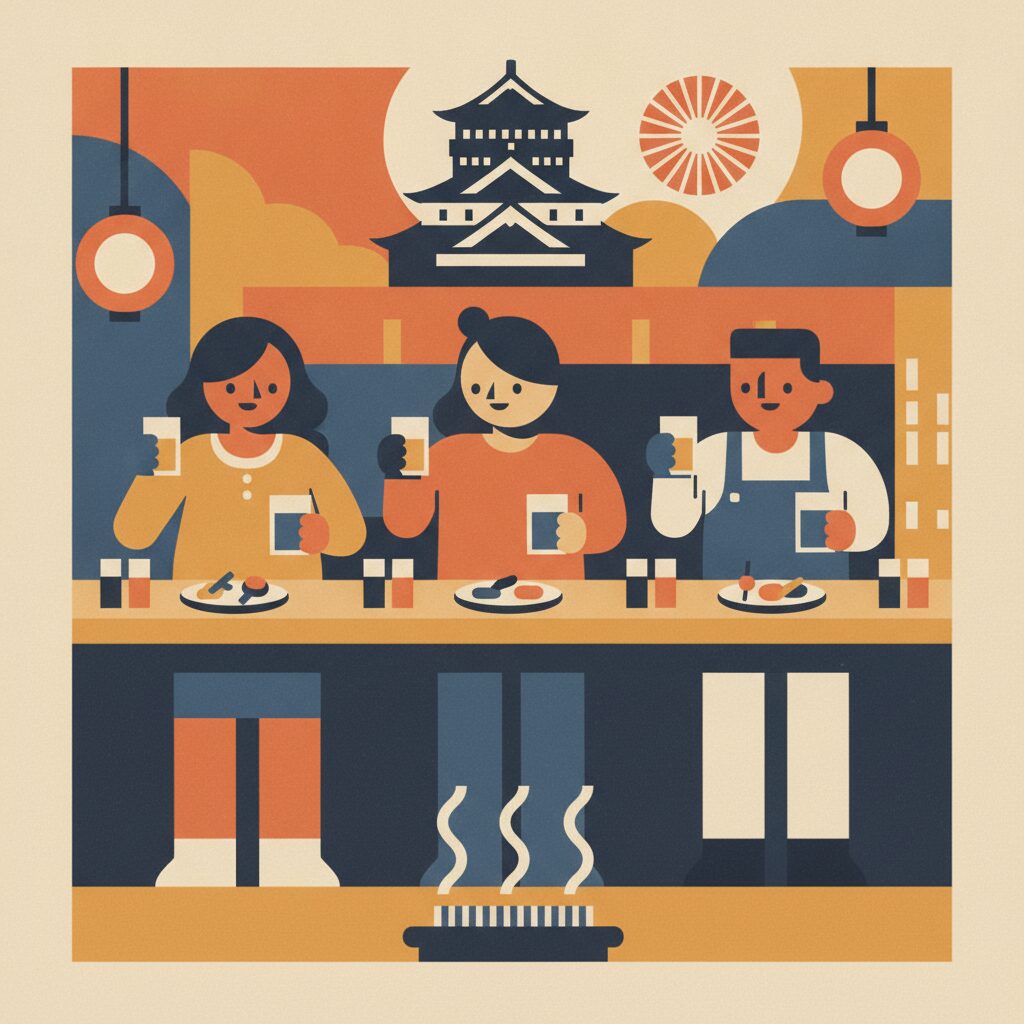
When the clock strikes six in Tokyo, a silent, city-wide switch flips. The air, already thick with purpose, tightens with a new urgency. It’s the sound of a million keyboards clicking off, a million desk chairs pushing back, and a million people funnelling into the immaculate, yet soul-crushingly efficient, train system. The goal is singular: get home. An after-work drink is a formal affair, a pre-planned campaign requiring reservations, coordination, and a commitment of at least two hours. It’s another scheduled event on an already packed calendar. In Osaka, the clock strikes six and a different switch flips. It’s not a tightening, but a release. A collective, audible exhale that ripples through the city’s office blocks and down into its sprawling underground malls. The goal is not necessarily to get home, not yet. The goal is to create a buffer, a pause, a moment of transition between the person you are at your desk and the person you are when you walk through your front door. This transition happens in a uniquely Osakan space: the tachinomi, the standing bar. For the uninitiated, these brightly lit, often cramped, and wonderfully chaotic establishments might look like mere watering holes. But for those of us who live here, they are an essential part of the city’s rhythm, a cultural institution as vital as Osaka Castle or the Dotombori canal. They are the decompression chamber of Osaka’s workforce, a place where the city’s true character—pragmatic, direct, and deeply communal—is served up nightly, alongside cheap beer and grilled skewers. Forget what you think you know about Japanese bars. This isn’t a quiet, contemplative experience. This is a pit stop for the soul. This is where you truly understand how Osaka works.
Many who savor the unique energy of Osaka’s tachinomi might also appreciate the rich flavors of Osaka’s counter-style dining, which captures another facet of the city’s dynamic culinary scene.
What Exactly is a Tachinomi? More Than Just Standing and Drinking
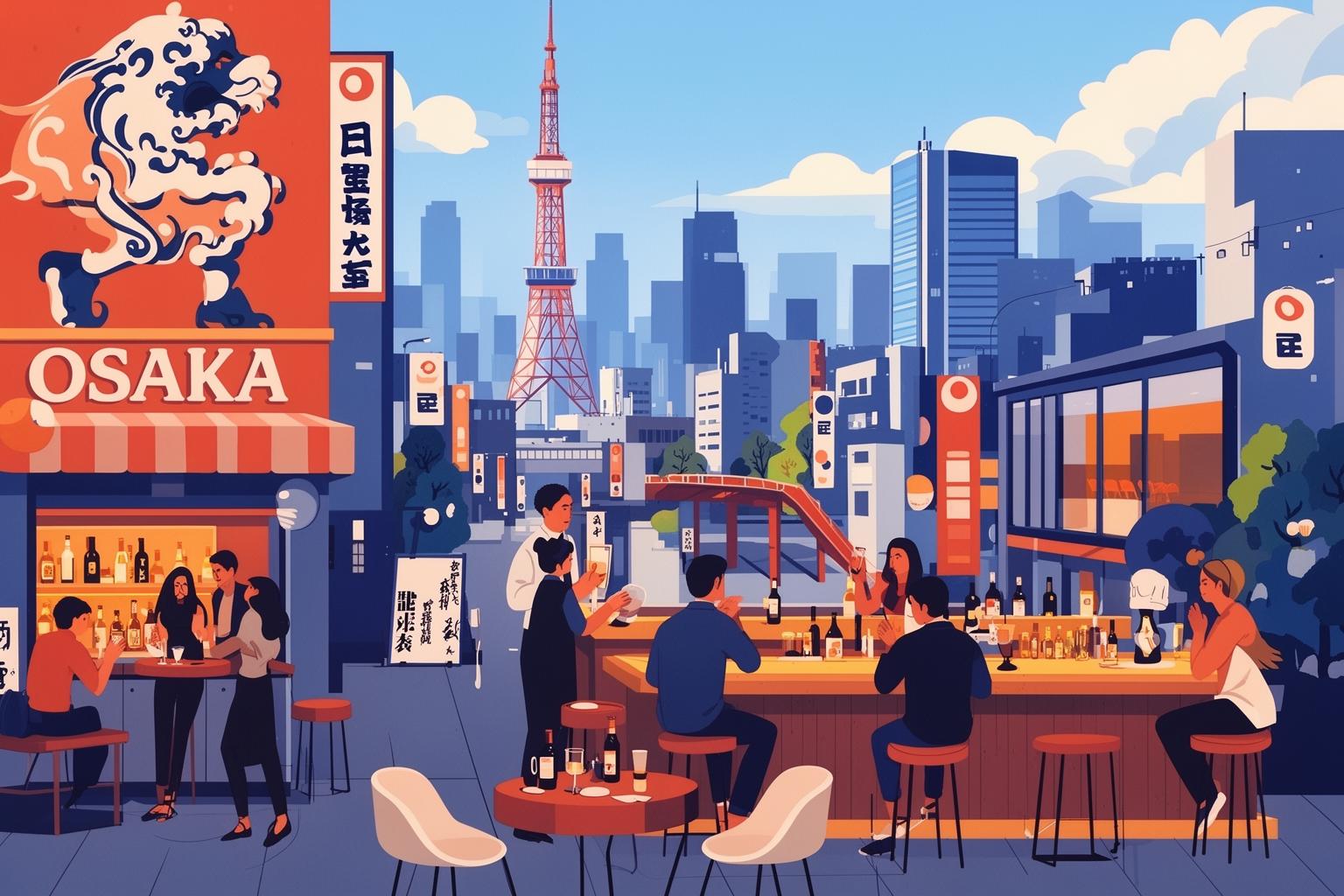
Let’s break down the word. `Tachi` (立ち) means “to stand,” and `Nomi` (飲み) means “to drink.” Simple enough. However, defining a tachinomi merely as a place where you stand and drink is like describing a library simply as a place with books. It overlooks the whole essence—the culture, the complex system humming just beneath the surface. Essentially, a tachinomi is a high-turnover, low-cost spot designed for quick consumption, whether alone or in small groups. You won’t find chairs because they encourage lingering. Private booths are absent since privacy contradicts the experience. Instead, you’ll find a counter, often worn smooth by the elbows of countless salarymen and women, a few simple taps for beer and chuhai, and a menu of small, savory dishes—`tsumami` or `ate`—that are quickly prepared and pair perfectly with alcohol.
The brilliance of the tachinomi lies in its function as a social and temporal buffer. It’s known as the `zero-kai` (zero次会), or “round zero,” serving as a prelude to a proper dinner or a longer drinking session. It’s the place to spend thirty minutes washing away the stress of the workday before facing the train ride home. It’s where you meet a colleague for a quick debrief that feels less like work and more like a shared ritual. For the solo visitor, it offers a bubble of anonymity within the crowd—a place to unwind with your own thoughts, sheltered by the ambient roar of conversation and clinking glasses. The atmosphere is a study in controlled chaos. It’s loud, filled with the sizzle of the grill, patrons’ chatter, and the gruff but efficient calls of the staff. It can get crowded, fostering a kind of incidental intimacy with your neighbors, yet it’s never uncomfortable. There’s an unspoken understanding that everyone is there for the same reason: a quick, affordable, and satisfying break from the demands of the day.
The Osaka Mindset on Display: Cost Performance and No-Nonsense Socializing
Nowhere is the fundamental contrast between Osaka and Tokyo more evident than in a tachinomi. These standing bars serve as a living, breathing manifestation of the Osakan spirit, founded on two sacred principles: exceptional value for money and a complete rejection of unnecessary formality. Drinking at a tachinomi offers a cultural masterclass in how this city thinks and operates.
The Gospel of “Cos-Pa”
In Tokyo, you often pay for the ambiance: elegant decor, impeccable, multi-layered service, and carefully curated playlists. In Osaka, you pay for the product itself. The core philosophy is `kosupa`, a Japanese portmanteau for “cost performance.” This goes beyond just being cheap; it’s a deeply embedded approach to maximizing value. An Osakan doesn’t want the cheapest beer; they want the best-tasting, coldest, most satisfying beer at the lowest possible price. A 350-yen draft beer that tastes crisp and fresh paired with a 150-yen skewer of grilled chicken thigh, perfectly charred and juicy? That’s true luxury in Osaka’s eyes.
This obsession with `kosupa` shapes the entire tachinomi business model. The absence of chairs allows more customers to fit into a smaller space, keeping overhead costs low. Service is lightning-fast to ensure high turnover. The menu centers on tasty dishes made from inexpensive ingredients, like offal (`horumon`), stewed beef tendon (`doteyaki`), or deep-fried skewers (`kushikatsu`). The payment system is a masterpiece of efficiency. In many traditional venues, you receive a small tray or bowl, place your money in it, and the staff takes the exact amount for your order, returning any change immediately. This is `kyasshu-on` (cash on delivery). There’s no waiting for a bill at the end, no complicated splitting of checks. You drink, pay, and leave. It’s a beautifully simple transaction that removes all ceremony and gets straight to the point—a perfect reflection of the city’s merchant soul.
Direct, Not Rude: The Communication Style
My first experience in an Osaka tachinomi, coming from Tokyo, was a shock. In Tokyo, ordering is a careful dance of politeness. You wait for staff to make eye contact, softly say `sumimasen` (“excuse me”), and place your order using polite verb forms. In the Kyobashi tachinomi I wandered into, a man next to me caught the bartender’s eye from across the room, jerked his chin at his empty glass, and yelled, “`Onaji!`” (“Same one!”). The bartender nodded, and a fresh beer appeared seconds later. There was no `sumimasen`, no `kudasai`. It was pure, unfiltered communication.
This is the Osaka way. The language is direct, practical, and stripped of the linguistic padding common in the capital. It can be startling for newcomers and is often misunderstood by other Japanese as harsh or rude. But it’s not about rudeness; it’s about efficiency and a certain warmth rooted in familiarity. In a noisy, busy bar, there’s no time for fluff. The staff appreciate you getting straight to the point. A simple “`Biru, ippon!`” (“One beer!”) is all that’s needed. This linguistic directness reflects a broader cultural trait. Osaka people value honesty and straightforwardness. They prefer clarity over decoding layers of subtext. The tachinomi is the ideal place to understand this mindset. You come to realize that the gruffness of the master behind the counter isn’t unfriendliness; it’s a sign of respect for your time and his.
The Unspoken Rules of the Standing Bar Counter
Like any cultural institution, the tachinomi comes with its own set of unspoken rules and etiquette. These guidelines aren’t posted anywhere, but every regular understands them, and they are crucial for a smooth experience. Learning them is your key to tapping into the true vibe of the place and transitioning from a curious onlooker to a comfortable participant.
Know Your Space, Know Your Time
Personal space is a precious commodity in a standing bar. The first rule is to keep compact. Place your bag by your feet or on a small hook beneath the counter—never on the counter itself. When you eat, keep your elbows tucked in. You’re sharing this narrow plank of wood with a dozen others, and the bar’s flow depends on everyone’s spatial awareness. It’s a kind of graceful, unspoken choreography. People instinctively shift and turn to let others pass, make room for newcomers, or help the staff serve food. You learn to exist within a smaller footprint.
Equally important is respecting the temporal contract. A tachinomi isn’t a place to linger all evening. The business model and social agreement rely on turnover. The general rule is to have one to three drinks, along with a few small dishes. Nursing a single beer for an hour is a major faux pas—you’re occupying valuable real estate. The vibe encourages you to get in, enjoy your drink, and move along. Typical visits range from a quick 15-minute beer-and-skewer stop to a more relaxed 45-minute session. When your glass is empty and your plate cleared, it’s time to settle your bill and make way for the next person seeking a moment of decompression.
Talking to Strangers: An Optional, but Available, Feature
This is perhaps the greatest cultural difference from a typical Tokyo bar. In Tokyo, you usually don’t talk to strangers unless they initiate conversation. In an Osaka tachinomi, the close quarters and shared experience lower the barriers to casual chats. The physical proximity fosters a sense of social closeness. It’s normal for the person next to you to comment on your food, ask where you’re from, or most commonly, spark a passionate discussion about the local baseball team, the Hanshin Tigers.
This is the “friendliness” Osaka is famous for, but it’s important to grasp its context. It’s not an invitation to become lifelong friends. It’s a temporary, low-commitment social connection born in the moment. You share a laugh, gripe about your boss, praise the sashimi, then both go your separate ways—likely never to meet again. It’s a beautiful, fleeting form of community. Of course, it’s entirely optional. You can also stand silently, enjoy your drink, and be left to your own thoughts without any pressure. Reading the room is essential. If your neighbor is quietly scrolling through their phone, it’s best to leave them alone. But if they catch your eye and nod, you might be on the brink of a classic Osaka interaction.
Where to Find This Culture: Beyond the Tourist Traps
While tachinomi can be found throughout Osaka, they tend to concentrate in areas that serve as major commuter hubs or have a long-standing history as entertainment districts. To truly immerse yourself in the culture, you need to explore these salaryman havens, where the bars are intricately woven into everyday life.
Kyobashi: The Salaryman’s Sanctuary
Just east of Osaka Castle, Kyobashi station is a key transit point where JR, Keihan, and subway lines intersect. The moment you step outside, you enter a maze of covered shopping arcades (`shotengai`) and impossibly narrow alleys filled with red lanterns and glowing signs. This is the epicenter of tachinomi culture. The air is thick with the aroma of grilled meat and stale cigarette smoke. The crowd is a sea of work uniforms and dark suits, faces marked by the weariness of a long day. The tachinomi here are old-school, no-frills joints. The walls are stained with decades of smoke, the counters well-worn, and the owners look like they were born behind the bar. It’s raw, unfiltered, and as authentic as Osaka gets.
Tenma: The Foodie’s Playground
North of Kyobashi, around Tenma Station, lies a district that feels somewhat younger and more diverse. Tenma is where tachinomi culture intersects with Osaka’s legendary love of food (`kuidaore` – to eat oneself into ruin). Here, the standing bars are more specialized. You can hop between a spot serving only fresh sashimi and sake, a standing tempura bar frying your order piece by piece, and a Spanish-style `bar de tapas` with a standing-only counter. The crowd includes office workers, culinary students, and young people out for a fun, affordable night. It’s an ideal place to do a `hashigo-zake` (bar hopping), sampling one drink and one dish at multiple venues to enjoy the incredible variety on offer.
Umeda’s Underground: The Commuter’s Oasis
The area around Osaka-Umeda Station is the city’s main commercial center, filled with gleaming department stores and skyscrapers. But underneath lies a different world. The basements of the Ekimae Dai-ichi, Dai-ni, Dai-san, and Dai-yon buildings form a sprawling, retro-futuristic maze of budget restaurants, discount ticket shops, and dozens of tachinomi. These are the most functional standing bars of all. Their location is purely strategic, designed to catch commuters for one last drink before their train ride home. Turnover is incredibly high, prices are rock-bottom, and the atmosphere is one of pure, unfiltered efficiency. It’s the perfect place to experience tachinomi in its most elemental form: as a vital part of the city’s daily commute.
What Foreigners Often Get Wrong
From the outside, the world of tachinomi can appear intimidating—a noisy, crowded, and seemingly impenetrable subculture. Many foreigners, as well as non-Osakan Japanese, hold misconceptions that keep them from fully embracing it. However, looking past these assumptions reveals a world that is surprisingly approachable and welcoming.
The most common stereotype is that tachinomi cater solely to older, working-class men. While they certainly make up the core clientele in more traditional venues, the culture is much more varied than that. Particularly in areas like Tenma and Namba, you’ll find young couples on dates, groups of female friends, and students enjoying the affordable prices. Contemporary tachinomi are emerging everywhere, focusing on wine, craft beer, or Italian cuisine, drawing a whole new generation to the standing bar lifestyle.
Another widespread misconception is that fluency in Japanese is necessary to get by. This is far from true. The ordering process is remarkably simple. Menus are often displayed on strips of paper on the wall, and pointing is a universally understood form of communication. The staff are experts in non-verbal interaction and accustomed to serving customers efficiently. Just a few key words will go a long way: `Nama` (draft beer), `Chuhai` (a shochu highball), and `Kore` (“this one”). Don’t let a language barrier hold you back; a smile and a willingness to try are all you need.
Lastly, some people confuse the no-frills appearance with poor quality or lack of cleanliness. They see the worn counters and simple decor and assume the place is “dirty.” In truth, these spots are simply “lived-in.” There’s an important difference. The grill is clean, glasses are spotless, and food handling is professional. The emphasis is on substance—the food and drink—not superficial looks. The weathered appearance is a badge of honor, reflecting its history and its role as a cherished local institution.
Tachinomi as a Microcosm of Osaka Life
When all is said and done, a standing bar is much more than just a spot to grab an inexpensive drink. It offers a glimpse into the very soul of Osaka. To truly grasp what makes this city tick, understand its people, and see how it stands apart from the rest of Japan, you need to spend an evening leaning against one of its well-worn counters. Every part of the experience reflects a fundamental Osakan value.
The unwavering focus on `kosupa` highlights a city shaped by merchants, where pragmatism and a sharp sense of value are held above all else. The straightforward, no-frills style of communication stems from a culture that shuns pretense and treasures honesty. The fluid social boundaries, where strangers easily strike up a conversation over a shared plate of `doteyaki`, showcase a city with a strong communal spirit and a warmth that is immediate and genuine. The very design of the tachinomi—a quick, efficient, transitional space—is perfectly in tune with the pace of a city that works hard yet deeply values a pause, a reset, a moment of human connection before the day is truly over.
As a Tokyo transplant, it was in the tachinomi of Kyobashi and Tenma that I began to truly understand Osaka. I no longer saw directness as rudeness but as a form of honesty. I stopped perceiving the focus on price as cheapness and began seeing it as a celebration of value. I learned that in Osaka, community isn’t built in quiet, private rooms; it’s forged openly, in the noisy, chaotic, and wonderfully human crush of the standing bar. So next time the clock strikes six, don’t rush for the train. Find a red lantern, slide open the door, and step into the real, living heart of Osaka.