Step off the roaring thoroughfare of Midosuji, or duck down a sleepy, vine-tangled alley in Nakazakicho. Push open a heavy wooden door, the kind with a small brass bell that announces your arrival with a gentle, apologetic chime. The air inside is different. It’s thick with the aroma of dark-roast coffee, brewed not with the violent hiss of an espresso machine, but the patient gurgle of a glass siphon. It carries the faint, sweet ghost of toasted shokupan and, often, the sharp, nostalgic scent of tobacco. Sunlight struggles through amber-tinted windows, illuminating dust motes dancing in the quiet air. You’ve just entered a kissaten, one of Osaka’s traditional coffee houses, and in doing so, you’ve stepped into another time. It’s not a café. It’s a repository of unspoken rules, a sanctuary of slow time, and a crucial window into the city’s soul. For the foreigner trying to build a life here, the kissaten presents a puzzle. It feels like a public space, but has the intimacy of a private living room. It seems perfect for quiet work, yet the sight of a laptop can feel like a cultural faux pas. How do you navigate this space? How do you become a welcome presence instead of a disruptive outsider? This isn’t just about coffee; it’s about understanding the rhythm of a city that values substance over flash, and community over convenience. It’s about learning to listen to the quiet.
Amidst the measured tempo of the kissaten, you may also appreciate how delving into okonomiyaki and takoyaki reveals another layer of Osaka’s nuanced cultural tapestry.
More Than a Cafe: The Kissaten as a Third Place
First, let’s set things straight. In Japan, the difference between a “kafe” (カフェ) and a “kissaten” (喫茶店) is significant. A café is likely what you’re familiar with: bright, airy, often part of a chain, offering lattes, flat whites, and pastries. They’re designed for efficiency, social meetups, or grabbing something quickly. A kissaten, however, is an entirely different experience. The term translates roughly to “tea-drinking shop,” reflecting its origin as a place to gather and enjoy a drink. These spots flourished during the Showa era (1926-1989), serving as hubs for writers, artists, intellectuals, and local businesspeople. They functioned as extensions of both office and home, a “third place” where one could think, converse, or simply be, free from usual obligations. This legacy is ingrained in their very walls. The style typically harks back to the mid-20th century: dark wood paneling, worn velvet or leather chairs, Tiffany-style lamps casting a warm glow, and soft background music—quiet jazz, classical tunes, or even just the ticking of a grandfather clock. Coffee is the centerpiece, not an afterthought. The owner, called the “Master,” is often an expert. An espresso machine is rare; instead, you’ll see gleaming glass siphons reminiscent of a science lab or the careful, almost ritualistic nel drip (cloth filter) brewing method. Coffee here is made with patience and precision. The brewing process itself is part of the experience, a visual reminder to slow down and savor the craft. In Tokyo, famous kissaten are linked to literary figures or historical movements, often feeling like small museums. Osaka’s kissaten, by contrast, feel more grounded, woven into the neighborhood’s daily life. They serve as local living rooms, unofficial community centers where familiar faces gather day after day, year after year. They come across as less performative and more practical, reflecting Osaka’s pragmatic spirit. It’s a place that truly fulfills a meaningful role in the everyday lives of its regular patrons.
Reading the Room: The Unspoken Etiquette of the Kissaten
Entering a kissaten for the first time can feel intimidating. The silence, the watchful gaze of the Master, and the quiet intensity of the regular patrons—it can seem like you’ve walked into an exclusive club. Yet, the rules, though unspoken, are straightforward and grounded in respect for both the space and its occupants.
The Art of the Entrance
The moment you step through the door, you are on display. Don’t just stride in and claim the nearest vacant table. Take a moment to pause. Make eye contact with the Master and quietly say “konnichiwa.” They will probably respond with a soft “irasshaimase” and may subtly gesture you to a seat. If they don’t, take a moment to observe the room. Some tables might be quietly reserved for regulars, or certain areas designated for smokers. Usually, it’s fine to choose your own seat, but do so thoughtfully. Avoid loudly dropping your bags or immediately rearranging furniture. The entrance is a silent negotiation, a way of signaling that you recognize you are a guest in a carefully maintained setting.
The Sacred “Morning Service” and Ordering
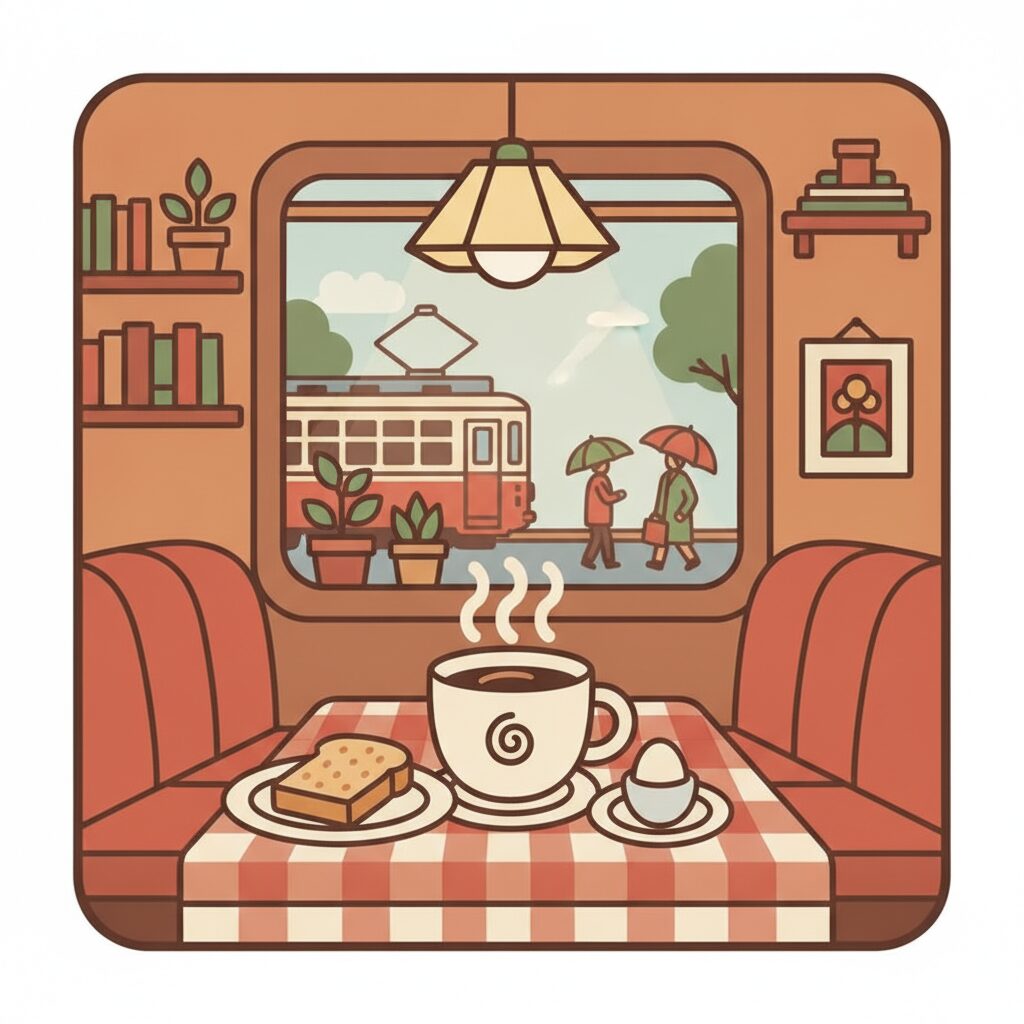
One of the most cherished kissaten customs, especially common in Osaka and Nagoya, is the “mōningu sābisu,” or morning service. This tradition perfectly embodies Osaka’s renowned appreciation for value. Order a coffee before 11 a.m., and it often comes with a complimentary breakfast plate: a thick slice of perfectly toasted shokupan (Japanese milk bread), a hard-boiled egg, and sometimes a small serving of salad or yogurt. All this is included with the coffee price alone. It’s a remarkable deal and a cultural hallmark. When ordering, the rule is simple: one item per person. Kissaten aren’t places to share a single coffee between two people. You pay for the seat, the time, and the ambiance as much as for the drink itself. Many regulars buy “coffee tickets” (kōhī chiketto), prepaid coupon books offering a slight discount. Purchasing one is the ultimate sign of your intention to return—a gesture of commitment quietly appreciated by the Master.
The Sound of Silence (and Siphons)
The defining feature of a kissaten is its soundscape. It’s not completely silent like a library, but deeply, profoundly quiet. Permitted sounds are part of the atmosphere: the rustle of a newspaper, the gentle clink of a ceramic cup on a saucer, the murmur of subdued conversation, the soft bubbling of the siphon brewer. Your voice should never rise above this ambient level. Taking phone calls inside is the ultimate breach of etiquette. If your phone rings, silence it immediately and step outside for the call. Even prolonged, lively conversations with a friend can feel intrusive. The kissaten is a shared space for solitary reflection. Visitors come to read, think, and escape the city’s noise. Your role is to merge with the quiet, not break it.
A Note on Smoke
Here’s a practical, non-negotiable fact: many traditional kissaten still allow smoking. For some, the faint scent of tobacco is an essential part of the Showa-era atmosphere. For non-smokers, this can be a deal-breaker. Before recent legal changes, smoking was the norm in these establishments. While some have switched to non-smoking (“kin’en”) or set up separate smoking sections (“bun’en”), many old-fashioned spots remain grandfathered in or continue to accommodate longtime smoking patrons. A small sign on the door often indicates the smoking policy, but the best way to find out is simply to open the door and take a breath. If the air smells smoky, that’s the reality. It’s an important detail frequently misunderstood by foreigners accustomed to widespread smoking bans. You can’t ask others to extinguish their cigarettes; you can only decide to stay or choose another place.
The Digital Nomad’s Dilemma: Working in an Analog World
For many of us, a quiet spot with good coffee feels like the perfect remote office. However, bringing a laptop into a kissaten is a delicate matter, fraught with the risk of cultural missteps. This is where the analog world of the kissaten meets the digital demands of modern life.
To Laptop or Not to Laptop?
There is no one-size-fits-all answer. The acceptability of laptop use varies greatly between different kissaten. Your first task is to observe. Look around. Are there any other laptops visible? Does the menu or a sign on the wall explicitly forbid them (sometimes indicated by a crossed-out laptop icon)? The atmosphere itself offers a hint. In a small, quiet space run by an elderly Master, where the only other customers are retirees reading the paper, pulling out a MacBook can feel intrusive and inappropriate. In a larger kissaten near a university, it’s often more accepted. If you’re uncertain, the most respectful approach is to ask. A simple, polite “Pasokon o tsukatte mo ii desu ka?” (“Is it okay to use a computer?”) shows consideration. The Master’s reply will be revealing. A hesitant “dozo” might mean “yes, but please be discreet,” while an enthusiastic response signals a green light. The key is to remember that using the space as your office is a privilege, not a right. And under no circumstances should you type loudly. The keyboard should be as quiet as the rest of the room.
The Unspoken Contract: Sockets and Wi-Fi
Assume no Wi-Fi is available. Assume there are no power outlets. Come with your devices fully charged. A kissaten is meant to help you disconnect, not to provide infrastructure for an entire day of online work. The absence of these amenities is a feature, not a flaw. It encourages a different kind of work—writing, reading, editing, sketching—that fosters deep focus without relying on a constant internet connection. If you do find a rare seat with a power outlet, don’t assume it’s for public use; it may be intended for the staff’s cleaning equipment. Again, asking permission is essential. If you are allowed to stay and work for an extended time, you enter into an unspoken agreement. A single 500-yen coffee does not secure you a desk for three hours. A good rule is to order something new every 90 minutes or so—a second coffee, a slice of cake, a glass of juice. This isn’t just about politeness; it’s about recognizing that you are occupying valuable space in a small business. By ordering more, you’re thanking the Master for their hospitality and supporting the continuation of a place you appreciate.
The Master and the Regulars: Becoming Part of the Scenery
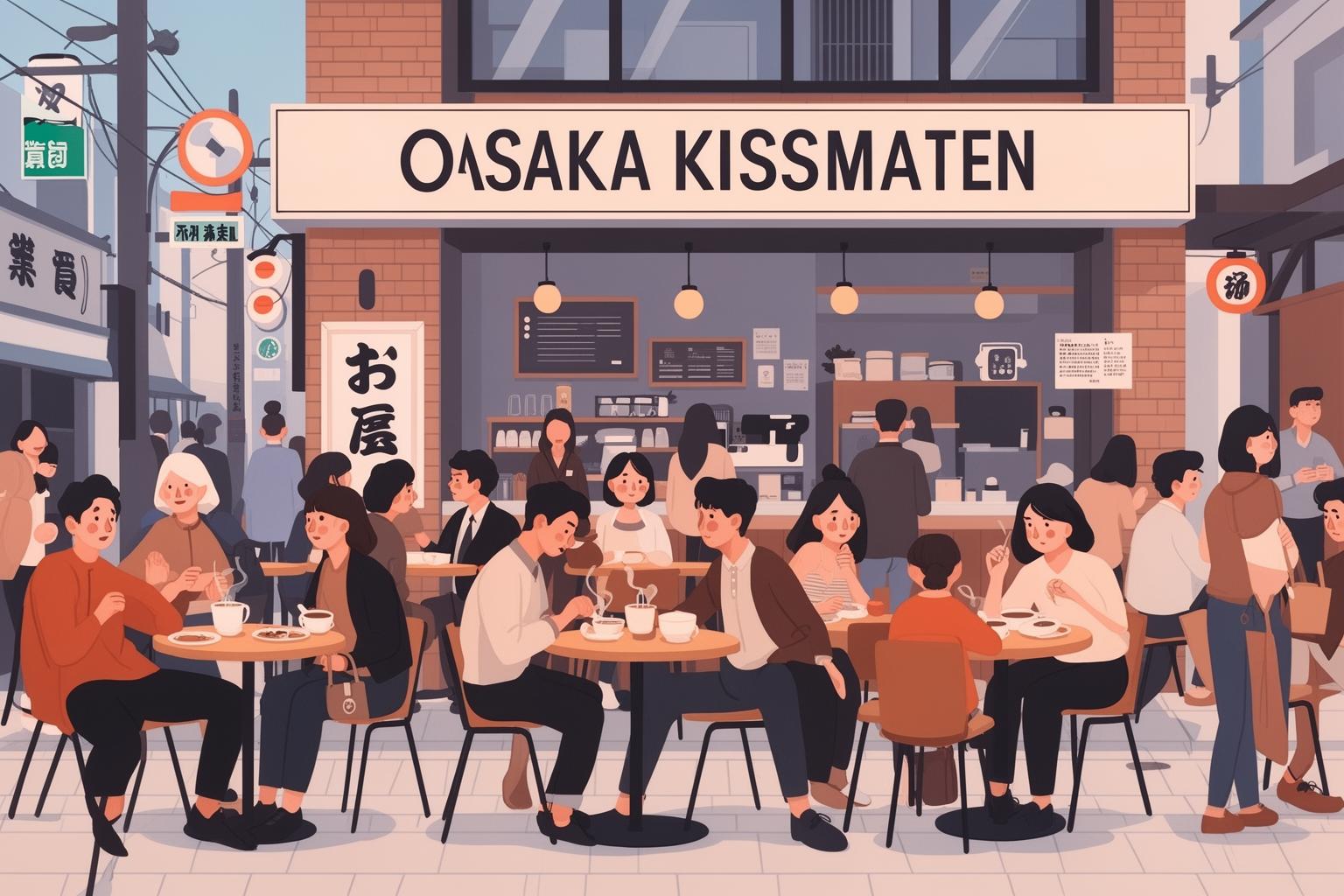
To truly grasp the essence of the kissaten, you need to understand its two key components: the Master and the “jōren,” the regular customers. The Master is more than just a barista or manager; they are the curator, guardian, and soul of the establishment. Often, they have run the shop for decades, having inherited it from their parents. They know the exact water temperature, the precise grind of the beans, and the preferred newspaper section of every regular. Their movements are efficient and practiced, resembling a quiet ballet. They set the atmosphere for the entire space. A stern Master cultivates a monastic silence, while a friendlier one might encourage calm, respectful conversation at the counter. The jōren form the other half of this dynamic. They are the ecosystem of the kissaten: the salaryman who stops for coffee and a cigarette every morning before work, the elderly woman who reads in the same seat every afternoon, the students quietly studying for exams. They share a silent understanding with the Master; their orders and seats are familiar and reserved. For foreigners, becoming a regular is one of the most rewarding ways to feel truly connected to a Japanese neighborhood. It doesn’t happen instantly but through consistency. Visit the same kissaten, sit in roughly the same spot, order a similar drink. Be a quiet, respectful presence. Over time, your nod of greeting to the Master will be met with a warmer one in return. They may even begin preparing your coffee as you enter. This is the Osaka version of “friendliness.” It’s not the loud, boisterous camaraderie of the Dotonbori stereotype. It’s a slow, earned recognition—a quiet satisfaction of being known, of having a place that feels like your own, a small anchor in a vast city.
Why the Kissaten Explains Osaka
In a city known for its fast-talking merchants, lively street food, and the “kuidaore” (eat till you drop) spirit, the kissaten quietly stands in defiance. It represents the other side of Osaka’s character. It reveals that beneath the boisterous surface lies a culture that deeply cherishes tradition, quiet dedication, and the slow nurturing of relationships. The morning service reflects the city’s renowned pragmatism and appreciation for a good deal. The meticulous focus on the art of coffee-making embodies pride in specialized skill, a hallmark of the shokunin, or artisan, deeply ingrained in Japanese culture. The roles of the Master and the jōren emphasize a preference for long-term, loyalty-based bonds over anonymous, transactional interactions. For a foreigner considering whether Osaka is the right place to live, learning to appreciate the kissaten serves as a litmus test. Can you slow down? Can you embrace silence? Can you respect the unspoken rules of a shared space? If so, you’ll discover that Osaka is not just a city of neon lights and noise. It’s a city with quiet corners and a rich, enduring soul. Navigating a kissaten is like learning the city’s secret handshake. It shows you’re willing to look beyond stereotypes and tune into its quieter, deeper rhythm. And in the warm, coffee-scented air of these time capsules, you just might find your own place to belong.