You’ve settled into Osaka. You’ve mastered the train lines, you can order your favorite ramen without pointing, and you’ve even started to understand the local dialect’s rapid-fire rhythm. But then you hear the whispers about a different kind of dining. It’s not the boisterous izakaya, nor the conveyor belt sushi. It’s a world of quiet reverence, sharp knives, and a hefty price tag. You hear terms like Kaiseki, Ryotei, and Kappo thrown around, and they all seem to blend into one intimidating image of formal, inaccessible Japanese haute cuisine. As someone living here, you start to wonder: is this part of Osaka life for me? Or is it just for tourists with deep pockets and a guidebook?
The answer, especially in Osaka, lies in understanding one specific word: Kappo (割烹). This isn’t just a style of restaurant; it’s a philosophy. It’s a direct reflection of the Osaka mindset, stripped of the solemn ceremony you might find in Kyoto or the cool precision of Tokyo. Kappo is where Osaka’s obsession with quality food, its love for straight talk, and its merchant-city pragmatism all meet at a beautifully polished wooden counter. It’s an interactive performance, a conversation between you, the chef, and the very best ingredients of the season. To understand Kappo is to get a seat at the heart of Osaka’s culinary soul. Forget the tourist traps; this is where you see the real city, one perfectly prepared dish at a time.
Rich in cultural nuance, the intimate Kappo experience seamlessly connects with another authentic side of Osaka, as seen in the ever-evolving influence of kaitori shops and their practical value on the city’s everyday life.
What Exactly is ‘Kappo’ and Why is it So Osaka?
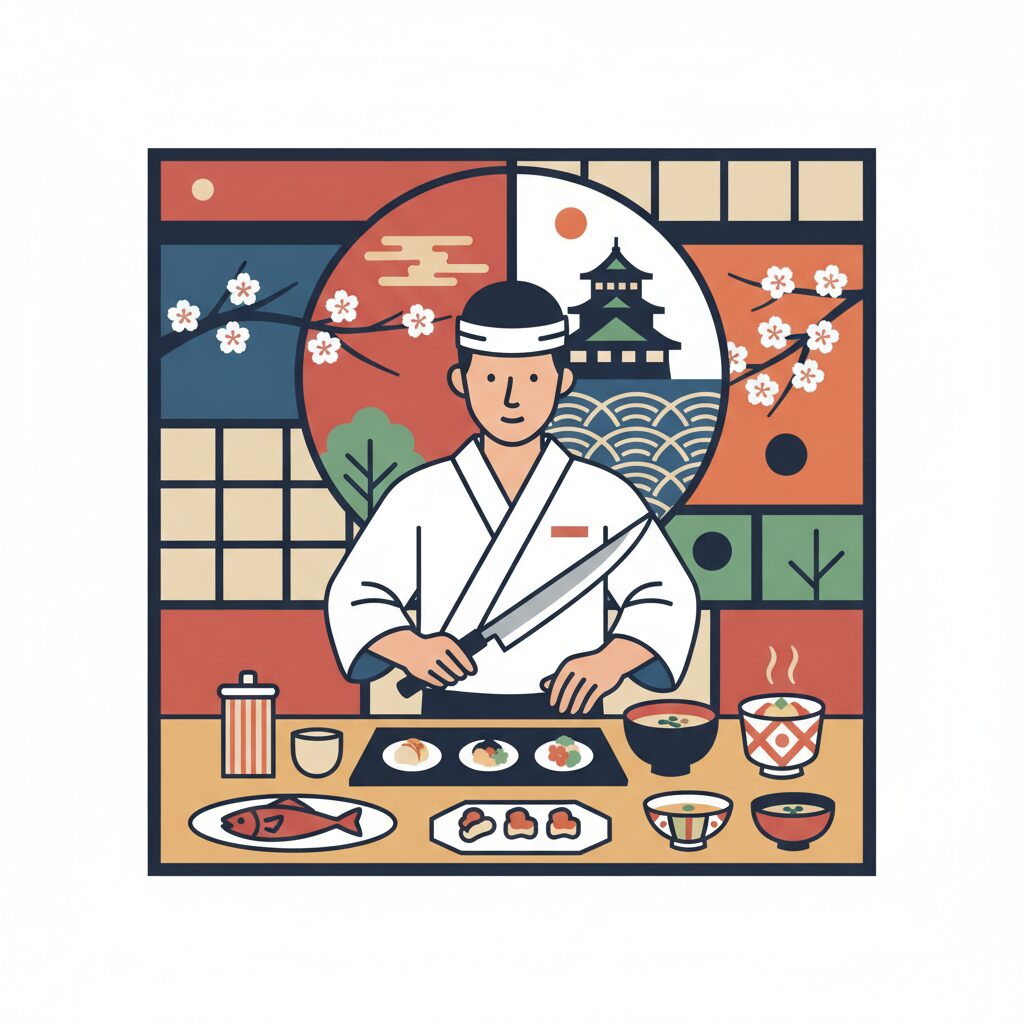
Before you can truly appreciate the experience, you first need to break down the word itself. Kappo is composed of two characters: katsu (割), meaning ‘to cut’ with a knife, and pou (烹), meaning ‘to simmer’ or ‘to cook’. Immediately, the name reveals everything. This cuisine centers on the fundamental actions of a chef, showcasing raw skill performed right before your eyes. It’s not about abstract ideas or poetic names for dishes; it’s about the craft.
The Art of the Counter
The absolute, non-negotiable heart of a Kappo restaurant is the counter. It’s more than seating; it’s the stage. You sit inches away from the Taisho (the master chef), observing every slice, every sear, every meticulous detail. The kitchen isn’t hidden behind swinging doors; it’s right there. You see the fresh ingredients, inhale the aroma of the charcoal grill, and hear the sizzle of dashi stock. This openness is pure Osaka. There’s a prevailing attitude here that values honesty and directness. Concealing the process feels suspicious. An Osaka chef is proud of their skill and ingredients, and they want you to witness it. It’s a confident, no-frills approach: I have the best fish, the sharpest knife, and the skills to bring them together. Watch me work. This upfront nature stands in sharp contrast to more veiled, formal dining styles where food appears as if by magic from a hidden kitchen.
A Conversation, Not a Lecture
If you’ve ever been to a high-end sushi bar in Tokyo’s Ginza, you might have sensed the atmosphere of a hushed cathedral. The chef is a silent, focused master, and the customers are his devoted, quiet congregation. In an Osaka Kappo, the atmosphere is completely different. It’s more like a lively salon. The Taisho is not some distant culinary deity; they are the host, the guide, and often, the entertainer. They’ll speak with you. They’ll ask what you like, what you’re in the mood for, or if you’re celebrating. They’ll explain that the sawara (Spanish mackerel) is especially good today due to the cold current, or that the bamboo shoot was harvested just this morning from a farm in nearby mountains. This back-and-forth is central to the experience. It breaks down the barrier between creator and consumer, which is very much an Osaka way of doing business. It’s relational. You’re not simply buying a meal; you’re cultivating a relationship with the chef and the establishment. It’s an expression of the city’s merchant spirit, where a good transaction is founded on trust and mutual understanding.
The Kappo Experience: A Play-by-Play for the Uninitiated
Understanding the philosophy is one thing, but embodying it and living it is quite another. For a foreign resident, the process can seem mysterious. There are unspoken customs and rhythms that may be challenging to navigate. So, let’s walk through the experience, from the first phone call to the final thank you.
Making the Reservation: Your First Challenge
First and foremost: you cannot simply walk into a Kappo restaurant. These are small, intimate spaces, often with only eight to twelve counter seats. A reservation, made well ahead of time, is essential. When you call, this becomes your first cultural interaction. Be ready to be direct and clear. The restaurant will likely ask about your budget. This isn’t a rude inquiry about your wealth; it’s a practical question to help them create the perfect meal for you. Most Kappo dining is omakase, meaning ‘I’ll leave it up to you.’ By providing a budget—say, 15,000 yen or 20,000 yen per person—you give the chef a clear guideline. They’ll then select the best ingredients available within that price range. This is also the moment to mention any allergies or strong dislikes. Disliking sea urchin is totally fine, but informing them once you’re seated is a major faux pas. This initial conversation is about setting expectations, a practical approach that Osakans, with their business-minded history, genuinely appreciate.
The Arrival: Setting the Atmosphere
Don’t expect a large, flashy sign. Many of the best Kappo restaurants are tucked away down quiet alleys, marked only by a simple, neat noren (a fabric curtain) over the door and perhaps a small, discreet wooden sign. This isn’t about exclusivity for its own sake. It reflects an Osaka value system that values substance (jitsuri) over superficial appearance (gaiken). The quality lies inside the restaurant — in the ingredients and the craftsmanship — not in an elaborate exterior. When you slide the door open, you’ll be greeted warmly and personally, likely by the Taisho themselves or their apprentice. You’ll be guided to your seat at the counter, and this is where the experience truly begins. The setting is arranged with a clean placemat, perfectly aligned chopsticks, and perhaps a small, seasonal decoration.
The Main Event: The Counter and the Chef
Once you’re seated, the meal begins to unfold. It’s not a strict sequence of courses arriving at predetermined times. The Taisho observes you closely. They pace the meal according to your rhythm. They see you savoring the grilled fish, so they allow you a few extra moments before preparing the next dish. They notice your enthusiasm for a particular sake, so they recommend another that will pair wonderfully with the upcoming tempura. The menu is dynamic, a living entity that responds to the mood in the room. You might start with a delicate appetizer (sakizuke), then move on to pristine sashimi, followed by a grilled dish (yakimono), a steamed dish (mushimono), and so forth, finishing with rice, soup, and pickles (shokuji). Each dish is prepared and plated before you, handed directly over the counter. This intimate exchange, from the chef’s hands to yours, captures the essence of the experience. It’s a dance of timing, observation, and intuition — a profoundly human interaction that a typical restaurant kitchen could never replicate.
Unspoken Rules: Kappo Etiquette for the Foreign Resident
This intimate setting carries its own set of expectations. Although Osaka is known for its laid-back vibe, a Kappo restaurant is a space of craftsmanship that requires a certain degree of respect. Observing these unspoken rules demonstrates that you are not just a customer, but a grateful guest.
Pace Yourself: It’s a Marathon, Not a Sprint
A Kappo meal is an experience that usually lasts two to three hours and is meant to be enjoyed slowly. Avoid rushing through a dish as soon as it arrives. Pause to admire the presentation. Take a small bite. Reflect on the flavors. The chef is narrating a seasonal story through the sequence of dishes, and speeding ahead means missing the narrative. Additionally, it is considered polite to finish everything on your plate, down to the last grain of rice. This shows respect for the ingredient’s life and the chef’s effort. Leaving food behind can suggest you did not enjoy it.
The Art of Conversation: Engage, Don’t Interrogate
Engaging with the chef is welcomed, but there is a delicate balance between genuine curiosity and being disruptive. Feel free to ask questions like, ‘What fish is this?’ or ‘Where do these vegetables come from?’ The chef will be happy to share their knowledge. Compliments on a dish you especially liked are also appreciated. However, be mindful of the atmosphere. If the Taisho is focused on a complex preparation or serving other guests, give them space. Avoid overly personal questions or monopolizing their attention. The aim is to maintain a pleasant, shared environment, not a one-on-one interview. Being loud, laughing loudly, or shouting across the counter to friends will disrupt the intimate ambiance for others. This is a shared space, and your behavior impacts everyone’s experience.
Practical Matters: Phones, Perfume, and Payment
There are a few strict rules to keep in mind. The most important concerns scent. Do not wear strong perfume or cologne. A key part of the Kappo experience is the subtle aroma of the food—the fragrant zest of yuzu, the smoky grill scent, the clean smell of fresh fish. A cloud of perfume completely spoils this for you and those around you. Regarding phones, keep them on silent and away from the counter. If you wish to photograph a dish, it’s courteous to ask the chef first by saying, ‘Shashin, ii desu ka?’ (Is a photo okay?). They will almost always agree, but asking shows respect. Never use a flash. When it comes to payment, this is not the time to split the bill item by item. The check will come as a single total. The most elegant approach is for one person to pay, or to split the total evenly beforehand. Tipping is neither necessary nor expected in Japan.
Osaka Kappo vs. The World: A Tale of Two Cities (and a Half)
To fully understand what sets Osaka Kappo apart, it’s helpful to compare it with its upscale equivalents in Japan’s other cultural hubs. It’s through these comparisons that Osaka’s unique character truly emerges.
Tokyo’s Polish vs. Osaka’s Passion
Dining at a high-end restaurant in Tokyo, whether sushi or modern French, often feels like visiting a museum. There is an air of cool, calculated perfection. The presentation is immaculate, the service flawless, and the ambiance one of quiet, serious admiration. The chef is an untouchable maestro, and you are there to observe their brilliance. Osaka Kappo, however, takes a different approach. It’s less about detached perfection and more about warm, passionate expression. The plating may be slightly less architectural, but the flavors are bold and straightforward. The chef isn’t elevated on a pedestal; they’re right alongside you, sharing their passion for food. It’s the contrast between admiring a perfect sculpture behind a velvet rope and watching the sculptor chisel away at marble, dust flying, sweat on their brow.
Kyoto’s Grace vs. Osaka’s Guts
Kyoto is the birthplace of Kyo-ryori and its most formal form, Kaiseki. This cuisine is deeply intertwined with the tea ceremony and imperial court traditions, embodying subtlety, elegance, and profound aesthetic beauty. Each dish is a tiny masterpiece, a seasonal poem crafted from vegetables and seafood. It is delicate and ethereal. Osaka Kappo, in contrast, is more robust and bold. Emerging from a vibrant port and merchant city, it’s a cuisine that prizes strong, satisfying flavors and the unmistakable quality of the main ingredient. While a Kyoto dish might whisper, an Osaka dish often sings. It cares less for visual poetry and more for delivering a powerful, delicious punch. This mirrors the historical identities of the two cities: Kyoto, the aristocratic capital of culture and aesthetics, and Osaka, the pragmatic commercial hub, known as the nation’s kitchen (tenka no daidokoro).
Why Kappo is the Key to Understanding Osaka
So why is all this important for someone living in Osaka? Because walking into a Kappo restaurant feels like a quick immersion into the local culture. It’s an experience that captures the essence of the city within a few hours at the counter. The straightforwardness of watching your meal being prepared mirrors the direct communication style typical of Osakans. The focus on ingredient quality rather than flashy presentation reflects the city’s strong pragmatism. The warm, conversational environment underscores how much Osakans value human connection and community, even in an upscale setting.
Living here means more than just securing a good apartment and a steady job. It involves understanding the local rhythm, the unspoken values, and the things people genuinely care about. In Osaka, that passion is often centered around food. A Kappo meal is undoubtedly an investment. But it’s not merely a costly dinner. It’s a lesson. It’s an opportunity to witness master craftsmanship firsthand, to savor the seasons with vivid clarity, and to engage with the city in its most genuine and delicious form. It’s where you transition from being just a resident to becoming an active part of the vibrant, ongoing story of life in Osaka.