Moving to a new country is a series of small, startling discoveries. You figure out the trains, you learn how to sort your trash into a dozen different categories, and you eventually find a brand of coffee that doesn’t taste like disappointment. But for those of us navigating life with dietary restrictions, the biggest challenge often lurks under the bright, fluorescent lights of the local supermarket. Standing in an aisle in Osaka, surrounded by a universe of packages covered in characters you can’t read, can feel like a special kind of culinary nightmare. Your first thought is often, “This is impossible.” Your second, more panicked thought is, “Am I going to live on plain rice and cucumbers forever?”
Here’s the truth about finding vegan, gluten-free, or allergy-friendly food in Osaka: it’s not impossible, but it’s a game played with different rules. This isn’t Tokyo, where you might stumble upon a chic organic cafe or a dedicated vegan grocer in a trendy neighborhood. Osaka is a city built on pragmatism, incredible value for money—a concept the locals call `kosupa` (cost performance)—and a certain cheerful chaos. The search for safe food here isn’t about seeking out specialty shops. It’s about learning to decode the massive, bustling, everyday supermarkets where the rest of the city shops. It’s a treasure hunt, and once you learn the map, you’ll find that Osaka has everything you need, often hidden in plain sight. This guide is your map. It’s for navigating the aisles of a regular Life, Izumiya, or Mandai supermarket, the places that are the true heart of Osaka’s daily life.
Discovering the kappo culinary tradition in one of Osaka’s intimate kitchens can further illuminate how the city creatively adapts its food culture to meet diverse dietary needs.
The Osaka Supermarket Mindset: More Than Just Groceries
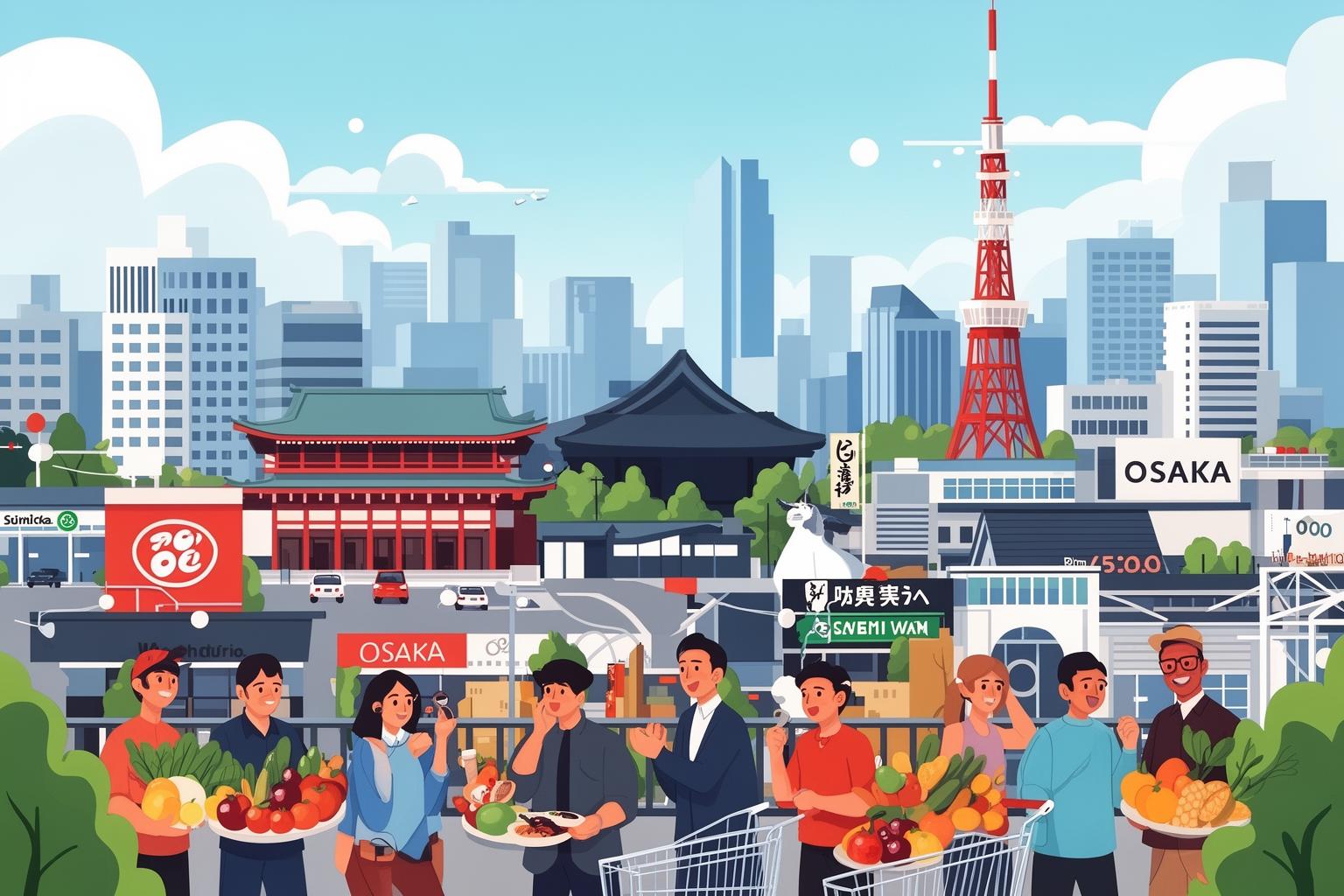
Step into a typical Osaka supermarket on a Tuesday evening, and the first thing that strikes you is the sound. It’s a lively mix of competing jingles for instant noodles, enthusiastic announcements about daily specials, and the rhythmic calls of `irasshaimase!` (welcome!) echoing from every corner. It’s loud, crowded, and pulsing with an energy that feels distinctly Osaka. This isn’t the quiet, orderly experience you might expect—it’s a vibrant, living marketplace.
This atmosphere directly mirrors the city’s character. Osaka is famously merchant-focused, with people who are savvy and demanding shoppers. They seek quality, but they absolutely insist on good value. This fixation on `kosupa` influences the entire supermarket scene. Shelves are stacked high, promotions are aggressive, and the emphasis is on volume and turnover. While Tokyo may have more small, curated shops catering to specialty lifestyles, Osaka defaults to highly efficient, all-in-one superstores that offer the best possible price on a kilogram of carrots or a block of tofu.
For foreigners with dietary needs, this situation offers both challenges and opportunities. The challenge is that dedicated “free-from” sections are uncommon. Vegan or gluten-free items aren’t neatly grouped in one convenient aisle; instead, they’re scattered throughout the store, mixed in with their conventional counterparts. The opportunity lies in the fact that basics are incredibly cheap and plentiful. The sheer size of these stores means that if you know what to look for, you can create a fantastic, affordable pantry. You just have to tune out the noise, embrace the chaos, and learn to read the signs.
Cracking the Code: Reading Japanese Food Labels
Your most essential tool in this journey isn’t just a shopping list; it’s the ability to conduct basic forensic analysis of a food label. You don’t need to be fluent in Japanese, but mastering pattern recognition is crucial. The Japanese food labeling system is quite thorough, and once you grasp its logic, it will become your greatest ally.
The Big Seven (and More): Mandatory Allergen Labeling
Japan requires clear labeling of seven specific major allergens. This should be your first and most important checkpoint when examining any package. These allergens must be legally listed if they are present in the product.
The mandatory seven (`特定原材料7品目`, tokutei genzairyou 7 hinmoku) are:
- Egg (卵, tamago)
- Milk (乳, nyuu)
- Wheat (小麦, komugi)
- Shrimp (えび, ebi)
- Crab (かに, kani)
- Buckwheat (そば, soba)
- Peanuts (落花生, rakkasei)
Beyond these, there are 21 other allergens that are strongly recommended for labeling. For vegans and others, the most important among these include soybeans (大豆, daizu), various nuts (カシューナッツ, cashew nuts; くるみ, walnut), sesame (ごま, goma), and beef/pork/chicken (牛肉/豚肉/鶏肉). These allergens are almost always displayed in a clear box on the back of the package, often labeled `原材料に含まれるアレルギー物質` (Allergens contained in the ingredients). Spotting this box is like discovering the Rosetta Stone for that product—it’s the first place you should always check.
The Vegan’s Challenge: Hidden Animal Ingredients
A common and frustrating misconception for newcomers is that products appearing vegetarian often are not. Japan’s culinary tradition relies heavily on subtle, savory `umami` flavors, frequently sourced from animal products even in surprising places. This means you need to look beyond the allergen box and carefully examine the entire ingredient list.
- Dashi (だし): The top offender. Dashi is a fundamental soup stock used in countless products, from miso soup to salad dressings and even some rice crackers. The standard dashi is made from bonito flakes (fish flakes; 鰹, katsuo). If dashi is listed without specification, assume it’s fish-based. The vegan alternative is kombu dashi (昆布だし), made from kelp.
- Extracts (エキス, ekisu): This single term can dash your hopes. Chicken extract (チキンエキス), beef extract (ビーフエキス), and pork extract (ポークエキス) appear in a surprising number of products, including vegetable soups, curry roux, and savory snacks.
- Lard (ラード, raado): Many baked goods, especially the fluffy white bread known as `shokupan`, use lard or dairy products to add softness and flavor. Look for the word shortening (ショートニング, shootoningu), then try to find the phrase for plant-based (植物性, shokubutsu sei) nearby.
- Gelatin (ゼラチン, zerachin): Commonly found in jellies, desserts, and as a stabilizer. It is almost always animal-derived. Safer plant-based alternatives include agar (寒天, kanten) or carrageenan (カラギナン).
Your Pocket Dictionary: Essential Kanji for Survival
You don’t need to memorize a full dictionary—just learn to recognize a handful of key characters that act as clear signals. Keep a photo of these on your phone until they become second nature.
Green Lights (Generally Safe):
- 植物性 (shokubutsu sei): Plant-based. A golden phrase.
- 大豆 (daizu): Soybean. Your friend in many forms.
- 豆乳 (tounyuu): Soy milk. The foundation of a vegan lifestyle here.
- 不使用 (fushiyou): Not used. For example, `乳製品不使用` (nyuuseihin fushiyou) means ‘dairy products not used’.
- 無し (nashi): Without. A simpler way of saying ‘not used’.
Red Lights (Warning! Check Closely):
- 卵 (tamago): Egg
- 乳 (nyuu): Milk
- 小麦 (komugi): Wheat
- 肉 (niku): Meat
- 魚 (sakana): Fish
- エキス (ekisu): Extract (usually animal-derived)
- だし (dashi): Stock (usually fish)
Navigating the Aisles: A Section-by-Section Guide
Once you’ve developed your kanji-spotting skills, you can confidently navigate the supermarket. Think of it as a generally welcoming territory with a few challenging spots.
The Tofu & Soy Section: Your Safe Haven
This is your home base. Japanese supermarkets dedicate a large refrigerated area to tofu and related products, making it a vegan paradise. You’ll discover an incredible variety far beyond what you’re used to. There’s soft, silken tofu (`kinu`, 絹), perfect for smoothies and sauces, and firm tofu (`momen`, 木綿), ideal for stir-fries. You’ll also find `atsuage` (厚揚げ), thick blocks of deep-fried tofu, and `aburaage` (油揚げ), thin fried tofu pouches great for stuffing or adding to miso soup. The soy milk (豆乳, tounyuu) selection is extensive as well. A key tip: look for `無調整` (muchousei), meaning unadjusted or unsweetened. The alternative, `調整` (chousei), is adjusted soy milk, often sweetened and flavored.
The Produce Aisle: Seasonal, Local, and Sometimes Confusing
Japanese produce is beautiful, fresh, and highly seasonal. Osakans, like all Japanese, take great pride in eating what’s in season. You’ll find heaps of daikon radish in winter and perfectly sweet corn in summer. Many supermarkets have a `地元野菜` (jimoto yasai) section featuring vegetables from local Osaka farms. This connection to local producers is a significant cultural aspect. Although the quality is excellent, prices can be higher than you may be used to. This is where you can adopt the Osaka `kosupa` mindset. Watch for discount stickers (`割引`, waribiki) staff apply near the end of the day. Snagging perfectly good but soon-to-expire produce at 30% off is a classic Osaka pro move.
The Dry Goods Maze: Sauces, Spices, and Snares
This is where the real treasure hunt begins. This aisle contains essentials along with hidden pitfalls.
- Soy Sauce (醤油, shouyu) & Miso (味噌): Most are safe. Basic soy sauce contains just soybeans, wheat, salt, and water. For miso, check for brands marked `無添加` (mutenka), meaning additive-free, as these are less likely to contain dashi. The ingredients should simply be soybeans, rice or barley, and salt.
- Curry Roux (カレールー): A potential minefield. Convenient Japanese curry roux blocks are common in home cooking, but over 90% contain milk powder, lard, or meat extracts. Careful label reading is a must. A few product lines, like S&B’s Golden Curry, offer vegan versions, but even within the same brand, ingredient lists can vary by spice level. Always double-check.
- Pasta Sauces: Assume every pre-made sauce contains hidden meat extracts unless proven otherwise. Even the simplest “arrabbiata” or “basil” sauces often list chicken extract. Your best and most affordable option is to buy plain canned or pureed tomatoes (`トマト缶`, tomato kan) and make your own sauce—a simple and practical solution.
Bread, Snacks, and the Quest for Butter-Free Pastries
Finding bread can be tricky. The standard fluffy white loaf, `shokupan`, almost always contains milk, butter, or both. Your safest bet is usually a hard, crusty bread like a French baguette from an in-store bakery (`パン屋`, pan-ya). Check the label, but these often contain just flour, water, salt, and yeast.
For snacks, plain rice crackers (`塩せんべい`, shio senbei – salt-flavored rice crackers) are usually a good choice, but always check for hidden dashi or shrimp powder. Dark chocolate is becoming more widely available, and you can typically find vegan-friendly options by checking the allergen list for milk (乳). Reading labels is a constant effort, but it quickly becomes a fast, reflexive habit.
Beyond the Big Chains: Finding Your Niche

While a standard supermarket can provide about 90% of what you need, there are a few other stores that are essential for completing your pantry. They perfectly capture the Osaka spirit of `kosupa` and practicality.
Gyomu Super (業務スーパー): The Budget Bulk Haven
`Gyomu Supa` means “Business Supermarket.” These no-frills, warehouse-style stores were originally designed for restaurant owners but are open to the public. They represent the very essence of `kosupa` culture. The aisles are narrow, boxes are stacked high, and the atmosphere is pure chaos, yet the prices are unbeatable. This is where you find giant bags of frozen vegetables, affordable imported goods like chickpeas and lentils, huge jars of spices, and often a surprising variety of vegan specialty items such as dairy-free cheese or plant-based meats in the freezer section. A visit to Gyomu Super is a quintessential Osaka experience; it’s not fancy, but it works like a charm.
Kaldi Coffee Farm and Seijo Ishii: The Import Essentials
When you really need a certain brand of oat milk, some gluten-free pasta, or a jar of sugar-free peanut butter, these are the places to go. Kaldi Coffee Farm is a treasure trove of imported goods, packed into small, overflowing aisles. Seijo Ishii is a more upscale supermarket with higher prices but a carefully curated selection of organic and imported specialty foods. While these stores are excellent, think of them as supplemental. In Tokyo, you might center your entire lifestyle around stores like these. In Osaka, they serve as go-to spots for specific cravings after you’ve completed your main shopping at local chains like Life or Izumiya. The core of your pantry still comes from the larger, mainstream stores.
The Osaka Attitude: Ask, and You Might Receive
Here’s a final piece of advice that captures what truly sets Osaka apart. If you find yourself genuinely stuck, don’t hesitate to ask for assistance. The stereotype that Osakans are more direct, open, and chatty than their Tokyo counterparts is, in my experience, largely accurate. Even if your Japanese is limited, staff members are much more likely to engage in some back-and-forth, possibly with the help of your phone’s translation app, to help resolve your issue.
I once stood in an aisle for ten minutes, completely puzzled by the label on a promising loaf of bread. I flagged down an employee who, after a brief moment of mutual confusion, took my phone and called the manufacturer’s customer service line right then and there to ask if it contained milk. It was a little loud, somewhat chaotic, and attracted a small crowd of curious shoppers, but it was also incredibly kind and remarkably practical. There was no fuss—just a straightforward effort to find an answer. This is the Osaka spirit. It’s a roll-up-your-sleeves, let’s-get-this-done mindset you can rely on.
Building Your Vegan & Allergy-Friendly Pantry in Osaka
Living with dietary restrictions in Osaka isn’t a tale of deprivation; it’s a story of adaptation. It involves learning a new language—not just of words, but of ingredients, symbols, and supermarket layouts. You come to appreciate the simple beauty of the tofu section. You become skilled at recognizing the kanji for milk from a distance. You embrace the lively chaos of Gyomu Super and the excitement of discovering a safe brand of curry roux. It encourages you to engage with your new home in a practical, everyday way.
Thriving here isn’t about finding an exact replica of the health food store you knew back home. It’s about tuning into the rhythm of the city’s unique food culture. It’s a treasure hunt that rewards patience and a bit of detective work. And once you crack the code, you’ll realize that an affordable, delicious, and safe culinary life is not only possible in Osaka—it’s waiting for you down the aisles of your local `suupaa`.