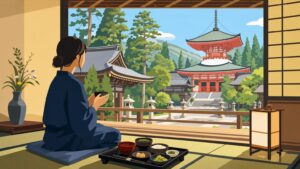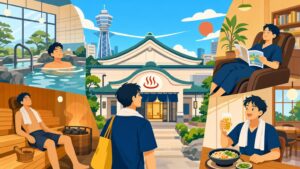
When you tell friends back home you live in Osaka, their minds conjure a very specific image. They picture Blade Runner-esque canals reflecting a riot of neon, steam rising from takoyaki stalls, and streets so packed with people you can feel the city’s heartbeat through the soles of your shoes. And they’re not wrong. That Osaka—the vibrant, chaotic, unapologetically loud heart of Kansai—is absolutely real. But it’s only half the story. The other half, the part that explains how people actually live here, how they recharge and stay sane, is a secret whispered on the gentle click-clack of a local train heading north. It’s the story of a city that keeps its escape hatch wide open, a city where pristine nature isn’t a far-off dream, but a backyard just a few train stops away. This is the Osaka I discovered on the Nose Electric Railway, a charming little line that leads to Myoken’s Forest, a place that reveals more about the local mindset than a thousand nights in Dotonbori ever could. It’s where you learn that for Osakans, escaping the city isn’t about grand, expensive gestures; it’s about practical, accessible joy. It’s not about finding solitude, but about finding a different kind of community, one built on shared mountain paths and the rustle of cedar trees.
The discovery of Myoken’s Forest invites travelers to relish not only an escape into nature but also the vibrant spirit of Osaka, where the engaging comedy culture adds an unexpected layer to the city’s charm.
The Osaka Escape Plan: Less ‘Zen’, More ‘Let’s Go!’
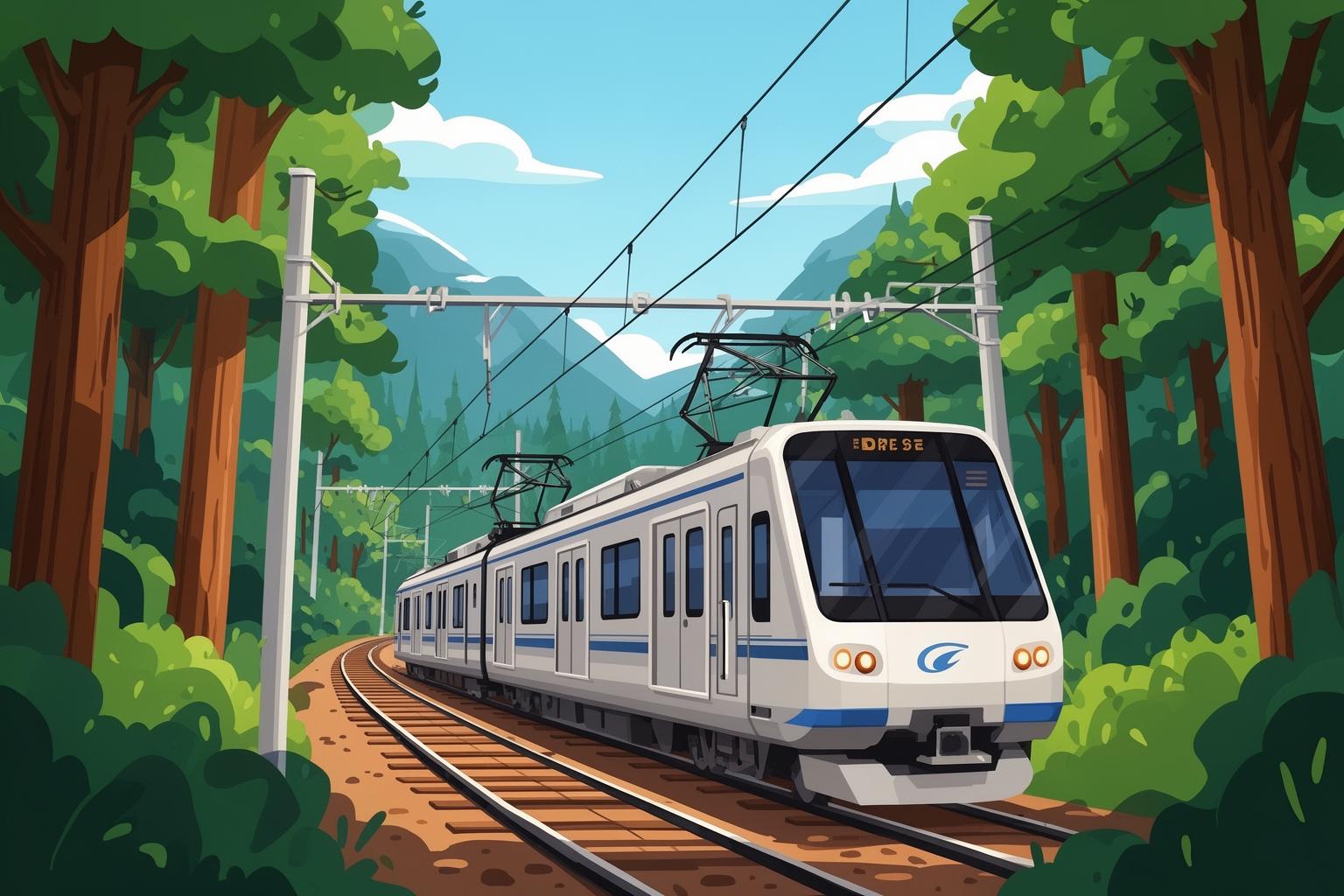
In Tokyo, organizing a day trip to nature often feels like a carefully orchestrated mission. It requires booking special express trains weeks ahead, researching the trendiest onsen towns, and synchronizing schedules with military precision. It’s an Event. In contrast, in Osaka, heading to the mountains is more like choosing to visit a different neighborhood for lunch. The journey to Myoken’s Forest starts at the vast, sprawling Hankyu Umeda Station, a cathedral of commerce and transit. You board a train to Kawanishi-Noseguchi, and for twenty minutes, you’re just another commuter. Then, you make a simple transfer, stepping off the sleek, wine-colored Hankyu express onto the Nose Electric Railway, or ‘Nose Dentetsu’ as locals call it. The change is immediate and striking.
A Train That Feels Like a Welcome
The Nose Dentetsu trains are smaller, with a charming, slightly nostalgic atmosphere. They glide along a single track winding through quiet residential areas, bamboo groves, and small vegetable patches nestled between houses. The pace slows, the windows open to a greener world, and the passengers seem to relax. You won’t find crowds of stylish twenty-somethings in perfectly coordinated, brand-name hiking gear here. Instead, the car is filled with a comforting mix of life. Grandparents shepherd their grandchildren, pointing out landmarks. Middle-aged couples in practical windbreakers and sturdy shoes carry backpacks already stocked with thermoses of tea and homemade onigiri. Solo hikers, absorbed in books, radiate contentment. This train isn’t a tourist attraction; it’s a vital local lifeline. It reflects the Osaka mindset of practicality. Why build a separate, fancy tourist train when the local commuter line works just as well—and for a fraction of the cost? This approach prioritizes function and accessibility over style and exclusivity. It’s a truly democratic way to experience nature—no special tickets, no reservations, just hop on and go.
The Landscape of Real Life
As the train rolls toward Myokenguchi Station, the final stop, the window view tells a story of how Osaka blends with its environment. Unlike the sharp, distinct boundary between city and countryside you might see elsewhere, here the transition is subtle. Urban sprawl leads to suburbs, which then dissolve into satoyama—the traditional Japanese mosaic of farmland, woodland, and villages living in harmony. This isn’t a pristine, untouched wilderness. It’s managed, inhabited nature. You see small farms, persimmon orchards, and occasional weathered sheds. This closeness is a fundamental part of Osaka life often overlooked. While Tokyo stretches as a vast plain of endless city, Osaka sits in a basin cradled by mountains visible on the horizon—a constant, gentle reminder that an escape is never far away. This geographical fact shapes the local mindset, creating a population that views nature not as a destination, but as an extension of their living space.
Trail Etiquette and the ‘Ame-chan’ Philosophy
Stepping off the train at Myokenguchi, you’re welcomed by the crisp mountain air and the gentle sound of a nearby stream. From there, a short walk leads you to the cable car that climbs up to the main forest area. As you set out on the well-marked hiking trails, you quickly realize the soundscape is unlike what you might expect. It’s not one of meditative silence but is instead filled with cheerful, rhythmic exchanges of greetings.
The ‘Konnichiwa’ Connection
Every person you pass on the trail, without exception, will meet your eyes, smile, and say “Konnichiwa!” It’s not a quiet mumble or just a polite nod; it’s a sincere, often enthusiastic greeting. A group of elderly hikers with bells jingling to ward off bears will call it out in unison. A young family will encourage their toddler to say it. A focused trail runner, barely breaking a sweat, will offer a clear, crisp “Konnichiwa!” as they pass by. As a foreigner, my initial instinct was to simply nod quietly, as I might in a more reserved city. But in Osaka, that won’t do. You’re expected to return the greeting with equal warmth. This isn’t just about politeness; it’s a core expression of the local culture. It signals a shared journey and instantly creates a temporary community on the mountain. It means, “We’re all here enjoying this together.” It breaks down the anonymity common in city life and fosters a sense of collective responsibility and camaraderie. This is Osaka’s “friendliness” in action—not passive, but an active, participatory social contract.
The Unspoken Language of Candy
Then there is the ‘ame-chan’ culture, Osaka’s famous love language of candy, in its natural environment. You might be resting on a bench when an ‘obachan’ (auntie) approaches, digs into her bag, and pulls out a small, individually wrapped candy. “Dōzo,” she says with a warm smile, offering it to you. “Take it, take it.” Refusing is hardly an option. This simple gesture carries deep meaning. It’s more than just a sweet treat—it’s an icebreaker, a gesture of goodwill, and a tiny, edible welcome into the community. It’s her way of saying, “You look like you could use a little sugar boost. I’ve got plenty. Let me share.” In Tokyo, offering a snack to a complete stranger might seem unusual, even intrusive. In Osaka, it’s the most natural thing in the world. It’s a small act of kindness that fuels the social engine of the city, whether in a bustling market or on a quiet mountain trail. It’s the belief that a little shared sweetness can brighten any situation.
Myoken’s Forest: Not an Instagram Backdrop, but a Living Room
After a pleasant hike through towering cedar groves, you arrive at the main area of Myoken’s Forest. This is often where foreigners encounter a moment of cultural dissonance. If you expect a perfectly manicured, minimalist Japanese garden designed for quiet reflection, you might find yourself surprised. Myoken’s Forest feels less like a pristine nature preserve and more like a vast, communal backyard gathering.
The Beauty of the Practical
The central area boasts a large, open space with public barbecue pits, a free-to-use foot bath (ashiyu), a small café offering simple udon and curry, and a somewhat rickety lift that takes you to the summit. None of it looks particularly new or stylish. The barbecue pits are concrete blocks, the benches are worn wood, and the signage carries a charmingly dated, Showa-era vibe. Visitors from more aesthetics-driven cultures might view this as somewhat rundown. But that completely misses the point. This exemplifies the classic Osaka mindset: function over fashion, experience over aesthetics. The facilities aren’t built to be featured in a design magazine; they’re made to be used, enjoyed, and to promote fun with maximum efficiency and minimal fuss. The foot bath exists because soaking your feet after a long hike feels fantastic. The barbecue pits are there because outdoor cooking and eating together is a joyful, communal event. The focus is wholly on the human experience, not on crafting a perfect visual impression. This unpretentiousness is a refreshing contrast to the pressure for perfection you sometimes encounter elsewhere in Japan.
A Symphony of Communal Joy
On any given weekend, the barbecue area buzzes with activity. It fills with multigenerational families, university groups, and local community clubs. The air is rich with the enticing aroma of grilled meat and yakisoba. The sounds form a cheerful chorus of laughter, children yelling, and food sizzling on the grill. People share coolers, borrow tongs from neighbors, and toast with cans of beer and chu-hai. It’s messy, loud, and delightful. It feels less like a park and more like an outdoor living room. This scene highlights the deep-rooted significance of the group in Osaka culture. Joy is meant to be shared—loudly and with plenty of food. While a Tokyo picnic might be a more restrained affair with elegantly packed bento boxes, an Osaka BBQ is a raucous, all-out feast. It’s a communal performance, a celebration of togetherness at the city’s very heart.
The Nose Dentetsu: A Train Line with a Personality
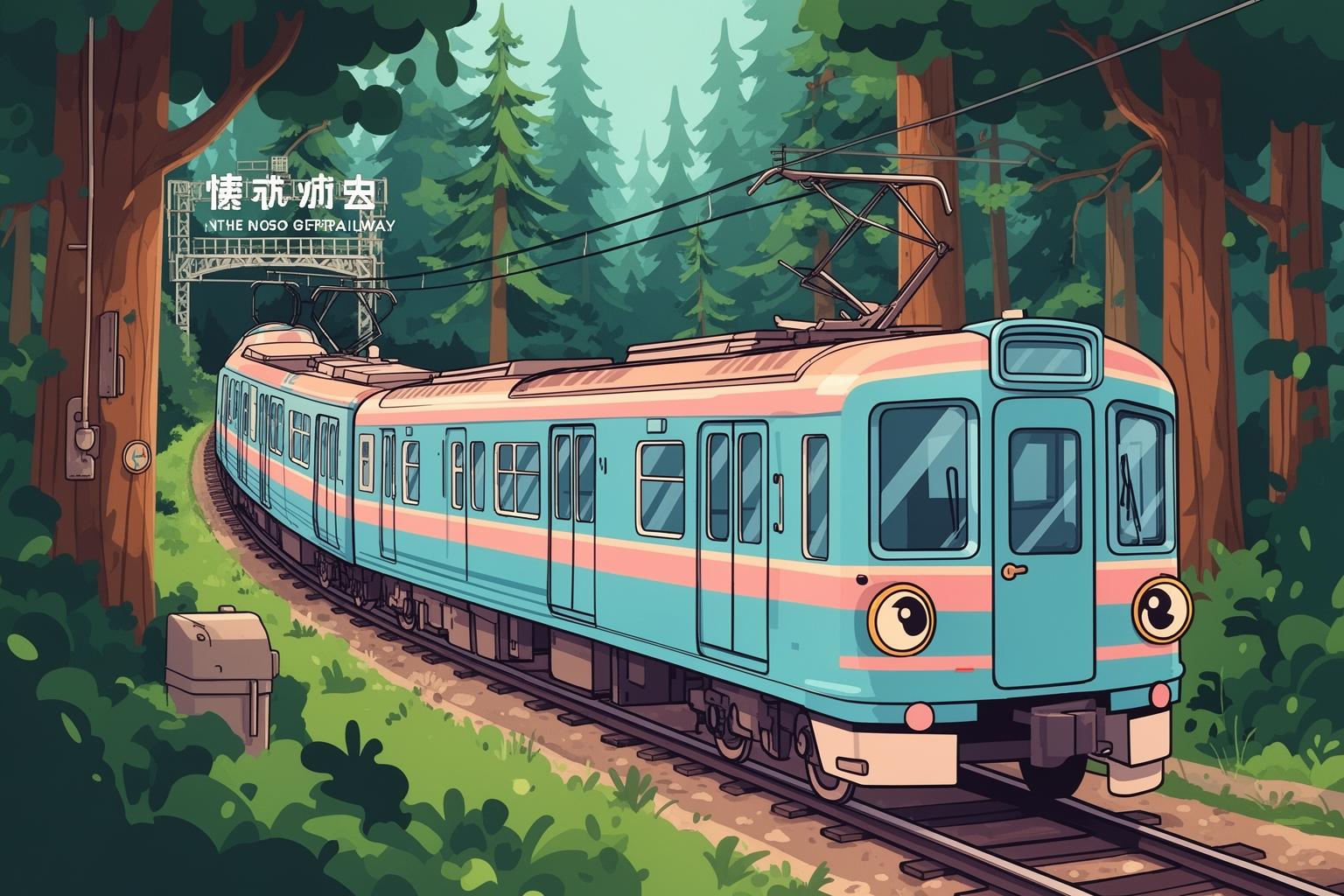
Even the journey home from Myoken’s Forest reveals something important about how this region operates. The Nose Electric Railway is more than just a means of transportation; it’s an institution with its own unique character, serving as a perfect example of the role private railway companies play in shaping life in the Kansai region.
Beyond Transportation
In Tokyo, the public transit system, dominated by the extensive JR and Metro networks, often feels anonymous and purely functional. In Kansai, private railway lines such as Hankyu, Hanshin, and Kintetsu have historically done much more than simply run trains. They developed the land along their routes by building department stores at major terminals, creating desirable residential neighborhoods, and even founding cultural institutions like the renowned Takarazuka Revue theater, started by Hankyu’s founder. They didn’t just move people; they crafted an entire lifestyle. Residents develop a strong loyalty and a sense of identity tied to “their” train line. The Nose Dentetsu, as a smaller branch of the Hankyu empire, reflects this philosophy on a more personal scale. The stations are clean and often adorned with artwork from local schoolchildren. The company organizes seasonal events, such as winter illuminations or special trains for cherry blossom and autumn leaf viewing. There is a sense that the railway is not a detached corporation, but an active and invested member of the community it serves. This nurtures a relationship of affection and familiarity between residents and the railway, contrasting sharply with the often impersonal commuting experience in larger cities.
What It All Means for Living in Osaka
So, what does a day trip on a small local train to a forest filled with barbecue pits reveal about living in Osaka? Everything. It uncovers a side of the city essential to understanding its true spirit. It shows that life here is characterized by a comfortable, unpretentious balance. It’s the ability to work and enjoy a world-class metropolis, then spontaneously escape to the mountains for the price of a regular train ticket. It’s about choosing practical fun over polished perfection. Why spend a fortune on a fancy glamping trip when you can have just as much fun, or even more, grilling sausages with friends in a public park? This pragmatism, this focus on what genuinely brings joy rather than what looks good on social media, defines the people of Osaka. Living in Osaka means embracing this duality. It means loving the grit and energy of the city center while also cherishing the ease of trading concrete for cedar trees. It’s understanding that the city’s famous friendliness isn’t just a cliché; it’s a daily practice observable in shared greetings on hiking trails and the simple offering of a piece of candy. For many foreigners deciding where to establish roots in Japan, this is the deciding factor. Tokyo may offer unmatched career opportunities and cutting-edge trends, but Osaka provides a different kind of wealth: a life that feels more grounded, connected, and fundamentally more relaxed. It’s a city that doesn’t ask you to be anything other than yourself, a place that reminds you the best things in life are often the simplest, and that a good day is one spent with good people, good food, and a view of the mountains from your train window.