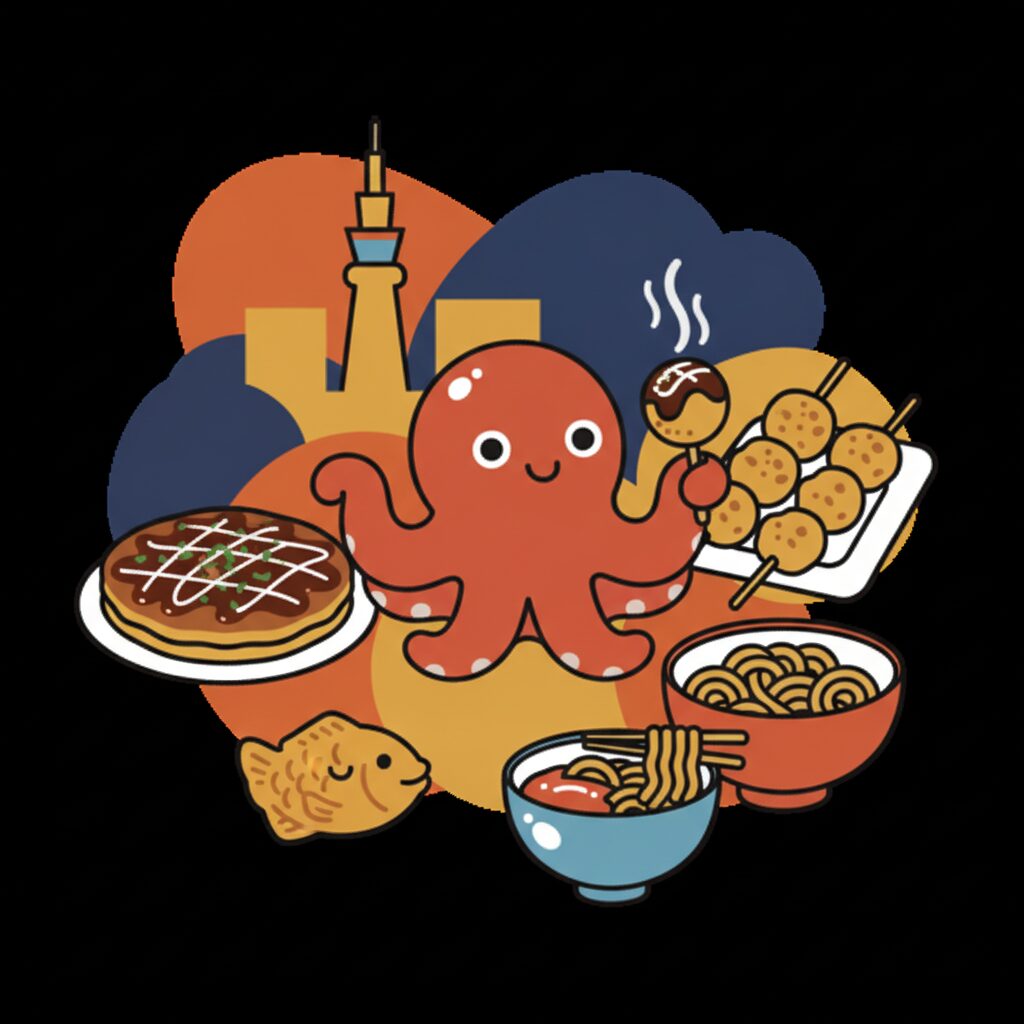
When you first move to Osaka, you notice the sounds. The rumble of the Midosuji Line, the clatter of bicycles on pavement, the singsong calls of shopkeepers inviting you in. But another sound soon joins the symphony: a rhythmic, metallic scrape-scrape-scrape, followed by a sizzle. It’s the sound of batter hitting a hot iron griddle, the sound of konamon being born. It’s the pulse of the city. Before arriving, I’d heard Osaka was the ‘kitchen of Japan,’ a title that conjures images of delicate kaiseki meals and perfectly sliced sashimi. And while that exists, the true culinary heart of this city, the food that fuels its daily life, is far more humble. It’s konamon, a broad term for flour-based dishes, with its two reigning monarchs: Okonomiyaki and Takoyaki.
For an outsider, the obsession can seem baffling. These are, at their core, simple foods. Okonomiyaki is a savory pancake, a chaotic jumble of flour, egg, cabbage, and whatever else you want to throw in. Takoyaki are little dough balls with a piece of octopus tucked inside. Yet, in Osaka, they aren’t just meals; they’re a language, a philosophy, and the bedrock of social interaction. People here don’t just eat konamon; they debate it, they defend it, they celebrate with it. Trying to understand Osaka without understanding its relationship with a hot griddle is like trying to understand Australia without the beach. It’s the essential backdrop to everything. This isn’t about fine dining. This is about food that’s fast, filling, and forged in the fires of a deeply pragmatic merchant culture. This is the story of how flour and water became the social glue of Japan’s most spirited city.
Discover more layers of local culture by venturing on a weekend on Awaji to experience roadside cafes and inviting craft shops alongside scenic beaches.
The Holy Trinity: Cheap, Fast, and Delicious
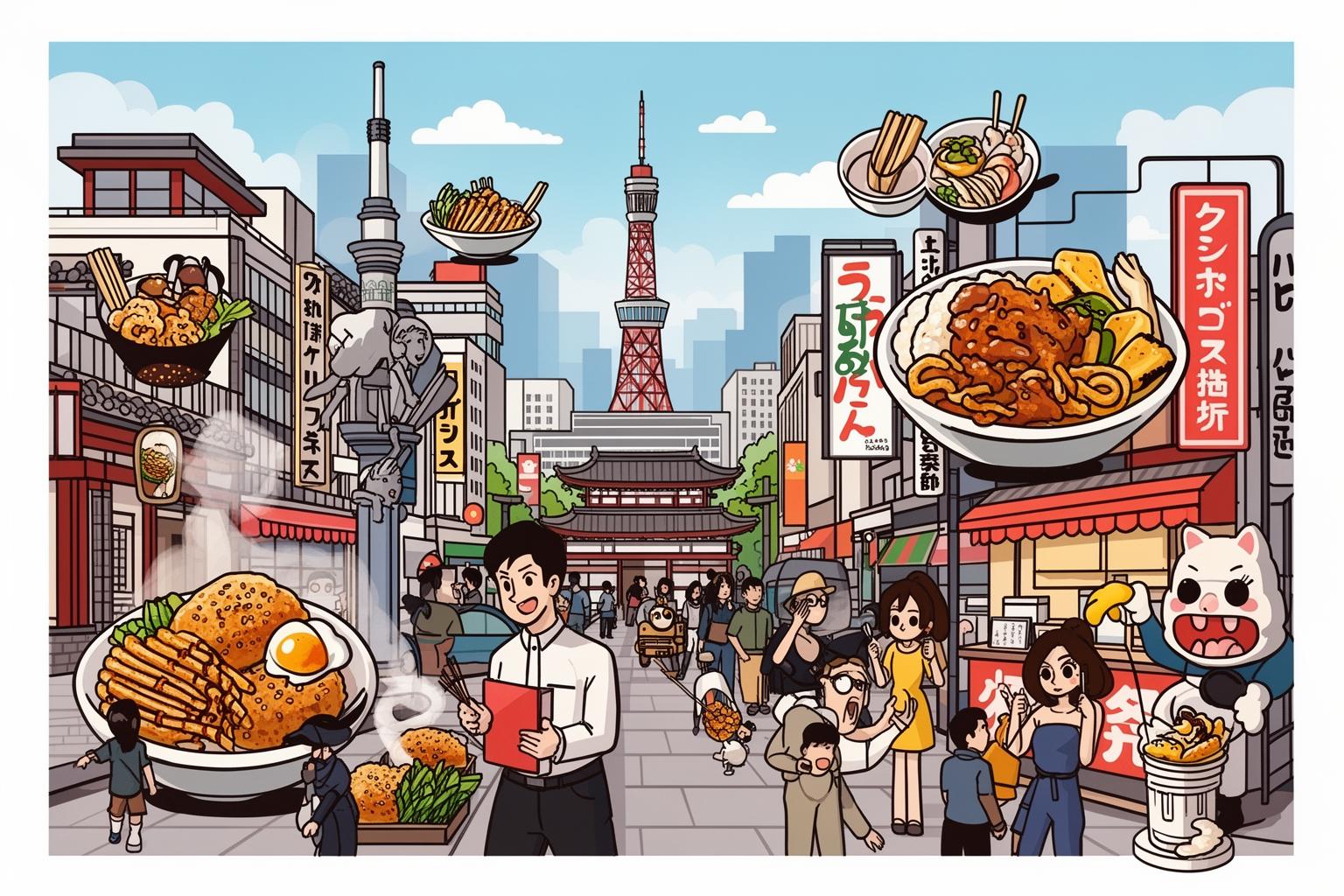
To truly understand Osaka, you need to first embrace its mantra: yasui, hayai, umai. Cheap, fast, delicious. This phrase isn’t just a catchy slogan for a noodle chain; it serves as the city’s unofficial operating system. Shaped by centuries as Japan’s commercial powerhouse, Osaka fostered a culture where value wasn’t merely appreciated—it was expected. Merchants, laborers, and dealmakers didn’t have the luxury for elaborate, multi-course meals. They required food that was quick, affordable, and satisfying. Konamon perfectly fulfilled this need.
This mindset sharply contrasts with Tokyo’s culinary scene. There, prestige often hinges on exclusivity, refinement, and aesthetic perfection. A chef might spend an entire career sourcing the rarest vinegar or perfecting the ideal rice temperature. While this dedication to excellence is admirable, it usually demands a high price and a long wait. Osakans value quality but view it through a prism of practicality. Is it good for the price? Is it served promptly? Does it satisfy? An Osaka chef is both a skilled artisan and a savvy entrepreneur. The aim is to keep customers happy and full, turn tables efficiently, and maintain a steady flow.
This philosophy explains why lines of salarymen, students, and grandparents patiently form outside tiny, modest takoyaki stands. It’s not about the atmosphere; it’s about the unspoken promise that what awaits inside offers an unbeatable combination of flavor and value. The taste is heightened by the quick service and low price. It’s a transaction built on trust and efficiency, perfectly reflecting the city’s merchant spirit. You don’t linger for hours; you eat, pay, and leave satisfied, making room for the next person. This is a beautifully simple, deeply practical approach to food that permeates every part of daily life here.
More Than Just a Meal: Konamon as Social Glue
While the yasui, hayai, umai principle explains the why, it doesn’t completely reveal the how. Konamon isn’t merely eaten; it’s experienced, almost always in the company of others. It acts as an invisible thread weaving through the city’s social fabric, connecting friends, families, and colleagues.
The Communal Rite of Okonomiyaki
Imagine an okonomiyaki restaurant. More often than not, the focal point of your table is a sizzling hot teppan grill. This is far from a passive meal. It’s interactive, collaborative theater. A bowl of raw ingredients arrives—a fluffy batter base, a mountain of shredded cabbage, your choice of proteins, and a raw egg sitting on top. The ritual begins.
Who mixes? Who pours? Who dares to make the first flip? These small questions break down walls. You’re not just sharing a meal; you’re cooking together. With my family, it’s a controlled chaos of spatulas clashing and my kids bickering over who gets to drizzle the mayonnaise. With friends, it’s an easy space for conversation, with the grill’s sizzle filling any quiet moments. The very name, okonomi, means “what you like.” Grill what you like. It’s a philosophy of accommodation and personalization baked right into the meal. There’s no strict etiquette, no pristine presentation to maintain. It’s messy, it’s loud, and above all, it’s communal. Deals are eased, friendships strengthened, and family ties reinforced around these hot plates of delicious, unpretentious food.
The Spontaneous Joy of Takoyaki
If okonomiyaki is a planned gathering, takoyaki is the spontaneous party. Every neighborhood has at least one corner takoyaki stand, often run by a single person who has mastered the wrist-flick needed to turn dozens of octopus balls at once. This stand is more than just a food vendor; it’s a community landmark. It’s where you stop on your way home from the station, grabbing a boat-shaped tray as a treat. It’s where kids spend their allowance after school. Neighbors bump into each other, exchanging gossip while waiting for their order to be slathered in tangy brown sauce, mayo, and dancing bonito flakes.
And then there’s the takopa—the takoyaki party. Many Osaka households own a portable takoyaki grill. It’s the go-to for any casual get-together. Friends gather, everyone crowds around the grill, and the process begins. Someone handles the batter, someone else chops the octopus and green onions, and everyone takes a turn mastering the delicate skill of turning the half-cooked spheres. It’s an affordable, high-engagement way to host. The goal isn’t to impress guests with culinary expertise; it’s about the shared activity and the laughter sparked by inevitable mistakes—a dropped ball, a burnt side. It’s social, playful, and pure Osaka.
The Osaka Mindset on a Griddle
Spend enough time here, and you come to see that konamon is not merely what Osakans eat; it defines who they are. The city’s core traits are perfectly reflected in these flour-based dishes. It’s a culture served hot, accompanied by a side of pickled ginger.
Substance Over Style
Osaka is a city that prizes substance. Flashiness and pretense often invite skepticism. This is evident in its cuisine. Okonomiyaki is far from a visually elegant dish. It can appear as a brown, uneven mass drizzled with sauces and dusted with green flakes. A takoyaki shop is judged not by its flashy signage or trendy décor but by the skill of its cook and the flavor of its offerings. The most cherished spots are frequently cramped, worn, and a bit greasy. This imparts an important lesson about life in Osaka: don’t judge a book by its cover. The best experiences and most genuine connections are usually found in the humblest places. It’s a city that rewards those who look beyond appearances.
Ingenuity and Pragmatism
Konamon culture emerged from the necessity to create something tasty and filling using the simplest, most affordable ingredients: flour, water, cabbage, and whatever scraps were on hand. This captures the core of Osaka’s inventive and practical spirit. The city was built by merchants who knew how to turn small advantages into substantial gains. This resourceful mindset remains alive today. Osakans excel at side hustles, clever fixes, and direct routes to their goals. Why overcomplicate things? Why opt for costly ingredients when humble ones, skillfully prepared, are just as satisfying? To outsiders, this pragmatic philosophy may sometimes seem coarse or unsophisticated, but it is truly a form of brilliance—a steadfast focus on what works.
A Dash of Humor and Performance
There is an unmistakable performative aspect to making konamon. Watching a skilled chef expertly flip a giant okonomiyaki with two metal spatulas, or a takoyaki master spinning dozens of balls with a single pick, serves as entertainment. The chefs often engage customers in lively banter, cracking jokes and making the experience enjoyable. This directly connects to Osaka’s fame as Japan’s comedy capital. Life, like food, shouldn’t be taken too seriously. The streets, shops, and especially the teppan grill radiate a playful spirit and a love of laughter. It’s a culture that doesn’t take itself too seriously, and this lightheartedness is among the city’s most charming qualities.
The Great Konamon Divide: Osaka vs. The World
For many foreigners, the nuances of konamon are often overlooked. Okonomiyaki is called “Japanese pizza,” and takoyaki are referred to as “octopus dumplings.” While not entirely inaccurate, these labels fail to capture the deep cultural significance and, more importantly, the intense local pride connected to these dishes. This pride is most evident when comparing Osaka’s version to others.
The simmering rivalry with Hiroshima over okonomiyaki highlights this vividly. In Osaka, all the ingredients are mixed together before being poured onto the grill. In Hiroshima, they’re layered: a thin crepe, a heap of cabbage, bean sprouts, pork, noodles, and a fried egg, all arranged with architectural precision. To an outsider, this might seem like a minor difference. But to a native of either city, it represents a fundamental statement of identity. Mentioning Hiroshima-style okonomiyaki in an Osaka restaurant is sure to spark a passionate (though often good-natured) debate. It shows just how deeply this food is tied to regional identity.
Then there’s the great carbohydrate debate. Ask someone from Tokyo if they would eat okonomiyaki alongside a bowl of white rice, and they’ll likely recoil in disbelief. Flour with rice? It’s an epic carbo-load and a culinary taboo. But in Osaka? It’s a standard lunch set known as the okonomiyaki teishoku. This isn’t just a peculiar habit; it’s a direct reflection of the yasui, hayai, umai philosophy. Rice is affordable, filling, and helps stretch the meal further. The aim is maximum satisfaction for minimal cost. It perfectly exemplifies Osaka’s practical, no-nonsense logic overcoming the unwritten culinary rules that dominate much of Japan. It’s a small detail that reveals everything about the differing priorities of Osaka and Tokyo.
Finding Your Place in the Konamon Capital
So what does all this mean for everyday life? It means that Osaka is a city where social dining has an incredibly low barrier to entry. You don’t need a thick wallet or a reservation weeks ahead to enjoy a good, fun meal with friends. You can simply show up.
You learn to recognize the best spots not by their storefront, but by the constant flow of locals. You discover that the gruff man flipping takoyaki has a heart of gold and remembers your usual order. You realize that inviting new friends to a takopa is a much more relaxed and genuine way to get to know them than a formal dinner.
The konamon culture makes the city feel approachable. It’s a democratic food. You’ll find high school students and company presidents alike enjoying the same 500-yen tray of takoyaki from the same street vendor. It dissolves social status and brings people together through a shared, simple joy. For a foreigner trying to find their place, it’s a welcoming gesture. Sharing a sizzling okonomiyaki, passing the sauce, and laughing as you try to cook it yourself—these are the moments when you stop feeling like a visitor and start feeling like you belong.
To truly understand this city, you have to eat it. Not in its upscale restaurants, but on its street corners and in its lively, smoke-filled neighborhood joints. You have to embrace the philosophy of the griddle. Because within the simple mix of flour, water, cabbage, and care, you’ll discover the true, unfiltered, and wonderfully pragmatic soul of Osaka.