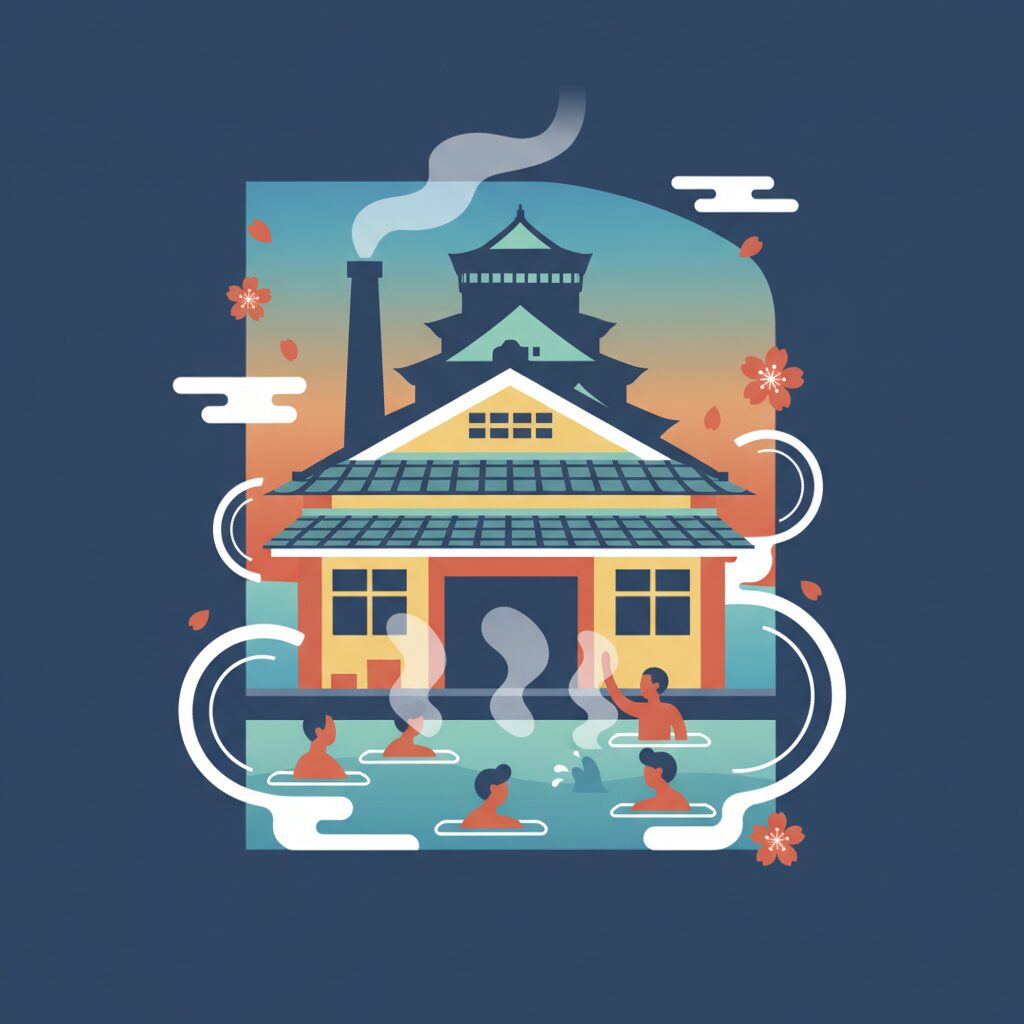
So, you’ve landed in Osaka. You’ve mastered the train map, you can order takoyaki without pointing, and you’ve even learned to stand on the right side of the escalator. You feel like you’re getting the hang of this city. But then someone asks if you’ve been to the local sentō, and a whole new layer of cultural confusion unfolds. The public bathhouse. Is it just a big bathtub for the neighborhood? A relic from a time before everyone had a shower? Or is it something more? Here in Osaka, the answer is a resounding ‘yes’ to all of the above, and it’s also a battleground, a fault line running right through the heart of the city’s identity. It’s the old-school, no-frills neighborhood joint versus the shiny, all-you-can-soak entertainment palace. This isn’t just about getting clean; it’s a choice that says a lot about who you are and what you’re looking for in this vibrant, chaotic, and deeply human city. Forget the tourist brochures for a moment. If you really want to understand the soul of Osaka, you need to get naked, grab a tiny towel, and dive in. Let’s explore the steamy, sudsy world of the Osaka sentō and figure out which side of the bath you belong on.
Understanding Osaka means not only mastering its bathhouses but also immersing yourself in its vibrant tachinomi culture that reveals another facet of the city’s spirited charm.
The Soul of the Showa-Era Sentō: More Than Just a Bath
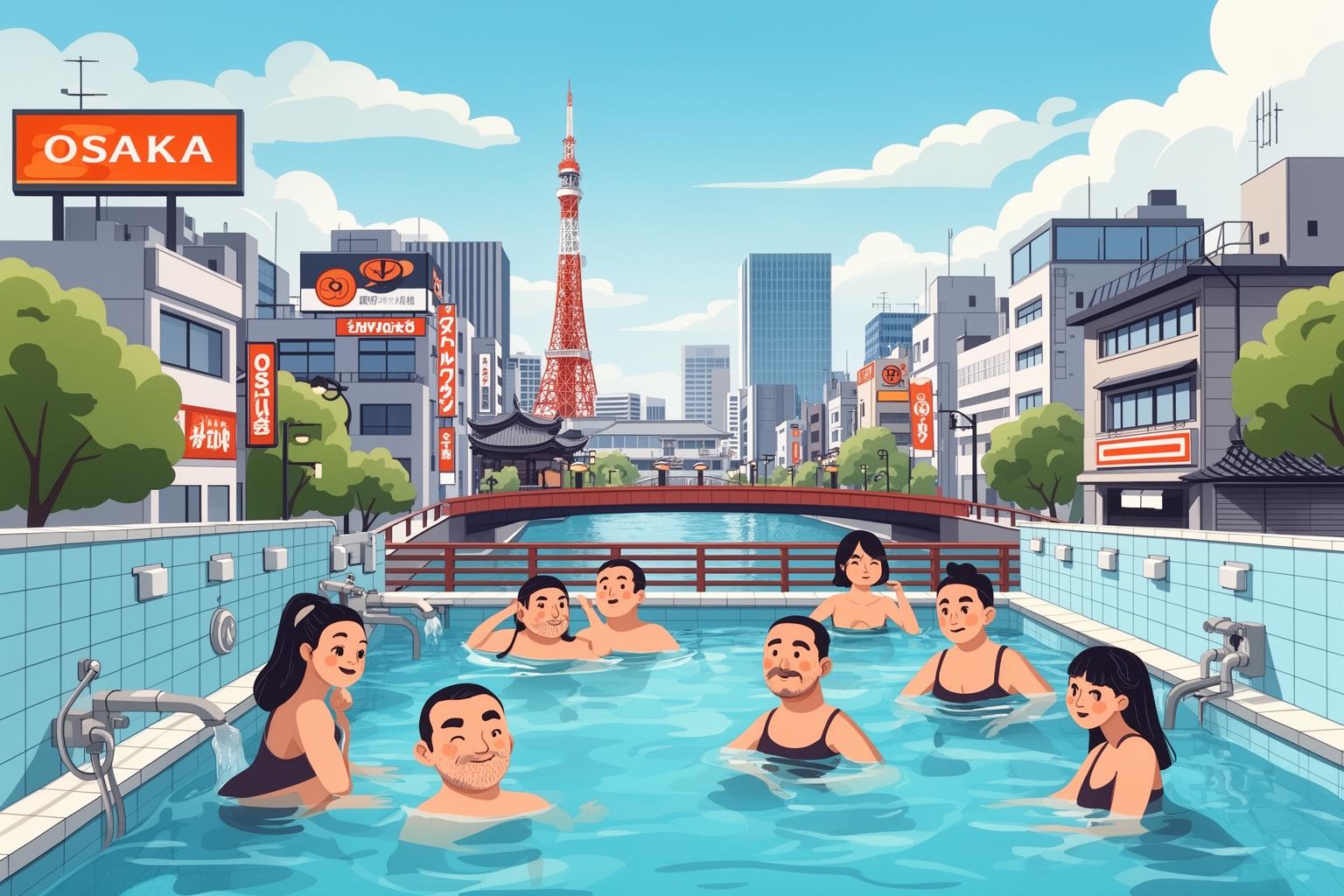
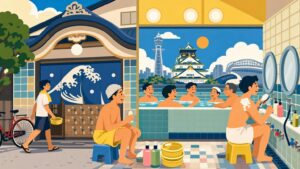
Step through the sliding door of a classic neighborhood sentō, and you’ll be transported back in time. The air is thick with steam and carries the faint, clean scent of soap. The first thing you notice is the bandai—a high wooden perch where an elderly woman or man sits, collecting the fee—usually a modest few hundred yen—and overseeing their domain. The changing room, or datsuiba, exudes functional nostalgia. Wicker baskets hold your clothes, rather than lockers with keys. A large, analog scale, likely uncalibrated since the emperor’s last birthday, stands nearby. Faded posters on the walls advertise local noodle shops or a long-forgotten beer brand. This isn’t a spa; it’s a utility, the social foundation of the neighborhood.
The Osaka Mindset in Steam
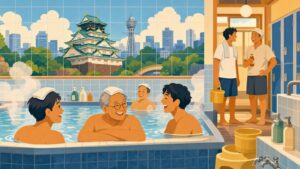
Here, the renowned Japanese concept of hadaka no tsukiai, or “naked communication,” takes on a distinctly Osaka flavor. In Tokyo, a sentō visit might be a quiet, almost meditative experience, where people keep to themselves in respectful silence. Not so here. An Osaka sentō serves as a living room, a town hall, and a comedy club all at once. The silence is replaced by the clatter of yellow plastic washbowls on tile floors and a steady buzz of conversation. People don’t just talk—they banter, argue, and laugh loudly. They complain about city government, analyze the latest Hanshin Tigers game with surgical precision, and gossip about the family who just moved down the street. It’s direct, unfiltered, and without any pretense. Status, job titles, and wealth vanish the moment your clothes come off. The CEO of a small company is simply another person complaining about a bad back, soaking next to a student stressing over exams. This captures the essence of the Osaka spirit—a profound egalitarianism and a love for honest, human connection.
A Newcomer’s Guide to the Old School
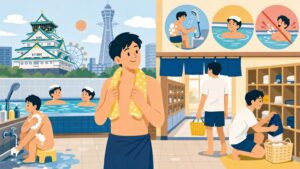
For a foreigner, this can be a trial by fire. You will be looked at—not with malice, but with a bold, unashamed curiosity that is purely Osaka. The unspoken rules are crucial. You find a small stool and bucket, take your place at one of the rows of faucets, and wash yourself thoroughly before even thinking about stepping into the bath. The small towel provided is for washing and modesty while walking around; it absolutely does not go into the main bath. Yet once you master the basics, you’ll discover the social barrier is surprisingly low. A simple nod and smile, a mumbled konnichiwa, often suffice to draw you into conversation. They’ll want to know where you’re from, what you think of Japanese food, and whether it’s really as cold in your country as they imagine. They’re not being nosy in a rude way; they’re including you. In a city that can sometimes feel vast and anonymous, the neighborhood sentō is an anchor—a place where you are seen and acknowledged. It’s where you stop being a nameless foreigner and become “Sofia-san from Spain who lives in the corner apartment.”
The Rise of the ‘Super Sentō’: Osaka’s Modern Makeover
At the far end of the spectrum is the super sentō. These aren’t your grandpa’s simple bathhouses. They are expansive, multi-story complexes devoted to relaxation as a form of entertainment. Think of them as aquatic theme parks. Instead of just one or two baths, you’ll find a dozen varieties. There’s the silky bath, infused with microscopic bubbles; the carbonated bath, which gently fizzes on your skin; and the denki buro, or electric bath, where a mild current pulses through the water (approach with caution!). Outside, you’ll encounter open-air rock pools (rotenburo), enormous ceramic soaking pots, and even baths scented with seasonal herbs or wine.
The Pragmatist’s Paradise
If the traditional sentō embodies Osaka’s communal spirit, the super sentō highlights another key trait: a savvy, practical love for a great deal. For a price only slightly higher than a movie ticket, you get hours of entertainment. This is more than just bathing. These venues feature multiple types of saunas, ice-cold plunge pools, restaurants serving everything from ramen to sushi, vast manga libraries, massage chairs, and nap rooms with reclining loungers. This embodies the kuidaore (“eat till you drop”) philosophy applied to wellness. Why settle for a bath when you can enjoy a bath, sauna, three-course meal, massage, and nap—all under one roof? It reflects Osaka’s entrepreneurial spirit: maximize value, offer variety, and deliver what people want. It’s an efficient, convenient, and incredibly satisfying experience, ideal for the modern family or a stressed worker seeking an afternoon of relaxation.
The Easy Entry Point
For newcomers, the super sentō offers an inviting introduction. Rules are often clearly posted in English. The atmosphere is more anonymous, allowing you to spend hours without needing to interact if you wish. It’s a gentler, more user-friendly way to experience bathing culture. You can gradually explore different temperatures and water types and discover what you enjoy without the social pressure of a small, intimate neighborhood bathhouse. It’s a controlled environment that demystifies the process, transforming it from a cultural hurdle into a personal indulgence. While Tokyo boasts its share of sleek spas, the Osaka super sentō often feels livelier and more family-oriented—less like a chic urban retreat and more like a spirited community center with superior water pressure.
The Great Divide: Choosing Your Side (or Not)
The divide between the old and the new creates a compelling tension within the city. Traditionalists often bemoan the rise of the super sentō, viewing them as sterile, corporate, and soulless. For these individuals, the local bathhouse is an essential piece of cultural heritage, a place where genuine human connections are formed through steam and water. It’s about the familiar face of the owner, the shared history among regulars, and the beautifully imperfect tile work that has endured for six decades. They contend that replacing these with sleek, impersonal complexes erodes the irreplaceable neighborhood atmosphere. This perspective reflects the Osaka that values its shitamachi (downtown) roots, its gritty history, and its resistance to bland homogenization.
Conversely, modernists and pragmatists regard the old sentō as outdated relics. In a world where every apartment has a private bath, why pay to use a cramped, aging facility? Life is busy, and the super sentō provides a superior experience with more options, better amenities, and enhanced comfort. This represents the voice of the merchant city—an Osaka that is always looking ahead, innovating, and responding to market demands. It’s not about disrespecting the past but rather embracing a future that is more convenient and diverse. They see the super sentō not as a replacement for community but as a new form of it—a place where families and friends can spend an entire day enjoying shared leisure.
The Reality of Daily Life
What’s intriguing is that many Osakans don’t actually take sides. They smoothly navigate between both worlds. The reality of daily life is grounded in practicality, a core Osaka trait. On a Tuesday night, they might drop by the local sentō for a quick, functional wash and some neighborhood gossip. Then on a Saturday, they’ll pack the family into the car and head to a super sentō on the outskirts of the city for a full-day outing. This isn’t an ideological conflict; it’s about choosing the right option for the right occasion. This flexibility is key to understanding how Osaka operates. People here are less constrained by rigid traditions and more focused on what works best for them in the moment. They can cherish the charm of the old while fully embracing the comforts of the new.
Navigating the Nuances: A Foreigner’s Field Guide
Beyond selecting a style of bathhouse, every foreigner encounters practical challenges. The most significant? Tattoos. The historical link between tattoos and the yakuza (Japanese mafia) has caused widespread bans in bathing facilities. This is where the divide becomes clear. Super sentō, especially large chains, nearly always enforce strict, non-negotiable “no tattoos” policies. Being large corporations concerned with their brand image, they want to avoid any potential issues. Traditional neighborhood sentō, however, tell a different story. Often run by independent owners, the rules tend to be more flexible. Some don’t mind at all. Others may accept small, non-intimidating tattoos. There’s no universal rule; it depends entirely on the owner. The best advice is to look for signs at the entrance. If none are visible, try asking or simply observe. This point of friction perfectly illustrates Japan’s struggle between old social codes and a more globalized, modern reality.
The Art of Conversation
Then there’s the matter of communication. Should you engage with others? In a super sentō, you’re free to remain in your own world. But in a small neighborhood sentō in Osaka, being too quiet can feel almost odd. Unlike in more reserved parts of Japan, a friendly greeting is usually appreciated here. A simple “ee oyu desu ne” (“It’s nice hot water, isn’t it?”) can open the door to an entire conversation. People from Osaka, especially the older generation, are known for being curious and talkative. They operate on a different social wavelength than their Tokyo counterparts. They will ask you direct questions because they’re genuinely interested. Don’t interpret their directness as rudeness; it’s their way of connecting. Engaging in small talk—about the weather, your job, or how ridiculously good the ramen is at the shop down the street—is how you become part of the sentō’s social life.
So, Is Sentō Culture for You? The Verdict
Ultimately, the Osaka sentō reflects the city itself in miniature. It’s a space of stark contrasts, where time-honored, gritty traditions collide with sleek, innovative commerce. It’s where lofty ideals of community intersect with the practical realities of modern life. Choosing a bathhouse is like selecting your own unique Osaka adventure.
For cultural explorers eager to experience the unfiltered, vibrant heart of the city, the traditional sentō beckons. Be ready for curious glances, aging facilities, and water that can sometimes be scalding. In return, you’ll gain authentic human connections, a window into a fading world, and an introduction to Osaka’s direct, warm, and wonderfully nosy style of communication. You won’t just leave clean; you’ll leave with a story.
If you feel hesitant or prefer a first-rate relaxation experience, the super sentō offers a safe haven. It’s a reliable way to enjoy one of Japan’s beloved cultural traditions in a comfortable, modern, and stress-free setting. Here, you can gently immerse yourself in the culture without plunging straight into complex social etiquettes.
Whichever route you pick, the important thing is to see the sentō as more than just a place to bathe. It is a cultural classroom, a social stage, and a glimpse into the soul of the city. Whether you find yourself soaking in a small, tiled tub while listening to a grandpa reminisce about his glory days, or floating in a high-tech, colorfully lit bath surrounded by families, you are taking part in a ritual that defines life here. You are experiencing the Osakan way of living—unvarnished, practical, and always, always deeply human.