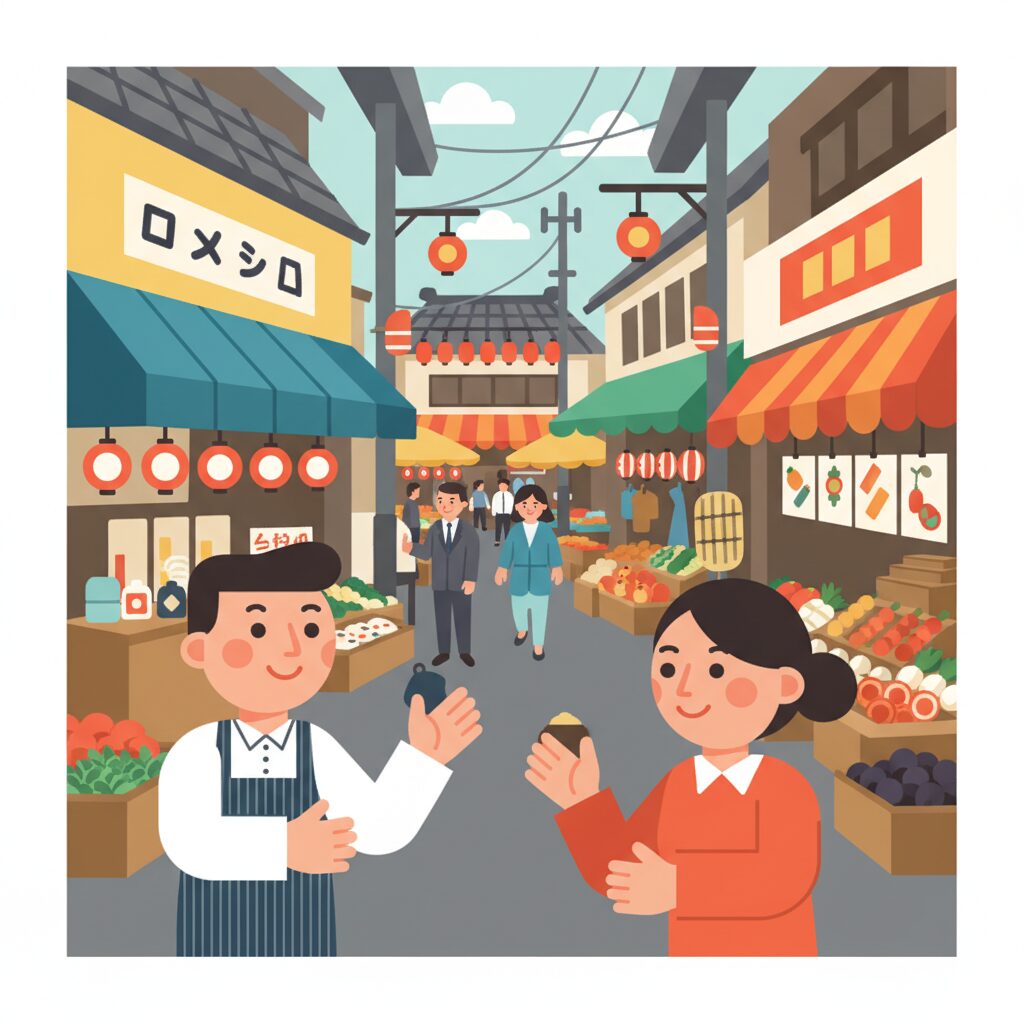
Walk into any Osaka shotengai—those long, covered shopping arcades that are the arteries of the city—and you’re hit with a wall of sensory data. It’s a symphony of chaos. The rhythmic clang of a knife hitting a cutting board at the fishmonger’s, the high-pitched, melodic calls of vendors hawking pickled vegetables, the sizzle and sweet smell of takoyaki, the low rumble of a thousand conversations bouncing off the arched ceiling. It’s overwhelming, intoxicating, and quintessentially Osaka. You’ve probably heard the stories. This is the city of merchants, the place where the customer is king but also a sparring partner. You hear that people are “friendly,” that they’re comedians at heart, and most tantalizingly, that you can haggle. This is the Japan you don’t see in the quiet, orderly temples of Kyoto or the sleek, silent subways of Tokyo. But as a foreigner trying to build a life here, you quickly realize those tourist-friendly soundbites are just the trailer for a much more complex movie. What does “friendly” actually mean when an old woman you’ve never met starts critiquing the contents of your grocery basket? And is haggling a real, everyday tool for survival, or a romanticized myth that will get you politely, but firmly, shut down? The truth is, the unwritten rules of the shotengai are a masterclass in Osaka culture. It’s not about just buying things; it’s about participating in a living, breathing social ecosystem. It’s a performance, a conversation, and a game, and if you don’t know the rules, you’ll be stuck in the audience wondering what’s going on. Let’s pull back the curtain and decode the real art of the deal and the chat in the merchant’s capital of Japan.
Discover another dynamic side of Osaka’s community by exploring how sentō social hubs actively shape local connections.
The Art of the Deal: Is Haggling in Osaka a Myth?
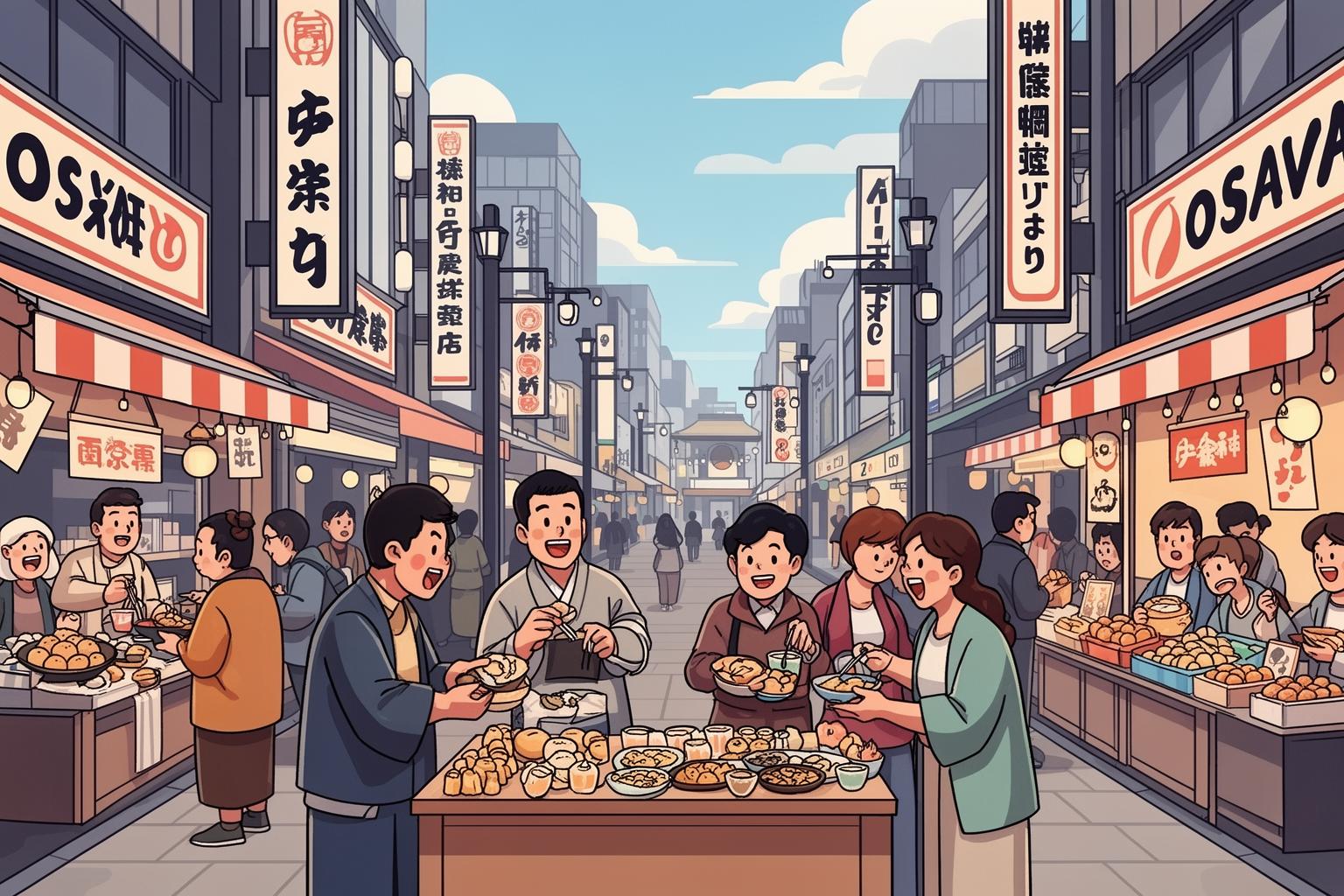
Let’s tackle the biggest question first. You’ve seen the YouTube videos and travel blogs promoting Osaka as the one place in Japan where you can haggle like you’re in a lively Southeast Asian market. The image is vivid: a clever traveler bantering with a seasoned shop owner and walking away with a bargain treasure. It’s a great story. But is that what you’ll encounter on a random Tuesday afternoon when you just need to buy some new socks? The answer, as with many things in Japan, is complex, subtle, and steeped in social context. Assuming a universal “haggling is okay in Osaka” rule is the quickest way to create an awkward moment and completely misunderstand the local culture. The real skill isn’t about lowballing a price; it’s about knowing when, where, and even if price negotiation is appropriate at all. Overlooking this distinction is the common mistake many newcomers make. They see the relaxed, energetic vibe and presume all the formal Japanese business etiquette has been tossed aside. It hasn’t. Instead, it’s replaced by a different, unwritten set of rules that are far more intricate.
The Hard Truth: It’s Mostly a No
Before exploring exceptions, let’s set the baseline. In nearly all your everyday transactions in Osaka, haggling simply doesn’t happen. Not now, not ever. Step into a 7-Eleven, Daiso, Uniqlo, Matsumoto Kiyoshi drugstore, or any chain restaurant or supermarket, and the price on the tag is the price you pay. Period. The price is programmed into a digital register, and the part-time employee at the counter neither has the authority nor the cultural background to alter it for you. Trying to negotiate the price of your onigiri or Heat-Tech undershirt will be met with pure confusion, followed by polite but flustered apologies that they can’t assist you. That’s simply not how the system works. This also applies to department stores, large electronics chains like Yodobashi Camera, and basically any business that feels corporate, organized, or standardized. The price is fixed, not negotiable. Treating Osaka’s reputation for bargaining as an open pass to ask for discounts everywhere is a fundamental misunderstanding. Doing so won’t make you seem like a savvy local; it makes you look like an unprepared tourist causing a scene. The true negotiation happens on a much smaller, more personal scale—away from the glow of fluorescent lights and the beep of barcode scanners.
Reading the Signs: Where the Price Is a Conversation
So, where does this reputation come from? It originates from the heart of old Osaka: the small, independent, family-run stalls lining the sprawling shotengai and local markets. These are places where the line between business and personal relationships blurs. Here, a transaction can turn into a conversation, and a price can, occasionally, be flexible. But even in these settings, it’s not a free-for-all. You must learn to read the environment. Is the shop run by a single person? Does the owner actively engage customers with jokes and conversation? Are prices handwritten on cardboard pieces, or are some items unpriced? These are your clues. A busy fruit stand run by a husband-and-wife team, a tiny vintage clothing shop, or a stall at a weekend flea market—these are likely spots for friendly negotiation. Another possibility is independent, old-school electronics shops, like those tucked away in Den Den Town, especially if you’re buying multiple items or a display model. The key factor is the human element. If the person you’re talking to owns the items and sets prices, there may be room to discuss. If they’re just an employee following corporate rules, the door is closed. The vibe matters. A quiet, formal shop where staff maintains a respectful distance isn’t the place. But a shop where the owner greets you loudly as you enter and immediately asks where you’re from—that’s where negotiation could be possible.
The “Makete” Mindset: How to Ask for a Deal Without Being Rude
If you’ve found a suitable spot, how do you proceed? First, discard the Western idea of aggressive, hard-nosed haggling. This isn’t about winning a battle of wills. It’s a delicate social dance. The goal isn’t just saving a few hundred yen; it’s about engaging in cultural exchange. The phrase you’ll often hear is “Chotto makete kureru?” or simply “Makete?” It roughly means “Could you give me a little discount?” or more literally, “Could you lose a little for me?” The wording is key. It’s a gentle, humble request acknowledging you’re asking for a favor. You’re not demanding a new price; you’re appealing to kindness. This process always starts with genuine interest and conversation. Don’t just point at an item and say “Makete?” That’s like throwing a social grenade. Instead, build rapport first. Compliment the product. Ask the shopkeeper about it: Where did it come from? How do you cook this vegetable? Praise their selection. Spend a few minutes showing you’re a person, not just a walking wallet. Once you’ve established a small connection, then you can politely ask. Buying multiple items is your best chance. For example, if you pick three shirts, you can say, “Zenbu de, chotto dake yasuku narimasu ka?” (“If I buy all of these, can it be a little cheaper?”). This is a reasonable, low-pressure approach. Don’t expect a 50% discount; a small gesture is more likely. They might round the total from 5,800 yen down to a flat 5,500. Or they could throw in a freebie, known as omake. Buy five tomatoes, and the vendor might wink and say, “This one’s a gift!” and hand over a sixth. This is the real spirit of Osaka haggling. It’s less about the price and more about the positive social interaction—a sign you’ve moved from a generic customer to a friendly acquaintance, even briefly. If they say no, accept gracefully with a smile and thanks. Pushing further is a major faux pas. The brief relationship always matters more than the discount.
More Than a Market: The Shotengai as a Social Stage
The emphasis on haggling often overshadows a far more common and significant element of shotengai culture: socializing. In Tokyo, shopping trips tend to be quiet, efficient errands—you enter, select your items, pay, and leave. Interactions are polite, scripted, and minimal. In contrast, an Osaka shotengai often uses the transaction as merely a pretext for the real event: conversation. The arcade acts as a community living room, a venue for gossip, jokes, and unsolicited advice. It’s a stage where everyday life unfolds with a cast of vibrant characters, and as a member of the community, you’re not just a spectator—you’re expected to participate. This can be surprising for foreigners used to the anonymous, transactional nature of urban shopping, sometimes feeling intrusive or confusing. However, grasping this social dynamic is essential to understanding Osaka’s core. The city’s identity was shaped by commerce, where reputation and relationships were the most valuable assets. That heritage hasn’t vanished—it has simply evolved. The ongoing chatter isn’t meaningless noise; it’s the sound of a community actively nurturing its social fabric, one conversation at a time.
“Where You From?” – Navigating the Friendly Interrogation
If you appear visibly non-Japanese, you will attract attention and curiosity in the shotengai. Brace yourself for the friendly interrogation. It will come from everyone: the butcher, the elderly man on a bench, and most notably, the local matriarchs known as the Osaka Obachan. These older women, recognizable by their bright clothing and perfectly permed hair, are the undisputed queens of the shotengai. They serve as the social glue, neighborhood watch, and keepers of local knowledge, and they are not shy about engaging you. You might be quietly weighing two brands of soy sauce when you suddenly feel a tap on your shoulder. Questions will follow in quick succession: “Where you from?” “America?” “Your Japanese is so good!” “Are you a student?” “You’re tall!” This isn’t meant as an intrusive grilling but rather as a form of social outreach—genuine curiosity and a way to welcome you, in their unmistakably direct fashion, into their community. They might comment on your clothes, hair, or the items in your shopping basket. I once had an obachan stop me mid-step, point at the bag of bean sprouts I was holding, and launch into a detailed five-minute lesson on the best way to stir-fry them, complete with hand gestures. In Tokyo, such an interaction would be almost unthinkable—a breach of personal space and social norms. In Osaka, it’s just an ordinary Tuesday. The key is to regard it not as an intrusion but as an invitation to connect. A simple smile and brief reply are all that’s needed. They’re not fishing for your life story; they’re just checking if you’re part of the local social network.
The Candy in Your Pocket: The Gospel of Ame-chan
Nothing captures the unique warmth of Osaka’s social atmosphere quite like ame-chan. Ame means candy, and -chan is a term of endearment. For those unfamiliar, ame-chan refers to the hard candies that nearly every Osaka obachan carries in her purse or pocket, ready to share at a moment’s notice. They function as social currency, a way to break the ice, and a gesture of goodwill. You might be complimented on your clumsy Japanese at the checkout, and the obachan behind you will slip a candy into your hand with a conspiratorial “For your hard work!” If a child starts crying on the street, an obachan will seemingly appear from nowhere to offer ame-chan. It’s a small act of kindness, a way of saying, “I see you. We’re part of the same community.” This tradition is so ingrained that a common joke in Osaka is to greet an obachan by patting your pockets and asking, “Got any ame-chan?” This little ritual symbolizes a broader mindset: a readiness to share, connect with strangers, and ease the challenges of daily life with a sweet, simple gesture. It reflects a culture less concerned with formal distance and more focused on immediate, tangible human connection. It’s a reminder that in Osaka, you’re seldom just another anonymous face in the crowd.
Tokyo Silence vs. Osaka Banter
The contrast with Tokyo is stark, offering the clearest perspective on the shotengai’s social function. Tokyo values efficiency and non-interference. The supermarket cashier is impeccably polite, moving you efficiently through the line, saying only what the script requires—nothing more. The transaction is smooth, anonymous, and silent. In an Osaka shotengai, the fishmonger might spot you examining the sea bream and immediately ask, “What are you making for dinner tonight?” If you’re unsure, he’ll probably suggest three different ways to prepare it: “If you grill it, use a little salt. If you simmer it, add some ginger! And the daikon at the shop across the street is perfect today.” The person selling vegetables isn’t just a vendor; they act as a consultant. This difference is rooted in the cities’ historical DNA. Tokyo (formerly Edo) was the city of samurai and bureaucrats, marked by rigid hierarchies and formal rules. Osaka was the city of merchants (shonin), where success depended on wit, humor, and the ability to cultivate lasting relationships with customers. Business was personal. Banter wasn’t a distraction from the sale—it was part of it. That spirit endures today. The ongoing chatter, teasing, and personal questions are modern echoes of that merchant culture. It’s a mindset that values practical, human-to-human connection over abstract formality. Though it can be loud and somewhat chaotic, it’s also deeply warm and grounding once you learn its language.
The Unwritten Rules: How to Thrive, Not Just Survive
Navigating this intricate social environment can feel overwhelming. You want to blend in and enjoy the unique atmosphere of the shotengai without committing a cultural faux pas. Fortunately, Osakans tend to be quite forgiving, especially toward foreigners. Still, grasping the fundamental principles will elevate your experience from passive observation to active engagement. It’s about learning to interpret social cues, sensing the flow of conversation, and mastering the art of give and take. These unwritten rules are essential for thriving in the heart of Osaka.
Read the Room
This is the most vital skill. The shotengai isn’t uniform; its mood can change from one stall to another, or even from one hour to the next. Your ability to quickly assess the situation will make or break any interaction. Is the shopkeeper hurriedly bagging produce for a long line of impatient customers? This is not the moment to practice your Japanese, ask for culinary tips, or bargain. Keep your interaction short, polite, and efficient. However, if it’s a slow afternoon and the shop owner is casually leaning on the counter while watching the crowd, that’s your cue. If they make eye contact and smile or call out a greeting, they’re signaling that they’re open for business—both commercial and social. Pay close attention to body language. Are they open and facing the crowd, or turned inward, concentrating on stocking shelves? Being able to tell a “come on in” vibe from a “please don’t bother me right now” vibe is crucial. This situational awareness is valued throughout Japanese culture but is absolutely essential in the fast-moving, dynamic setting of the shotengai.
Give as Good as You Get
Social interaction in Osaka is a two-way street—like a game of verbal tennis. If a shopkeeper asks you a question, you’re expected to return the ball. Avoid one-word answers. If someone compliments your Japanese, don’t just say “arigato.” Reply with something like, “Thank you! I’m still learning, but I love chatting with people here.” This opens the door for further conversation. If they ask where you’re from, share that and perhaps ask a question back, like “Have you ever been?” or “What’s your favorite thing about Osaka?” You don’t need to be a comedian, but you should be ready to engage. This exchange, known locally as kakeai, is a mutual performance of acknowledgment. By taking part, you show that you respect the local culture and want to be included. Being reserved or shy might come across as cold or uninterested, shutting down the warmth you’re trying to experience. Prepare a few simple, friendly Japanese phrases. They show effort and respect, which will be returned with even greater warmth and enthusiasm.
Don’t Take It Personally
Osaka’s sense of humor is straightforward, teasing, and often self-deprecating. It can be surprising if you’re used to more indirect, deferential communication styles common elsewhere in Japan. A shopkeeper might glance at the single onion you’re buying and joke, “That’s it? Are you on a diet? You need to eat more!” A butcher might tease you for choosing a cheap cut, saying, “Ah, saving money for a big date tonight?” This is not meant as an insult. Often, it’s a sign of affection. Teasing bridges the gap between strangers, treating you like a regular or neighbor rather than a formal, faceless customer. It’s a way of saying, “I’m comfortable enough with you to joke around.” The worst reaction is to take offense or get defensive. The best approach is to laugh and play along. You might reply, “Yes, I’m saving money so I can buy more of your delicious meat next week!” Learning to appreciate this candid, earthy humor is key to unlocking the city’s friendly side. They’re laughing with you, not at you.
Know When to Walk Away
This applies to both bargaining and socializing. You must be able to accept a polite “no.” If you try a gentle negotiation and the shopkeeper smiles and shakes their head, or simply repeats the original price, the conversation is done. Insisting or pushing further would be very rude. It breaks the unspoken agreement and turns a friendly exchange into an awkward confrontation. The same goes for chatting. While many are talkative, some are not. If you try to engage a shopkeeper and they respond with brief, polite but curt answers while avoiding eye contact, take the hint. They’re not in the mood to talk. Respect their space. Ending an interaction gracefully is just as important as starting one. Thank them for their time, smile, and move on. There’s no shame in that. By recognizing these subtle signs of refusal, you demonstrate cultural sensitivity. You show that you’re not just a tourist looking for something, but someone who understands and respects the delicate balance of social harmony.
What It All Means for Daily Life in Osaka
So, what do these intricate rituals of the shotengai reveal about life in Osaka? They show a city that, at its core, functions on a distinct social code compared to much of the rest of Japan. This is a place that highly values human connection, practical communication, and a shared sense of community, even among strangers. The unspoken rules of the arcade go beyond shopping; they serve as a microcosm of how the city operates. Living here means embracing a culture that is more direct, more verbal, and more openly emotional. It means recognizing that a transaction is rarely just a transaction; it’s an opportunity for engagement. It’s a city where sharing a laugh with a fishmonger can be as integral to your day as catching your train on time. For a foreigner, this can be a double-edged sword. The directness can feel warmly inviting and help you feel connected to your neighborhood in a way that is often difficult in the more reserved setting of Tokyo. It can break down the loneliness barriers many expatriates face. However, it can also feel overwhelming, noisy, and even intrusive if you’re a private person who cherishes quiet anonymity. But the key is to realize that it’s not random. It’s the living legacy of a merchant city that built its wealth on the strength of its relationships. The so-called “friendliness” of Osaka isn’t a vague, passive trait. It’s an active, participatory, and performative skill set. It’s the belief that business, and life, are better when people genuinely talk to each other. To truly live in Osaka, you don’t just have to learn Japanese; you have to learn the language of the shotengai. Master that, and you haven’t just figured out how to buy cheaper vegetables—you’ve discovered the heart of the city.