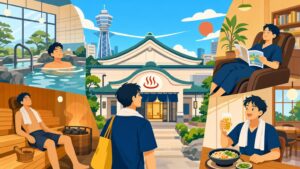
So you’re living in Osaka. You’ve navigated the whirlwind of Umeda Station, you’ve eaten takoyaki until you swore you’d never eat again, and you’ve learned that “chotto matte” can mean anything from “one second” to “never in a million years.” But you feel like there’s a layer you haven’t peeled back yet, a rhythm to the city you can’t quite catch. You see these old, temple-like buildings tucked between concrete apartment blocks, a tall chimney rising defiantly against the skyline, and you wonder, what’s going on in there? That, my friend, is a sentō, a public bath. And it’s not just a place to wash. It’s a portal. A trip to a sentō isn’t about hygiene; it’s a weekend getaway to the real, unfiltered heart of Osaka, a place where the city’s gruff, warm, and wonderfully weird spirit is on full display. Forget the bullet train to Kyoto. Your most profound cultural journey might just be a ten-minute walk away, cost you about 500 yen, and require you to get completely naked. This is your guide to planning that trip—not as a tourist, but as a temporary local, ready to soak in the culture, quite literally.
For those inspired by Osaka’s vibrant local culture, exploring the option of renting an apartment in Osaka could be the next step toward fully embracing the city’s unique rhythm.
The Sentō Mindset: It’s Not Just a Bath, It’s a Stage
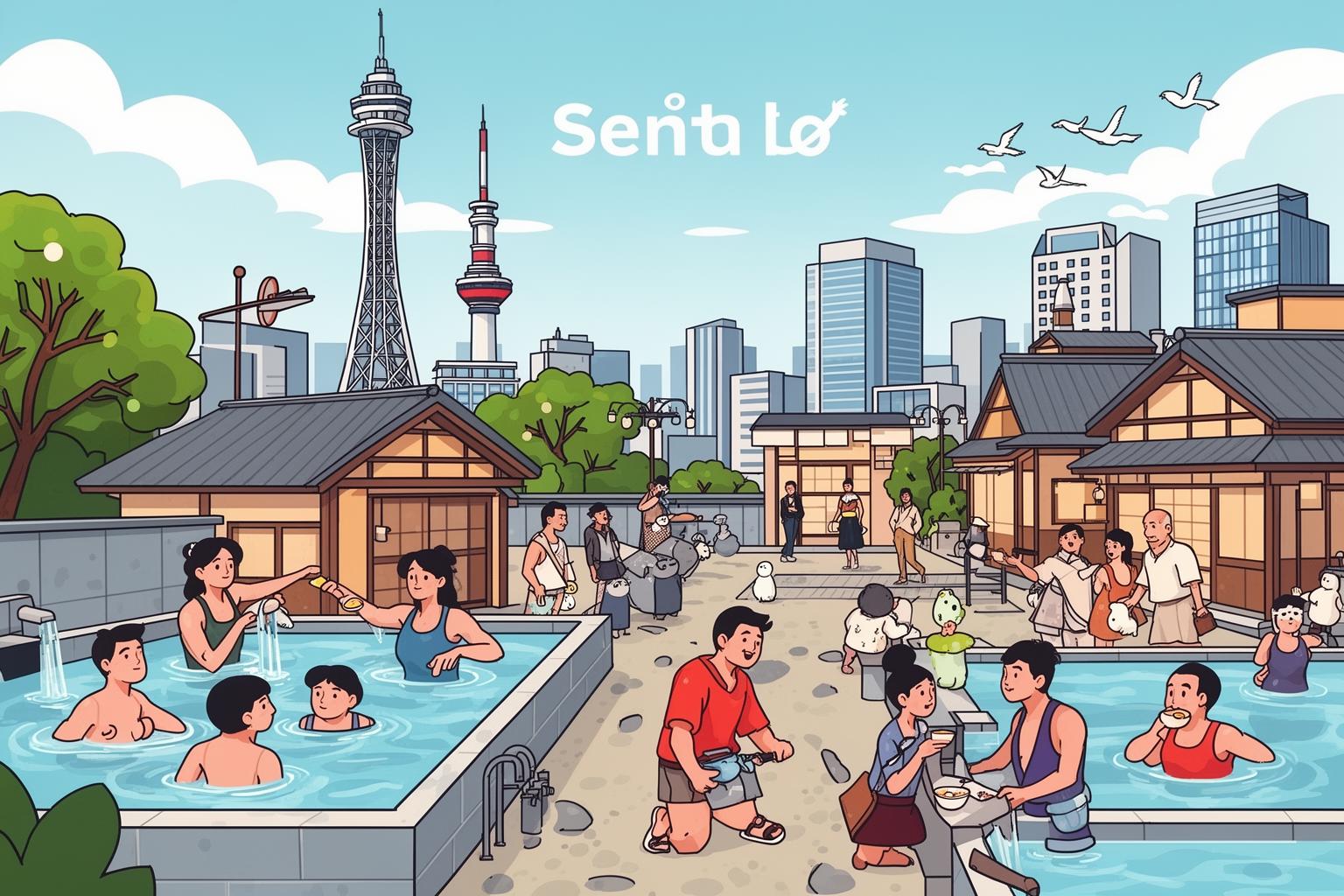
First, let’s clarify one thing. A sentō is not a spa or an onsen. There are no artfully arranged bamboo fountains or attendants whispering quietly. An Osaka sentō is loud. It’s steamy. It’s a communal living room where the dress code is your birthday suit. This is the fundamental difference you’ll notice compared to Tokyo. A Tokyo sentō can sometimes feel like a library where everyone happens to be naked—efficient, quiet, and individualistic. An Osaka sentō is a stage for the everyday drama of life. It’s where you catch the unvarnished local news, the unfiltered opinions on the Hanshin Tigers’ latest game, and the unsolicited but surprisingly useful advice on where to find the cheapest daikon radish.
This is the arena of “hadaka no tsukiai,” or “naked communion.” While this concept exists across Japan, Osaka elevates it to a unique level. Here, it means shedding all pretenses. Your job title, your expensive watch, your stylish sneakers—none of that counts when you’re standing there with nothing but a small towel. It’s a great equalizer. In a city proud of its down-to-earth nature and aversion to snobbery, the sentō is sacred territory. It’s where you’ll encounter the legendary Osaka “obachan,” the middle-aged or elderly woman who rules this realm unofficially. She might ask where you’re from, comment on your pale complexion, or tell you you’re scrubbing your back wrong—all within thirty seconds. Don’t confuse this for rudeness. This is connection, Osaka-style. It’s direct, curious, and a way of saying, “I see you. You’re part of this community now, even if just for tonight.” People aren’t trying to be “friendly” superficially; they’re just being themselves and expect you to do the same.
Planning Your Retro Weekend “Trip”
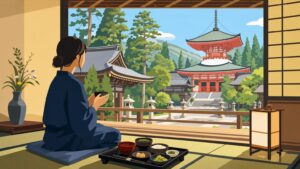
Think of this not as a chore, but as a brief getaway. You’re journeying back to the Showa Era, embracing a slower rhythm of life. A genuine sentō experience is unhurried. It serves as the perfect remedy to the sensory bombardment of modern city life. It’s about carving out a few hours on a Saturday or Sunday, leaving your phone tucked away, and simply… being.
Step 1: Choosing Your Neighborhood Sentō
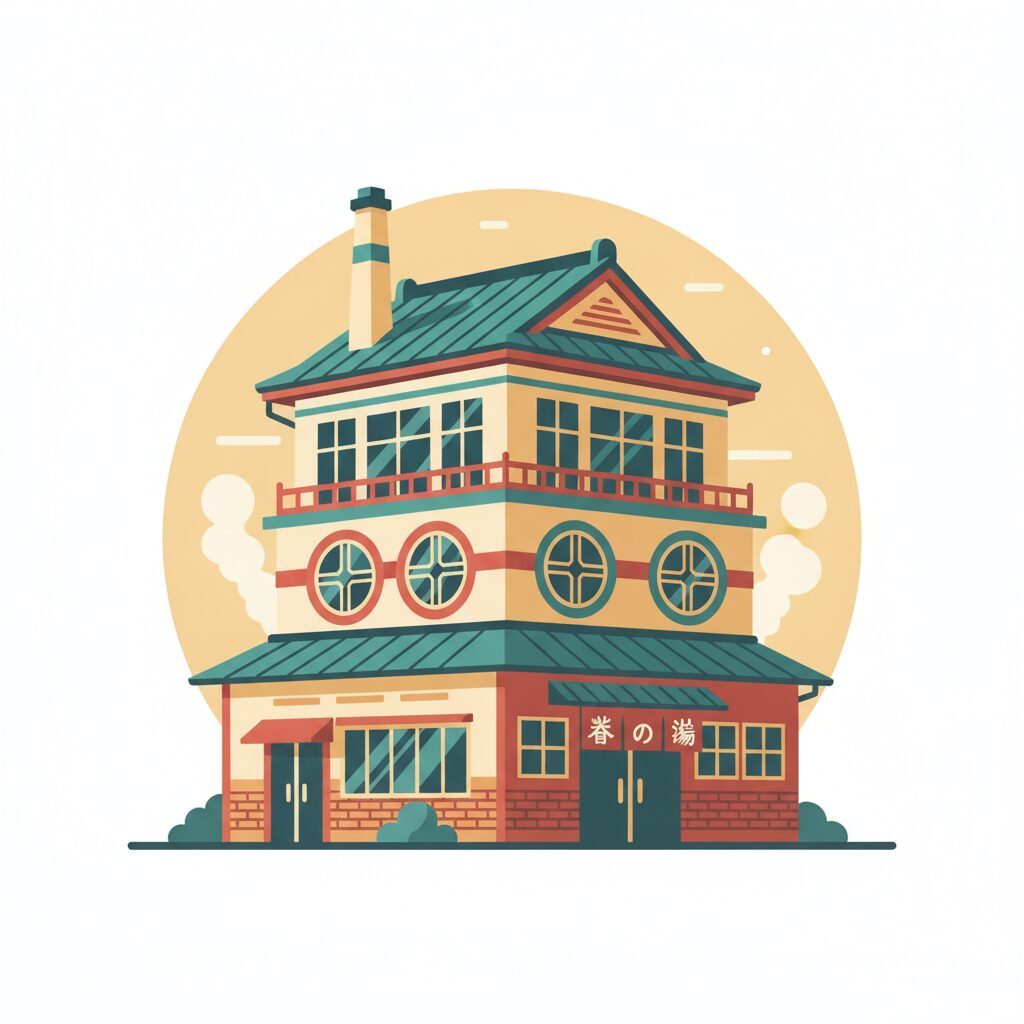
Your first task is to select your vessel for this time-traveling adventure. The best sentō seldom have flashy websites. They are neighborhood fixtures, deeply embedded in daily life. The most dependable way to locate one? Look up. Notice the tall, slender chimney (煙突, entotsu) rising above a sea of residential rooftops. That’s your guide. Alternatively, explore older neighborhoods—the shotengai (shopping arcades) in areas like Taisho, Nishinari, or parts of Higashiosaka are great hunting grounds.
The building itself will narrate a story. Watch for the grand, sweeping “karahafu” (唐破風) gabled roofs, which make the entrance resemble a shrine more than a bathhouse. This architectural choice was intentional; it aimed to elevate the daily ritual of bathing into something special, a modest luxury for workers. Inside, you’ll find time has seemingly paused around 1975. Tiled murals depicting Mount Fuji or vibrant koi fish, worn wooden lockers, and analogue weight scales all add to the charm. Each sentō has its own character. Some buzz with families, children splashing about with uninhibited joy. Others, particularly in areas like Shinsekai, have a quieter, more rugged ambiance, where elderly men soak in silence, the steam carrying decades of tales. Don’t chase after the “best” one from a blog. Pick the one that feels right, the one whose faded noren curtain at the entrance seems to welcome you personally.
Step 2: What to Bring (and What Not to Worry About)
Now, let’s discuss what to bring. While you can enter completely empty-handed, noticing what locals bring is your first lesson in Osaka’s practicality. Most regulars carry their own “sento set” (銭湯セット) in a small plastic basket or waterproof bag. The basics are straightforward:
- A small towel for washing. A Japanese tenugui is ideal, but any small washcloth will suffice. This is your scrubbing tool.
- A larger towel for drying off. This remains in the changing room.
- Your chosen soap, shampoo, and conditioner. While the sentō provides basic, often questionable soap, bringing your own is part of the ritual.
Bringing your own set signals, “I’m not a tourist; I’m a participant.” It’s a small badge of pride. However, Osaka’s renowned pragmatism has you covered if you forget. Nearly every sentō offers a “tebura set” (empty-handed set) for a couple hundred yen, which includes a rental towel and single-use packets of soap and shampoo. This is the city’s way of saying, “Ahou ka! Forgot something? Don’t worry, we’ve got you.” It’s a beautiful balance of personal responsibility and communal support. No one will judge you for buying the set, but you’ll feel a deeper bond with the experience by coming prepared.
Step 3: Navigating the Changing Room (Datsuijo)
After paying your fee at the front desk—a simple exchange with the owner likely seated on a raised platform called a “bandai,” overseeing both the men’s and women’s entrances—you pass through the curtain into the datsuijo, the changing room. This is the backstage before the main event. Take a deep breath. The air carries the scent of steam, soap, and wood.
Your first decision: wicker basket or coin locker? The baskets are for the seasoned visitors. They convey a sense of trust and familiarity. They place their clothes inside, set the basket on a shelf, and forget about it. For your initial visits, the ¥100 coin locker is your ally. It’s not about fearing theft; it’s about peace of mind, allowing you to fully relax in the bath. The atmosphere here is communal and easygoing. You’ll spot old-timers drying themselves at a leisurely pace, a TV in the corner likely showing a baseball game or a lively comedy show, and a large, industrial fan lazily circulating the humid air. Find your spot, undress without rush, and remember the one essential rule: your large towel stays in the changing room. Only take your small washing towel with you into the bathing area.
The Bathing Ritual: An Osaka Performance
This is it. You slide open the glass door and are greeted by a wave of warm, moist air. The soundscape is a blend of splashing water, echoing conversations, and the groan of aging pipes. The performance has begun.
The Kakeyu: The Opening Act
Before you even consider dipping a toe into those invitingly steamy tubs, you must wash. This is the cardinal rule in any Japanese bath. Find an empty washing station (洗い場, araiba), which includes a low plastic stool and a faucet, sometimes accompanied by a fixed-head shower. Grab a basin, fill it with warm water from the tub (called kakeyu), and rinse yourself thoroughly, starting with your feet and working upward. Then, take a seat on the stool and give yourself a proper scrub with soap. Watch the locals. They do this with an efficient, no-nonsense rhythm. There’s no leisurely pampering. It’s about getting clean to fully enjoy the main event. It’s also a sign of respect for everyone else sharing the water. You’re washing away the outside world before entering this shared space.
Soaking in the Tubs: The Main Event
Now you’re ready. The tubs are the heart of the sentō. There are usually several, each offering a different temperature or feature. You’ll often find:
- The main tub (主湯, shuyoku): Moderately hot and the social hub.
- The hot tub (あつ湯, atsuyu): Extremely hot. For the brave. You’ll see old men get in, turn bright red, and get out after 30 seconds with a look of pure triumph.
- The jet bath (ジェットバス): Position yourself against powerful jets for a surprisingly intense back massage. It’s functional hydrotherapy for the working class.
And then there’s the king of Osaka sentō quirks: the “denki-buro” (電気風呂), or electric bath. Yes, you read that correctly. It’s a small tub with low-voltage electric currents running between two plates. As you ease in, your muscles start to tingle and contract involuntarily. It’s a bizarre, slightly startling sensation that many foreigners find frightening. But Osakans love it. It reflects a fondness for things that are a bit strange, a bit intense, and a bit over-the-top. Why settle for a normal bath when you can have one that gently electrocutes you? It’s a perfect metaphor for the city itself. Start by just dipping a leg in. Work your way up. Or don’t. There’s no shame in skipping it, but if you’re brave enough, you’ll have a story to tell.
As you soak, listen. Conversations flow freely here. People don’t whisper. They talk, laugh, argue. This is where you’ll hear the true Osaka-ben, the city’s distinct dialect, in its natural habitat. It’s a performance of community, and you’re invited to be part of the audience.
The Post-Bath Cool-Down: The Encore
The experience isn’t over once you leave the water. The encore takes place back in the changing room. After drying off, take a moment. This is a crucial part of the ritual. Head to the old-school, glass-doored refrigerator. Inside, you’ll find small glass bottles of coffee milk (コーヒー牛乳), fruit milk (フルーツ牛乳), and perhaps a few bottles of beer. The classic move is to place one hand on your hip and down the entire bottle in one go. It’s pure, unadulterated post-bath bliss.
This is when the datsuijo truly becomes a living room. You’ll see a father and son sharing a bottle of milk, two old friends catching up on gossip, a man in a yukata fanning himself while watching the end of a baseball game. It’s a moment of shared, peaceful exhaustion—a collective sigh of contentment. You don’t have to talk to anyone. Just by being there, sipping your ridiculously sweet fruit milk, you are participating in the final act of this communal play. Stick around for ten or fifteen minutes. Let your body cool down. Let the experience sink in.
What Foreigners Often Misunderstand
Navigating the sentō can be intimidating, and it’s easy to misinterpret the social cues. Here are a few things to keep in mind.
- The Nakedness: For many, this is the biggest challenge. But in the sentō, nakedness isn’t about exposure; it’s about equality. Once clothes are off, the social hierarchy of the outside world vanishes. The CEO and the construction worker become just two people soaking in a tub. This deep-rooted egalitarianism is a key aspect of the Osaka mindset. People accept you as you are, not for what you do or wear.
- The Stares: If an older person is looking at you, it’s almost certainly not with hostility. In Tokyo, you might encounter polite indifference. In Osaka, you’re a novelty, a curiosity. They’re wondering about your story. Don’t be surprised if that stare turns into a question: “Where ya from? You like it here?” This direct, unfiltered engagement can feel surprising at first, but it stems from genuine interest.
- The Noise: You may be used to spas where silence is valued. A sentō is quite the opposite. The chatter, kids’ laughter, and the background noise of the TV aren’t distractions—they’re the atmosphere. It’s the sound of a community relaxing together. Asking for quiet in an Osaka sentō would be like asking a marketplace to hush. It misses the entire point.
Why a Sentō is the Real Osaka
In a world that’s always changing, the sentō remains a steadfast anchor. While Tokyo constantly reinvents itself, tearing down the old to make room for the new, Osaka clings to its history with a stubborn, affectionate grip. These bathhouses, many unchanged for half a century, stand as a tribute to that spirit. They are treasured not in spite of being old-fashioned, but precisely because of it.
A weekend trip to your local sentō is a journey into the heart of the city. It encapsulates everything that makes Osaka special. It’s practical and straightforward—you pay a modest fee for the simple, profound pleasure of a hot bath. It’s deeply communal—a place for connection rather than isolation. It’s unpretentious—no one is trying to impress anyone. And it’s wonderfully, stubbornly itself, filled with quirky touches like electric baths and a fierce devotion to fruit-flavored milk in glass bottles.
So next weekend, skip the crowded tourist spots. Pack a small towel and some soap, spot that tall chimney in your neighborhood, and push aside the noren curtain. Go find your sentō. Don’t just watch—step into the water. Buy the coffee milk. For a couple of hours, become part of the rhythm. You’ll come away not just cleaner, but with a much deeper, more intimate understanding of the city you call home.