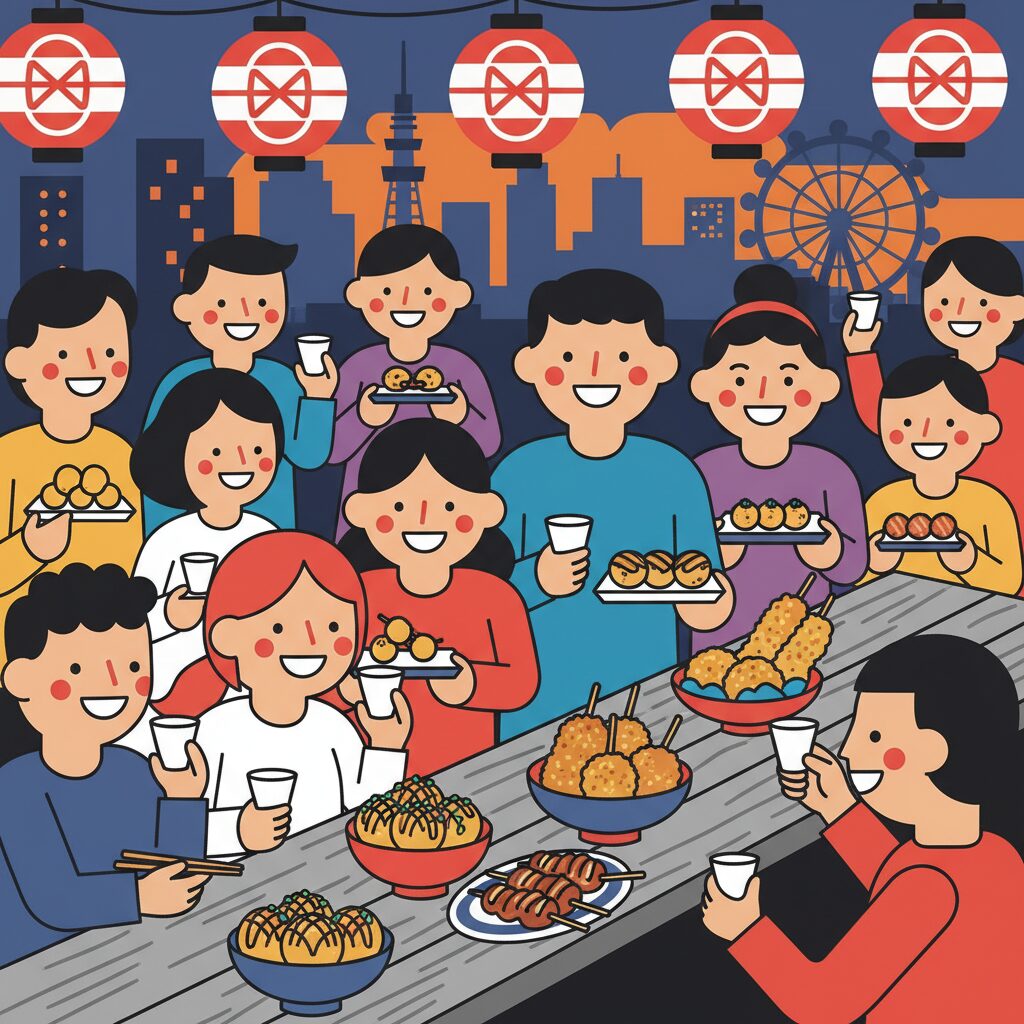
You see it all the time. A newcomer, maybe a tourist, maybe a fresh transplant from Tokyo, steps into the warm, noisy glow of a tachinomi. They stand a little stiffly, scan the room, and land on the familiar. A tall, cold beer. A plate of karaage. Maybe some edamame. They eat, they drink, they pay, and they walk out, thinking they’ve ticked the “authentic Osaka standing bar” box. And in a way, they have. But they’ve only read the book’s cover. They’ve missed the story, the plot twists, the characters that live on the pages inside. Because in Osaka, a tachinomi isn’t just a place to stand and drink. It’s a microcosm of the city itself. It’s a theater of daily life where the core principles of Osaka—pragmatism, community, and an almost religious devotion to good food—are acted out every single night. This isn’t about just grabbing a cheap drink. This is about kuidaore, the glorious philosophy of eating until you drop, executed with the speed and efficiency of a merchant closing a deal. It’s about understanding that the worn wooden counter is more than just a place to put your glass; it’s a shared space, a communal table where stories are traded as freely as recommendations for the next drink. To truly understand this city, you have to look past the fried chicken and learn the language of the deeper menu. You have to learn what the locals know: the real soul of a tachinomi is found in its simmering pots and its carefully sourced, unpretentious treasures. This is your guide to that world, a map to the heart of Osaka’s food culture, one delicious, surprising dish at a time.
Furthermore, exploring the influential Osaka railway system offers another layer to understanding how tradition and modern life mingle in every corner of the city.
The Tachinomi Mindset: More Than Just Standing
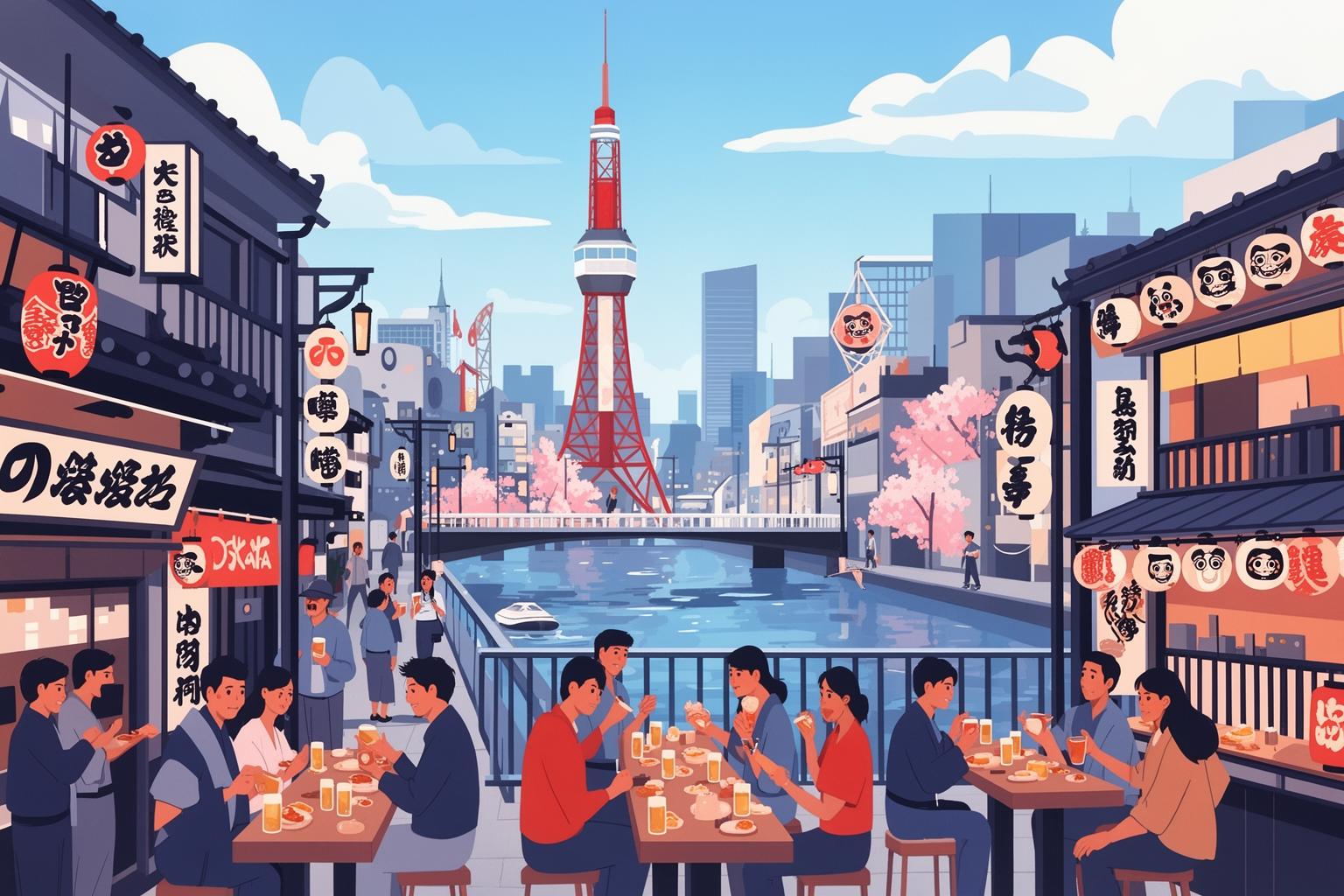
Before we even begin discussing food, you have to tune into the rhythm. Walking into a tachinomi feels like stepping onto a moving walkway. There’s a pace, a flow, an unspoken set of rules that governs everything. It’s not unfriendly, not at all, but it’s efficient. This efficiency is the first hint to understanding the Osaka mindset.
Efficiency is Everything: The Unspoken Rhythm
The concept of senbero, enjoying a drink for a thousand yen, is well known. But outsiders often misunderstand it as simply being cheap. It’s not about cheapness; it’s about value. It’s a philosophy of maximizing return on investment, a principle shaped in the merchant quarters of this city. Your time is valuable. Your money is valuable. The space you occupy at the counter is valuable. The tachinomi is designed to respect that. You enter, order, receive your food and drink almost immediately. You eat, chat, pay, and leave. This isn’t the long, leisurely two-hour meal that you might find elsewhere.
Here’s a fundamental difference from Tokyo. In Tokyo, a standing bar can often feel like a trendy warm-up—a quick stop for a stylish drink before the real dinner reservation. It’s just one part of a bigger social routine. In Osaka, the tachinomi can be the entire night. It is the destination. You might move between two or three of them—a practice known as hashigo-zake—but each stop is a complete experience on its own. That’s because the food isn’t just an afterthought; it’s the star attraction.
This unwavering focus on efficiency can be misunderstood by foreigners as being rushed or detached. It’s actually the opposite. The system is designed to serve everyone quickly so more people can enjoy the experience. Lingering isn’t prohibited, but locals understand the unspoken agreement: when it gets busy and people are waiting, you finish your drink, thank the master, and make room. It’s a quiet, collective respect for the bar’s ecosystem. It’s practical, it’s fair, and it’s deeply Osakan.
The Counter as a Stage: Community in Close Quarters
The moment you secure your spot at the counter, you enter a social contract. The close proximity to others—sometimes elbow-to-elbow—breaks down the formal barriers that shape much of Japanese society. This isn’t an incidental design flaw; it’s intentional. In these tight spaces, conversations ignite easily. You might overhear a debate about the Hanshin Tigers baseball team, listen to a salaryman vent about his boss, or receive an unsolicited but insightful recommendation for a rare sake from the elderly man next to you.
At the heart of it all is the Taisho, the owner or master of the bar. He’s not just a cook or bartender. He’s the director of this nightly performance. He knows his regulars by name, remembers their favorite drink, and anticipates their order for doteyaki before they even ask. He’s a conductor, orchestrating the flow of orders, conversations, and introductions. This is where the cliché about “friendly Osaka people” holds true. The friendliness isn’t accidental or excessive; it’s a deliberate, cultivated aspect of the business. A good Taisho creates an environment where everyone feels like a regular, even on their first visit. It’s good for morale and good for business.
A common mistake for foreigners is feeling intimidated by the close quarters and the rapid, dialect-heavy Japanese exchanged back and forth. You might feel like an outsider in a private club. But the barrier to entry is surprisingly low. You don’t need to be fluent. A simple nod to your neighbor, a smile, or pointing at their dish and saying “Oishisou!” (That looks delicious!) is an open invitation to connect. Participation, even non-verbal, is the key that opens the door. The community isn’t exclusive; it’s just waiting for you to join.
Beyond the Fryer: Unlocking the Real Tachinomi Menu
Alright, you’ve adopted the right mindset. Now you’re ready to place your order. This is where you distinguish yourself from the casual visitor. You’ll look beyond the obvious and explore dishes that reveal Osaka’s history, geography, and unwavering pride in quality food.
The Wonders of the Simmer Pot: Doteyaki and Oden
In nearly every tachinomi, you’ll find a large, steaming pot resting on the counter. This pot is the kitchen’s heart, simmering for hours, concentrating flavors, and promising instant, soul-warming satisfaction. It holds the story of Osaka’s working class.
Doteyaki (Slow-Cooked Beef Sinew)
Spot the dark, bubbling vat filled with what may seem an unidentifiable meaty substance on skewers. That’s doteyaki. Made from beef sinew—a tough, often disregarded cut—it’s slow-cooked for hours in a rich, sweet-and-savory miso-based broth until it becomes incredibly tender and gelatinous. It melts in your mouth, bursting with deep, beefy umami and sweet miso flavors. Usually topped with a mountain of chopped green onions, it offers a sharp, fresh contrast.
Why is this a tachinomi staple? Because it exemplifies Osaka’s resourcefulness. It transforms an inexpensive, overlooked ingredient into a delicacy through time and care. There’s no fancy technique here—just patience. For the bar owner, it’s perfect: made in large batches, it retains heat and flavor all day, and can be served instantly. For the customer, it’s ultimate comfort food, a taste that soothes the fatigue of a long day. The dish carries no pretense; loving it means understanding Osaka’s spirit of finding value and beauty in humble things.
Oden (Simmered Delights)
Beside the doteyaki, you might spot another simmering pot, this one filled with a clear, golden broth. This is oden. Although oden is found throughout Japan, the Osaka style tells a uniquely regional story. The first thing you’ll notice is the broth’s color. In Tokyo and the Kanto area, oden broth is dark and robust, based on heavy soy sauce. Here in Kansai, the broth is a delicate, light-colored dashi made from premium kombu (kelp) and katsuobushi (bonito flakes). The flavor is subtle and refined, designed to enhance the natural taste of the ingredients without overpowering them.
This culinary approach—highlighting the ingredient’s essence—is a hallmark of Kansai cuisine. When you eat Osaka oden, you savor the earthy sweetness of giant daikon radish, simmered until translucent; the creamy yolk of the boiled egg; the subtle fishiness of chikuwa (tube-shaped fish cake); and the savory surprise inside a kinchaku (fried tofu pouch filled with mochi). Ordering adds to the fun. Some places are self-serve, letting you pick what you want with a bowl. At others, you point and the Taisho will plate it for you. Don’t forget the small dab of yellow karashi mustard on the side—it cuts through the richness with a sharp heat that brightens every bite.
Fresh from the Water: From Kisetsu no Sashimi to Kimo
Osaka’s identity as a port city runs deeply. Though you might not expect a standing bar to offer high-grade raw fish, ignoring the seafood menu is a rookie error. A great tachinomi prides itself on access to fresh, daily catches.
Kisetsu no Sashimi (Seasonal Raw Fish)
Look for a small chalkboard or a handwritten menu taped to the wall—this lists the day’s treasures. You won’t find an extensive sushi menu here, just a small curated selection of kisetsu no sashimi, seasonal raw fish. It might be glistening aji (horse mackerel) in summer, fatty buri (yellowtail) in winter, or tender ika (squid) in spring. The limited choices show confidence, meaning the Taisho visited the market this morning and bought only the best.
This sashimi may lack the refined presentation of a high-end sushi-ya, but it’s impeccably fresh and served at a fraction of the price. It reflects Osaka’s market culture—quick-moving, quality-focused, and deeply attuned to seasonality. Ordering the daily sashimi special connects you to the city’s rhythm, tasting the freshness that powers its bustling markets.
Kimo no Takiawase (Assorted Liver Sashimi)
For the adventurous, if you spot kimo (liver) on the menu, you’ve found a place serious about its ingredients. This dish, often an assortment of lightly boiled or seared chicken or pork liver, is a true local delicacy. Served chilled with sesame oil and salt or tart ponzu sauce with grated ginger, it has a rich, creamy texture and a deep mineral flavor that’s surprisingly clean.
This dish reveals much about Osaka’s food philosophy. It embodies mottainai—a cultural aversion to waste—celebrating every part of the animal. Serving offal semi-raw tests freshness and kitchen skill; there’s no margin for error. An Osakan ordering this signals trust in the establishment and their status as a genuine food connoisseur, appreciating flavors beyond standard cuts. It’s a badge of honor.
The Art of the Skewer: Beyond Yakitori
Skewers are a universal symbol of simple, satisfying food. While yakitori (grilled chicken skewers) is a staple, Osaka’s skewer offerings go far beyond.
Kushikatsu (Deep-Fried Skewers)
Kushikatsu is perhaps Osaka’s most famous contribution to skewer culture. Yes, it’s straightforward—battered and deep-fried meat, seafood, and vegetables. But to understand its place in a tachinomi, you must grasp the ritual. The most important rule, posted everywhere, is nidozuke kinshi—NO DOUBLE-DIPPING. The communal pot of thin, savory dipping sauce at the counter is for everyone. Dip your skewer once, and only once. If you need more sauce, use the provided raw cabbage slice as a spoon to scoop it onto your plate.
This rule transcends hygiene; it’s the fundamental social contract of Osaka fast food. Following it shows respect for shared space. Breaking it earns you dirty looks and possibly a scolding from the Taisho. Beyond classic beef and onion skewers, widen your scope. Try renkon (lotus root) for crunch, uzura no tamago (quail egg) for creaminess inside, and the surprising delight of deep-fried cheese skewers. The variety reflects Osaka’s playful and endlessly creative culinary spirit.
Robatayaki (Hearth-Grilled Items)
Seek out a charcoal hearth known as a robatayaki grill. This cooking style contrasts the quick searing of yakitori. The slow, intense charcoal heat imparts a sublime smoky flavor. The menu here emphasizes simplicity and purity.
Order saba shioyaki (salt-grilled mackerel) for a perfectly cooked fish with crispy skin and moist, oily flesh. An ika maruyaki (whole grilled squid) arrives tender and smoky, served with ginger and soy sauce. Seasonal vegetables like asparagus, shiitake mushrooms, or green peppers, grilled with only a sprinkle of salt, reveal their natural sweetness amplified by the char. A robatayaki dish asserts confidence: “Our ingredients are so good, they don’t need heavy sauces.”
Unsung Heroes: The Supporting Cast
Some of the most telling tachinomi dishes seem the simplest. These humble sides are bar regulars’ benchmarks.
Potato Salad
Never underestimate potato salad. In Osaka, potesara is more than a bland picnic side. Each tachinomi has a signature version, a point of pride. It reflects the Taisho’s personality. Some are smooth and creamy, others chunky and rustic. Many feature thick-cut bacon, crunchy cucumbers, or Japanese karashi mustard for a spicy kick. Often topped with a soft-boiled egg whose runny yolk adds richness. To locals, the potato salad’s quality is a litmus test for the whole establishment. Simple, comforting, and surprisingly complex—it tastes like home.
Atsuage (Thick Fried Tofu)
Simplicity itself: a thick tofu block, deep-fried until golden brown outside, soft and creamy inside. It’s usually grilled again for a slight smoky flavor. Served with grated ginger, chopped green onions, and a splash of soy sauce, atsuage pairs perfectly with a cold beer. It’s cheap, filling, and an excellent vegetarian choice. It represents the foundation of tachinomi food: humble, satisfying, and designed to complement alcohol seamlessly.
Dashimaki Tamago (Rolled Dashi Omelet)
Like oden, this rolled omelet tells a story of two regions. The Kanto version, tamagoyaki, is often sweet with sugar and mirin. The Kansai dashimaki tamago focuses on dashi, containing much more savory stock, making it juicy, light, and fluffy. A beautifully rolled dashimaki, layered in a rectangular pan, signals a skilled chef. When you bite into it and the savory dashi floods your mouth, you’ll appreciate Kansai’s reverence for this fundamental building block of Japanese flavor.
How to Navigate a Tachinomi Like a Local
Knowing what to eat is only half the challenge. The other half lies in knowing how to behave. A few simple tips will help you go from a hesitant outsider to a confident regular.
Reading the Room (and the Menu)
Many of the best dishes won’t appear on the printed, laminated menu. Instead, they’ll be written in Japanese on strips of paper taped to the wall or scribbled on a chalkboard. Don’t let this intimidate you. It signals that the menu is alive, changing daily depending on what’s fresh at the market. Your best approach is to observe. Notice what the old man at the end of the counter is eating with such enthusiasm. Point to it and say to the Taisho, “Sumimasen, are onaji no kudasai” (Excuse me, I’ll have the same as that). This shows respect and almost guarantees something delicious. If you’re feeling adventurous, simply ask, “Kyou no osusume wa?” (What’s today’s recommendation?). Your curiosity will be rewarded.
The Art of Paying: Cash is King
Forget your credit card. Most tachinomi spots are cash-only. This isn’t due to technological lag but a deliberate choice prioritizing speed and low overhead. It’s part of the city’s efficient business culture. Payment methods vary: sometimes it’s cash on delivery, where you place your money in a small tray on the counter and staff take the correct amount with each order. Other times, you’ll receive a bill at the end. Some traditional places operate on an honor system, where you tell the Taisho what you’ve had when ready to leave. Just watch what others do and follow their lead. Be sure to carry small bills and coins; trying to pay a 300-yen drink with a 10,000-yen note is a classic beginner mistake.
Making Your Exit
When you’re done, how you leave is as important as how you arrived. Don’t simply disappear into the night. Catch the Taisho’s eye and say a clear, warm “Gochisousama deshita” (Thank you for the meal). It’s a simple courtesy acknowledging their hard work and your satisfaction. If you’ve been chatting with neighbors, a slight nod and a quiet “Osaki ni” (I’m leaving ahead of you) is a polite farewell.
And remember the culture of hashigo-zake. Don’t feel pressured to stay at one place all night. The real joy is in moving around. Have a beer and the famous doteyaki at one spot, then stroll down to another known for its fresh sashimi, and finish at a third with a unique potato salad. This flow creates the vibrant, ever-changing energy of Osaka’s nightlife. You’re not just a customer; you’re part of a city-wide culinary adventure.
Tachinomi as a Window into the Osaka Soul
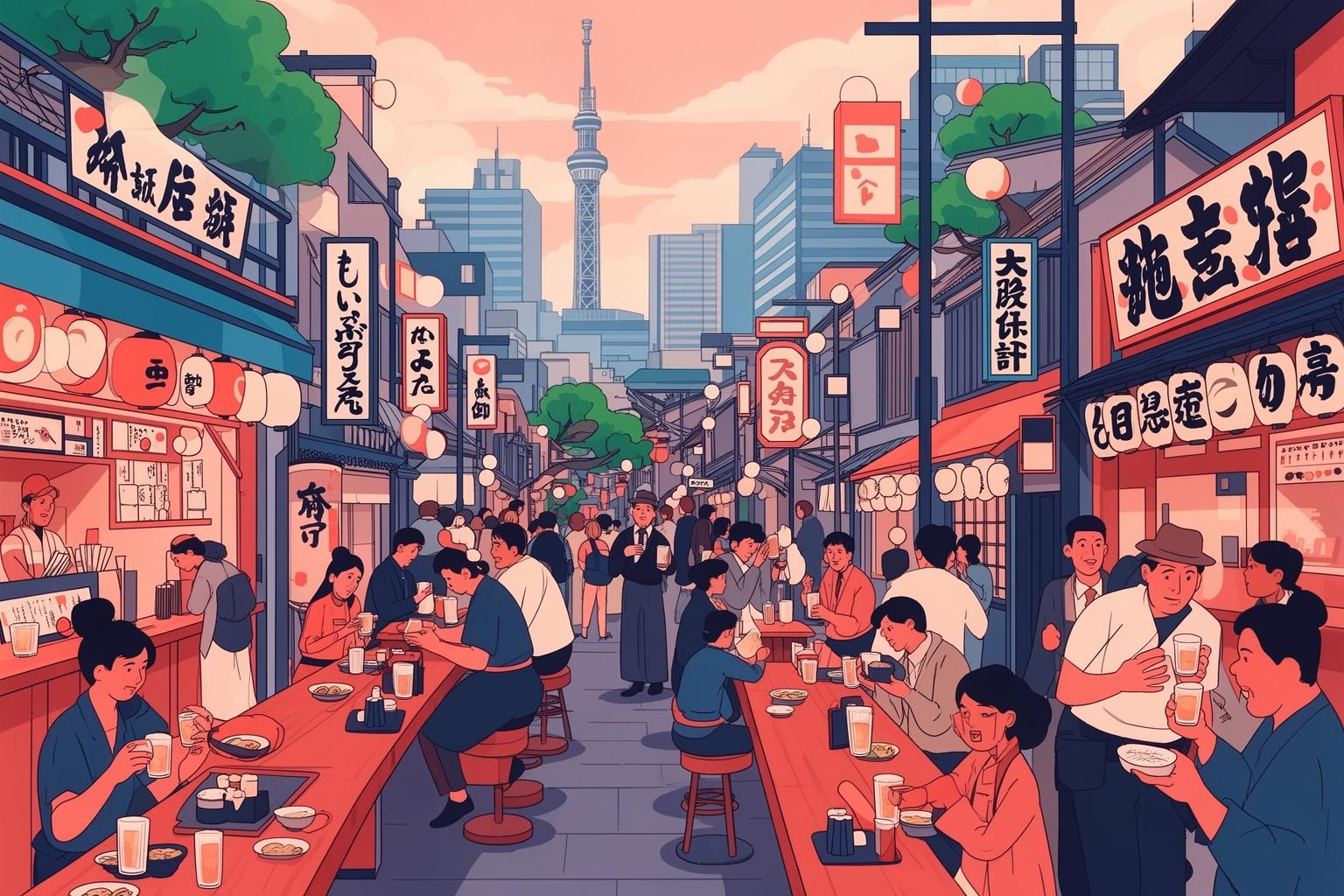
If you truly want to understand what drives Osaka, spend a few evenings in its standing bars. They are more than just spots to eat and drink; they are living museums of the city’s culture, packed into a few square meters of vibrant, delicious chaos.
You’ll witness the Osaka merchant spirit firsthand. The relentless focus on cost-performance and value isn’t about being stingy; it’s about being savvy. Locally, they say, “Kechi ya nai, shoubai ya”—It’s not cheapness, it’s smart business. Every dish, every system is refined for quality and efficiency, ensuring the customer enjoys the best possible experience for their money.
You’ll experience the power of hito no tsunagari, or human connection. In a society that can often feel reserved and hierarchical, the tachinomi acts as a great equalizer. The cramped space encourages interaction, dissolving the barriers between a company president and a construction worker. For the price of a drink, you gain a temporary, yet profoundly genuine, sense of community.
And finally, you’ll savor the kuidaore no puraido, the pride of a city defined by its food. The care taken to transform a humble beef tendon or a simple block of tofu into something extraordinary embodies Osaka’s culinary heart. This pride isn’t reserved for fancy, expensive restaurants. It lives and breathes on every street corner, in every simmering pot, and in every perfectly grilled skewer.
So next time you’re in Osaka, step into that warm, inviting glow. Walk beyond the familiar and be bold. Point at the simmering pot of doteyaki. Ask for the seasonal sashimi. Order the potato salad. Stand shoulder-to-shoulder with the locals, listen to the rhythm of their conversations, and take a bite. You won’t just be having a meal—you’ll be tasting the soul of the city itself.