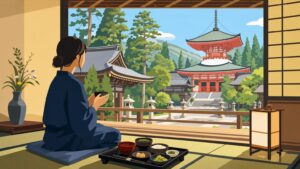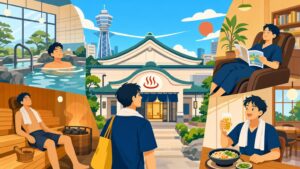
Friday afternoon in Osaka hits different. The air in Umeda, thick with the scent of takoyaki grease and department store perfume, starts to vibrate. The rumbling of the Midosuji line, the frantic chatter of salarymen rushing for the last train, the sheer, crushing weight of millions of people packed into one urban bowl—it’s a symphony of beautiful chaos. And for many of us who call this city home, it’s a signal. The pressure gauge is in the red. It’s time to get out. Not far. Not for long. Just enough to breathe air that doesn’t taste of concrete and ambition. This is where Awaji Island comes in. It’s not a vacation destination in the glossy travel magazine sense. It’s Osaka’s backyard, our collective decompression chamber, a place we go not to see things, but to stop seeing so much. Forget the tourist checklists. A weekend trip to Awaji is a ritual, and it tells you more about the Osaka mindset than a thousand guidebooks ever could. It’s about understanding that for a city that runs at 1.5x speed, the most essential thing is knowing where the off-switch is. This is a look at that switch, and why finding it is so fundamental to surviving, and thriving, in the vibrant, relentless heart of Kansai.
After leaving the tranquil rhythms of Awaji behind, you might find that indulging in the subtle dashi-forward cuisine is the perfect way to reconnect with Osaka’s vibrant culinary spirit.
The Great Escape: Why the Bridge is More Than Just a Road
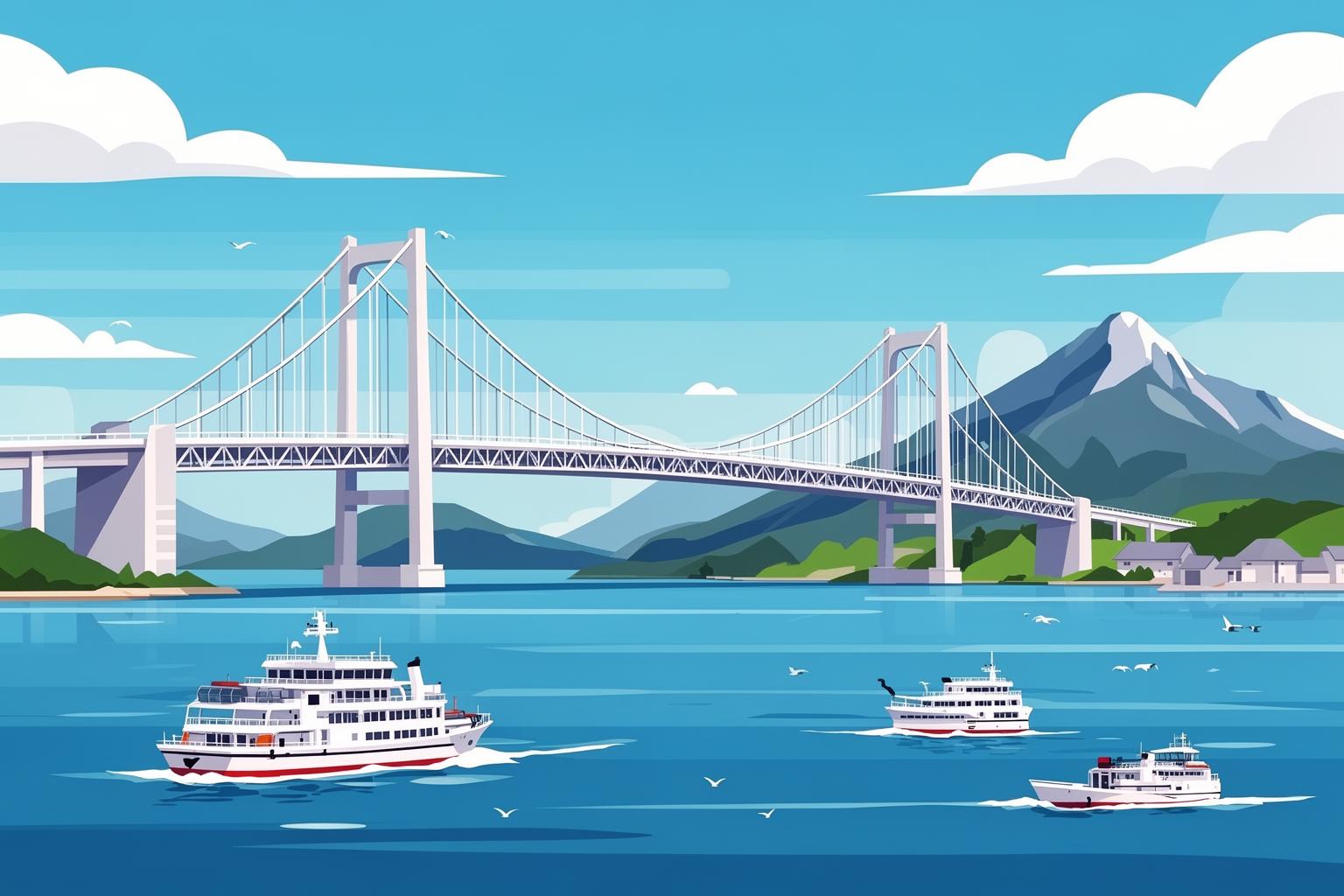
In Tokyo, escaping often involves a precisely timed Shinkansen ticket, a reserved seat, and a quiet, efficient trip into the mountains of Nagano or the coast of Izu. It’s a ritual, an extension of the city’s orderly character. The Osaka escape is different. It begins with the jingle of car keys. The car becomes our capsule, a pocket of private space in a city where personal room is a rare luxury. The journey starts on the Hanshin Expressway, a concrete serpent weaving through office towers and apartment complexes. It’s still the city—loud and demanding. Then, you spot it. The Akashi Kaikyō Bridge, emerging through the haze. It’s the longest suspension bridge in the world, but to an Osakan, its engineering marvels come second. It’s a symbol. A gateway.
The moment your tires touch that smooth asphalt and Kobe fades in your rearview mirror, something inside you shifts. The claustrophobic walls of the expressway give way to an impossibly vast panorama of sea and sky. The Seto Inland Sea sparkles below, dotted with container ships moving at a pace that suddenly feels reasonable. You roll down the windows, letting the salty air flush out the city smog from your lungs and the week’s tension from your mind. This isn’t a passive trip. It’s an active, physical transition from one state of being to another. The bridge isn’t merely a route to Awaji; it’s the first step in the island’s therapy. It’s the long, deep breath you’ve been waiting to take since Monday morning. The freedom of the open road, the control of your own vehicle—this is a distinctly Osakan way to unwind. It’s practical, straightforward, and puts you in the driver’s seat of your own relaxation.
The Gospel of the Michi no Eki: Cost Performance as a Way of Life
Once you arrive on the island, your first pilgrimage isn’t to a temple or a theme park. It’s to a `michi no eki`, a roadside station. Foreigners might assume these are just simple rest stops, places for a quick bathroom break and a vending machine coffee. That’s a fundamental misunderstanding of their role in the Kansai weekend landscape. A `michi no eki` is a shrine dedicated to the Osakan god of `cos-pa`, or cost performance. It’s a farmer’s market, a seafood stall, a casual restaurant, and a gift shop all rolled into one, and it’s where the search for value begins.
Beyond Souvenirs: The Onion Obsession
You’ll notice it right away. Piles upon piles of onions. Awaji is renowned for its sweet, succulent onions, and Osakans treat them with a reverence usually reserved for high-end electronics. You’ll see couples, families, and groups of friends seriously considering giant mesh bags of them. Why the excitement? Because here, they are incredibly fresh, unbelievably cheap, and taste worlds apart from what you find at the local supermarket in Namba. Buying a 5-kilo bag of onions isn’t just a purchase; it’s a victory. It’s a tangible, edible trophy of your smart shopping skills. This is the merchant DNA of Osaka at work. It’s not about being cheap; it’s about being smart. It’s about recognizing superior quality at an unbeatable price. A Tokyoite might bring back a beautifully packaged, expensive cake from a famous patisserie as a souvenir. An Osakan will proudly return with a trunk full of onions, garlic, and locally grown lettuce, boasting about the deal they scored. The value isn’t in the branding; it’s in the raw, delicious reality of the product.
The Unspoken Rule of the Roadside Lunch
The same principle applies to lunch. Forget fancy restaurants with white tablecloths. The parking lot of the `michi no eki` is where you’ll find some of the best food on the island. Look for the small stalls with handwritten signs advertising `kaisendon` (seafood over rice) or `shirasu-don` (a mountain of tiny whitebait). The rule is simple: if there’s a line of locals, it’s good. The experience is unapologetically straightforward. You order from a window, receive a plastic bowl, and find a seat at a communal table. The fish probably swam in the nearby sea that very morning. The value proposition is undeniable. You’re getting peak freshness for a fraction of the price of a city restaurant. An Osakan will happily recount the story of their 1,200 yen seafood bowl that was better than a 5,000 yen meal they once had. It’s not just about the food; it’s about the win. It’s about skipping the inflated prices and unnecessary frills to get straight to the source. This practical, no-nonsense approach to pleasure is the essence of daily life in Osaka.
Cafe Culture, Osaka Style: It’s All About the View
In the city, cafe culture can feel like a competitive sport. In trendy neighborhoods such as Horie or Nakazakicho, you’ll find cafes renowned for their latte art, minimalist design, or exclusive single-origin beans. There are lines, time limits on tables, and an unspoken pressure to fit the image. It’s a scene. On Awaji, however, the entire concept is turned upside down. The cafes here aren’t about being noticed. They’re about noticing.
Trading Crowds for Coastlines
The best cafes on Awaji are thoughtfully situated along its western coast, known for stunning sunsets. They tend to be simple structures—often just a room with a massive plate-glass window or a wide wooden deck. You drive there with intention. The goal isn’t merely a cup of coffee; it’s the seat that accompanies it. You’re not paying 600 yen for caffeine; you’re paying for an uninterrupted hour spent gazing at the horizon. You’re renting a small slice of tranquility. People linger for hours, frequently in comfortable silence, watching the waves or shifting light. There’s no rush, no pressure to vacate your seat. The cafe owner understands the arrangement: they offer the view, you offer quiet appreciation. It’s an exchange of space and time, not just goods and services. This is what Osakans, craving both physical and mental space, truly desire. It’s the remedy for the city’s sensory overload.
The Anti-Tokyo Vibe
This approach sharply contrasts with the often carefully curated experiences favored in Tokyo. A Tokyoite’s escape might involve a reservation at a cafe featured in Casa BRUTUS magazine, celebrated for its architecture or celebrity chef. There, the destination is the brand. In Awaji, the destination is the untamed nature outside the window. The cafe serves merely as the vessel. An Osakan is less impressed by a famous name and more by a place that delivers an authentic, unpretentious experience. Does it have a great view? Is it comfortable? Is the coffee good? If yes, it’s a success. This pragmatism, this emphasis on the core experience over fashionable presentation, is a hallmark of the Kansai mindset. They want the real thing, not just the story about the real thing.
Finding Yourself in Small Shops and Quiet Sands
The final layer of the Awaji experience involves peeling back the commercial facade to reveal the human and natural elements beneath. It’s about wandering without a map, exploring freely, and embracing the slow, quiet discoveries the island offers.
The Charm of the Imperfect: Awaji Craft
Scattered across the island are small craft shops—pottery studios, incense makers, and textile workshops. These aren’t glossy, polished boutiques. Often, you’ll find the owner in the back, covered in clay or sorting herbs. This is what makes it special. In Osaka, you can buy anything you want, but it’s usually a depersonalized transaction in a vast, efficient store. Here, you can pick up a slightly irregular mug and speak with the person who crafted it. You can ask about the local clay or the firing process. This connection is something Osakans, who value direct, human interaction in their local `shotengai` (shopping arcades), truly appreciate. There’s a story and a person behind the object. It’s a purchase that feels genuine, grounded, and personal. It’s about character over soulless perfection—a value that resonates deeply in a city proud of its distinct, often rough-around-the-edges personality.
The Private Beach Phenomenon
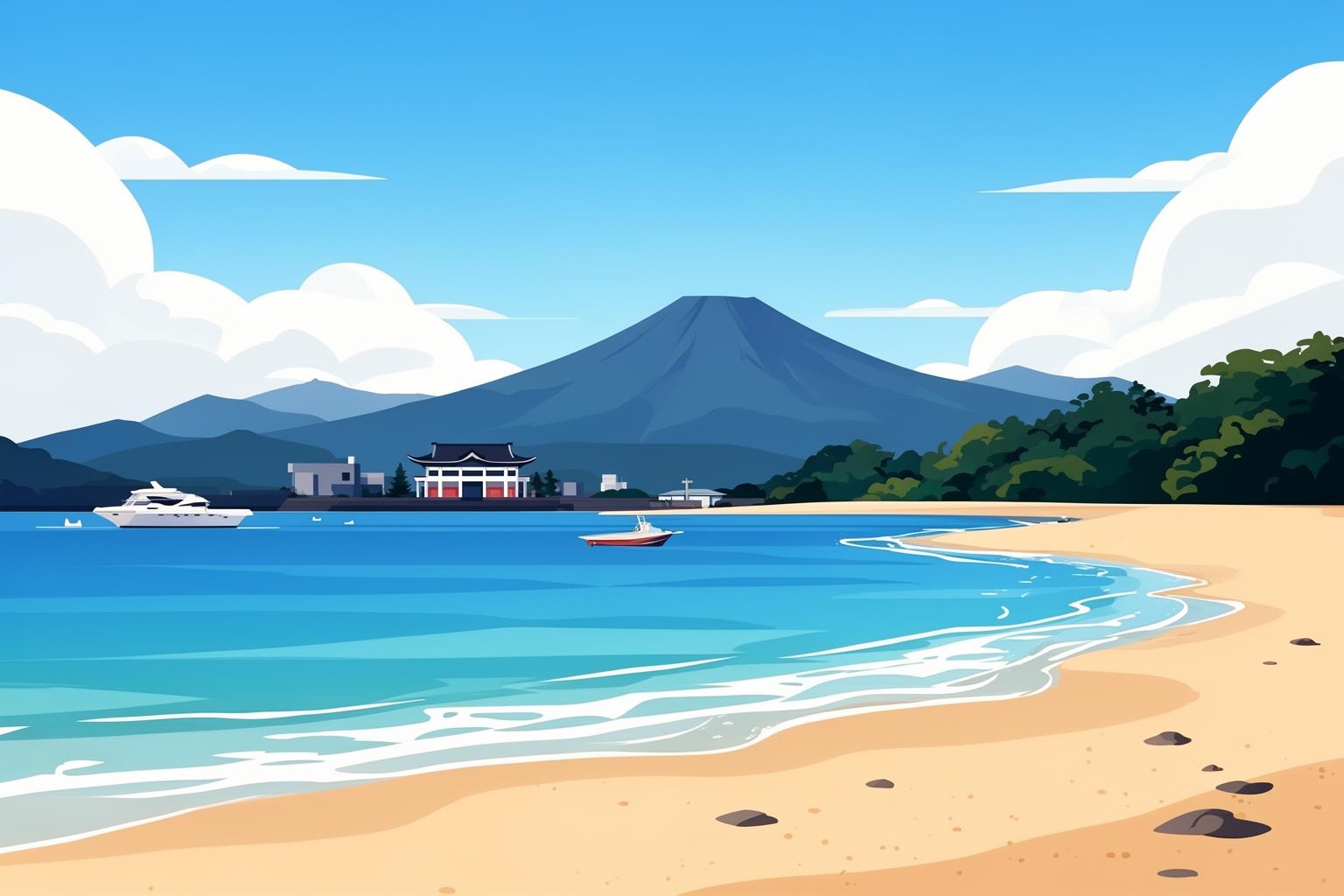
Finally, there’s the quest for the perfect, unnamed beach. Awaji has its main swimming spots, but the true treasure is discovering a small, deserted cove along a winding coastal road. You pull your car over, kick off your shoes, and walk on sand that hasn’t been marked by a thousand footprints that day. For someone whose apartment window might overlook their neighbor’s kitchen, having an entire stretch of coastline to yourself feels like an impossible luxury. You’re not there to swim or party. You’re there to listen to the waves without train announcements or traffic noise in the background. You’re there to let your mind unwind. This quiet solitude is the ultimate purpose of the trip. The loud, boisterous, constantly joking persona many Osakans project is a performance; it takes energy. This is where the battery recharges. This quiet time is what allows the city’s vibrant, high-energy culture to thrive. Without the calm of Awaji, the noise of Osaka would be unbearable.
The Return Trip: Bringing Awaji Back to Osaka
Driving back across the bridge on a Sunday evening is a moving moment. The trunk is filled with onions and local vegetables. Your skin carries a faint scent of salt and sun. In the distance, the lights of Kobe and Osaka begin to sparkle, creating a vast, electric constellation. There’s no sense of dread about the weekend ending. Instead, there’s a feeling of preparedness. You’ve emptied your stress tank and refilled it with something calmer and more grounded. The weekend on Awaji wasn’t an escape from Osaka but an essential part of the rhythm of living in Osaka. It’s the exhale that makes the next inhale possible. It recalibrates your senses, reminding you that just a short drive from the beautiful chaos, there is space, there is quiet, and there is a stunningly simple view of the sea. And armed with that knowledge—and a bag of very sweet onions—you’re ready to return to the city and do it all over again.