
They tell you Osaka runs on two things: laughter and flour. Before I moved here from Tokyo, my friends painted a picture of a city paved with okonomiyaki and drowning in takoyaki broth. “You’re vegan?” one of them said, shaking his head with theatrical pity. “Good luck. You’ll starve.” He wasn’t entirely wrong about the premise. Osaka is, without a doubt, the undisputed capital of konamon, a term that loosely translates to “flour things.” It’s a culture built on batter. It’s the soul food, the street food, the ‘had a bad day’ food, and the ‘let’s celebrate’ food. For someone who avoids gluten and animal products, it sounds less like a culinary destination and more like a dietary minefield. But here’s the secret I’ve learned, the one that goes beyond the tourist guides and the well-meaning warnings: navigating Osaka’s food scene with restrictions isn’t about what you can’t eat. It’s about learning how to talk, how to negotiate, and how to understand the very pragmatic, surprisingly flexible soul of the Osakan people. This city’s relationship with flour is a deep and complex love story, but it’s not an exclusive one. If you’re willing to look past the menu and connect with the person behind the counter, you won’t just find a meal; you’ll find the real, beating heart of this magnificent, misunderstood city.
Embracing Osaka’s vibrant street food culture can also open the door to discovering a relaxed weekend escape along the Yodo River that reveals another side of the city’s dynamic spirit.
The Konamon Trinity: More Than Just a Meal
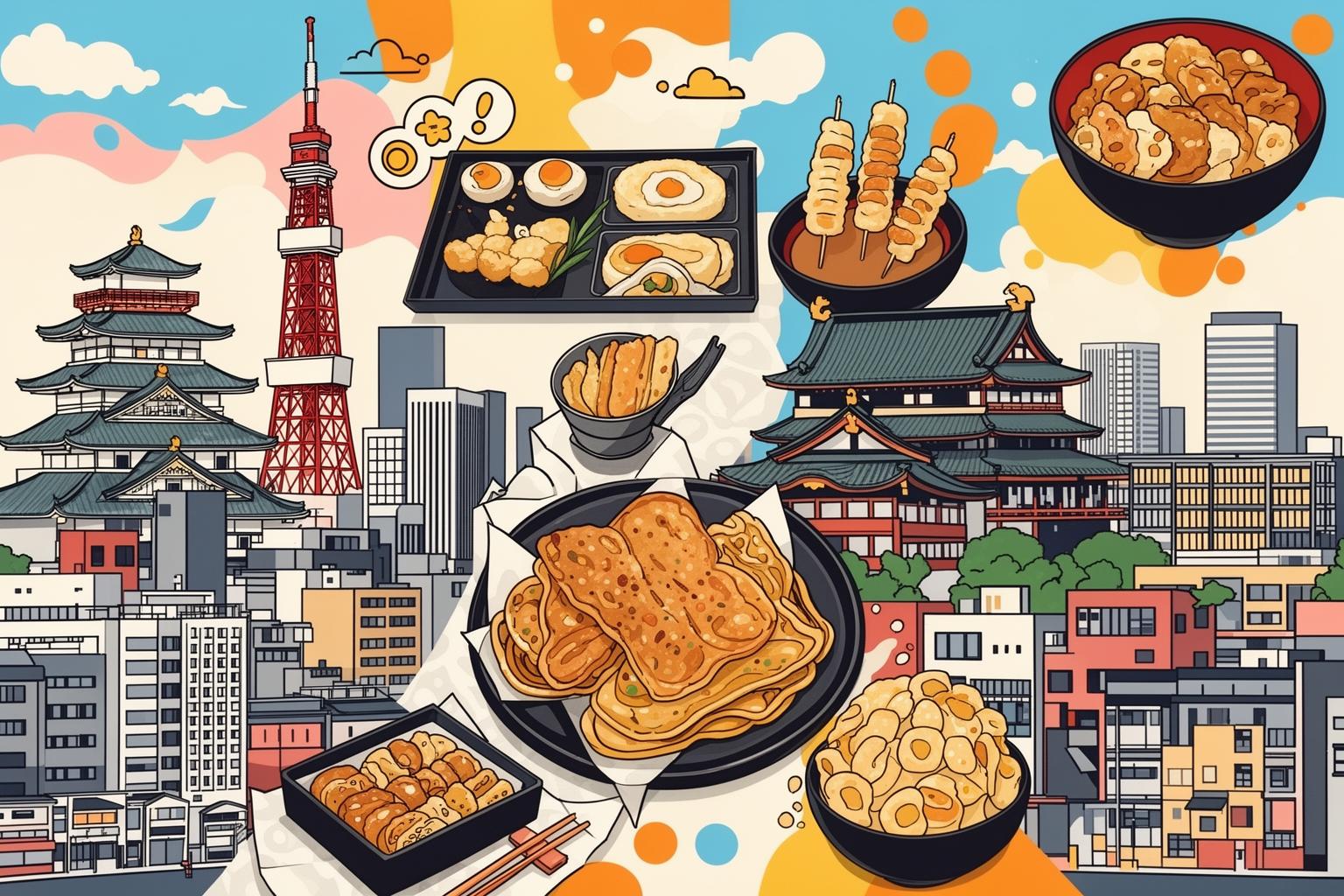
To truly understand Osaka, you first need to grasp the holy trinity of its flour-based culture: takoyaki, okonomiyaki, and kushikatsu. These aren’t merely dishes; they are social rituals, economic barometers, and reflections of a deeply rooted local philosophy. They form the foundation of everyday life here, and at first sight, they seem like a fortress of gluten, egg, and seafood. Yet, when you break them down, they reveal the cultural code of the city and, surprisingly, open the door to vegan and gluten-free possibilities.
Takoyaki: The Street Corner Litmus Test
Stroll through any shotengai (shopping arcade) in Osaka, and you’ll catch the sweet, savory aroma of grilling batter before you see it: the golden-brown balls of flour batter filled with octopus known as takoyaki, the city’s iconic snack. Fast, affordable, and dangerously hot, takoyaki in Tokyo feels like a novelty or special treat, while in Osaka, it’s a daily necessity — the after-school snack, pre-dinner bite, or the meal after a few drinks. The takoyaki stand serves as a local hub, a spot for quick, straightforward socializing.
Vendors—often elderly men or brisk women—are skilled performers, flipping dozens of batter balls with two metal picks in a swift, rhythmic dance. There’s no ceremony, just speed and precision. For vegans, takoyaki poses a formidable challenge: wheat flour and egg batter, dashi (fish-based broth), and of course, the octopus fillings. It’s a trifecta of obstacles.
Yet here you see Osaka’s pragmatism at work. The city is evolving. Vegan takoyaki shops have emerged, not as mere fads, but as practical responses to growing demand. One spot I found in Amemura uses konjac as an octopus substitute, capturing that characteristic chewiness, with a batter made from soy milk and vegetable broth. The young owner, sporting a bleached pompadour, didn’t frame it as a ‘plant-based revolution.’ He simply said, “More people ask for it, so I made it. If it tastes good and sells, that’s what matters.” This embodies the Osaka mindset: not rigidly clinging to tradition, but adopting a sharp, pragmatic instinct for what works. When a problem arises (people can’t eat the classic version), an Osakan finds a practical, profitable solution. It’s a culture of doers, not just dreamers.
Okonomiyaki: The ‘As You Like It’ Philosophy
If takoyaki is the quick fling of Osaka street food, okonomiyaki is the messy, devoted relationship. The name itself—okonomi (as you like it) and yaki (grilled)—announces its philosophy. This savory pancake, made from a flour-and-egg batter mixed with heaps of shredded cabbage and your choice of fillings, is topped with a sweet dark sauce, mayonnaise, and glittering bonito flakes. Many restaurants bring the griddle to your table, handing you the bowl of raw ingredients to cook yourself. This stands in stark contrast to Tokyo dining, which often revolves around silent reverence for the chef’s untouchable creation.
Here, you become the chef. It’s participatory, loud, and it’s perfectly fine to make a mess. The aim is not perfection but shared enjoyment. The okonomiyaki experience captures Osaka’s love of customization and its disdain for pretension. The meal says, “Don’t just sit back and be served—get involved. Make it yours.”
For gluten-free vegans, the standard ingredients present a maze of challenges: the batter, egg binder, dashi powder, pork belly, sauce often containing oyster extract, and bonito flakes. But the spirit of okonomi becomes your greatest ally. This is where you learn the art of Osakan negotiation. In Tokyo, asking for significant changes can lead to polite but firm refusals, disrupting kitchen harmony. In Osaka, it’s a conversation. I once entered a small, family-owned place in Tenma’s backstreets and, using my most apologetic Japanese, explained my dietary restrictions. The elderly woman behind the counter didn’t hesitate. She grumbled, “That’s a lot you can’t eat,” but went into the back and came out with a bag of rice flour. “My granddaughter has allergies,” she said. “We can try this. No promises it’ll be good.” It was wonderful. The exchange wasn’t about customer service—it was a direct human-to-human problem-solving moment. This frank, practical approach to accommodation lies at Osaka’s core. They might say no, but they say it openly, and sometimes they say yes and invent something new on the spot.
Kushikatsu: The ‘No Double-Dipping’ Social Contract
In Shinsekai, a wonderfully gritty neighborhood, you’ll find the third pillar of konamon culture: kushikatsu. These deep-fried skewers of meat, seafood, and vegetables are coated in that familiar flour-and-egg batter. You eat them standing shoulder-to-shoulder at a counter among salarymen, tourists, and locals. The focus here is the communal trough of dark, sweet dipping sauce.
This is where you encounter Osaka’s most sacred unwritten rule: nidozuke kinshi, no double-dipping. Once your skewer has touched your lips, it must never go back into the shared sauce. This rule is enforced not just by signs, but by the sharp looks from fellow diners. It’s about more than hygiene — it’s the city’s social contract condensed into one culinary law. It declares: we’re all sharing this space and this sauce; individual freedom ends where communal respect begins. It’s a system of trust and clear-cut respect. Follow the rule, and you belong.
For the gluten-free, the batter is the main obstacle; for vegans, the shared fryer almost guarantees cross-contamination. Still, many shops offer vegetable skewers, and here you can engage in those direct conversations again. I’ve had luck asking, “Could you just grill these with salt? No batter, no frying.” Sometimes the response is a terse “We’re too busy.” Other times, the cook shrugs, grills some eggplant and shiitake mushrooms, and serves them. The readiness to bend the rules for reasonable requests is a hallmark of Osaka’s character. They respect the system but aren’t its slaves. Pragmatism prevails.
‘Meccha Oishii!’ vs. ‘Maa Maa’: The Language of Osaka Satisfaction
The way people talk about food in Osaka directly mirrors their entire communication style. It contrasts sharply with the subtle, nuanced politeness found in Tokyo. When a Tokyoite enjoys a meal, they might say, with a slight bow, “Oishii desu” (It is delicious). It’s polite, formal, and expresses appreciation. Meanwhile, an Osakan who loves their food will lean back, pat their stomach, and shout, “MECCHA OISHII!” or “UMAI!” It’s loud, exuberant, and comes straight from the heart—a raw, unfiltered expression of joy.
This emotional openness is central to the Osakan identity. There’s little room for ambiguity or beating around the bush. This holds true even for negative feedback. If a dish is mediocre, they won’t bother with a polite euphemism; they’ll simply say “maa maa” (so-so) while shrugging. A friend once took me to his favorite ramen shop. After finishing my bowl, he looked at me eagerly. Still thinking in a Tokyo manner, I said, “It was very nice, thank you.” He seemed genuinely disappointed. “Just ‘nice’? Didn’t you like it?” I later understood that anything less than a passionate reaction is seen as mild disappointment. This honesty can be surprising for newcomers, especially foreigners used to gentler responses, but it’s rarely meant to offend. It’s about being clear. Life’s too short to pretend you enjoy something when you don’t.
For those with dietary restrictions, this straightforwardness is a blessing. When you discover a vegan okonomiyaki that truly amazes you, and you tell the owner with a heartfelt “Meccha oishii!,” their face will light up. That shared, honest excitement creates an instant connection. You become more than a customer; you become someone who gets it. You recognize the effort, love the food, and want to proclaim it from the rooftops. In Osaka, that kind of genuine enthusiasm is a currency more valuable than yen. It’s how you build relationships, get remembered, and turn a small, tucked-away vegan café into your personal haven.
The Kitchen of the Nation: A Culture of Abundance and Pragmatism
Osaka has long been known as Tenka no Daidokoro—The Nation’s Kitchen. This is more than just a catchy tourism slogan; it is a historical identity that continues to influence the city’s modern mindset. During the Edo period, Osaka stood as the central hub for rice and other goods, a commercial powerhouse that supplied the entire country. This heritage fostered a deeply ingrained belief about food: it should be plentiful, affordable, and delicious. There is a nearly moral resistance to the idea of food being pretentious or overly expensive.
This philosophy is precisely why konamon culture thrives. Flour, cabbage, and a few scraps of meat or seafood could be turned into a cheap, filling, and remarkably satisfying meal for the city’s working-class merchants and laborers. It embodies the spirit of kuidaore, another well-known Osaka phrase meaning ‘to eat oneself into ruin.’ This doesn’t imply eating costly food; rather, it means enjoying so much delicious, affordable food that you end up spending all your money anyway.
The same practicality that gave rise to konamon is now, somewhat ironically, the vegan and gluten-free eater’s best ally. Osaka’s business mindset is sharp and pragmatic. If a demand exists, someone will fulfill it. The city’s food scene is evolving not due to a sudden wave of dietary enlightenment but because it makes sound business sense. This is an important contrast to Tokyo, where new food trends are often driven by branding, media hype, and a desire to appear cosmopolitan. In Osaka, the change is more grassroots. It’s not about opening a sleek, minimalist vegan restaurant in a trendy district (though such places exist as well). Instead, it’s about the neighborhood okonomiyaki joint realizing they can attract more families by offering a gluten-free option, or the corner grocer starting to stock soy meat because a few customers requested it. This change is practical, demand-driven, and seamlessly woven into the city’s existing commercial fabric.
How to Navigate the Konamon Scene: A Practical Guide for the Dietary Restricted
Understanding the culture is the initial step. The next involves putting it into practice. Navigating Osaka with dietary restrictions demands a specific set of language skills, strategies, and a particular mindset. It’s less about discovering a perfect guide to ‘safe’ restaurants and more about learning to plot your own path.
Master the Vocabulary of ‘No’
Simply stating you are vegan (biigan) or have an allergy (arerugii) is a starting point, but it often isn’t sufficient. Japanese cuisine is intricate, with hidden ingredients in sauces and broths. Being specific is crucial. Mastering a few key phrases will change your dining experience from a game of chance into a successful negotiation.
Go beyond the basic “Niku nuki” (No meat). Equip yourself with these:
- “Dashi ga haittemasu ka?” (Does this contain dashi/fish broth?) This is the most essential question. Dashi is everywhere.
- “Katsuo-bushi wo nuki ni dekimasu ka?” (Can you leave off the bonito flakes?) This is an easy adjustment for many dishes.
- “Tamago to nyuuseihin nuki de onegaishimasu.” (No egg or dairy products, please.)
- “Watashi wa komugi arerugii ga arimasu. Gohan-ko wa daijoubu desu.” (I have a wheat allergy. Rice flour is okay.) Framing it as an allergy often commands more seriousness than a dietary preference.
Tone matters. In Osaka, a transaction is a conversation. Begin with a friendly “Sumimasen!” (Excuse me!), explain your situation with a slightly apologetic yet clear tone, and be ready to engage in dialogue. The interaction should feel like collaborating to solve a puzzle rather than making demands. This cooperative spirit is highly valued.
The Supermarket is Your Secret Weapon
Living in Osaka isn’t just a continuous restaurant hop. The real key to sustainable, enjoyable eating is the local supermarket. Stores like Life, Mandai, or the slightly more upscale Ikari are treasure troves. You’ll discover an amazing variety of tofu (from silken to firm grilled), atsuage (thick fried tofu), soy milk, and fresh produce. Gluten-free soy sauce (tamari) is easy to find, as are different kinds of rice flour (komeko) and potato starch (katakuriko)—ideal ingredients for making your own homemade konamon.
This connects directly to another core aspect of Osaka life: the uchi-pa, or house party. If you’re finding it hard to locate a restaurant accommodating a group with mixed dietary needs, the ultimate Osakan solution is to host a takoyaki-pa or okonomi-pa at home. Everyone brings an ingredient or drink, you place the electric griddle in the middle of the table, and everyone cooks together. This turns your dietary restrictions from a social inconvenience into a reason for a fun, communal event. It fully embodies the okonomi (as you like it) spirit in the most literal way.
Finding Your Tribe: The Rise of a New Community
While traditional shops are gradually adapting, a new wave of dedicated vegan, vegetarian, and gluten-free-friendly establishments is emerging to create vibrant community hubs. Using an app like HappyCow is a good starting point, but the true magic happens through word-of-mouth. Engage with people. Strike up a conversation with the owner of a vegan bakery or the staff at a macrobiotic cafe.
These places are often run by younger Osakans, returnees who have lived abroad, or foreigners who fell in love with the city. They are pioneers, blending Osaka’s deep-rooted love for hearty, flavorful food with a modern, global awareness. They’re not serving bland health food; they’re crafting vegan ramen with a broth as rich and complex as any pork-based tonkotsu, or gluten-free okonomiyaki that is crispy, savory, and utterly satisfying. These chefs act as cultural translators. They understand that to thrive in Osaka, the food must have soul. It has to be umai. These establishments become more than just restaurants—they’re gathering places where you can exchange stories, share tips on the best spots to find nutritional yeast, and commiserate about your latest dashi-related challenge. They are the new neighborhood takoyaki stands, fostering a different kind of community.
Beyond Konamon: Embracing Osaka’s True Flavor

It’s easy to become obsessed with konamon. The sizzling griddles and the aroma of grilling batter are the city’s most powerful symbols. But the truth is, Osaka’s soul isn’t actually made of flour. It’s made of what flour-based culture represents: directness, pragmatism, community, a strong loyalty to good value, and a joyful, unpretentious love of sharing a good meal.
Visiting as a vegan and gluten-free eater felt like a handicap, a barrier to entry. I assumed I would always be on the outside, watching friends laugh over plates of takoyaki. But my dietary restrictions compelled me to engage with the city on a much deeper level. I couldn’t just point to pictures on a menu. I had to learn the language—not only of food but of negotiation and human connection. I had to speak with chefs, shopkeepers, and strangers; to explain, to ask, to listen.
And in those conversations, I discovered the real Osaka. I found it in the gruff but kind kushikatsu chef who quietly grilled my vegetables separately. I found it in the organic café owner who passionately shared her mission to craft the perfect vegan mayonnaise. I found it in the friends who eagerly agreed to host a rice-flour okonomiyaki party at my apartment. Navigating the konamon scene wasn’t a barrier; it became my entry pass. It forced me to look beneath the tourist-friendly surface and engage with the city on its own terms: honest, direct, and heartfelt. It’s not always easy, but living here has shown me that embracing the spirit of “as you like it” is about much more than food. It’s a way of life.