The first time I walked into a real Osaka kissaten, I was completely lost. I wasn’t looking for a cultural experience; I was just looking for caffeine. I’d just moved into my neighborhood near Tenjinbashisuji Shotengai, a labyrinth of commerce and humanity, and my body was still screaming for a morning brew on a West Coast schedule. I saw a sign with a simple, steaming coffee cup, pushed open a heavy wooden door, and stepped back in time. The air was thick with the ghosts of a million cigarettes and the rich, earthy smell of dark-roast coffee. It was a world of worn velvet chairs, dark wood paneling, and the low murmur of regulars talking over the morning news blaring from a corner TV. An old man in a crisp white shirt behind the counter, the “Master,” gave me a nod that felt less like a welcome and more like an appraisal. This wasn’t the sleek, minimalist coffee shop of Tokyo or the grab-and-go efficiency of an American Starbucks. This was something else entirely. It was a living room, a community center, a time capsule, and a foundational piece of Osaka life that most visitors, and even many foreign residents, walk right past. To truly understand the rhythm of this city, you have to understand what happens in these little neighborhood institutions between the hours of 7 and 11 AM. It’s a daily ritual that says more about the Osaka mindset than any textbook or travel guide ever could.
The timeless allure of an Osaka kissaten seamlessly complements the essence of a daily sento ritual, which further illuminates the community spirit that defines the city’s mornings.
The “Morning Service” Mindset: It’s Not a Deal, It’s a Declaration
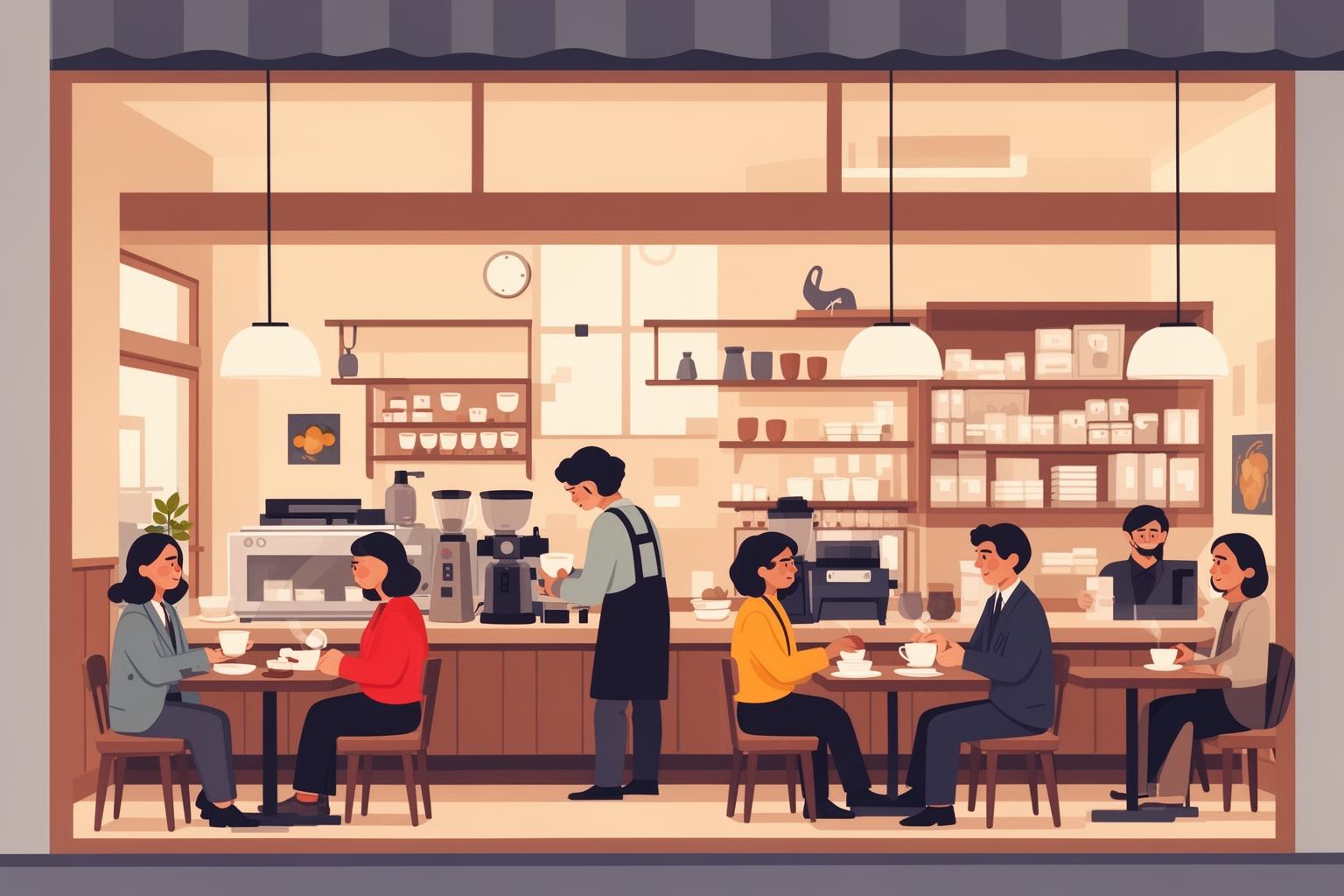
If you want to witness the soul of Osaka commerce in action, you need to order the “Morning Service,” or as it’s popularly called, simply “Morning.” You’ll see it listed on a chalkboard outside, a straightforward promise: order one 400-yen coffee, and you receive a full breakfast included. This isn’t a continental buffet; it’s a thick slice of toasted shokupan, a hard-boiled egg patiently waiting in a basket, and perhaps a small cup of yogurt or a few shreds of cabbage salad. To an outsider, it may seem like a surprisingly generous, almost unsustainable business model. In Tokyo, you’d be lucky to get a thimble of water for that price. But here, it’s the norm. It’s the baseline expectation.
The Unbeatable Logic of Free Toast
This isn’t just a promotion; it’s a philosophy. It embodies the Osaka spirit of akinai, the art of the deal, where value isn’t solely about the lowest price but about the greatest return on investment. People in Osaka are often stereotyped as kechi, or stingy. But that’s a fundamental misconception, a label usually given by people from Tokyo who don’t understand. The truth is Osakans are relentlessly practical. They are ken’yaku, or frugal. They appreciate and demand value. Why pay 400 yen for just coffee when you can have coffee and toast and an egg for the same price? It’s simply smart. It’s efficient. The Morning Service isn’t a gimmick to attract customers; it’s a gesture of mutual respect. The kissaten Master is saying, “I know you have options. Thanks for starting your day here. Have some toast.” In return, the customer offers their loyalty. This simple exchange builds a bond that can last for decades. It’s a daily reaffirmation that in this city, a good deal is a form of good manners, a social contract served on a small ceramic plate.
A Community on a Plate
The breakfast itself is almost deliberately unremarkable. The toast is just toast. The egg is just an egg. But its strength lies in its consistency. It’s a ritual. Every morning, it’s the same. In a world of constant change, in a country that values innovation, the kissaten morning set is a rock of stability. It’s a shared, communal experience that quietly erases social distinctions. The construction worker on his break, the elderly woman meeting her friend, the salaryman reading the sports pages before heading to the office—they all receive the exact same plate. There’s no premium option, no avocado toast upgrade. For a few moments, everyone is on equal footing, partaking in the same simple ritual. This shared foundation, this common ground, is the cornerstone of the neighborhood community. It’s a subtle but powerful force, a daily reminder that everyone belongs to the same local fabric, beginning their day in precisely the same way.
The Kissaten as a “Third Place”: Your Other Living Room
The concept of a “third place,” a social setting distinct from the two usual environments of home and work, is essential to understanding the kissaten. It’s not merely a spot to purchase a product; it’s a place to simply exist. Unlike the sterile, interchangeable lobbies of global coffee chains, the kissaten is deeply personal, shaped entirely by the character of its owner and patrons. It serves as an extension of the neighborhood’s living rooms—a neutral space where connections are built and sustained over decades.
The Master and Their Castle
At the core of every authentic kissaten is the Master. This isn’t a teenage barista wearing a name tag. This is the owner, the operator, the confidant, the gatekeeper. The Master is often a quiet but attentive figure, managing the morning rush with a graceful efficiency honed by countless repetitions. They know who takes sugar, who reads which newspaper, and who’s having trouble with their daughter-in-law. The relationship goes far beyond mere customer service. The Master is a neighborhood fixture, a human anchor. They might greet you with a gruff “Maido” (“Thanks as always”), a classic Osaka merchant’s greeting, or rib you if you’re late. They are keepers of local gossip, the unofficial historians of the block. This personal touch is quintessentially Osaka. In Tokyo, professionalism often means maintaining polite distance; in Osaka, it means closing that distance, showing you’re attentive not just to the customer’s order, but to the customer themselves. It’s a form of care that feels somewhat nosy, a bit blunt, but ultimately rooted in genuine connection.
The Art of Conversation (or Comfortable Silence)
The soundscape of a kissaten is a symphony of the everyday. The clatter of ceramic on saucer, the rustle of newspaper pages turning, the hiss of the coffee siphon, and the constant, low murmur of the morning TV show. Conversations flow thickly in unfiltered Osaka-ben, the local dialect that’s faster, more direct, and more expressive than standard Japanese. You’ll hear candid opinions about the Hanshin Tigers’ latest loss, complaints about the humidity, and detailed takes on a neighbor’s recent home renovation. For a foreigner learning Japanese, it offers the most authentic and challenging listening practice imaginable. Equally important is the silence. The kissaten is a refuge for quiet reflection. You can settle into a booth, savor a single cup of coffee for an hour, and read a book without a single disapproving glance. There’s no rush to consume and leave. The unspoken understanding is that you’re renting the space as much as purchasing the coffee. This relaxed relationship with time is worlds apart from the hyper-efficient, high-turnover cafés of other major cities. It embodies a core Osaka value: life doesn’t always have to be a race. Sometimes, it’s perfectly fine to just sit.
Decoding the Unspoken Rules of the Kissaten Universe
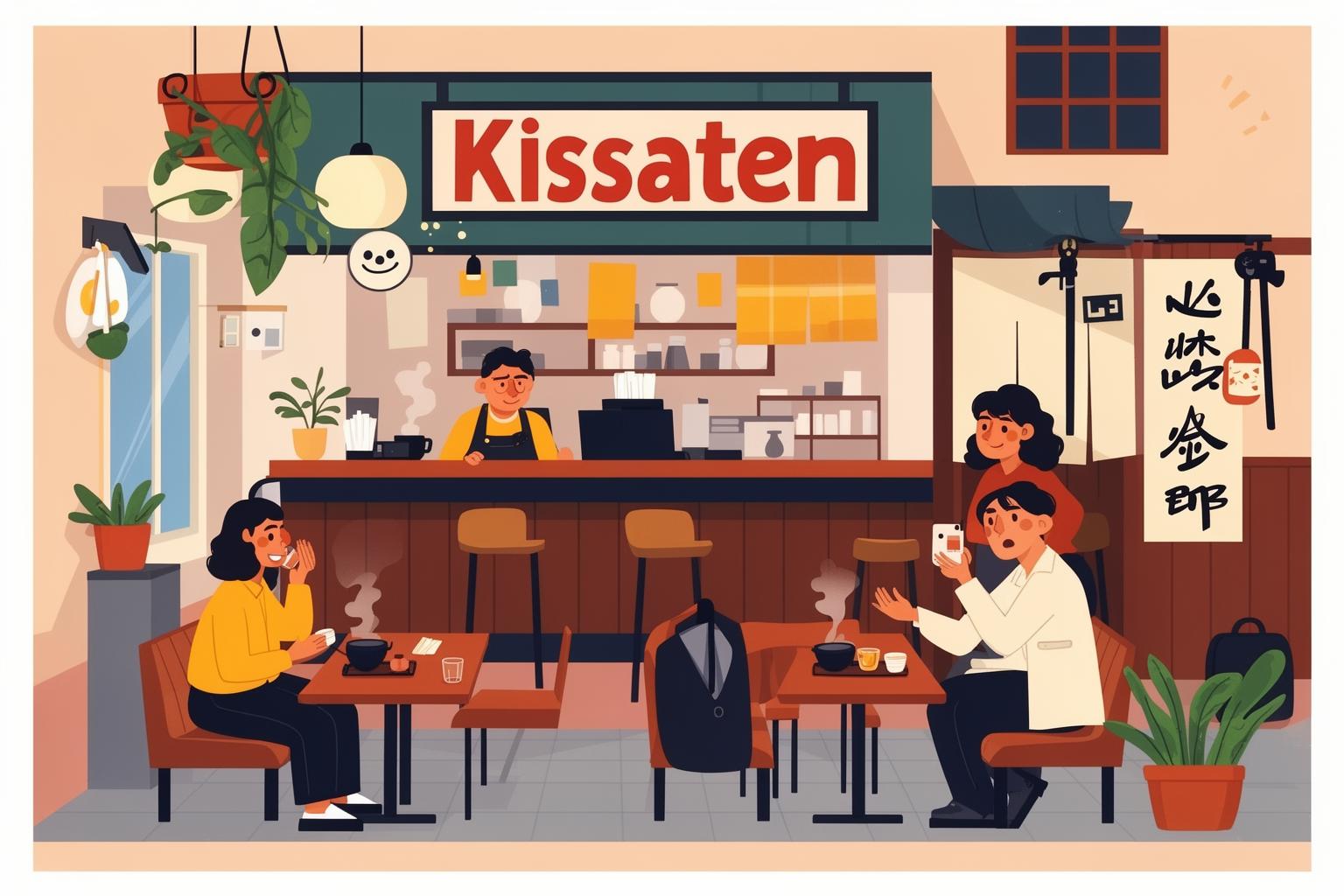
Like any deeply rooted cultural institution, the kissaten follows a set of unspoken rules and subtle signals. It’s a world with its own logic, aesthetic, and social hierarchy. A newcomer might feel as if they’ve entered a private club—and in a way, they have. Yet it’s a club quietly open to anyone willing to observe and honor its rhythms. To truly understand this space, one must look beyond the surface and appreciate the significance behind the worn furniture and smoky atmosphere.
Finding Your Seat, Finding Your Place
Upon entering, you’ll notice the regulars have their usual spots. The elderly gentlemen working on crossword puzzles sit by the window. The group of women who gather every Tuesday choose the round table at the back. These aren’t officially reserved seats, but they might as well be—territories earned through years of loyalty. As a newcomer, you learn to read the atmosphere and select an open, neutral seat. It’s not about exclusion; it’s about respecting an established ecosystem. The decor itself sends a message. It is conspicuously unfashionable. The kissaten isn’t designed for Instagram; it’s designed for comfort and endurance. The dark wood, vinyl booths, and slightly faded artwork all convey a sense of permanence. A foreigner used to the bright, airy style of modern cafes might see an old place in need of renovation. But that misses the point. The kissaten’s aesthetic is a conscious rejection of the transient. It declares, “We have been here for a long time, and we will be here for a long time to come.” It offers a comforting anchor within a constantly changing urban environment.
The Rhythm of the Regulars
The clientele at a neighborhood kissaten offers a genuine snapshot of local life, often leaning toward an older generation. These are not the digital nomads of the laptop era; many don’t even own smartphones. Their social network isn’t online—it’s the people sitting across from them in the booth. Their presence sets the pace for the entire café: slow, deliberate, and unhurried. A morning visit to the kissaten isn’t a rushed stop on the way somewhere else; for many, it is the main event of the morning. This highlights one of the most striking contrasts between Osaka and Tokyo. In Tokyo, the relentless push forward, the feeling that every moment must be optimized, gives way in Osaka to a more relaxed, human-centered tempo. The kissaten stands as a temple to this mindset. It represents a daily, collective resistance to the pressures of modern productivity. What a foreigner might see as a lack of ambition is actually a deeply held belief in an alternative way of living—one that values community and comfort over speed and efficiency.
Why the Kissaten Is the Soul of Osaka
Ultimately, these modest coffee shops are much more than mere businesses selling a product. They function as vital organs of the city, circulating life through the intricate capillaries of its extensive residential neighborhoods. They serve as the cohesive force that binds communities, the keepers of local history, and the classrooms where the city’s true character is revealed. To label them as old-fashioned is to entirely miss their significance. They represent a powerful and lasting response to a very modern issue: the loneliness and anonymity of urban life.
A Buffer Against Anonymity
Living in a sprawling city can be a lonely experience. You might be surrounded by millions of people yet still feel utterly alone. The neighborhood kissaten offers a potent remedy to this. It is a place where your name is recognized, and your presence acknowledged. It provides a casual, low-pressure environment for social interaction that is becoming increasingly rare today. For foreigners, who often find it difficult to break into Japan’s tightly knit social circles, the kissaten can be a crucial entry point. By becoming a regular, you cease to be just an anonymous face in the crowd. You transform into “the American guy who prefers his coffee black” or “the Korean woman who is always reading.” You gain a small but meaningful foothold in the local community. This mirrors Osaka’s broader preference for the tangible and personal. People here tend to trust the familiar face they see daily far more than a faceless brand or far-off bureaucracy. The kissaten perfectly embodies this hyperlocal, person-to-person culture.
More Than a Morning, It’s a Mindset
Thus, the morning ritual at an Osaka kissaten isn’t really about the coffee. It’s not even about the free toast. It’s about reaffirming a specific set of values each day. It’s about celebrating practicality and smart value. It’s about fostering human connections within a physical space. It’s about choosing a slower, more intentional pace in a world that constantly demands speed. It’s about beginning the day feeling rooted in a particular place, among a certain group of people. This is the real Osaka. It’s not always glamorous, and it’s certainly not new. But it is a city with a deep and resilient soul—a soul you can discover in the quiet corners of countless neighborhood coffee shops. If you truly want to understand what drives this city, skip the tourist traps. Find a local kissaten with a weathered sign, order the Morning Set, listen to the conversations around you, and simply be. You’ll learn more in that one hour than you ever could from a lifetime of reading about it.