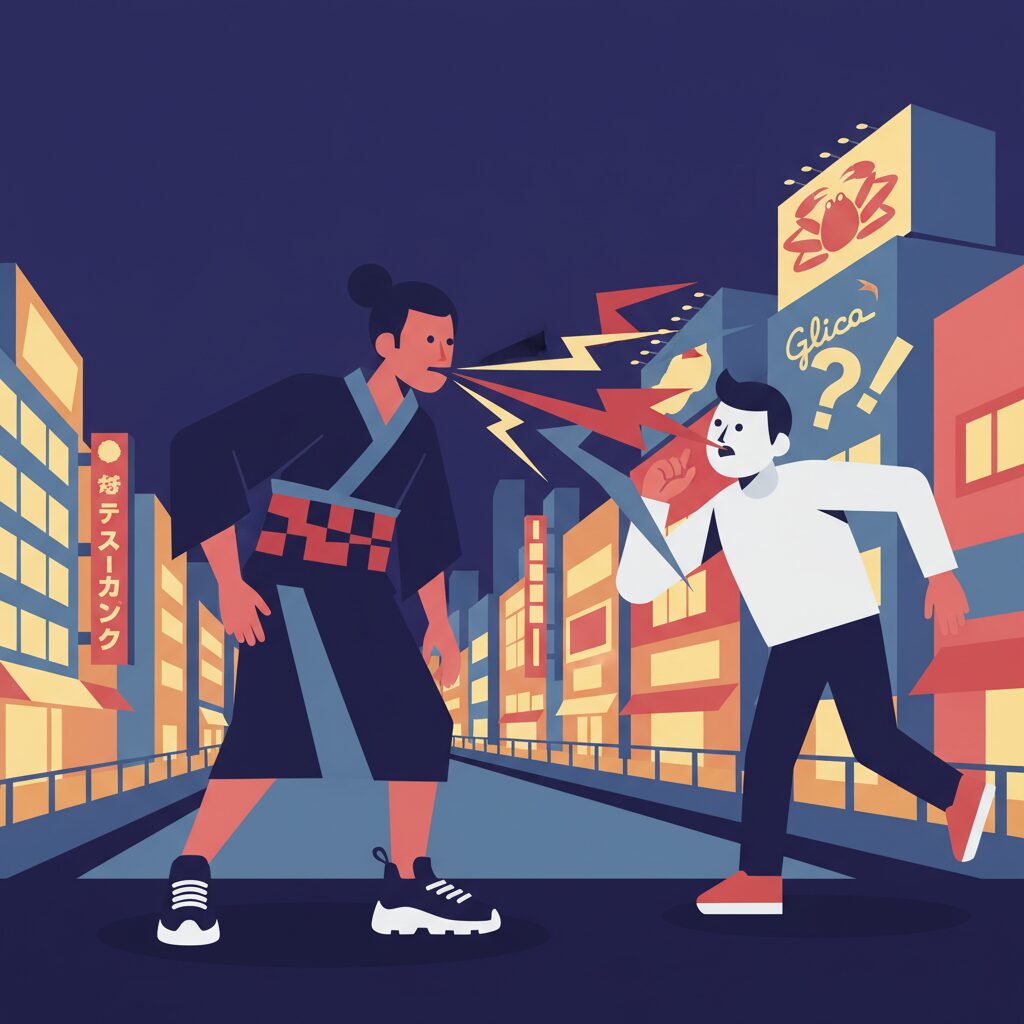
So, you’ve heard the talk. You’ve seen the TV shows where comedians with electric-shock hair and leopard-print shirts shout at each other with gleeful abandon. You’ve been told that Osaka is Japan’s loud, boisterous, in-your-face cousin to prim and proper Tokyo. The stereotype is potent: Osakans are blunt. They say what they think, when they think it, with zero filter. They’ll ask your life story at a bus stop, critique your fashion choices in the checkout line, and use a word that translates to “idiot” as a term of endearment. The question that hangs in the air for anyone considering a life here, beyond the neon glow of Dotonbori and the historic weight of Osaka Castle, is a simple one: Is it true? Is this city a minefield of unfiltered commentary, or is the whole “blunt Osaka” thing just a caricature, a myth polished for entertainment? The answer, like most things in this wonderfully complex city, isn’t a simple yes or no. It’s a reality, but one that’s deeply misunderstood. This isn’t a guide to tourist spots. This is a deep dive into the code of Osaka communication, a look under the hood of a conversational style that feels less like a script and more like a high-energy jazz improvisation. It’s about learning to hear the music behind the noise, the warmth behind the directness, and the profound sense of connection that underpins it all. Before we decode the dialect, let’s get our bearings.
Delving deeper into Osaka’s multifaceted character, exploring its dynamic tachinomi food culture can reveal how the city’s renowned candor is as much a celebrated culinary art as it is a mode of daily communication.
The Osaka Stereotype vs. The Tokyo Standard
To understand what makes Osaka’s communication style feel so unique, you first need a point of comparison. For many, that reference point is Tokyo. The capital functions on a highly intricate system of unspoken rules, a social choreography centered around the concepts of tatemae and honne. Tatemae is the public facade—the polite, harmonious, and often indirect manner of speaking that keeps social interactions smooth. Honne reveals one’s true feelings, usually shared only with trusted friends and family. This system aims to reduce friction in a densely populated metropolis. You may disagree with your boss, but the tatemae requires nodding, saying you’ll think it over, and then venting to your spouse later. It’s not dishonesty; it’s social tact.
Then you come to Osaka. The fine line between tatemae and honne often seems to merge into a single, lively, and sometimes surprisingly candid expression. The image portrayed on television—the fast-talking, animated merchant, the quick-witted comedian—is not entirely exaggerated. It’s an intensified reflection of a genuine cultural characteristic. While a Tokyoite might say, “That’s an interesting perspective, I’ll need to consider it,” an Osakan is more likely to tilt their head, squint, and say, “Why would you do it that way? That makes no sense. Do it this way, it’s quicker.” The intent isn’t to demean; it’s to cut through the fluff and arrive at a practical solution. This difference has historical roots. Tokyo was the city of samurai and bureaucrats, where hierarchy and formality dominated. Osaka was the nation’s kitchen, the city of merchants (shonin), where success relied on sharp wits, quick negotiation, and rapidly building trust. In a marketplace, there’s no time for ambiguity. A deal is a deal, a price is a price, and a bad idea is a bad idea. This merchant spirit still flows deeply through the city, influencing everything from business meetings to casual conversations at a ramen counter.
Deconstructing “Blunt”: What It Is and What It Isn’t
For a foreigner, the word “blunt” often carries a heavy, negative connotation, implying a lack of care, disregard for feelings, or mere rudeness. However, in Osaka, this is rarely the case. The directness you encounter is a complex phenomenon, and understanding its various aspects is essential not only to surviving but truly enjoying the social environment here. It’s not an attack; it’s an invitation. You just need to learn the rules of engagement.
It’s Not Rudeness, It’s Efficiency
Imagine this: you’re in a clothing store in Shinsaibashi. You try on a jacket that honestly doesn’t fit you well. In many places, a salesperson might use gentle encouragement: “It has a very modern silhouette,” or “It’s a unique style.” In Osaka, don’t be surprised if the shopkeeper, a woman in her sixties with perfectly styled hair, takes one look and says, “Nah, that’s no good on you. The shoulders are all wrong. Try this one instead, it’ll match your eyes.” The first time I experienced this, I was shocked. Was she trying to insult me? But then I noticed the genuine concentration on her face as she pulled out another option. She wasn’t being rude; she was being extremely efficient. Her goal wasn’t just to make a sale; it was to make the right sale. She was saving me from buying something I’d regret and sparing herself the hassle of handling a dissatisfied customer. This merchant’s logic—valuing time, honesty, and a good outcome over polite fiction—is everywhere. It’s in the taxi driver who tells you your planned route is unwise because of traffic, and in the restaurant owner who insists you order the grilled fish instead of the tempura because the fish is fresher today. It’s a practicality that may seem abrasive at first, but once you realize it comes from genuine, time-saving helpfulness, it becomes a refreshing form of kindness.
It’s a Shortcut to Connection
In a more reserved culture, building a connection takes time—it’s a slow process of revealing layers, moving from polite small talk to more meaningful conversation. Osakans often see such formality as a barrier, and their directness acts like a bulldozer meant to tear it down as quickly as possible. They want to get to the real stuff, the human-to-human interaction, without the usual preamble. That’s why strangers feel comfortable launching into unexpectedly personal conversations. The little old lady (obachan) next to you on the train isn’t asking where you’re from out of nosiness. She’s trying to find common ground. The question is a tool. You say you’re from Canada. She replies, “Oh, Canada! So cold! You must think Osaka is so hot! Is the food strange here? What do you do for work?” Within a minute, you’re no longer two strangers sitting silently. You are the “Canadian who finds Osaka hot,” and she’s the “local lady giving you tips on surviving the summer.” A bond—however fleeting—has been formed. This desire for connection, called ninjo (human feeling or empathy), is a powerful force here. People want to hear your story. The blunt questions are simply the fastest way to get you to share it. They skip the boring parts to get to the good stuff. It’s a conversational style that says, “Let’s not be strangers. Let’s be real people, right now.”
It’s Wrapped in Humor
This may be the most important element to understand and the one that causes the most confusion. Much of what sounds “blunt” to foreigners is actually a form of humor, deeply rooted in the local tradition of manzai, the Japanese stand-up comedy that began here. At the heart of manzai is the dynamic between the boke (the silly, air-headed one) and the tsukkomi (the sharp straight man who points out absurdities). This rhythm is not just for the stage; it’s the default conversational style for many Osakans. A seemingly harsh comment is often a tsukkomi, and you, as the listener, are expected to join in the play. A classic example is the word aho. In Tokyo, its equivalent, baka, is a real insult — sharp, cold, and meant to wound. But in Osaka, aho is versatile. It can be gentle teasing, a sign of affection, or an icebreaker. If you tell your Osaka friend you spent a fortune on a new gadget, they might laugh and say, “Aho ya na!” (You’re an idiot!). They’re not attacking your intelligence; they’re saying, “You crazy person, spending so much money! That’s hilarious, let’s laugh about this together.” The right response isn’t to get defensive but to return the volley: “I know, right? But look how cool it is!” or “Well, I work hard; I can be an aho sometimes!” Taking the comment literally misses the whole point. You’ve been invited into a playful exchange, a kind of conversational theater. The “insult” is a sign they feel comfortable enough to joke with you—it’s a compliment in disguise.
Navigating Daily Conversations: A Foreigner’s Field Guide
Comprehending the theory is one thing; spotting it in everyday life is another. The Osaka communication style appears in numerous small, daily interactions that can be confusing until you recognize the pattern. It’s a language of engaged, communal living.
The Supermarket Checkout Line
You’re standing in line at a local supermarket like Life or Tamade, your basket filled with ingredients. The woman behind you, a classic Osaka obachan sporting a gravity-defying perm, glances into your basket. “Oh, making nikujaga tonight?” she might say. Before you can respond, she continues, “You’re using that brand of soy sauce? The one over there is on sale and tastes much better. And those carrots look a bit sad. You should have picked the ones from Hokkaido.” This isn’t an invasion of privacy. In her eyes, it’s a public service announcement. She has valuable, life-enhancing information and would feel remiss not to share it with a fellow shopper clearly in need of her wisdom. She is building community, one unsolicited tip at a time. The best approach is to smile and engage. “Oh, really? I’ll have to try that one next time, thank you!” You’ve now made a connection, acknowledged her expertise, and learned something new. You haven’t been judged; you’ve been welcomed into the neighborhood.
At the Izakaya or Local Bar
Step into a small, family-run izakaya in a neighborhood like Tenma or Kyobashi. In Tokyo, you might just get a quiet nod and be left alone. In Osaka, you are fresh meat, and the owner and regulars are thrilled. The shop’s master will likely lean over the counter and, while wiping it down, ask, “Where are you from? Do you live around here? First time here? You should try the doteyaki, it’s the best in the city.” The person next to you will probably join in, and soon you’ll be deep in conversation about your job, your home country’s food, and your thoughts on the Hanshin Tigers baseball team. The questions are direct, the laughter is loud, and the feeling of inclusion is immediate. They’re not prying; they’re welcoming you into their temporary family for the night. This is the essence of Osaka hospitality—not polite and distant, but boisterous, heartfelt, and fully immersive.
Getting Directions on the Street
Asking for directions is a universal experience for travelers, but in Osaka, it turns into an interactive adventure. Stop someone in the maze-like underground mall of Umeda and ask for directions to a specific exit. They won’t just point. They’ll likely begin with a thorough inquiry. “Where are you headed after that exit? Because if you’re going to that building, this exit is actually worse. You should take this route. It looks longer, but you avoid the big intersection. Trust me.” They might then walk you twenty meters in the right direction, all the while giving a running commentary on the shops you pass and asking about your day. I once had a man walk me not only to the correct train platform but also check the timetable with me and suggest which car would be least crowded. The exchange was a whirlwind of information, personal questions, and unsolicited advice. It was also one of the kindest and most genuinely helpful interactions I’ve ever experienced. The directness comes as part of a package: you get the information you need, plus much more you didn’t realize you needed, delivered with an energy that is uniquely Osaka.
The Language of Osaka: Beyond Standard Japanese
The dialect itself, Osaka-ben, plays a central role in the communication style. It’s quicker, more melodic, and often more straightforward than the standard Japanese spoken in Tokyo. Certain words and phrases common here can sound striking to those unfamiliar with them. “Akan” is a frequent example. It’s a brief, sharp word meaning “no good,” “impossible,” or “don’t do that.” While it can come across as very final and harsh, it’s used to describe anything from a major issue to a minor annoyance. “Meccha” replaces “totemo” for “very,” adding extra emphasis and energy. The classic phrase “Nande ya nen” (“Why the hell?” or “What the heck?”) represents the quintessential tsukkomi, used to humorously call out absurdity. Then there’s the previously mentioned “aho.” The warmth embedded in this word cannot be overstated. When your boss pats you on the back after a successful project and says with a grin, “You worried for nothing, you big aho,” it’s a sign of camaraderie and praise. Grasping these nuances is essential. You’re not just learning vocabulary; you’re absorbing the emotional tone of the city.
Is This Style for Everyone? The Honest Answer
Let’s be perfectly clear: this style of communication can be quite exhausting. If you are a private individual, someone who values quiet anonymity, or simply having a day when you don’t want to engage with anyone, Osaka can feel like an overwhelming assault on your senses. The constant interaction, unsolicited advice, and the expectation to always be “on” and ready for banter can be draining. There have been days when I just wanted to buy groceries in peace without a full consultation on the ripeness of my avocados from a complete stranger.
The key is to understand the intention behind it. The bluntness is almost never meant to be malicious. Rather, it stems from a desire to connect, to help, to be efficient, and to share a laugh. It’s a social fabric woven with thicker, brighter threads than you might be used to. Thriving here means learning not to take the directness personally. It means developing a slightly thicker skin and, more importantly, learning to recognize the humor and warmth that are almost always the true underlying message. It’s about realizing that when someone teases you, they are trying to be your friend, and when someone offers unsolicited advice, they are trying to be helpful.
So, is the stereotype of the blunt Osakan a myth? No, it is a reality. But the word “blunt” is an incomplete and often misleading translation. It isn’t bluntness meant to be harsh. It’s a form of radical sincerity. It’s efficiency born from a merchant’s soul. It’s humor that acts as social lubricant. It’s a shortcut to genuine human connection. Living in Osaka is a daily exercise in recalibrating your understanding of communication, learning to value a truth delivered with a laugh over a platitude whispered from afar. It is loud, sometimes messy, and always, without question, human.