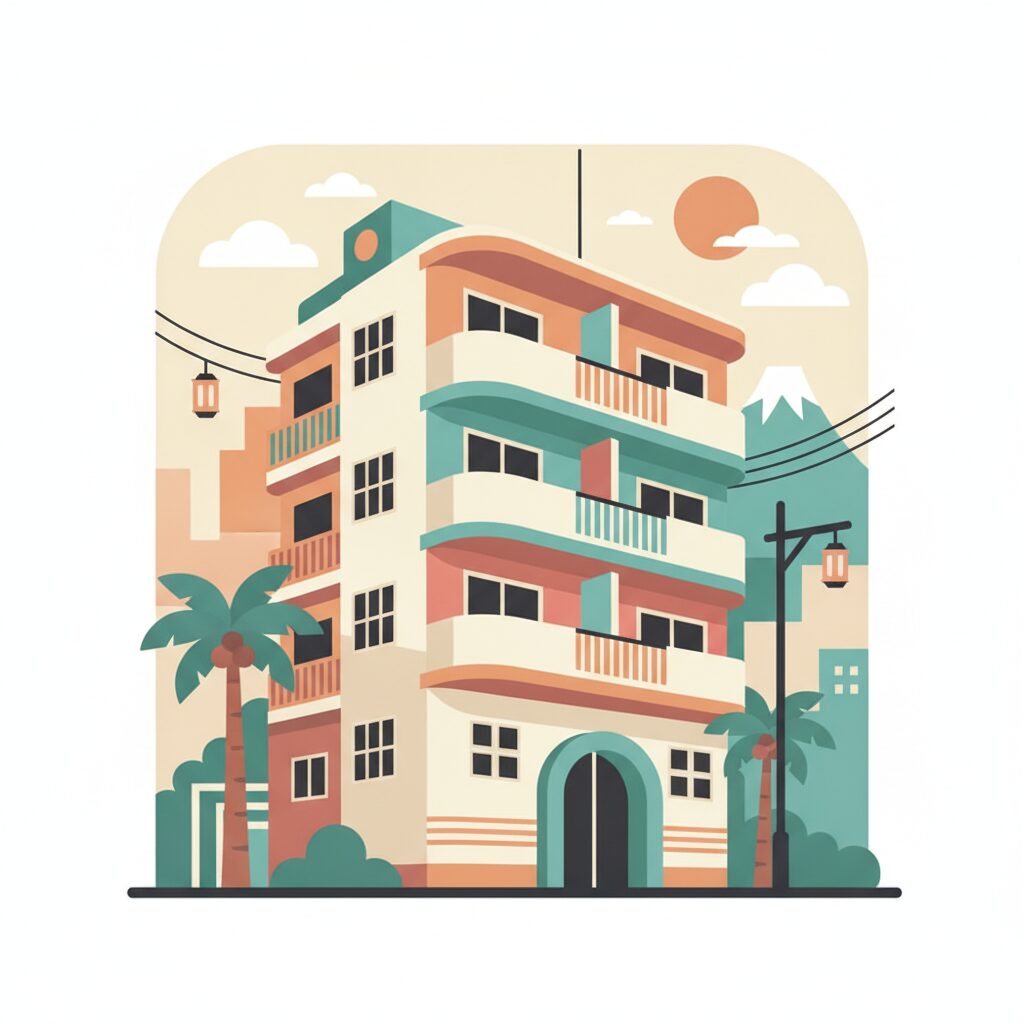
Walk away from the neon glow of Namba, stray from the polished corridors of Umeda’s shopping malls, and you’ll find them. Tucked into the quiet, winding streets of neighborhoods like Showacho, Tengachaya, or even just behind a major thoroughfare in Tenma. They are two-story wooden buildings, their tiled roofs a gentle grey, their timber siding weathered by decades of sun and rain. They stand in quiet defiance of the gleaming white towers and beige-bricked apartment blocks that shoot up around them. You’ve probably wondered what they are, who lives there, and what secrets they hold. These are Osaka’s Bunka Jutaku—the “Culture Houses”—and they are not just buildings. They are a living testament to a different era, a different dream, and a fundamentally Osakan way of life. For the foreigner looking to get beneath the surface of the city, to live a life measured in tatami mats and the rattle of sliding windows instead of elevator rides and automated lobby doors, the Bunka Jutaku is a key. It’s not an easy key to turn, and the door it opens leads to a world of both immense charm and surprising challenges. This isn’t a guide to finding a luxury apartment. This is a guide to finding a piece of Osaka’s soul.
For travelers eager to immerse themselves further in Osaka’s soul, mastering how to use humor to genuinely connect with locals can add a delightful, authentic twist to your journey.
What Exactly is a ‘Bunka Jutaku’? Unpacking the Name
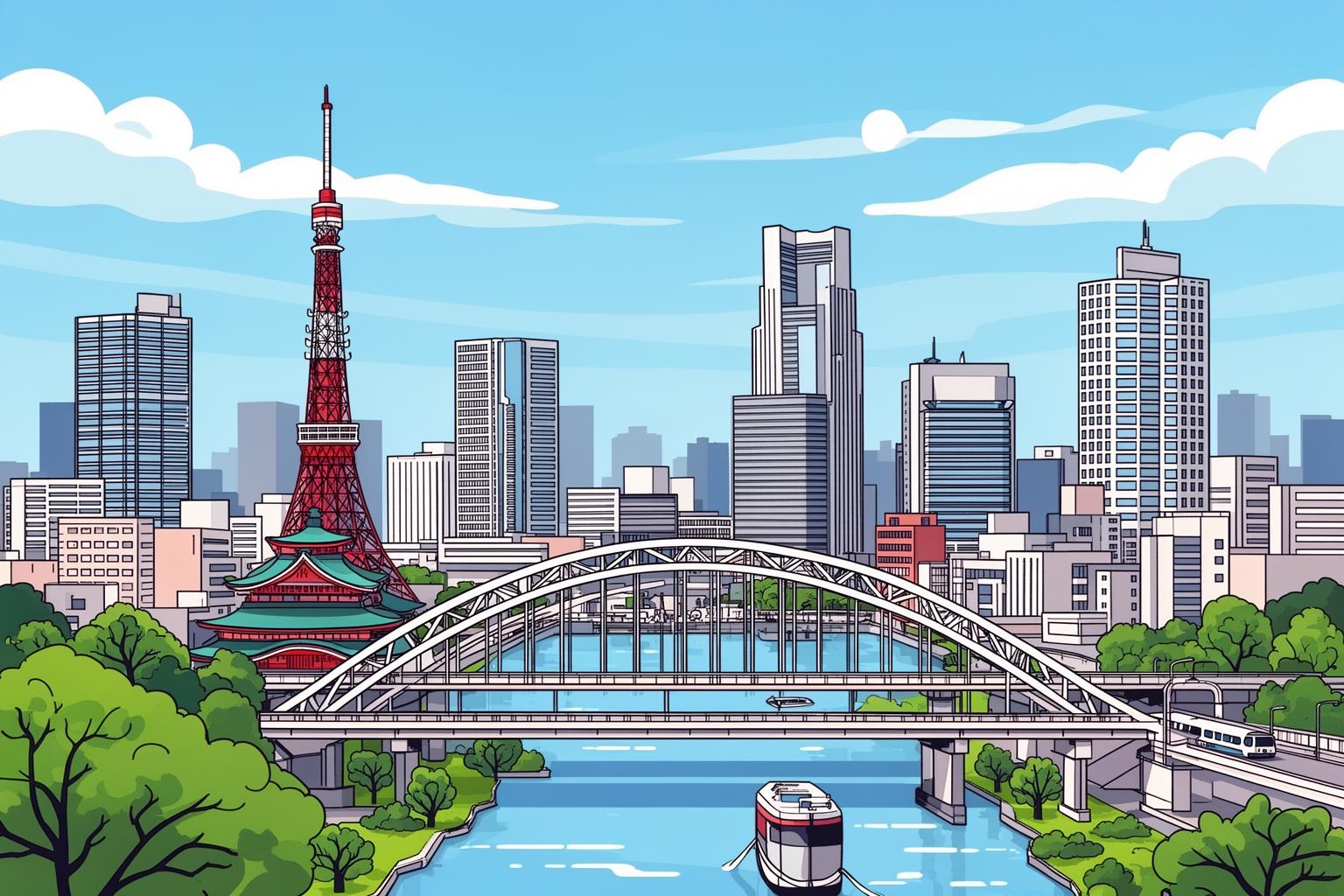
The term 文化住宅 (Bunka Jutaku) itself is a charming example of Showa-era marketing. “Culture House” sounds impressive, doesn’t it? It conjures images of art, literature, and refined living. In reality, they were more modest, but the name reflects the aspirations of the era perfectly. These buildings sprang up throughout Japan, especially in industrial centers like Osaka, during the post-war economic boom of the 1950s and 60s. They represented an evolution from the pre-war nagaya—long, communal row houses where entire families often lived in a single room with shared facilities. The Bunka Jutaku was a revolution in privacy.
The Anatomy of a Culture House
In terms of structure, they follow a consistent design. Most are two-story wooden buildings, featuring a series of compact apartments accessed via a shared external staircase or a central corridor. The apartments themselves are generally small—what we’d now describe as a 1K (one room and a kitchen) or a 1DK (one room with a dining/kitchen area). The key innovation was that each unit was self-contained. For the first time, a working-class family had its own front door, its own small kitchen, and its own toilet. This marked a dramatic shift in the Japanese concept of home. While bathing often still meant a trip to the local sento (public bathhouse), everyday life became private. Architecturally, these homes feature dark wooden beams, tiled kawara roofs, large sliding windows often with wooden frames, and occasionally frosted or patterned glass for a retro touch. They were built quickly and economically, yet showcased woodworking craftsmanship rarely seen in today’s prefabricated homes.
The “Culture” in Culture House
But where does the “culture” come from? It refers to the culture of the modern nuclear family. The Bunka Jutaku was designed to accommodate a husband, wife, and one or two children. It symbolized a shift away from multi-generational, communal living toward a more Western-inspired, individualized lifestyle. Having your own kitchen meant cooking what your family wanted, on your own schedule. Having your own toilet was a luxury in terms of sanitation and privacy. The name itself promised a brighter, more “cultured” future—a lifestyle glimpsed in foreign films and magazines. In Osaka, these buildings became the foundation of the new urban landscape, housing the millions who powered the factories and businesses that made the city an economic powerhouse. They are more than just old buildings; they are the physical embodiment of Japan’s post-war dream.
The Osaka Mindset: Why Practicality and Character Trump Polish
To understand why so many Bunka Jutaku still stand in Osaka while Tokyo continuously demolishes the old to build the new, you need to grasp the city’s fundamental philosophy. Osaka operates on a different system than Tokyo. It’s a city shaped by merchants rather than samurai, and that pragmatic, business-first approach influences everything, including its architecture.
Tokyo Gleam vs. Osaka Grit
In Tokyo, real estate is a high-stakes game driven by brand names, seismic ratings, and property values that resemble the stock market. There is a strong fixation on novelty. Buildings over 30 years old are often deemed outdated and ready for demolition. The “scrap and build” cycle is unending. Foreigners frequently find this surprising, but it’s standard in Tokyo. In contrast, Osaka follows a principle rooted in practical sensibility. An Osakan viewing a 60-year-old Bunka Jutaku might think, “The roof isn’t leaking, the foundation is solid. It still works. Why demolish it?” This isn’t about being cheap; it reflects a deep aversion to waste. There is a real appreciation for things that have endured over time. This city treasures its well-used tools, long-standing neighborhood shops, and buildings rich with stories. The Osakan aesthetic values aji — a term meaning flavor, but also character, patina, and the charm that comes with age. A brand-new, sterile apartment might be comfortable, yet to many, it lacks aji.
“Mottainai” and the Soul of a Building
Central to this mindset is the concept of mottainai. It’s a potent word, often translated as “what a waste,” but it also carries a deeper, almost spiritual regret over wasting something’s potential. Demolishing a perfectly functional building is the ultimate act of mottainai. It means wasting materials, labor, and history. This philosophy explains why you’ll find ancient wooden houses standing beside modern office towers or a tiny family-run okonomiyaki shop operating out of a pre-war building amid high-rises. Where a Tokyo developer sees a plot to be cleared and maximized for profit, an Osaka landlord sees a building that has provided shelter for decades and still serves its purpose. As a foreigner, it’s easy to misjudge this. An old, slightly crooked building might seem neglected or indicate a poor area, but often the opposite is true. It signals a community that values continuity over novelty and function over form. It’s a deliberate choice.
The Reality of Living in a Bunka Jutaku: Pros and Cons
Choosing to live in a Bunka Jutaku is both an emotional and aesthetic choice, yet it requires a clear-eyed awareness of practical realities. It’s a trade-off: exchanging modern comfort and convenience for character, community, and cost savings. For some, it’s the best deal in town; for others, it’s a romantic notion that quickly fades.
The Unbeatable Charm: What You’ll Love
First, the rent. This is the biggest attraction. You can often rent a Bunka Jutaku apartment for a fraction of the cost of a modern equivalent in the same area. In Osaka, where disposable income is best spent on food, drink, and experiences, this is a huge benefit. Second, the character is undeniable. If you appreciate Showa-era design, you’ll be delighted. The feel of tatami underfoot, the soft light filtering through a shoji screen, and the unique texture of an old tiled kitchen are things you won’t find in modern, mass-produced apartments. The layouts can also be more interesting. Instead of a single, sterile box, you might have a small veranda for drying laundry, a tokonoma alcove for displaying art, or a more traditional separation of spaces. Finally, there’s the sense of community. In concrete high-rises, you might live for years without exchanging a word with your neighbors. In a Bunka Jutaku, that’s almost impossible. Thin walls and shared spaces foster a quiet awareness of each other’s lives. This isn’t about being nosy; it’s about a shared existence. It’s the quiet nod in the morning, sharing vegetables from a balcony garden, the feeling of belonging to a small, interconnected ecosystem.
The Cold, Hard Truths: What You’ll Endure
Now, the downsides. And they are considerable. Let’s call them the Four Horsemen of Bunka Jutaku living. First is the cold. These buildings were built before insulation was common. The single-pane glass windows are beautiful but act as thermal sieves. Winter is a constant battle. You’ll become well-versed in the merits of various space heaters, the life-saving warmth of a kotatsu (a heated table with a blanket), and the art of layering clothes indoors. Second is noise. The walls are thin. You’ll hear your neighbor’s television, phone calls, and baby crying—and they’ll hear you. If you need silence and privacy, this lifestyle isn’t for you. Third is bugs. Old wood has gaps, which invite insects. Expect to encounter spiders, cockroaches, and the fearsome mukade (giant centipede). It’s manageable with precautions but unavoidable. Fourth is outdated facilities. Although some units have been renovated, you may still come across a squat toilet, a bathroom separated from the toilet by a tiny room, a charming but functionally limited kitchen with minimal counter space and a gas stove that you must light manually, and hot water supplied by an external gas-powered boiler that you need to turn on and off for each use. These aren’t deal-breakers for everyone but do require significant adjustment from modern standards.
The Hunt: How to Find and Secure a Bunka Jutaku
So, you’ve considered the pros and cons and decided that the retro lifestyle suits you. How do you go about finding one? You won’t find “Bunka Jutaku” listed as a search category on major real estate sites like Suumo or Homes. The search requires a more traditional approach.
Keywords and Real Estate Agents
Your best bet is to visit a local, neighborhood real estate agent (fudosan-ya). Avoid the large, polished offices in the city center and look for a small, family-run shop in the residential area you want. These agents often have personal connections with landlords of older properties, many of whom don’t bother with online listings. When speaking with the agent, be clear and specific. Let them know you’re looking for an older, Showa-era apartment. Use terms like レトロ (retoro) and 味がある (aji ga aru – “has character”). A crucial phrase is 築年数不問 (chiku nensuu fumon), meaning “age of building is not important.” This tells them you’re not a typical client and that you appreciate qualities beyond modernity. This often excites agents, as they can then show you interesting, quirky properties that many overlook.
The Foreigner Factor: Overcoming Hurdles
Prepare for some hesitation. Landlords of older properties are often elderly and may be cautious about renting to foreigners. Their concerns tend to be practical: Will there be language barriers if issues arise? Do they understand the complicated garbage sorting rules? What if they suddenly break the lease and leave the country? Success comes from being well-prepared and reassuring. Have all your documents ready: your residence card, a certificate of employment, and proof of income. A Japanese bank account is essential. The most important asset is a guarantor company (hoshou-gaisha). Most rentals require one anyway, but for older landlords, it’s a non-negotiable guarantee that ensures rent payment. When you visit the property, sincerely appreciate its unique qualities. Show that you understand the compromises and are enthusiastic about its character. Assure the agent and landlord that you are a quiet, responsible tenant planning to stay long-term. Your attitude can make all the difference.
Living the Bunka Life: How to Thrive, Not Just Survive
Moving into a Bunka Jutaku is just the first step. Thriving in one demands a change in mindset and daily habits. It’s about embracing the limitations and adopting a more analogue lifestyle.
Embracing the Seasons
Rather than resisting the building’s lack of modern climate control, you learn to adapt to it. In summer, you’ll master the art of cross-ventilation by opening windows on opposite sides of the apartment to catch the breeze. You’ll hang sudare (bamboo blinds) outside the windows to block harsh sunlight while still allowing air to circulate. In winter, the kotatsu becomes the center of your world. Your social and relaxation time will revolve around this magical heated table. You’ll invest in thermal curtains, cozy slippers, and warm fleece clothing. Instead of heating the entire apartment, you warm yourself. It’s a more focused and ultimately more energy-efficient way of living.
The Sound of Silence (and Not-So-Silence)
Living with thin walls is a two-way street. You must be mindful of your own noise, especially late at night. Use headphones for music or movies. Be aware of when you run the laundry or vacuum. But you also learn to accept the ambient sounds of the community as part of the experience. It’s the chime of the local school, the melodic horn of the tofu vendor, the distant click-clack of the train tracks. These aren’t interruptions; they form the soundtrack of your neighborhood. You learn to tune out your neighbor’s television and tune into the rhythm of life around you.
Neighborhood Etiquette and Building Community
This is where living in a Bunka Jutaku truly connects you to the real Osaka. When you move in, a simple introduction to your immediate neighbors is essential. You don’t need to bring an expensive gift; just knock on the door, bow politely, and say, “Hajimemashite, tonari ni hikkoshite kimashita. Yoroshiku onegaishimasu.” (“Nice to meet you, I’ve just moved in next door. I look forward to being your neighbor.”) This small gesture breaks down barriers and establishes you as part of the community, not just a temporary resident. The most important rule is mastering the garbage disposal system. Learn the schedule for burnables, plastics, cans, bottles, and oversized items, and sort everything perfectly. Failure to do so is the leading cause of neighborhood disputes. By showing respect for these shared rules, you earn respect in return. And that respect comes back in small, wonderful ways—an extra bag of oranges left at your door, a friendly chat while hanging laundry, a recommendation for the best ramen nearby. This is the famous Osaka friendliness at its truest. It’s not loud or flashy; it’s a quiet, practical, and deeply felt sense of mutual responsibility, born from living together in the beautiful, imperfect, and utterly soulful Culture Houses of Osaka.