The air hangs thick and sweet with the ghosts of a million cigarettes and the rich, dark aroma of Sumiyaki charcoal-roasted coffee. It’s 8 AM in a back-alley kissaten somewhere deep in Osaka’s urban sprawl. The clatter of ceramic on saucer, the rustle of a newspaper, the low hum of a television reporting the day’s headlines—this is the city’s morning symphony. At the heart of it all is the mōningu sābisu, or the “Morning Set.” It’s not just breakfast; it’s a sacred pact between the shop owner and the customer, a cornerstone of daily life built on the unshakeable Osaka principles of value and efficiency. For the price of a single cup of coffee, you get a thick slab of toasted shokupan, a hard-boiled egg, and a tiny side salad. It’s a perfect system. A beautiful, delicious, and incredibly rigid system. But what happens when you, a foreigner navigating this intricate city, can’t partake in the ritual? What if dairy and gluten are off the table? This isn’t just a quest for a suitable breakfast. It’s a journey into the heart of Osaka’s mindset, a test of its famed flexibility, and a lesson in how this city really works, one awkward request at a time.
Although adapting to Osaka’s specific breakfast routines may require some ingenuity, discovering the city’s vibrant after-hours culture through kaku-uchi bars further illustrates its remarkable ability to blend tradition with innovation.
The Unspoken Contract of the Osaka Morning Set
First, you need to understand that the Morning Set isn’t a menu item. It’s a deal—an economic proposition that embodies Osaka. In a city obsessed with kosupa—cost performance—the morning set reigns supreme. It’s the concept of receiving something almost for free. You pay for the coffee, priced around 400 or 500 yen, and the food simply… appears. This isn’t an à la carte experience where you customize your perfect plate. It’s a pre-packaged, time-honored, and ruthlessly efficient bundle of morning fuel.
The Anatomy of a Classic Set
The centerpiece is nearly always the toast. Not some flimsy slice of sandwich bread, but a proud, thick-cut piece of fluffy white shokupan, toasted to a perfect golden brown. It arrives already spread with either butter or margarine—a shiny layer of fat essential to the flavor profile. Accompanying it is a single hard-boiled egg, sometimes still warm in its shell, other times peeled and ready. There might be a small heap of shredded cabbage dressed lightly, or a spoonful of potato salad. That’s it. Simple, quick, and consistent. The owners of these small, often family-run kissaten have perfected the craft of producing dozens of these sets between 7 AM and 11 AM. It’s a rhythm of popping bread into the toaster, fetching eggs from a basket, and pouring coffee—while chatting with regulars. The system is the service.
More Than Food: A Cultural Fixture
This is about more than just a cheap meal. It’s a communal ritual. You see elderly men reading the horse racing section of the paper, office workers fueling up before heading to the nearby station, and local shopkeepers taking a quick break. The Morning Set anchors their routine. It symbolizes stability. It’s a piece of Showa-era culture that stubbornly resists change, and that’s precisely its charm. It stands as a testament to the Osaka belief in doing one thing well and offering it at a price that makes people feel clever for buying it. It’s a small, daily victory in the pursuit of good value.
When ‘Custom’ Crashes the System
So, imagine this: you, with your dietary restrictions, walk into this well-oiled machine. You’re not trying to be difficult—you just can’t have the bread or butter. You wait patiently for the owner to approach and politely make your request. “Morning set, please. But no toast. And black coffee, no milk.” This is where culture really hits the ground. The request seems straightforward to you, but to the system, it’s a major glitch. You’ve just asked the conductor to play a note that isn’t written in the symphony.
The Three Classic Reactions
Over time, I’ve noticed that responses to such requests typically fall into one of three categories, each reflecting a different side of the Osaka personality.
The Blank Stare and System Reboot
The most common reaction is a brief moment of silent confusion. The owner, often an older man or woman who’s been preparing this same set for decades, simply freezes. Their mind tries to process an illogical command. “No toast?” they repeat, not as a question, but like debugging a piece of code. “But… the toast is the set.” This isn’t rudeness—it’s genuine bafflement. You’ve broken the unspoken agreement. You’ve asked for the set but without its core component. In their perspective, it’s like trying to buy a car without an engine. The price covers the whole package; removing something doesn’t lower the cost—it just breaks the deal. Usually, they’ll just say, “Okay, the price stays the same,” and bring out a sad-looking plate with only an egg and a small salad.
The Direct and Efficient ‘Muri’
The second reaction is pure Osaka. A quick, sharp, but not unfriendly, “Ah, muri, muri.” Impossible. It can’t be done. There’s no long apology like you might find in Tokyo, where staff might bow repeatedly and express regret for minutes. The Osaka approach is ruthless efficiency. “We can’t do that.” Period. It might feel abrupt at first, but you soon realize it’s not personal—it’s practical. They know their system. They understand that custom orders slow things down, confuse the small kitchen, and disrupt the flow for regular customers. The blunt “no” is actually a sign of respect for their process and everyone’s time. They’re not there to provide a tailored experience; they’re there to handle the morning rush. Take it or leave it. No hard feelings.
The Creative Problem-Solver
And then there’s the third reaction—the one that brings you back. This is where the famed Osaka flexibility and warmth shine. The owner’s eyes light up at a challenge. “No bread, huh? Allergy or something?” they ask, curiosity sparking. “Alright, alright. Hmm. How about some extra fruit instead? Or an extra egg? Wait a second.” They disappear into the back and return with something completely off-menu—a small bowl of yogurt (if dairy is allowed), some sliced banana, or maybe even a small onigiri if they have one handy. This embodies the nantoka naru spirit—”we’ll figure it out somehow.” This is the person who sees you not as a problem but as an intriguing puzzle to solve. They take pride in their ability to improvise and please a customer, even if it means bending their own rules.
Why Osaka is Different from Tokyo in the Morning
This whole scenario is markedly different from what you’d encounter in Tokyo. In Tokyo, particularly in fashionable areas like Daikanyama or Omotesando, cafe culture is decidedly international. Menus are crafted with customization in mind. Oat milk, almond milk, soy milk—they are all standard options. Gluten-free bread or pastries are frequently available. Staff are trained to accommodate dietary requests with smooth, corporate efficiency. It’s straightforward. It’s convenient. And it’s completely anonymous.
Osaka’s neighborhood kissaten scene follows a different logic. It’s not about embracing global trends; it’s about serving a local community. The focus isn’t on creating a frictionless customer experience for a transient clientele; it’s on preserving a familiar, comforting space for those who live and work there. The resistance to change isn’t a flaw; it’s a defining feature. It’s what maintains the unique, time-warped charm of these establishments. In Tokyo, you are a customer being served. In an Osaka kissaten, you are a guest in someone’s space, expected to follow their rules—until you become a regular and those rules begin to loosen.
This is where many foreigners get it wrong. They confuse rigidity with poor service. But it’s not about service in the Western sense. It’s about a deeply ingrained cultural preference for consistency, value, and community over individual customization. While the city offers countless modern cafes that will cater to every need, the soul of its morning culture lives in these older places that steadfastly protect their identity.
Navigating the Maze: A Practical Guide for the Gluten-Free and Dairy-Averse
So how can you survive and thrive in this environment? It’s about adjusting both your strategy and your expectations. You need to learn to read the room and pick your battles wisely.
Know When to Hold ‘Em, Know When to Fold ‘Em
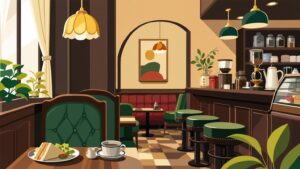
First, develop a sense for the type of place you’re entering. If it’s a small shop with dark wood paneling, velvet chairs, and an owner who seems to have been there since the 1960s, don’t attempt to customize the Morning Set. It’s a futile effort. Instead, order a black coffee and simply soak in the atmosphere. The experience itself is the main attraction. For your dietary needs, plan to eat before or after. However, if you encounter a slightly more modern café, perhaps run by a younger generation, your chances of success rise significantly. They are more likely to understand and accommodate different dietary lifestyles.
Master the Language of Necessity
Learning a few essential phrases can make a huge difference. Your pronunciation doesn’t need to be perfect; what matters is the effort.
- For dairy: “Nyūseihin nashi de onegaishimasu.” (No dairy products, please.) You can also be more specific: “Batā nuki de onegaishimasu.” (No butter, please.)
- For gluten: This is trickier since “gluten-free” is not a common concept in older establishments. It’s better to describe it as an allergy. “Komugi arerugii ga arimasu.” (I have a wheat allergy.) This phrasing is more likely to be understood and taken seriously.
Hunt for Alternative Menus
Your best approach is often to avoid the toast-based Morning Set altogether. Look out for places that offer a Wafū Mōningu (Japanese-style Morning Set). This option is a game-changer. It usually includes a bowl of rice, a bowl of miso soup, a piece of grilled fish, and some Japanese pickles (tsukemono). It’s naturally dairy-free and, if you’re careful with the soy sauce in some dishes, largely gluten-free. It’s a delicious, satisfying, and culturally authentic way to start the day. Other establishments might simply have onigiri (rice balls) or other rice-based items on their regular menu that you can order in the morning.
The Payoff: When You Find Your Spot
The journey can be frustrating, marked by misunderstandings and plates of lonely boiled eggs. But then, one day, it happens. You find your place. Maybe it’s a shop where the owner, having seen you a few times, begins placing your black coffee on the counter before you even order. Maybe it’s the spot where the obachan took your “no toast” request as a personal mission and now proudly serves you a custom plate of fruit and a small salad without you needing to ask.
This is the ultimate reward. It’s not about discovering a cafe with a perfect menu. It’s about building a human connection. In Osaka, loyalty goes both ways. Once you become a regular—a jōren-san—you’re no longer an outsider with tricky requests. You’re woven into the fabric of the place. The initial bluntness and stiffness give way to a deep, unspoken warmth and a genuine desire to take care of you. You’ve broken through the system and been embraced. And that feeling—of being recognized, belonging, and having your own little corner in the vast, chaotic, and wonderful city of Osaka—is more rewarding than any slice of gluten-free toast you could ever find.