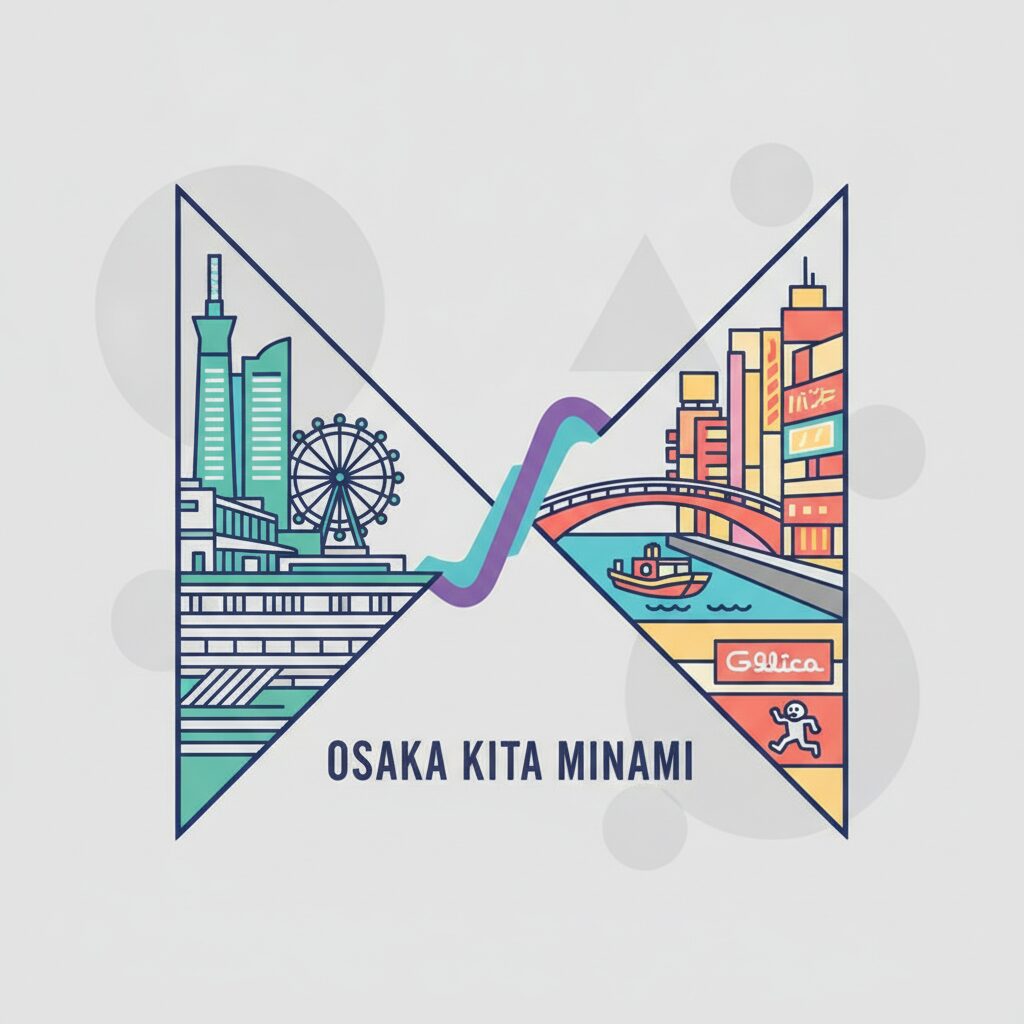
When you first tell people you’re moving to Osaka, the advice comes pouring in. But after you’ve been here a minute, the real question emerges, the one that sorts you, defines you, and places you on the city’s invisible chessboard: “So, are you a Kita person or a Minami person?” This isn’t just about geography; it’s a personality test, a lifestyle choice, a declaration of urban allegiance. Forget Tokyo’s sprawling, multi-centered identity, where you might be a Shibuya type or a Ginza type. Osaka’s soul is a powerful magnet, a bipolar force field aligned along a single, pulsing artery: the Midosuji subway line. At the north pole, you have Kita, centered around the sprawling Umeda station complex. At the south pole, you have Minami, the chaotic, neon-drenched universe of Namba and Shinsaibashi. Living here means understanding that these aren’t just places on a map. They are two different philosophies on how to live, work, and play in Japan’s most spirited metropolis. To truly get Osaka, you have to understand the current that flows between them, and decide which way you’re swimming.
Exploring the cultural intricacies of Osaka goes beyond just the Kita and Minami divide, as understanding local neighborhood associations can further illuminate the city’s unique community dynamics.
The Tale of Two Cities: Defining Kita and Minami
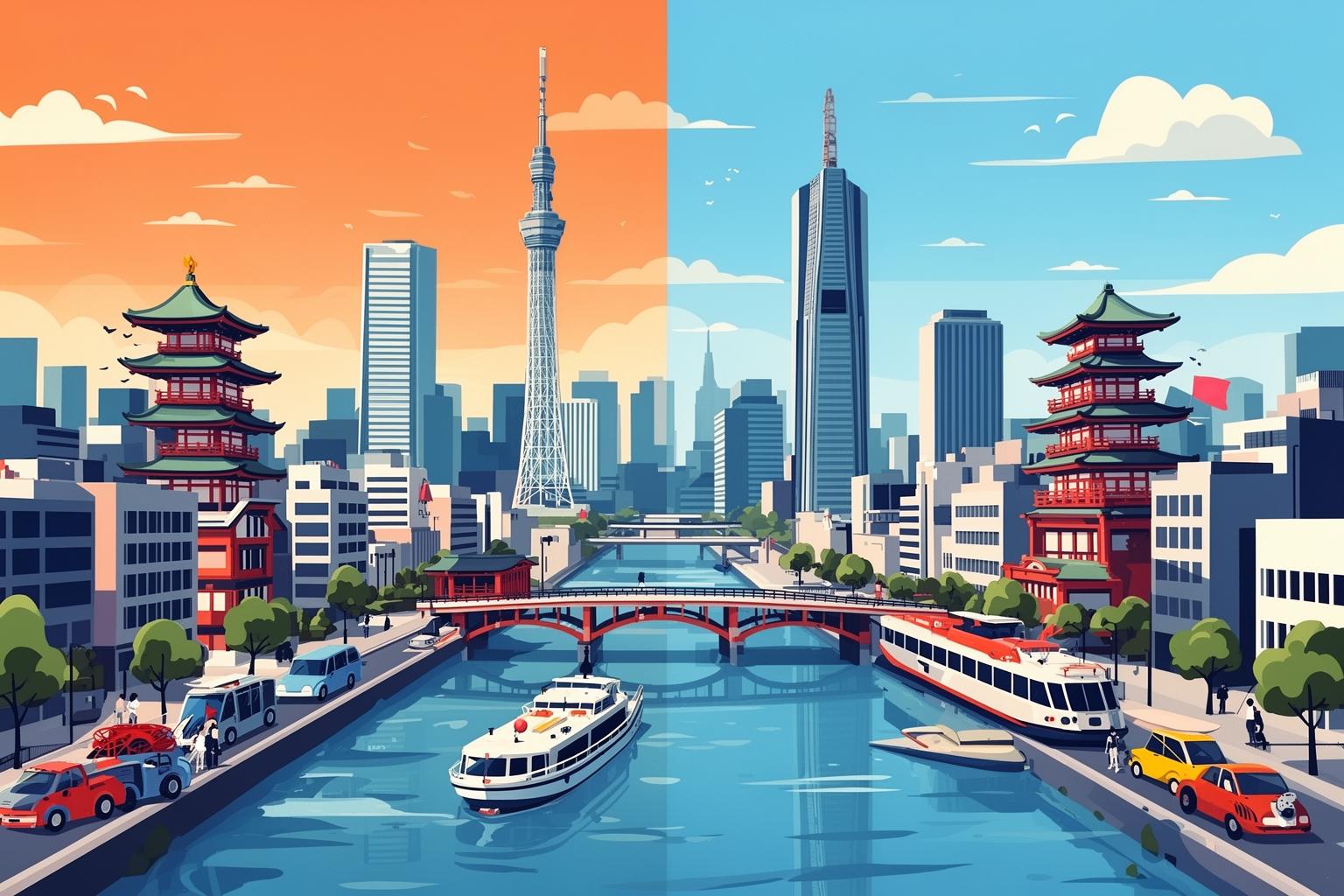
To understand Osaka, you first need to grasp its two distinct faces. These are not competitors like sports teams but rather two aspects of the same intricate coin. One face is the image it projects to the world of international business—calm, composed, and impeccably dressed. The other reveals its genuine, unfiltered nature—vibrant, unruly, and brimming with creative energy that cannot be restrained. Deciding where to spend your time, or even where to live, often depends on which of these energies connects with your own spirit.
Kita: The Refined Face of Commerce
Step off the train at Umeda Station, and you find yourself immediately in Kita. This is Osaka dressed in a tailored suit. It’s the city’s economic hub, a sparkling district filled with glass skyscrapers, luxury department stores, and upscale hotels. The atmosphere here feels different—more rarefied, more deliberate. Kita is where national and international corporations are headquartered, where deals happen over expensive bento meals in quiet restaurants, and where the city adopts its most polished and professional persona. The urban landscape reflects this with wide, clean boulevards, intricately designed underground shopping arcades forming a true labyrinth, and public spaces adorned with sleek modern art.
The people you encounter in Kita embody this environment. During the day, they are a sea of salarymen and office ladies, moving briskly and efficiently in a manner reminiscent of Tokyo. They navigate the complex JR Osaka, Hankyu, and Hanshin stations with practiced ease, their expressions focused. On weekends, the crowd shifts to affluent shoppers gliding through Hankyu Umeda, arguably Japan’s most beautiful department store, or families enjoying a carefully curated experience at Grand Front Osaka. The atmosphere is aspirational, portraying modern urban success. Social interactions here tend to be more reserved, at least by Osaka’s standards. The typically boisterous Osaka personality remains but is softened, expressed with sharper, drier wit in the upscale bars of Kitashinchi, the district’s exclusive entertainment area. Life in Kita feels planned, purposeful, and refined. It serves as the city’s impressive, powerful front office.
Minami: The Raw, Pulsing Heart of Culture
Travel just a few stops south on the Midosuji line, and you enter a completely different world. Welcome to Minami. If Kita is Osaka’s brain, Minami is its untamed, unapologetic, pulsating heart. This is the Osaka of popular legend—a magnificent sensory overload of neon lights, noise, and humanity. Centered around Namba, Shinsaibashi, and the iconic Dotonbori canal, Minami is where Osaka’s raw creative spirit is born and vividly displayed. It’s a hub of grassroots culture, street fashion that’s years ahead of magazines, and an unrelenting pursuit of pleasure.
This neighborhood presents a chaotic mosaic of sights, sounds, and smells. Giant mechanical crabs and pufferfish adorn building facades, video screens flash advertisements from every angle, and the aroma of grilled octopus and fried noodles fills the air. Instead of broad boulevards, there are narrow, covered shopping arcades like Shinsaibashisuji, crowded with throngs of shoppers, and even narrower back alleys like Hozenji Yokocho, where moss-covered temples sit nestled among tiny traditional eateries. Amerikamura, or “Amemura,” is the epicenter of youth culture, where skaters practice tricks and aspiring musicians perform for anyone who will listen. The people of Minami form a lively mix of artists, entrepreneurs, students, and tourists, all attracted by the area’s infectious energy. Fashion here is bold and experimental, and the atmosphere promotes acceptance and individuality. Interactions are direct, loud, and humorous—the shopkeeper shouting a friendly joke across the street is commonplace. Minami is spontaneous, genuine, and vibrantly alive. It’s where Osaka lets loose and reveals its true, beautifully chaotic colors.
The Midosuji Line: Osaka’s Cultural Artery
The eight-minute subway ride on the Midosuji Line between Umeda (Kita) and Namba (Minami) is more than just transportation; it represents a journey across a cultural divide. This single subway line forms the backbone of the city, the artery linking its two distinct personalities. Every day, hundreds of thousands of Osakans travel this route, effortlessly moving between these two worlds. The stations themselves tell the tale. You begin at the expansive, modern Umeda, pass through Yodoyabashi and Hommachi—the city’s central business district, a kind of neutral zone where Kita’s seriousness starts to merge with the commercial buzz hinting at Minami—and then arrive at Shinsaibashi, with its direct access to high-fashion brand stores and the sprawling shopping arcade, before finally reaching the vibrant chaos of Namba. Understanding this daily migration is essential to grasping the fluid nature of the Osaka identity.
Crossing the Boundary: Code-Switching in Osaka
One of the most intriguing aspects of daily life here is watching how Osakans themselves navigate the Kita-Minami divide. It’s a form of social code-switching. During the day, a person might work as a buttoned-up employee in a Nakanoshima office tower, speaking formal Japanese and following strict corporate protocols. But when five o’clock arrives, they might board the Midosuji line, head south, and change completely. The suit jacket comes off, the tie loosens, and by the time they order their first highball in a standing bar in Ura Namba, their speech broadens, their laughter grows louder, and their demeanor shifts from Kita’s professionalism to Minami’s warmth and conviviality.
This isn’t about being insincere; it’s about being adaptable, a skill highly valued in Osaka. The city’s identity is not uniform. It embraces both the ambition of Kita and the soulfulness of Minami. The quintessential Osakan is someone who thrives in both worlds. They recognize that the polite, measured tone used with a client at a cafe near Osaka Station differs from the boisterous, self-deprecating banter shared with a stranger over a plate of kushikatsu in Shinsekai. This duality can be confusing for outsiders, especially those from Tokyo, where social personas tend to remain more consistent across different districts. But in Osaka, this ability to switch gears reflects social intelligence. It proves a deep understanding of the city’s unwritten rules: that there is a time and a place for business, and a time and place to relax, and in Osaka, those places have names—one called Kita, and the other called Minami.
Beyond the Stereotypes: Where Do You Actually Live?
So, when it comes to the practical question of choosing a neighborhood, the Kita vs. Minami framework is your go-to starting point. It’s not merely a choice between skyscrapers and neon lights. The residential areas surrounding these two hubs present a fascinating range of lifestyles, blending the traits of their central districts with unique local nuances. Your neighborhood choice will subtly influence your daily city experience, from your morning coffee run to your weekend adventures.
Life in the North: Convenience and Calm
Living near Kita doesn’t mean residing in a corporate high-rise. The nearby residential neighborhoods offer a compelling mix of urban convenience and unexpected charm. Take Nakazakicho, a labyrinth of narrow lanes just a ten-minute walk from the Umeda skyscrapers. Here, old wooden houses are transformed into quirky vintage shops, independent art galleries, and cozy, sunlit cafes. It feels like a bohemian village hidden in plain sight, providing a peaceful, creative retreat right next to the city’s major transport hub. Then there’s Tenma, known for one of Japan’s longest shopping arcades and a vibrant density of delicious, affordable restaurants and izakayas. By day, it’s a local life hub; by night, its lantern-lit alleys come alive with office workers and food enthusiasts. Fukushima, just one train stop from Umeda, has blossomed as a culinary hotspot, packed with innovative restaurants and wine bars. Choosing to live in the north often comes down to practicality. You’re connected to everything. The Shinkansen, trains to Kyoto and Kobe, and the airport limousine bus are all easily accessible. It’s a life of efficiency and access, with pockets of authentic local culture waiting to be explored.
Life in the South: Grit and Community
To live near Minami is to immerse yourself in the city’s cultural current. The neighborhoods here feel more organic, more lived-in. Horie, once a furniture district, has evolved into Osaka’s answer to Daikanyama—a stylish enclave of independent fashion boutiques, third-wave coffee shops, and design stores, all centered around a pleasant park. It attracts a creative, fashion-conscious crowd who appreciate aesthetics and a laid-back lifestyle. Nearby is Shinmachi, offering a slightly more mature, family-friendly vibe with a similar creative spirit. You’ll find excellent bakeries, organic grocers, and a strong local community feel. Further south, the area around Tennoji is quickly becoming Osaka’s “third core.” With the towering Abeno Harukas skyscraper, the expansive Tennoji Park, and the charmingly retro Shinsekai district close by, it presents a unique mix of old and new. Life in the south is more neighborhood-focused. You’re more likely to know your local shopkeepers, come across a street festival, and experience the city’s pulse from the ground up. It calls for an appreciation of a bit of grit and a love for the dynamic energy that makes Minami so captivating.
The Tokyo Comparison: Why Osaka’s Divide is Different
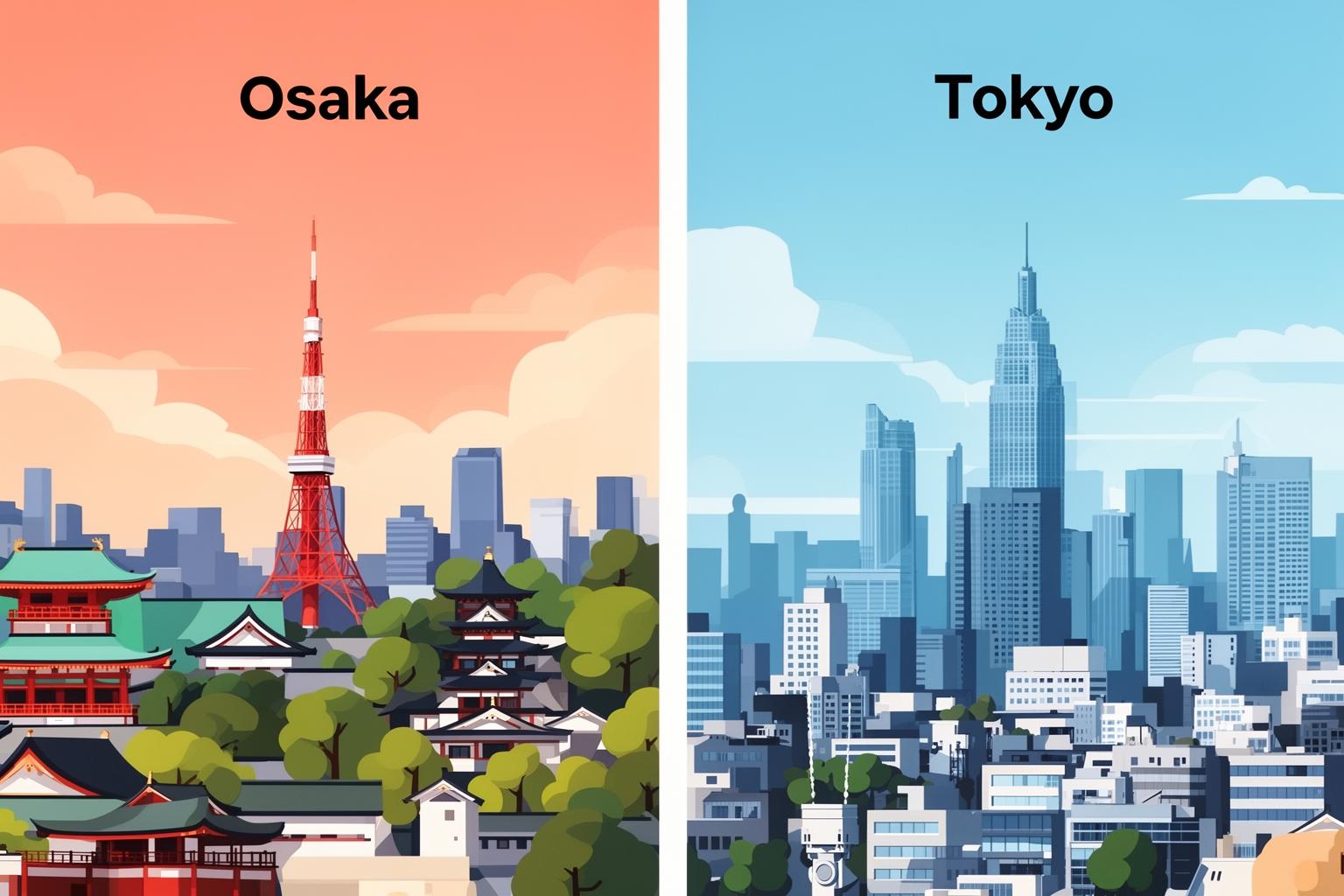
Foreign residents often attempt to apply their understanding of Tokyo to Osaka, but this comparison is flawed. Tokyo’s most well-known internal division is the historical boundary between the Yamanote (uptown) and Shitamachi (downtown) areas. This divide stems from the old Edo period class system: the high city of samurai and aristocrats contrasting with the low city of merchants, artisans, and entertainers. It is a deep-rooted cultural and historical split that still subtly shapes the character of its neighborhoods. Ginza’s refined luxury and Asakusa’s traditional craftsmanship are outcomes of this centuries-old dynamic.
Osaka’s Kita-Minami division, however, is fundamentally different. It is not based on class but on commerce. Osaka has always been a merchant city, and both Kita and Minami are essentially business centers. The difference lies in their approach and audience. Kita developed as the hub for large-scale, corporate commerce. Its growth was driven by railways and the department stores they established, creating a modern, organized center for big business and finance. It represents Osaka’s face to the rest of Japan and the world—its omote, or official front. Minami, conversely, grew more organically from the city’s entertainment districts, theaters, and small-scale retail. It is the domain of independent entrepreneurs, street vendors, and artists. It forms the city’s vibrant, chaotic backstage—its ura. This distinction is critical. In Tokyo, moving between Shinjuku, Shibuya, and Ueno can feel like entering entirely different cities. In Osaka, the whole city is strongly oriented along this single north-south axis. The tension and synergy between its polished front and creative soul give Osaka its uniquely concentrated energy.
The Osaka Mindset: It’s All About the Banter
Ultimately, the Kita-Minami divide serves as the perfect metaphor for the Osaka personality itself. It is a city of contrasts, where its people excel at navigating these differences. This dual nature is most apparent in the city’s distinctive communication style, especially its humor. The stereotype of the loud, joke-cracking Osakan is accurate, but it’s incomplete. This primarily describes the Minami style of interaction. However, there is an entirely different dialect of Osaka humor, and understanding both is essential to truly connecting with the locals.
Kita’s Humor: The Sharp, Witty Retort
In the business-focused world of Kita, humor acts as a tool. It is used to build rapport, ease negotiations, or deliver points with intelligence and flair. Here, humor is quicker, drier, and more dependent on wordplay and wit. It’s the kind of swift, clever comeback in a meeting that signals sharpness. It’s less about provoking roaring laughter and more about earning a respectful nod. This style assumes an intelligence and shared context from the listener. It is the humor of a savvy businessperson who seals a deal with a perfectly timed, subtle joke— a performance of competence wrapped in charming wit.
Minami’s Humor: The Loud, Physical Gag
Minami’s humor is a full-body affair. This is the comedy of the manzai stage, the traditional Japanese stand-up duo. It is loud, physical, self-deprecating, and deeply inclusive. The aim is to create a shared moment of laughter and instantly break down walls between strangers. It’s the takoyaki vendor pretending to drop your order before handing it over with a broad grin. It’s the exaggerated reaction, playful insult, and the readiness to appear a bit foolish just to bring a smile to someone else. This humor embodies warmth and accessibility. It communicates, “We don’t take ourselves too seriously here, and you don’t have to either.” It’s an open invitation to join in the fun and lies at the heart of why Osaka is often described as friendly. This friendliness is not a passive state but an active, ongoing comedic performance, with Minami as its grand stage.
Living in Osaka is a continuous lesson in this duality. You come to appreciate the sleek efficiency of a Kita morning alongside the vibrant chaos of a Minami night. You learn to switch your communication style, reading the atmosphere to know whether the moment calls for a sharp quip or a hearty laugh. The beauty of this city is that you don’t have to choose. Being an Osaka person means embracing both. It means understanding that the polished professional and the lively entertainer are not separate individuals, but two essential facets of the city’s unique, brilliant soul.