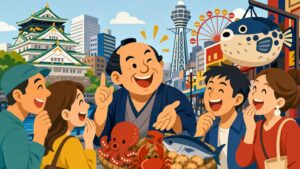
Walk out of Kyobashi Station on a Tuesday evening, and you’re hit with a wall of sound and scent that’s pure, uncut Osaka. It’s not the polished gleam of Umeda or the neon fantasy of Namba. This is different. This is a place of transition, a massive confluence of JR, Keihan, and subway lines, a human river flowing in and out of the city’s core. And tucked into the narrow streets under the elevated tracks, you’ll find its soul: the standing bars, the tachinomi. At first glance, they can be intimidating. A tight crush of bodies, a haze of cigarette smoke, a cacophony of laughter and gruff shouts. There are no velvet ropes, no hostesses, no neat little tables. It looks like chaos. It feels like a private party you weren’t invited to. Your first instinct might be to find a quieter, more “approachable” izakaya. But to do that is to miss the point entirely. Because these cramped, noisy, no-frills establishments are not just bars. They are living, breathing classrooms in Osaka culture. They are where the city’s unwritten social rules play out every single night, offering a raw and honest look into how this city thinks, acts, and connects, in a way that’s profoundly different from the reserved elegance of Tokyo. This isn’t about tourism; it’s about community. It’s the city’s decompression chamber, its social glue, its beating, boisterous heart.
As the standing bars echo with the untamed energy of local nightlife, so too does Osaka reveal its unique commercial ethos, inviting you to uncover the enduring merchant spirit that drives the city’s vibrant business culture.
More Than Just Cheap Drinks: Decoding the Tachinomi Code
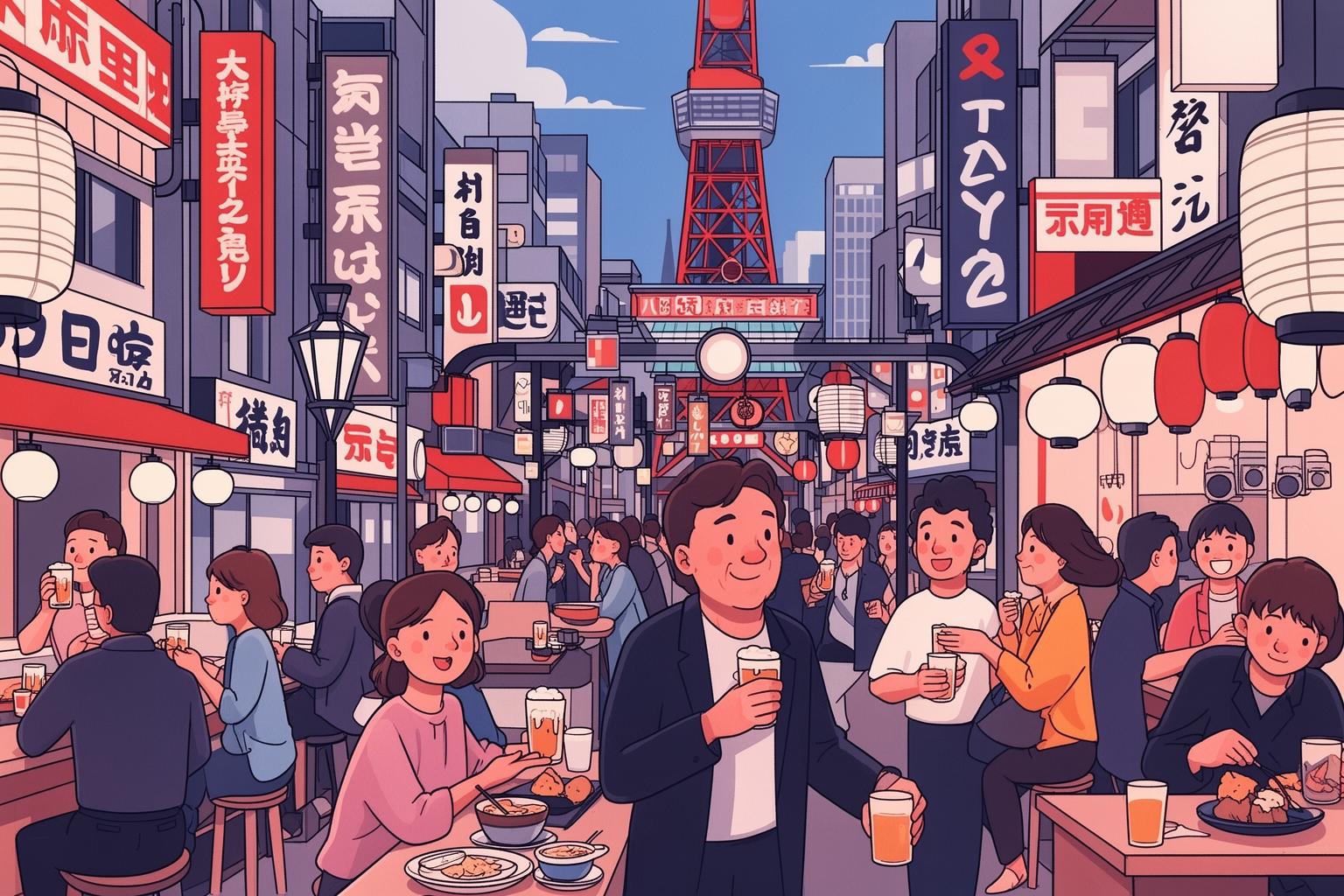
Step inside a Kyobashi tachinomi, and you’ll quickly notice there’s a system in motion, a seamless choreography that everyone seems to understand though no one ever explains. This isn’t just about grabbing a cheap beer; it’s about taking part in a ritual shaped by a distinctively Osakan set of values: pragmatism, efficiency, and a remarkable level of communal trust. The whole experience offers a lesson in how the city functions on a small scale, far removed from corporate boardrooms and official guidebooks. It’s a world built on unspoken agreements and shared understandings, and learning to navigate it is your first true step toward grasping the local mindset.
The Art of Finding Your Spot
There is no line. No host welcomes you. There is only the counter, a solid wall of people, and the challenge of gaining entry. In Tokyo, you might wait patiently for a clear opening, a sign that you’re welcome. In Osaka, you make the opening yourself. The key is to read the room, to observe the subtle dynamics of the crowd. You look for the person checking their watch, the group preparing to pay. You linger, not aggressively, but with purpose. You make eye contact with the person you want to stand next to, offer a slight nod, a small, almost imperceptible bow. It’s a silent question: “Is there room?” The answer usually comes as a slight shuffle, a turning of shoulders, a compression of personal space that creates just enough space for you to slide in. This is Osaka in a nutshell. It’s not about waiting for permission; it’s about finding a practical way to join. It’s a collaborative effort, a shared understanding that everyone is here for the same reason and that making a little room costs nothing. It’s a direct, efficient, and surprisingly graceful social agreement, played out in inches of counter space.
The Senbero Set: Your Golden Ticket
The concept of senbero—getting tipsy for a thousand yen—is both the financial and philosophical foundation of the tachinomi world. It’s a phrase you’ll hear throughout Japan, but in Osaka, it’s more than a marketing gimmick; it’s a point of pride. It reflects the city’s historic identity as a merchant town, where value for money, or “cos-pa” (cost performance), reigns supreme. A typical senbero set gets you two or three drinks and one or two plates of food for that single ¥1000 coin. It’s your entry to the party. The food itself embodies the Osaka spirit: hearty, straightforward, and deeply flavorful. You’ll spot large pots of doteyaki, beef sinew slow-cooked in a sweet, dark miso until tender. Trays of glistening kushikatsu, deep-fried skewers of meat and vegetables, crisp and golden, await you. There are simple, perfect plates of potato salad, vinegared mackerel, or a small bowl of edamame. This isn’t delicate kaiseki fare. This is fuel. It’s food meant to be eaten standing up, designed to perfectly accompany a cold beer or sharp highball, and to satisfy without draining your wallet. The senbero set levels the playing field; it makes the after-work ritual accessible to everyone, from young interns to department heads.
Cash on the Counter: The Rhythm of Payment
Forget running a tab. In most classic tachinomi, the system is beautifully straightforward and efficient: kyasshu on, or cash on delivery. When you arrive, you place a ¥1000 bill or some coins in a small plastic tray on the counter in front of you. Each time you order a drink or dish, the staff—moving with the speed and precision honed by years of practice—will take the exact amount from your tray. When your money runs out, you either add more or you’re done. This system does more than simplify accounting. It sets the rhythm of the whole place. It’s transparent, fast, and eliminates the hassle of flagging down a server for the bill at night’s end. It embodies a deep trust between customer and proprietor. More importantly, it reflects an Osaka mindset that values directness and forward momentum. No time is wasted on formalities. The focus is on essentials: good food, cheap drinks, and easy company. The rhythmic clinking of coins being taken and change given becomes part of the bar’s soundtrack, a constant reminder of the straightforward, no-nonsense transaction at the heart of the social gathering.
Where Strangers Become Neighbors, If Only for an Hour
The physical closeness found in a standing bar is an intentional feature, not a flaw. With elbows nearly touching and conversations overlapping, the boundary between strangers is incredibly thin. This is where the stereotype of the “friendly Osakan” is born, not through hollow greetings, but through genuine, spontaneous human interaction. A Kyobashi tachinomi acts as a social equalizer. The hierarchies and pressures of the outside world fade away at the entrance. Inside, you are simply another person looking to relax. It’s a space designed, whether intentionally or not, to encourage interaction and transform a group of individuals into a temporary, lively community.
The Salaryman’s Decompression Chamber
Look around after 6 PM, and you’ll notice the dominant crowd are salarymen, the Japanese office workers. They arrive, often alone, shed their work persona along with their suit jacket, and order a beer with a sigh of relief. An outsider might misinterpret this as a scene of quiet desperation or loneliness. But that would be a fundamental misunderstanding of this place’s purpose. This isn’t about drinking away sorrow in solitude; it’s a vital, communal ritual of letting go. It serves as a third space, a neutral ground between the strict world of the office and the demands of home. Here, they can freely vent about a tough boss, celebrate a small win, or simply stand in comfortable silence, surrounded by the shared energy of others doing the same. The conversations you catch are a raw glimpse of life: office politics, the latest on the Hanshin Tigers baseball team, or the rising cost of gas. It’s real, unfiltered, and deeply human.
“Nii-chan, Mou Ippai!”: The Language of Connection
Listen to how people place their orders. You won’t hear many stiff, formal requests. Instead, regulars call out, “Nii-chan, biiru!” (Big brother, a beer!) or “Nee-chan, atsukan!” (Big sister, hot sake!). Using these familiar, familial terms for the staff is a hallmark of the Osaka tachinomi experience. It’s a world away from the overly polite, deferential language typical of upscale Tokyo restaurants. This isn’t disrespect; it’s quite the opposite. It’s a sign of warmth and belonging. It turns a commercial transaction into a personal exchange. This linguistic shortcut breaks down the barrier between customer and server, creating a sense of family — a regular who is recognized and welcomed. It’s this casual, direct style of communication that many foreigners find so refreshing about Osaka. It’s not rudeness; it’s prioritizing genuine connection over performative politeness.
Breaking the Ice, Osaka-Style
It won’t take long before someone strikes up a conversation with you. It’s practically inevitable. The person next to you might notice you eyeing their plate of grilled squid and say, “Oishii de, tabete mi?” (It’s good, want to try some?). An older man might ask where you’re from and, upon hearing your answer, share a story about a business trip he took there in 1988. This is perhaps the biggest difference between the social atmosphere in Osaka and Tokyo. In a Tokyo bar, starting a conversation with a stranger is rare and usually requires a specific reason. In a Kyobashi tachinomi, it’s commonplace. The shared space creates a shared experience, and Osakans, who cherish conversation and humor as social currency, are quick to seize the opportunity. The questions aren’t interrogations; they’re invitations. They open the door to sharing a laugh, complaining about the humidity, and connecting for a brief moment. To turn away with a cold shoulder is to go against the spirit of the place. To accept is to experience the heart of Osaka’s famed friendliness firsthand.
Why Kyobashi? And Why It’s Not Namba
Every major station in Osaka has standing bars, but each neighborhood’s atmosphere is unique. The tachinomi in the tourist-heavy areas of Namba or Shinsaibashi tend to be sleeker, featuring English menus and a more international crowd. Kyobashi’s bars, however, stand apart. Their character is deeply connected to the neighborhood’s role as a key transit hub for commuters from the eastern suburbs and nearby prefectures. It’s a place people move through, and the bars mirror this transient, practical nature.
The Gritty Authenticity of a Transit Hub
Kyobashi’s standing bar alleys are far from picturesque. They are gritty, squeezed beneath rattling train tracks, with the scent of old grease and cheap shochu in the air. Floors can be sticky, and the atmosphere thick with smoke. Yet this roughness is exactly the point. These bars aren’t crafted for Instagram; they’re made for function. Their purpose is to offer a quick, affordable, and satisfying pause for working people on their way home. The aesthetic is purely utilitarian. This rawness is what makes Kyobashi unique. It hasn’t been overly polished or tailored for tourists. It remains unapologetically itself. The sound of a train rumbling overhead isn’t a nuisance; it’s part of the neighborhood’s rhythm. This setting embodies Osaka’s working-class spirit: practical, resilient, and indifferent to superficial appearances. It’s a city that prizes substance over style, and nowhere is this more evident than here.
Tokyo’s Standing Bars: A Different Species
Tokyo has its own standing bar culture, especially in salaryman districts like Shimbashi or Shinjuku, but the atmosphere feels distinctly different. While both share the concept of drinking while standing, their social dynamics often vary. A Tokyo tachinomi can feel more anonymous and transactional. People usually stick to themselves or small groups. Conversations tend to be more restrained, with the lively, cross-counter banter common in Osaka happening less often. In Tokyo, the emphasis is often on the efficiency of grabbing a quick drink and snack before heading home. In Osaka, particularly in Kyobashi, the social aspect is just as significant as the food and drink. The aim isn’t only to recharge, but to connect. The Osaka style is louder, messier, and more interactive. It’s a place where the city’s deep-rooted value of ninjo, or human warmth and empathy, shines through.
Navigating the Beautiful Chaos: A Foreigner’s Guide
For someone new, the tachinomi scene can be an overwhelming sensory and social experience. It’s easy to feel out of place and accidentally make a cultural error. However, the charm of these spots lies in their low barrier to entry, provided you grasp the underlying philosophy. Most early missteps result from a basic misunderstanding of what these places truly represent.
Misunderstanding #1: “It’s just a cheap, dive bar.”
To label a tachinomi as merely a “dive bar” overlooks its deep social significance. Although they are undeniably inexpensive, they are far from shabby. These spots serve as community centers and social levelers. On any given evening, a construction worker in work clothes might stand shoulder-to-shoulder with a manager from a nearby company. The usual differences in status and income that exist outside are rendered irrelevant by the shared counter and the universal appeal of a cold beer. These bars act as a microcosm of a more egalitarian society, where people from all walks of life can connect on equal footing. They play a vital role in the social fabric, offering an accessible outlet for stress relief and a space for casual, low-pressure socializing essential for community well-being.
Misunderstanding #2: “The loudness is aggressive.”
The noise level in a busy tachinomi can be startling. The buzz of conversation, the clinking of dishes, and the shouts to the kitchen might seem overwhelming or even hostile to someone used to quieter settings. But in Osaka, this clamor isn’t aggression; it’s liveliness. It represents a flourishing community. Osakans are known for being oshaberi, talkative. Conversation is a sport, a hobby, and an art form. A quiet, restrained bar is often perceived as dull or lacking energy. The lively atmosphere shows that people feel comfortable, engaged, and are having a good time. It’s the audible proof of human connection. The volume is a feature, a sign of health, a shared celebration of being together.
How to Fit In: A Few Practical Tips
Feeling at ease in a Kyobashi tachinomi is less about strict rules and more about adopting the right mindset. Be conscious of your space. These venues are crowded, so keep your bag on the floor and avoid spreading out. Order confidently, even if your Japanese is limited—a simple point and “Kore, onegaishimasu” (This, please) works perfectly. The staff are seasoned professionals and have seen it all. Most importantly, be open. If someone talks to you, smile and respond as best you can. You don’t need to engage in deep conversation. A shared laugh or a simple “Kanpai!” (Cheers!) is enough to show you appreciate the communal spirit. By being a positive, open presence, you won’t remain an outsider but will become, for the evening, part of Kyobashi’s social fabric.
The Heartbeat of the City
If you genuinely want to grasp what drives Osaka, moving beyond the tourist brochures to feel the city’s true rhythm, spend an evening at a standing bar in Kyobashi. It provides a deeper insight into local culture than any museum could. Here, you’ll witness the city’s core values in action: a passion for good value, a straightforward and efficient way of life, a casual indifference to strict formality, and above all, an unrelenting hunger for human connection. It’s seen in how a stranger makes space for you at the counter, how the bartender calls you “Nii-chan,” and how sharing a plate of fried chicken can bridge the gap between two people who don’t even share a language. This is where the heart of Osaka truly beats. It’s not always neat, rarely quiet, but it’s genuine, lively, and full of energy. Forget the guidebooks for one night. Squeeze yourself into a packed room, place a thousand-yen bill on the counter, and simply listen. The rhythm you’ll catch—the clinking of glasses, the rumble of the train, and the steady, vibrant buzz of conversation—is the authentic pulse of this magnificent, chaotic, and profoundly human city.