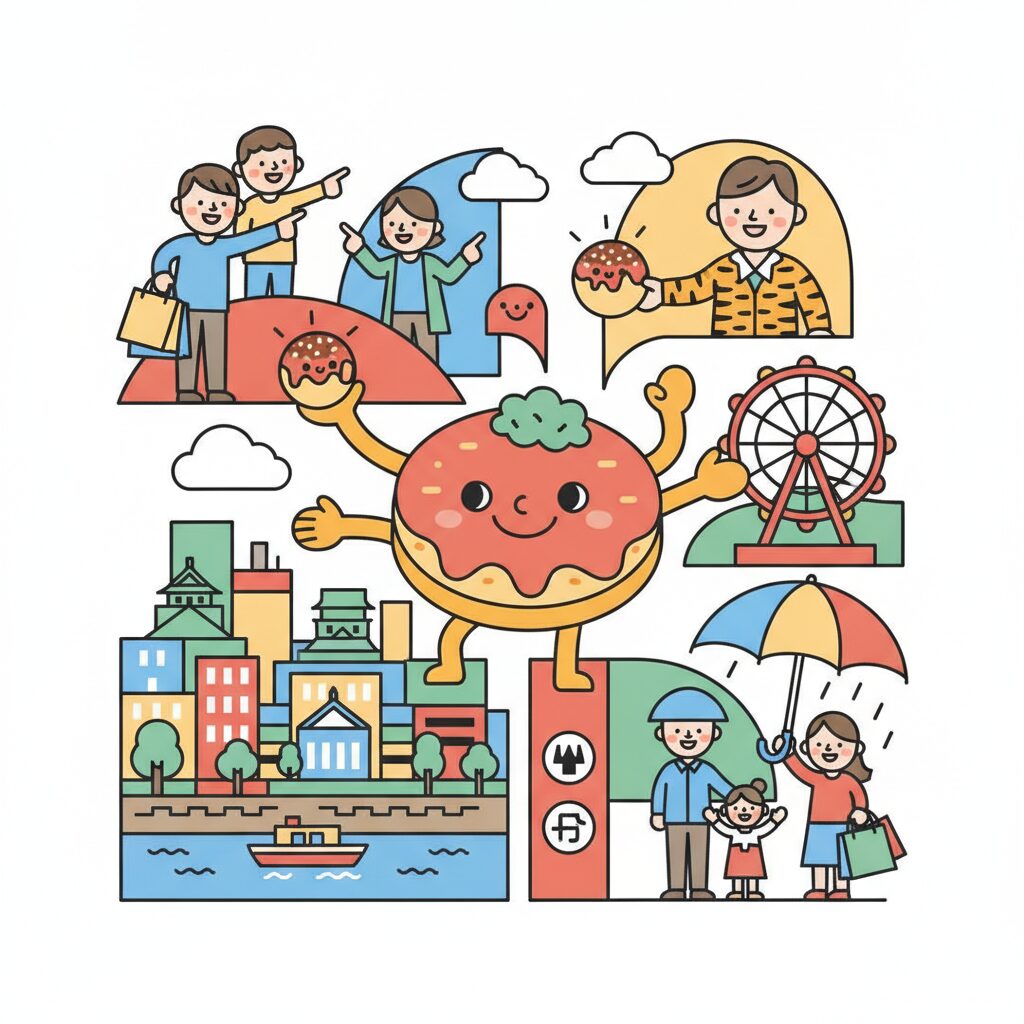
I’m a Tokyo girl, born and raised. In my world, a perfect interaction with a stranger is a smooth, frictionless exchange. It’s polite, it’s efficient, and most importantly, it respects the invisible bubble of personal space we all carry. We bow, we say what’s necessary, we move on. The social contract is built on a foundation of polite distance. Then I started spending more time in Osaka for work, and my entire understanding of Japan’s social contract was thrown into a deep fryer and served up with a side of takoyaki. My first real taste of this city wasn’t the food; it was a full-force dose of ‘osekkai.’ I was standing in a shotengai, a local shopping arcade, looking confusedly at a subway map on my phone. In Tokyo, I could stand like that for an hour and be granted the sweet, sweet anonymity I cherish. In Osaka, it took less than thirty seconds. An elderly woman, an ‘oba-chan’ with a perm of magnificent structural integrity, tapped my shoulder. “Lost, little girl?” she asked, not waiting for an answer. Before I could explain I was just figuring out my next stop, she had grabbed my phone, squinted at it, declared my route inefficient, and was now loudly explaining a better, cheaper, and faster way to the owner of the fish stall next to us, who also decided to chime in. Suddenly, my private moment of confusion became a public forum on urban navigation. That, in a nutshell, is ‘osekkai.’ It’s a word often translated as ‘kindness’ or ‘nosiness,’ but neither is quite right. It’s a proactive, meddlesome, sometimes overwhelming form of care. It’s the act of inserting yourself into someone else’s business, not out of malice, but from a genuine, deep-seated inability to see someone struggling—or even just existing—and not do something about it. This city’s human-to-human interface runs on a completely different operating system than the rest of Japan. And whether this makes Osaka a paradise of human connection or a nightmare of boundary violations really, truly depends on who you are.
For readers curious about how intimate local interactions thrive beyond chance encounters, exploring the role of Osaka cafe masters in nurturing neighborhood connections offers an intriguing glimpse into the city’s unique social fabric.
What ‘Osekkai’ Actually Looks Like in Daily Life
So, what is this meddlesome spirit like on a daily basis? It’s more than just an oba-chan offering you free candy, a cliché that barely touches the surface. Osekkai is embedded in the city’s very essence, a constant social buzz you can’t switch off.
The Shotengai Symphony
A visit to a local shopping arcade, or ‘shotengai,’ captures the true osekkai spirit. In Tokyo, you buy your vegetables, pay, and leave. In Osaka, you and the vegetables become the first act of an ongoing performance. The shopkeeper won’t simply sell you a daikon radish; he’ll ask what you’re cooking for dinner. If you say oden, he’ll critique your choice of konnyaku and suggest a better option. The woman behind you in line then shares her family’s secret oden recipe. The butcher across the way might overhear and call out that his beef tendons are perfect for the dish today. A routine shopping trip turns into a noisy, lively, and deeply communal discussion. You are not just a customer; you are a neighbor whose dinner is important to the whole street.
Workplace Woes and Wonders
This culture intrudes into the professional environment, often blurring the lines Tokyoites usually keep clear. An Osakan boss might not only ask if you’re feeling okay; they’ll inquire if you’re having issues with your partner because you “look sad.” A senior colleague might notice you struggling with a spreadsheet and, instead of offering advice, take over your mouse and fix it for you, all while commenting on your organizational style. This can be either very helpful or quite infantilizing, depending on your viewpoint. The Tokyo ideal of polite, professional distance is often perceived here as cold or ‘tanin-gyougi’ (treating someone like a stranger). In Osaka, your personal affairs are their affairs, encompassing both your work performance and your emotional well-being.
Neighborhood Watch, Osaka Style
Living in an Osaka neighborhood means giving up a certain level of anonymity. Your neighbors will know your habits. They’ll notice if someone unfamiliar leaves your apartment. They’ll remark if you’re coming home late from work too often. A Tokyo neighbor might express concern with a silent, worried glance. An Osaka neighbor will stop you on the street and say, “You look exhausted! Are they overworking you? You should eat more! Are you eating properly?” It’s not invasive in a harmful way. It’s a form of communal responsibility. They are looking out for you. But for someone used to the quiet privacy of a Tokyo apartment building, it can feel like living under a microscope.
The Psychology Behind the Meddling: Why Osakans Are So ‘Osekkai’
This behavior isn’t random; it’s ingrained in the city’s DNA. To truly grasp osekkai, you need to consider the historical and cultural forces that shaped the Osakan mindset. It’s a result of commerce, comedy, and a distinctive local philosophy.
A Merchant City’s Legacy
While Tokyo was the city of stoic samurai and bureaucrats, Osaka was the nation’s kitchen, a lively city of merchants, or ‘akindo.’ For an Osakan merchant, success wasn’t about strict rules; it was about cultivating relationships—fast, genuine, and profitable ones. This required quickly breaking down barriers. Shyness wasn’t an option. You had to ask personal questions, share jokes, and show sincere interest in your customer’s life. This culture of proactive engagement—getting involved in people’s lives to build trust—extended beyond the marketplace into all areas of life. Osekkai is the social legacy of a city grounded in the art of the deal, where every deal was personal.
Comedy is Connection
Humor fuels Osaka’s social interactions. The classic ‘boke’ (funny fool) and ‘tsukkomi’ (straight man) comedy duo serves as a model for daily communication. Much of osekkai is expressed through ‘tsukkomi.’ When someone points out that you have a bit of rice on your face, it’s more than a helpful notice; it’s a punchline. They’re creating a small, shared moment of humor. This sharply contrasts with Tokyo, where pointing out a flaw—even to help—might be seen as embarrassing or rude. In Osaka, a bit of teasing is a sign of affection. It means, “I see you, I’m comfortable with you, and we’re close enough to joke about this.” It’s a quick path to intimacy that can feel jarring if you’re not accustomed to it.
‘Hottokarehen’: The Inability to Leave Someone Alone
This is possibly the most vital concept. ‘Hottokarehen’ is a phrase from the local Kansai dialect meaning, “I can’t just leave them be.” It’s a gut-level, almost compulsive feeling. When someone appears to need help—or might potentially need it—it triggers an impulse to step in. It’s not a deliberate choice; it’s a reflex. That person looking at a map? Hottokarehen. That tourist struggling with a ticket machine? Hottokarehen. That young person living alone who looks a bit thin? Hottokarehen. This spirit is the emotional heart of osekkai. It represents a beautiful and powerful sense of communal responsibility but also drives its most intrusive tendencies.
Who Thrives on Osekkai? The Ideal Resident Profile
Osaka’s intrusive warmth isn’t for everyone. However, for a certain kind of person, this city is more than welcoming; it’s a place where you can finally feel at home.
The Social Butterfly Seeking Roots
If you’ve moved to Japan and feel confined by the politeness, distance, and challenges of forging real friendships, Osaka will feel like a breath of fresh air. You won’t need to put in much effort to meet people; they’ll come to you, whether you’re prepared or not. You’ll be informally embraced by the community. The owner of your local kissaten will become your therapist, the family at the ramen shop will celebrate your small wins, and those at the public bath will know your life story within weeks. For those seeking connection, osekkai is a social safety net, cast wide.
The Learner Who Welcomes Correction
Want to master Japanese? Forget silent classrooms. Just live in Osaka. People will constantly engage with you, correct your grammar, teach you slang, and push you to practice. They’ll do it loudly, bluntly, and without prompting. Your attempts to speak Japanese won’t be met with a polite, strained smile but with enthusiastic, sometimes overwhelming, coaching. If you view every exchange as a chance to learn, Osaka is the most immersive language school on earth.
The Thick-Skinned Extrovert
To love Osaka, you need to be able to laugh at yourself. You must see personal questions not as interrogations but as invitations. You need to interpret comments about your weight gain as a form of care, however awkward. If you are open, resilient, and don’t take things too personally, you’ll find the deep warmth beneath the nosy exterior. You’ll thrive in a place where barriers are low and human connection is raw and unfiltered.
When Osekkai Backfires: Who Might Struggle in Osaka
For every individual who feels at home in Osaka’s warmth, there’s another who finds it overwhelming. It’s important to be honest about whether this atmosphere will invigorate you or exhaust you.
The Guardian of Privacy
If your personal motto is “my business is my business,” living in Osaka will be a daily test. Casual inquiries about your salary, rent, or love life—topics considered taboo in many cultures, including Tokyo’s—are common here. If you see your personal life as a private refuge, these constant, well-intended intrusions will feel invasive. The cool, respectful distance of Tokyo will seem like a lost haven.
The Independent Problem-Solver
Do you take pride in solving things on your own? Do you dislike asking for help? If so, Osaka’s persistent helpfulness will drive you crazy. You won’t stand at a ticket machine for more than a minute without someone stepping in. You can’t browse a product in a store without a clerk telling you its entire backstory. The assumption is that if you appear even slightly uncertain, you need immediate assistance. For the strongly self-reliant, this can feel undermining, as if your competence is constantly doubted.
The Introvert Who Recharges in Solitude
For a genuine introvert, social interaction drains energy. In Osaka, finding a recharge point is difficult. A simple trip to the corner store might involve multiple conversations. The quiet and predictability you long for are scarce. You’re always on display, expected to engage, banter, and perform. If your perfect day involves moving through the city unnoticed, listening to music, and being left alone with your thoughts, Osaka’s constant social buzz can be utterly draining.
How to Navigate Osekkai: A Practical Survival Guide
So you’ve decided to live here, or you’re already here and feeling overwhelmed. You don’t need to change who you are to get by. You just need a few strategies to handle the flow of osekkai.
Embrace the Exchange
Osekkai is a two-way interaction. It’s an offering. When the oba-chan hands you a candy, she’s opening a channel. Accept it with a smile and offer something in return—not a physical gift, but a piece of yourself. Ask her about her day. Compliment her purse. By turning this one-sided meddling into a mutual exchange, you gain a sense of control and build a genuine relationship. It stops being something that happens to you and becomes something you’re involved in.
Master the Art of the Graceful Deflection
You’re not required to answer intrusive questions. The key is to deflect them without causing offense. Humor is your best ally. When asked about your relationship status, a cheerful “It’s a secret!” or “I’m accepting applications!” works better than silence. Develop a few vague but friendly non-answers. In Japan, maintaining harmony is crucial, and a polite, smiling refusal is understood. You can protect your boundaries without burning bridges.
Understand the Intent, Ignore the Delivery
This is the golden rule. You need to separate the words from the intention. The person isn’t trying to be rude; they’re trying to connect. They’re expressing care in the only way they know. When you feel your defenses rising, take a breath and mentally translate. “Why aren’t you married yet?” becomes “I hope you find happiness.” “You’ve gained weight” becomes “I hope you’re healthy.” It’s not always easy, but seeing beyond the awkward delivery to the ‘hottokarehen’ spirit at its core is the key to appreciating, and perhaps even loving, the beautifully flawed, meddlesome heart of Osaka.