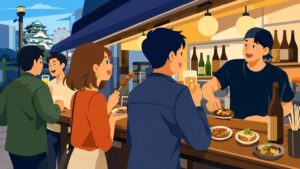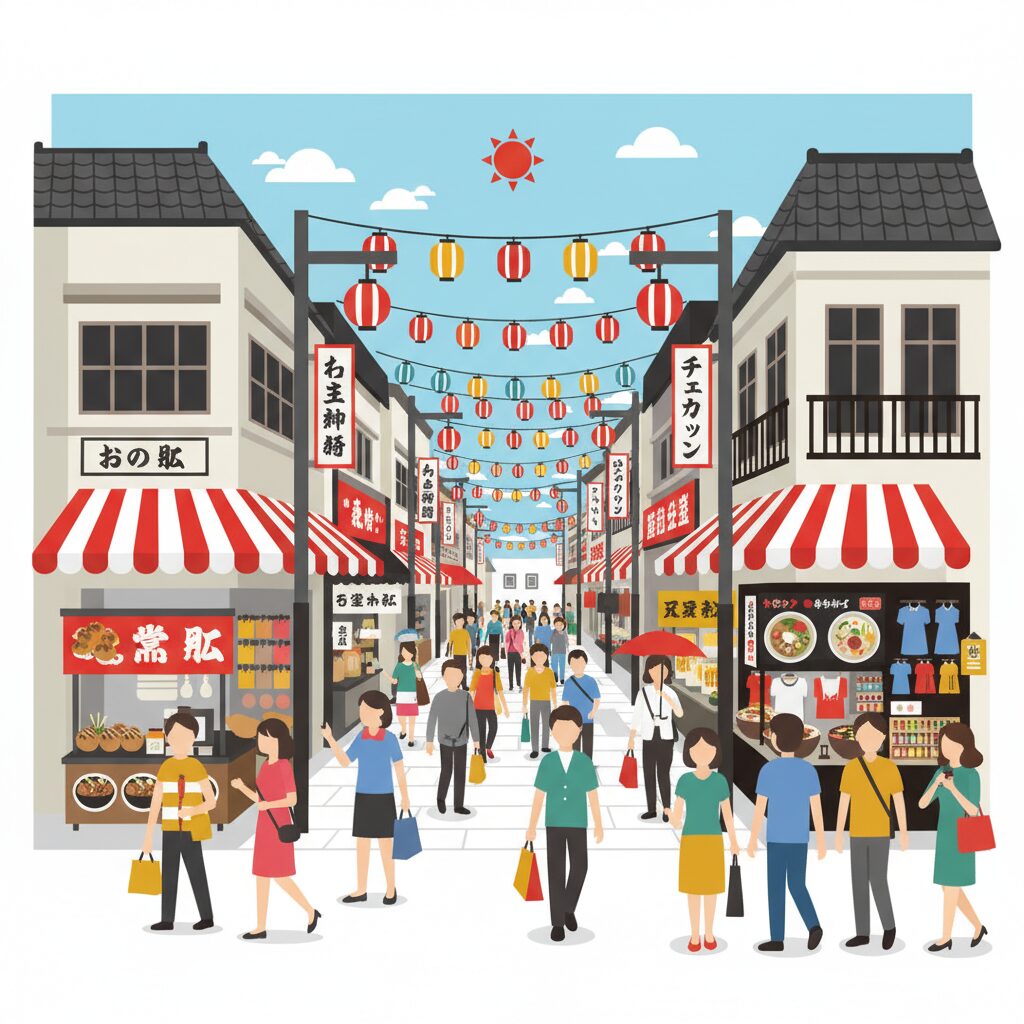
The first time I wheeled a stroller through a covered shotengai arcade in Osaka, I felt a jolt of sensory overload. It wasn’t the polite, curated experience of a Tokyo department store basement. This was loud. A fishmonger with a voice like gravel shouted specials over the clatter of a pachinko parlor. An elderly woman selling pickles offered me a sample on a toothpick with a grin that showed more gums than teeth. The air was a thick, confusing perfume of grilled eel, sweet daifuku, and old wood. My instinct, honed by years of navigating sterile supermarket aisles, was to clutch my purse and hurry through. But my neighbor, a tiny, formidable woman named Keiko-san, stopped me. She put a hand on my arm, pointed at a man meticulously arranging tofu in a bubbling water bath, and said, “You want to live here? This is where you start. The supermarket is for convenience. The shotengai is for life.”
She was right. If you want to understand what makes Osaka tick, to get beneath the surface of takoyaki and neon signs, you have to walk these covered streets. They are not merely shopping arcades; they are the public living rooms of the city, the thrumming, chaotic, and deeply human heart of every neighborhood. Forget what you think you know about Japanese politeness and reserve. Here in the shotengai, a different set of rules applies, a set of rules that reveals the pragmatic, warm, and fiercely relational soul of Osaka. This isn’t a tourist guide to the longest or most famous arcades. This is a look at how these arteries of commerce function as the social backbone of daily existence for millions.
Amid the vibrant pulse of Osaka’s shotengai, one can also appreciate the evolution of local cuisine by delving into its inventive traditional konamon scene, where classic flavors are reinterpreted with a modern vegan twist.
The Language of the Arcade Floor
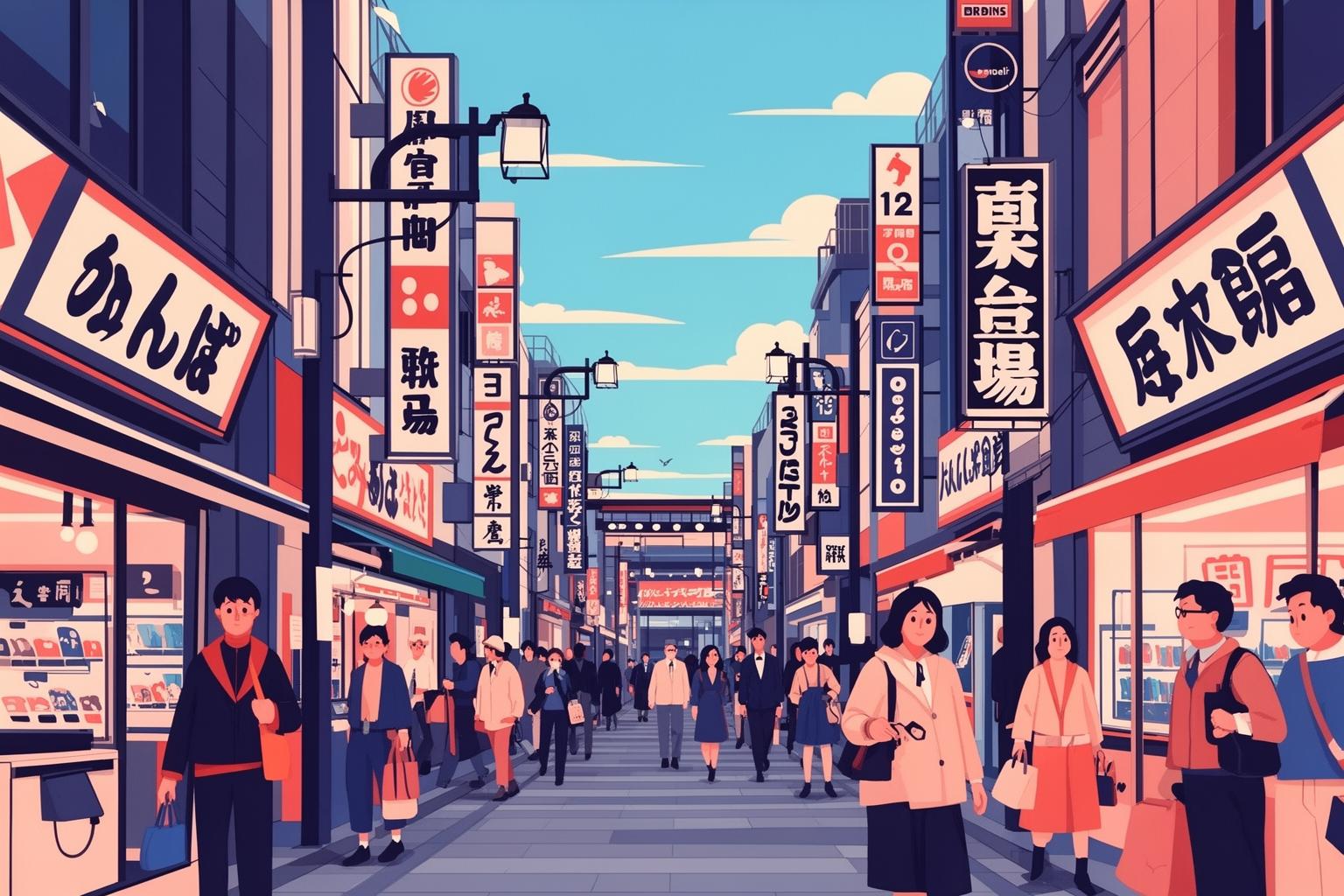
Step out of the silent, orderly environment of a modern Japanese convenience store and enter a shotengai, and the first thing you’ll notice is the sound. It’s a symphony of commerce, a constant buzz of human activity that can feel overwhelming at first. In Tokyo, a polite, pre-recorded “Irasshaimase!” greets you. In an Osaka shotengai, you’re more likely to be welcomed by a hearty, almost guttural “Maido!” from a butcher wiping his hands on his apron. The contrast is striking. “Irasshaimase” is a formal greeting to a customer. “Maido,” which roughly means “Thanks for your continued business,” is a greeting to a regular, a neighbor, a part of the community. It presumes a relationship before it has even begun. It’s an invitation to belong.
The sounds serve a purpose. The rhythmic chopping at the vegetable stall, the sizzle of oil in the tempura shop, the call-and-response between vendors across the aisle—they all form a living broadcast system. It signals who’s open, what’s fresh, and where the action is. This ambient noise isn’t a flaw; it’s a feature. It’s the sound of a vibrant community, of money changing hands, of people connecting. The silence of a supermarket feels efficient, but also impersonal. The noise of the shotengai is the sound of life unfolding openly, and for Osakans, a quiet shop is a suspicious shop.
Foreigners often misinterpret this directness and volume as aggression or a lack of refinement. It’s neither. It’s an expression of a culture that values transparency and authenticity over performative politeness. The energy is part of the experience. You’re not just buying a fish; you’re engaging in a lively, centuries-old tradition of marketplace interaction. You’re part of the performance.
It’s Not Rude, It’s Rational: The Osaka Mindset on Display
One of the biggest cultural challenges for newcomers in Osaka is grasping the local communication style, which is famously straightforward. The shotengai serves as the ultimate classroom for this. While a Tokyo shopkeeper might politely agree with your choice regardless of its quality, an Osaka shopkeeper will actively guide your decision-making—and it’s almost always for your benefit.
I once reached for a tray of perfectly shaped, expensive strawberries at a fruit stand. The owner, a woman sporting a perm unchanged since 1985, quickly snatched them away. “Dame, dame!” (No, no!), she said, shaking her head. “No good today. No taste. For show, not for eating.” She then pressed a bag of small, slightly bruised oranges into my hand. “These. These are sweet. And cheaper.” I was taken aback, almost offended. In any other retail setting, this would seem odd. But in the Osaka shotengai, it was a gesture of sincere honesty and care. She wasn’t trying to make the biggest sale; she wanted to ensure I had the best experience because she was thinking about the next transaction, and the one after that. She was building a relationship, not just sealing a deal.
This is the well-known Osaka concept of keizai kannen, or economic sensibility, in action. It’s a practical mindset that values long-term benefit and genuine worth over short-term profit or mere appearances. They will tell you the truth, because a satisfied, returning customer matters more than one inflated sale. This directness even applies to personal questions. The lady at the senbei (rice cracker) shop will ask where you’re from, what your husband does, and why your child isn’t wearing a hat. It’s not prying; it’s how they situate you within the community network, mapping their neighborhood one friendly inquiry at a time.
The Art of the ‘Omake’
This relational style of commerce leads to one of the shotengai’s most cherished customs: the omake, or a little something extra. This is not a discount you request but a gift given once you’ve established yourself as a regular. It’s the shopkeeper’s way of saying, “I see you. I appreciate you.” It might be an extra croquette tucked into your bag, a handful of spring onions to accompany your tofu, or a slightly misshapen cookie for your child. The economic value is small, but the social value is immense.
The omake acts as a powerful social bond. It transforms a simple transaction into a moment of mutual recognition and generosity. It’s the opposite of a corporate loyalty point system, which is impersonal and formulaic. The omake is personal, spontaneous, and depends entirely on the human connection between seller and buyer. It’s a small, tangible reminder that in the shotengai, you are more than just a walking wallet. You are a neighbor.
The Shotengai as a Social Safety Net
Beyond buying and selling, the shotengai plays a vital role as the eyes and ears of the neighborhood. In a country facing a rapidly aging population, this informal network offers an essential safety net, particularly for the elderly. The shopkeepers are deeply familiar with their customers’ routines.
The man who runs the tiny tea shop knows that Suzuki-san purchases her hojicha every Tuesday morning. The woman at the fish stall knows that Yamamoto-san only buys sea bream on Fridays. If Suzuki-san doesn’t appear, someone takes notice. A quick phone call might be made, or a neighbor may be asked to check in. It’s a low-tech, high-touch system of community care that no government program could ever duplicate. The daily flow of shopping in the shotengai acts as a wellness check, a social visit, and a grocery run all in one.
For families with young children, the arcade serves as an extended backyard. It’s a safe, enclosed space where children are known and watched over by hundreds of watchful eyes. My son learned to count from being quizzed by the man at the fruit stand. He receives a free candy from the sweet shop owner each time we pass by. When he once took a fall, three different shopkeepers rushed out with tissues, bandages, and comforting words before I could even respond. This is the celebrated “village” it takes to raise a child, existing right in the heart of a sprawling metropolis.
More Than Commerce: A Place to Belong
Look beyond the produce and products, and you’ll discover the shotengai’s true purpose. It’s the neighborhood’s communal gathering space. Here, you’ll find benches filled with elderly residents catching up on local gossip, their conversations providing a gentle contrast to the lively sales pitches around them. It’s where seasonal decorations go up with a sense of shared pride—from carp streamers in May to Tanabata wishes in July.
Many local festivals and events center around the shotengai. Street performances, seasonal markets, and children’s parades all take place under the arcade’s shelter. These events strengthen a sense of shared identity and belonging. In a city like Osaka, home to millions, it can be easy to feel anonymous. The shotengai counters that anonymity. It reduces the vast city to a single, walkable street where you are known, recognized, and missed when you’re gone.
Navigating the Labyrinth: A Practical Guide for Residents
So how do you transition from being an outsider looking in to becoming part of this vibrant ecosystem? It’s easier than you might think. It just takes a slight shift in mindset, moving away from efficiency and toward connection.
Finding Your “Go-To” Shops
Don’t approach the shotengai like a supermarket where you pick up what you need from different places each time. The secret is to build relationships. Pick a butcher, a fishmonger, a vegetable seller, and make them yours. Become a regular. Visit on the same days. Greet them with a cheerful “Konnichiwa” or, once you’re more at ease, a confident “Maido!” Even if your Japanese is limited, make the effort. Ask what’s good today (“Kyou no osusume wa?”). Trust their advice. It may take a few visits, but soon they’ll recognize you. The first time the tofu lady has your usual order ready before you even ask is a huge milestone in your Osaka residency.
Cash is Still King (and a Quick Apology Helps)
While much of Japan is gradually adopting cashless payments, many small, family-run stalls in the shotengai remain cash-only. Be prepared. Carrying smaller bills and coins is always appreciated. Fumbling with a large 10,000 yen note for a 200 yen purchase can interrupt the flow. The pace is brisk, and holding up the line is a minor social misstep. If you struggle with the language or currency, don’t worry. A simple, sincere “Sumimasen” (Excuse me/Sorry) paired with a smile works wonders. They don’t expect perfection; they appreciate effort and respect.
Decoding the Local Lingo
Learning a few key Osaka-ben (Osaka dialect) phrases can instantly show that you’re invested in the local culture. As mentioned, “Maido” is essential. When you receive something, saying “Okini” instead of “Arigato” often earns a surprised smile. It’s a warmer, more traditional Osaka way of saying thanks. When something is good, it’s not just “oishii,” it’s “meccha oishii.” These little linguistic touches signal that you’re not just a fleeting resident but someone genuinely trying to understand and engage with the local culture on its own terms.
Why the Shotengai Endures in an Age of Convenience
In an age dominated by Amazon Prime, expansive Aeon malls, and 24-hour convenience stores, the traditional shotengai should, logically, have vanished. Many are faltering, with closed storefronts and an aging owner demographic. Yet, many more continue to flourish. Why? Because they provide something no algorithm or automated checkout can offer: a genuine, unscripted human connection.
Shopping in a shotengai is an exercise in deliberate inefficiency. It takes more time. You must visit several shops. You have to engage with people. But that inefficiency is exactly the point. The time spent chatting with the butcher about the weather or asking the vegetable vendor for a recipe is not wasted. It’s the moment when community is fostered. It’s a small act of defiance against the isolating convenience of modern life.
The shotengai stands as a testament to the Osaka belief that business is inherently social. It’s a place where commerce and community intertwine beautifully and messily. So next time you need groceries, skip the bright, sterile aisles of the supermarket. Take a stroll beneath the arcade roof. Hear the sounds, greet the shopkeepers, and buy your dinner from someone who knows your name. You won’t just be purchasing food—you’ll be engaging in the city’s life and understanding Osaka in a way you never could before.