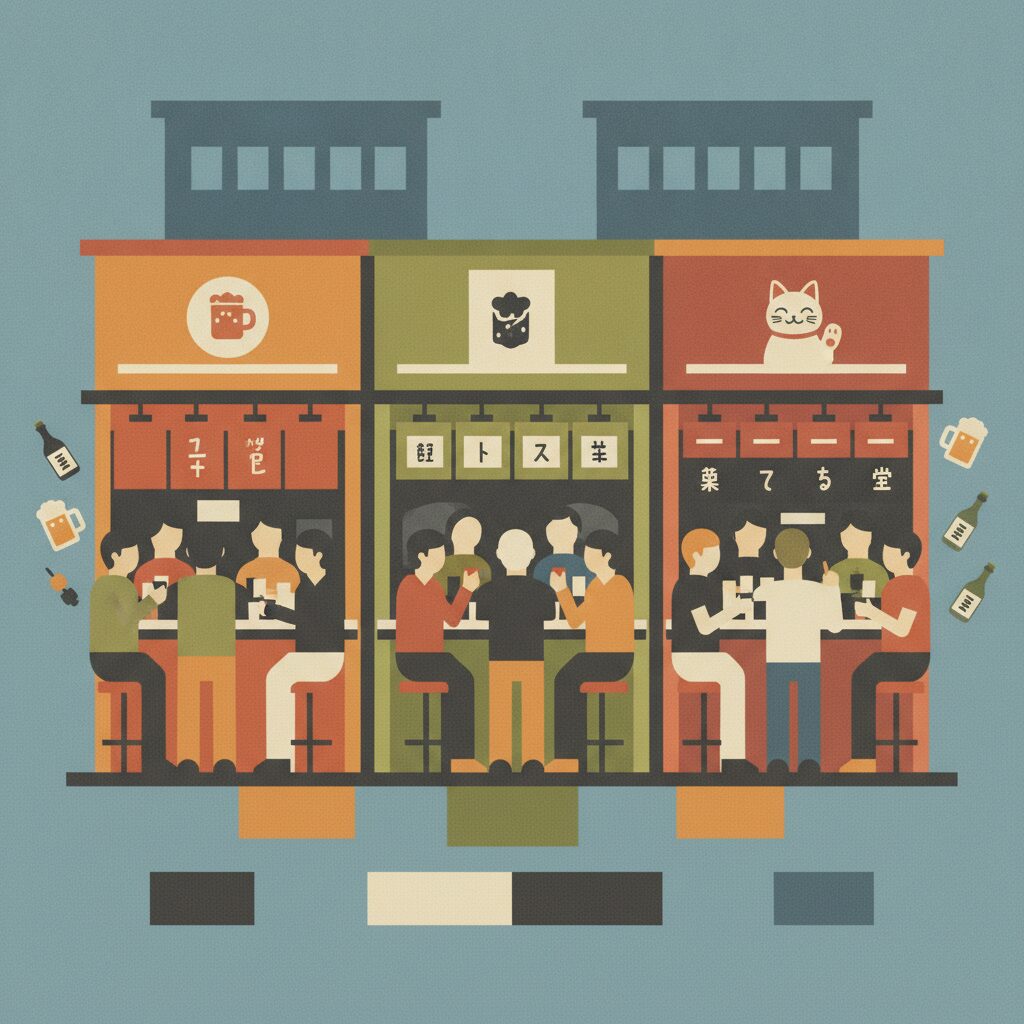
You see them tucked under train tracks, spilling out onto narrow shotengai arcades, and glowing in the concrete canyons of Umeda. They are Osaka’s standing bars, the tachinomi. From the outside, they look like a chaotic swirl of humanity—a crush of salarymen in loosened ties, steam rising from simmering pots of oden, the sharp clack of glasses, and a constant buzz of gruff, good-natured laughter in the thick Osaka dialect. It’s a scene that’s both intimidating and incredibly alluring. You’ve probably walked by and wondered, what is really going on in there? Is this just a place for a cheap, fast drink, or is it the secret portal to the city’s social heart? As a foreigner trying to build a life here, you might see it as the ultimate challenge: can you crack the code of the tachinomi and actually make local friends? The answer, like most things in Osaka, is more direct, more complicated, and far more interesting than a simple yes or no. These bars are a perfect microcosm of Osaka itself: efficient, economical, and brutally honest. They can be your fastest introduction to the local rhythm, but they can also be a revolving door of fleeting conversations. Let’s pull back the curtain and talk about the real pros and cons of diving into Osaka’s standing bar culture to find your place in this city.
Understanding the city’s vibrant social life takes on a new dimension when you explore how the Osaka dialect shapes relationships and expresses true feelings.
The Allure of the Quick Drink: Why Tachinomi Thrives in Osaka
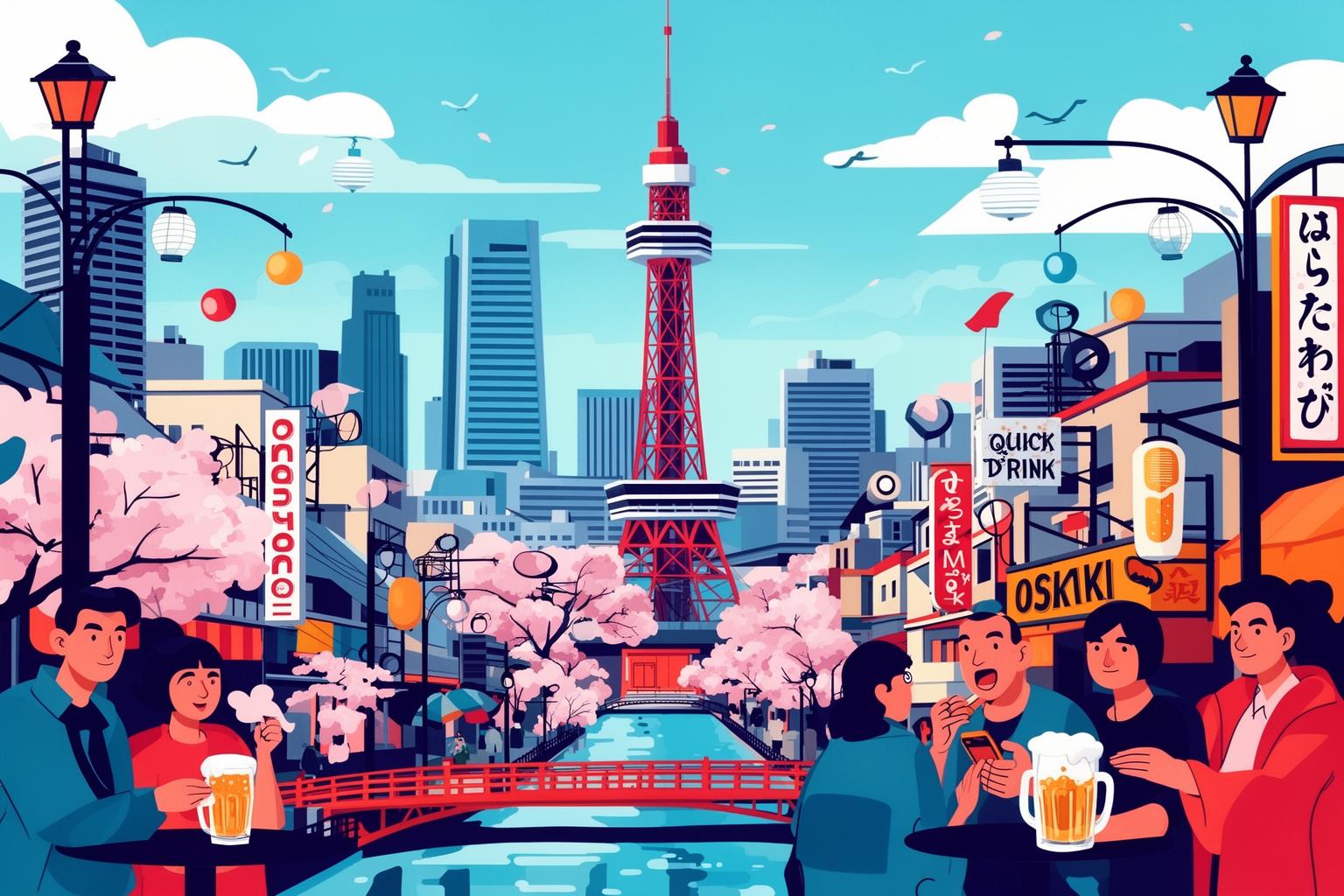
To truly grasp the concept of tachinomi, you first need to understand the Osaka mindset. This city was founded by merchants, and that commercial spirit is deeply ingrained in its DNA. It’s a culture that prioritizes pragmatism, efficiency, and getting a good deal above all else. Wasting time, space, or money is virtually a cardinal sin. The tachinomi perfectly embodies this philosophy—a meticulously crafted social mechanism aimed at delivering maximum value with minimal hassle. This marks a clear contrast to Tokyo’s character. In Tokyo, a night out is usually a planned affair: you reserve a spot at an izakaya, settle in for several hours, and follow a set social routine. In Osaka, however, the tachinomi plays a different role. It’s a transitional space, a social pit stop. It serves as the zero-kai, a pre-party drink before the main event. It’s the 20-minute pause between a long day at work and the train ride home. It’s a place for spontaneity, not scheduling.
A Culture of Efficiency and Economy
Stroll through the maze-like alleys of Kyobashi or Tenma around six in the evening, and you’ll witness these spots at their busiest. The patrons aren’t there to linger; they’re seeking a quick, energizing dose of socializing and refreshment. A construction worker in dusty overalls gulps a large mug of draft beer. A woman in retail clothes sips a chuhai as she checks her phone. A group of office workers shares a plate of fried skewers, talking loudly over one another. The exchange is rapid: you slip into a narrow spot at the counter, catch the bartender’s eye, and place your order. A beer arrives. You drop a few coins into the small tray before you. It’s a beautifully straightforward, no-frills transaction. There are no seating arrangements, no complex menus to decode, no pressure to order more than you want. This economic approach is essential. With drinks often priced at just a few hundred yen, the entry barrier is practically nonexistent. You can pop in for a single drink and a 100-yen snack and head out for less than the price of a coffee. This affordability creates a democratic, unpretentious environment where everyone, regardless of their job or background, shares the same space.
The ‘Zero Distance’ Social Contract
Space in a tachinomi is limited; you’ll be standing shoulder-to-shoulder with strangers, a scenario that would feel nearly impossible in most other Japanese settings. But here, it’s intentional. This close proximity serves as a powerful social lubricant, breaking down the personal space bubbles people carefully guard during the day. This physical closeness forms a unique social contract. Because the space is tight and the visit brief, usual social formalities loosen. It’s entirely normal to strike up a conversation with the person beside you—in fact, it’s almost expected. This reflects the core of Osaka’s communication style: direct, straightforward, and in-the-moment. There is less of the polite ambiguity typical of Tokyo. Here, a friendly ‘Kanpai!’ shared with a stranger is just that—a shared instance of camaraderie with no strings attached. It acknowledges your shared presence in this small, lively world. The goal isn’t to build lifelong friendships; it’s to enjoy a brief, pleasant interaction before moving on. This can be especially freeing for foreigners who find the nuances of Japanese social etiquette challenging. In a tachinomi, what you see is pretty much what you get.
The Reality Check: Can You Actually Make Friends Here?
So, you’ve gathered your courage. You’ve secured a spot at the counter, ordered a drink, and you’re ready to mingle. This is where the tachinomi experience becomes a bit complicated. Is this lively bar a treasure trove for making local friends, or is it simply a social illusion? The truth lies somewhere in between. It provides a unique chance to break the ice, but it seldom results in deep, lasting relationships on its own. Your success depends entirely on managing expectations and grasping the unspoken rules of interaction.
Pro: The Ultimate Icebreaker for the Courageous
Nowhere else in Japan is it easier to strike up a conversation with a complete stranger. The atmosphere practically invites it. The simplest way to start is by asking a straightforward question. Point to your neighbor’s intriguing dish and ask, “Sore, nan desu ka?” (What’s that?). Or comment on the Hanshin Tigers game playing on the small TV above. Or, if you’re feeling daring, make eye contact, raise your glass, and say, “Otsukaresama desu” (a way of saying “thanks for your hard work today”). In nine out of ten cases, you’ll be met with a warm response. Osakans are often genuinely curious about foreigners, and in the relaxed vibe of a tachinomi, that curiosity comes through. You’ll get to practice your Japanese in a low-pressure setting and hear the Osaka-ben dialect naturally spoken. From a woman’s perspective, it’s a distinctive social scene. While the traditional, gritty bars beneath the train tracks are mostly male-dominated, a new wave of stylish, brighter tachinomi has appeared in places like Fukushima and Ura-Namba. These venues attract a younger, more varied crowd and tend to feel more comfortable for solo women or small groups. It’s always smart to stay aware of your surroundings, but the transient nature of these bars generally keeps interactions light and respectful.
Con: Conversations Often Lead Nowhere
Here’s the hard reality. That fantastic and amusing 15-minute chat you had with the retired gentleman about his passion for American rock music? It probably remained just that: a 15-minute chat. Once he finishes his sake, he’ll nod, say “Ja, osaki ni” (“Well, I’m heading out”), and disappear into the night. You’ll likely never see him again. This is a common misunderstanding many foreigners have about Osaka’s friendliness. They confuse situational openness with an invitation for deep friendship. The “friendliness” at a tachinomi is a temporary social state, driven by the setting. Most patrons’ primary goal isn’t to expand their social network but to enjoy a cheap, efficient, and pleasant conclusion to their day. They’re not seeking a new best friend. It’s essential not to take it personally. The warmth is genuine in the moment but designed to be fleeting. If you expect to exchange contact information and make weekend plans, you will almost certainly be let down. The connection lies in the conversation itself, not what comes afterward.
Con: Mastering the Unspoken Rules
Though the atmosphere feels relaxed, it comes with its own strict, unspoken code of conduct. This is where you can come across as a savvy local or an awkward tourist. The rhythm of the bar is everything, and your role is to blend in smoothly.
The Art of Ordering and Paying
Hesitation won’t serve you here. Know what you want before making eye contact with the bartender. The staff is busy and values efficiency. Speak clearly, be decisive, and be ready to pay. Many places operate on a cash-on-delivery basis, known as kyasshu on. This means you place your money on a small tray with your order, the staff takes it, and hands back your change. There’s no waiting for a bill. This system keeps things moving swiftly. Fumbling for money or attempting to split a bill with a friend disrupts the entire flow. Observe what others are doing and follow their lead. The goal is to make your transaction as seamless and unobtrusive as possible.
Reading the Room
Even in this straightforward culture, the skill of kuuki wo yomu—reading the air—is crucial. Not everyone is eager to chat. Pay attention to body language. Is someone hunched over their phone, deliberately avoiding eye contact? Leave them be. They’re in their own world. Is a group of coworkers engrossed in a quiet, serious conversation? Don’t interrupt. Look for signs: the solo drinker appearing a bit bored, the cheerful group already sharing laughs with neighbors, the person who greets you with a friendly nod upon arrival. These are your potential conversation partners. The key lies in distinguishing between private moments and public ones, even when they are happening just inches apart.
Tachinomi vs. Other Social Venues: Finding Your Fit in Osaka
The tachinomi is a key part of the Osaka experience, but it shouldn’t be your sole means of building a social life. Think of it as a cultural boot camp and a social appetizer, rather than the main course. It’s an excellent place to boost your confidence, practice your language skills, and get an unfiltered sense of the city’s character. It reveals how Osakans communicate in their most genuine moments. However, once you’ve completed this boot camp, you’ll want to seek out venues better suited for developing lasting relationships.
The Standing Bar: A Snapshot of Society
Use the tachinomi for what it does best: low-pressure, frequent social practice. Visit once a week. Explore different neighborhoods. Notice how the atmosphere in a business district like Yodoyabashi contrasts with that of a vibrant entertainment area like Namba. Think of it as urban exploration. Each bar serves as a living museum showcasing a distinct slice of Osaka life. You’ll learn more about the city’s hopes, fears, and frustrations by spending an hour listening to conversations at a standing bar than from reading most books. It’s an education in the city’s soul, one inexpensive beer at a time.
Finding Deeper Connections: Where to Go Next
When you’re ready to develop more meaningful friendships, it’s time to move on to different settings. Seek out smaller, owner-operated bars where you can sit down. In these spots, the owner, or ‘Master,’ often plays the role of social connector, introducing regulars to each other. Neighborhoods like Tenma, Fukushima, and Nakazakicho are rich with such hidden gems. Becoming a regular at places like these is how you transition from being a stranger to becoming part of the community. Beyond bars, consider joining a club or class. Whether it’s a sports team, language exchange meetup, or pottery workshop, these shared experiences provide a natural basis for friendship that goes deeper than a brief chat over a highball. The bonds formed through working toward a common goal are far stronger than the fleeting connections made at a tachinomi.
A Final Word from an Osaka Observer

Osaka’s standing bars are more than just places to drink. They loudly, proudly, and honestly reflect the city’s spirit. They serve as living proof of a culture that cherishes efficiency, community, and a good laugh. To truly grasp Osaka, you need to experience these bars. But come with the right mindset—don’t expect to find your new best friend. Instead, seek an authentic taste of local life. Accept the tachinomi for what it is: a fleeting space for temporary connection. It’s a spot to share a quick drink and a brief story with a stranger before returning to the city’s relentless pace. Order a beer, pick up a skewer of crispy kushikatsu, and just listen for a while. You’ll catch the real rhythm of Osaka. And though you might not leave with a phone number, you’ll walk away with something far more valuable: a genuine understanding of what makes this vibrant, chaotic, and wonderful city tick.