You’ve seen them. On every corner, tucked into every shotengai arcade, hidden down every side street. Osaka is saturated with cafes. But if you’ve come from Tokyo, or London, or New York, something might feel off. They’re not always beautiful. They’re not always quiet. They’re not always serving single-origin, meticulously sourced beans. A friend from America once asked me, “What’s the deal with cafes here? Some of them feel like my grandpa’s living room, and not in a cool, retro way.” He wasn’t wrong. But he was missing the point. In Osaka, a cafe isn’t just a place to buy coffee. It’s a tool. It’s a workshop. It’s a public living room. It’s what sociologists call a “third place”—that essential anchor of community life that exists separately from the home (the first place) and the workplace (the second). But Osaka’s version of the third place is uniquely its own, built on a foundation of blunt pragmatism, human connection, and a deep-seated need for a good deal. To navigate this city, to truly live in it, you need to understand how to use these spaces not just for caffeine, but as an extension of your own life. It’s about decoding a culture that values utility over aesthetics, and comfort over coolness. It’s about finding your own corner in the city’s sprawling, chaotic, and wonderfully human living room.
For those seeking to unlock Osaka’s layered social scene beyond its cafes, exploring a unique local drinking experience provides a fresh perspective on its community charm.
The Osaka Mindset: Pragmatism Over Polish
Function First, Vibe Second
The core misunderstanding about Osaka cafes begins here. In many global cities, especially Tokyo, a cafe offers a curated experience. It has a concept, a brand, an aesthetic. You visit to engage with that vibe. In Osaka, the key question is not “Is this place cool?” but “Does this place function well?” This philosophy stems from a merchant city where time is money and practicality is prized. Does it have a seat? Is the coffee reasonably priced? Can I stay for an hour without receiving dirty looks? These are the criteria that matter.
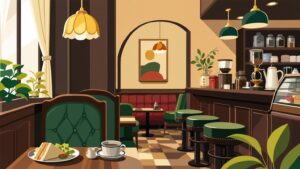
This is why the classic kissaten (喫茶店) culture persists here. These coffee shops, often family-run for decades, are the original third places. They are remnants of the Showa era, with dark wood paneling, worn velvet seats, and the gentle bubbling of a siphon coffee maker. They don’t try to be retro; they simply are. They haven’t changed because their purpose remains the same: to offer a comfortable, no-frills spot for the neighborhood. Inside, you’ll find a microcosm of Osaka life. A salaryman in a slightly rumpled suit reading the Nikkei newspaper with a cigarette and a cup of dark, bitter coffee. A pair of students with textbooks spread on a small table quietly quizzing each other. Two elderly women with shopping bags at their feet catching up on the latest neighborhood gossip in hushed yet lively tones. The cafe is a stage for their daily routines, and the coffee is just the entry fee.
The Sound of a Living Room
One of the first things you’ll notice is the noise. Many Osaka cafes aren’t quiet. There’s a constant low-level hum of activity that can be startling if you expect library-like silence. You’ll hear the clatter of ceramic on saucers, the hiss of the espresso machine, the rustle of a newspaper, and above all, the sound of conversation. This isn’t rude; it’s the sound of a community alive. The cafe is a public living room, not a silent shrine devoted to coffee.
The staff often embody this approach. Service is efficient and professional but lacks the almost theatrical politeness common in high-end Tokyo cafes. Here, interactions are more direct and more human. The owner, often called the “Master,” might greet a regular with a gruff nod and already have their usual order underway. They might ask about your family or comment on the weather. It’s a rapport based on familiarity, not formality. They guard this third place, maintaining its comfortable, lived-in feel. Trying to impose a quiet, solemn atmosphere here is like asking a bustling market to stay silent. You’d be missing everything that makes it work.
Decoding the Cafe Landscape: From Chains to Kissaten
The Role of the Big Chains
So, where do major chains like Starbucks, Doutor, and Tully’s Coffee fit into this? They serve as the modern workhorses of the third place. For an Osakan, choosing a chain is a purely practical choice. They are the undisputed champions of reliability. Need guaranteed Wi-Fi? Head to Starbucks. Need a power outlet to charge your dying laptop? Look for a Doutor with counter seating. Need a clean bathroom and a spot to sit for thirty minutes to escape the summer heat? Tully’s is your go-to.
Locals don’t visit these places for the “brand experience” as a tourist might. They make use of the infrastructure these global giants provide. A chain cafe’s role varies significantly depending on its location. A Starbucks in the Umeda Sky Building acts as an unofficial meeting room for businesspeople. The one near Kansai University is a de facto study hall, crowded with students from morning till night. A Doutor in the heart of the Tenjinbashisuji shopping arcade functions as a rest stop, a place for tired shoppers to drop their bags and recharge. You learn to read the vibe. If everyone has a laptop open, it’s a workspace. If it’s packed with people carrying shopping bags, it’s a short-term resting spot. The unspoken rule is to align your usage with the prevailing atmosphere. No one minds if you work for three hours at the Umeda Starbucks, but attempt that at the busy arcade location during a weekend rush, and you’ll feel the pressure from the waiting crowd.
The Heart of the Community: The Independent Kissaten
The real soul of Osaka’s cafe culture resides in the independents. These are the kissaten I mentioned earlier, the lifeblood of residential neighborhoods. Finding a good one is like finding a key to the local community. They’re often identified by a simple, sometimes faded sign with a stylized coffee cup, a handwritten menu taped to the window, and a display case of plastic food showcasing their toast and pasta dishes. Don’t be deceived by the dated exterior; inside is a hub of neighborhood life.
The unspoken rules here differ. This is a small, personal business. The Master isn’t an anonymous employee; they are the owner, and this is their livelihood. Staying for hours on a single 400-yen coffee is generally frowned upon. The unspoken agreement is that you’re renting the space. If you plan to stay long, order a meal or at least a second drink. It’s a sign of respect. The reward for that respect is a sense of belonging. The Master will begin to recognize you. They’ll know your usual order. They become a familiar face in your daily routine. This is where the concept of the third place truly comes alive.
This is also the home of the legendary “Morning Service” or simply “Morning.” From opening until about 11 a.m., ordering a coffee comes with a free or heavily discounted breakfast, usually a thick slice of toast (sometimes with butter and red bean paste), a hard-boiled egg, and maybe a small salad. This isn’t just a good deal; it’s a cultural institution. It’s the ultimate expression of Osaka pragmatism—a cheap, efficient way to begin your day and enjoy a quiet moment before the chaos starts. It cements the kissaten’s role as an essential part of the daily ritual for countless residents.
The New Wave: Specialty Coffee and Designer Cafes
Of course, Osaka isn’t immune to global trends. Stylish, minimalist cafes serving specialty coffee have appeared, especially in trendy neighborhoods like Kitahama along the river, the fashion district of Horie, or the quirky, artistic maze of Nakazakicho. These places are beautiful. They take coffee seriously, discussing flavor notes and brewing methods. And Osakans do visit them. But their role is different.
For many locals, these aren’t everyday third places. They are destinations. They’re for a weekend treat, meeting a friend who appreciates good coffee, or going on a date. The price point is higher, and the atmosphere can feel more delicate, more performative. You’re less likely to see an old man reading a sports paper here. It’s a different kind of space with a distinct purpose. While in Tokyo, integrating a 700-yen specialty latte into one’s daily routine might serve as a status symbol for some, in Osaka, spending that much on daily coffee seems impractical to many. Why pay that when the perfectly good kissaten down the street offers a lunch set with coffee for 800 yen? This simple calculation lies at the heart of the Osaka mindset.
The Unspoken Rules of Cafe Life in Osaka
Claiming Your Space: The Art of ‘Nagai’ (Staying Long)
For many foreigners, the biggest source of anxiety is how long it’s acceptable to stay. This concept is known as nagai suru (長居する), which literally means “to do a long stay.” The guidelines are unwritten and vary entirely depending on the context. In a busy chain cafe during peak lunch hours, occupying a four-person table alone with just one coffee is a major faux pas. You’ll feel the silent judgment of people circling with trays in hand, searching for a seat. However, during a quiet mid-afternoon lull, no one will mind if you stay for two or three hours.
In an independent kissaten, the cues come from the Master. When the place is empty, they’ll likely be glad to have you stay, as your presence makes the shop appear more inviting. But if it starts to fill up and a line forms, it’s polite to finish your visit and leave. The golden rule for a long work or study session is to keep re-ordering. An iced coffee for the first two hours, maybe a slice of cake or a toast set for the next two. This resets the clock and reaffirms your rental of the table. You are signaling that this is a commercial transaction, not a public library.
The Outlet Hunt: Powering Your Work Day
In today’s digital age, access to a power outlet can make or break a cafe’s usefulness as a third place. This is another area where Osaka’s pragmatism stands out. Locals know which cafes have reliable power sources—it’s essential urban knowledge. Big chains are almost always your safest option; many Doutor and Starbucks outlets have counter seats specifically equipped with power outlets. Newer independent cafes might have them, but it’s a gamble. Old-school kissaten? Almost never—they were built in an analog era.
The etiquette is straightforward. Don’t unplug something else to charge your device. Use only one outlet, not a power strip to charge all your devices. If you see someone waiting, don’t hog the spot once you’re fully charged. Power outlets are a shared resource, so being considerate of others is key. People will often choose a cafe with mediocre coffee over one with excellent coffee simply because the former has outlets and the latter doesn’t. Function always takes precedence.
Socializing vs. Solitude: Reading the Vibe
Every cafe has an unspoken social contract. Is it a place for quiet work or a lively chat? The key is learning to read the kuuki (空気), the “air” or atmosphere of the room. This skill is crucial for navigating social situations in Japan, and in Osaka, the signals are usually quite clear. Look around—are people wearing headphones and focused on laptops? It’s a workspace. Are groups of friends laughing and talking animatedly? It’s a social space. The decor can also offer hints. Small, two-person tables and counter seats suggest individual use. Large, communal tables and comfortable sofas invite groups.
Osaka’s straightforwardness means that if you’re out of sync with the vibe, you’ll probably notice. You might catch a pointed glance. In a very quiet cafe, a loud phone conversation will feel instantly out of place. Conversely, trying to hold a hushed, serious meeting in a noisy, family-friendly mall cafe is futile. Matching your activity to the space’s intended use shows you understand how the city operates.
Osaka vs. Tokyo: A Tale of Two Cafe Cultures
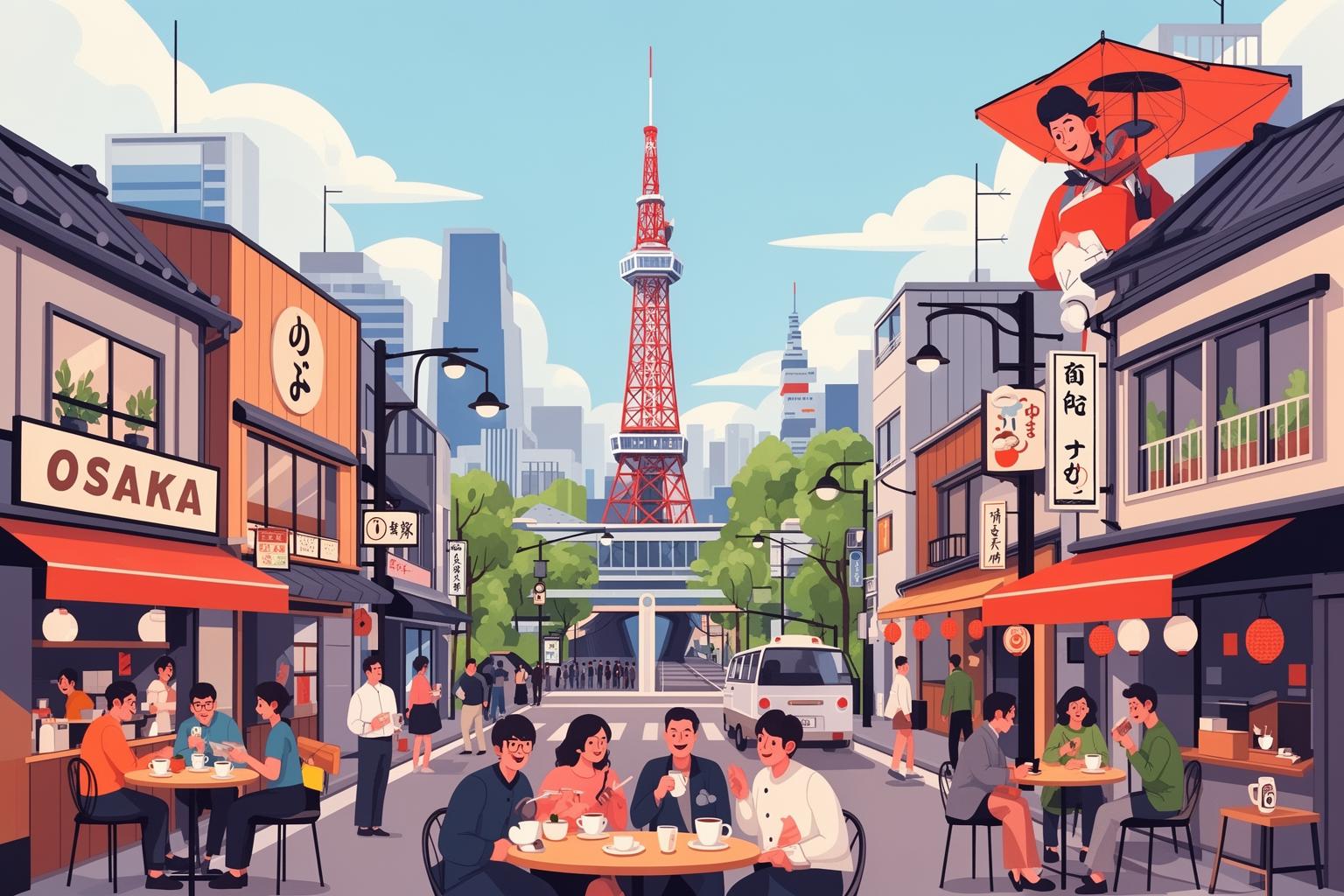
Tokyo: The Curated Experience
To truly understand Osaka’s cafe culture, it helps to compare it to Tokyo. In Tokyo, cafes often serve as destinations in their own right. They are experiences to be consumed. People will journey across the city to visit a specific cafe featured in a magazine or a popular blog. The focus is often on the photo, the aesthetic, and the opportunity to engage in a carefully crafted brand experience. Coffee is part of it, but it’s not always the main attraction. There are frequently more rules, both explicit and implicit: “No photos of the staff.” “Laptop use limited to 90 minutes.” “Please speak quietly.” The experience is carefully managed to maintain the desired atmosphere. It is a gallery, and you are a visitor.
Osaka: The Lived-In Reality
In Osaka, cafes function as infrastructure. They are integral to the machinery of daily life. People select their cafes based on convenience, price, and comfort. The best cafe is the one nearest the station, with a comfortable chair for a long read, or offering an affordable and satisfying lunch set. It’s less about the Instagram post and more about getting through the day. The culture accommodates life’s imperfect realities. A bit of noise, a fussing child, a group of friends laughing loudly—it all adds to the atmosphere. The cafe is a workspace, and you are there to get things done, whether that’s work, study, or simply relaxing.
Consider it this way: In Tokyo, you might overhear a quiet conversation about a new modern art installation or a pop-up fashion brand. In an Osaka kissaten, you’re far more likely to catch a lively debate over the price of wholesale fish, a detailed complaint about the Hanshin Tigers baseball team’s latest game, or a loud, amusing story about a cousin’s wedding. One is about curated culture; the other is about the raw, unfiltered business of life.
Practical Advice for Finding Your Third Place
Explore Your Local Station
Your journey to discovering your personal third place starts in your own neighborhood. Set aside the major hubs like Umeda and Namba for now. Take a stroll around your local train station. Peek into the shotengai. This is where the true treasures lie. Look for hand-painted signs, plastic food models in the windows, and bicycles parked messily outside. These are the marks of a genuine local hub. Step inside, order a coffee, and spend half an hour simply observing. You’ll learn more about your neighborhood then than you would in a week of wandering.
Master the “Morning” and “Lunch” Sets
Getting familiar with set menus is the quickest way to navigate cafes like a local. It shows you understand their value. The “Morning Service” is a staple, and the “Lunch Set,” typically available from 11 a.m. to 2 p.m., is another cornerstone of cafe culture. For roughly 800 to 1,000 yen, you can enjoy a main dish—like pasta, curry, or a sandwich—often accompanied by a small salad and a drink. It’s an incredibly cost-effective way to eat and claim a table for an hour. This is the ultimate Osaka life hack: combining your lunch break and workspace into one convenient, affordable experience.
Don’t Be Afraid to Become a Regular
Once you find a spot you enjoy—one with a comfy chair, the right atmosphere, or an especially good egg salad sandwich—keep going back. And then return again. Try to visit around the same time each day. The Master or staff will begin to recognize you. A nod may turn into a quiet “Irasshaimase” (Welcome). Eventually, it might evolve into a more familiar greeting, a cheerful “Maido!” (Thanks for your business!).
This is the final stage. When you shift from being an anonymous customer to a familiar face, the cafe changes. It stops being just a business and becomes your third place. It’s a small anchor in a vast city, a spot where you are known. This feeling of belonging, of having a cozy corner in a city of millions, is the essence of this experience. It’s not about finding the best coffee in Osaka, but about finding the place that feels like an extension of your home.