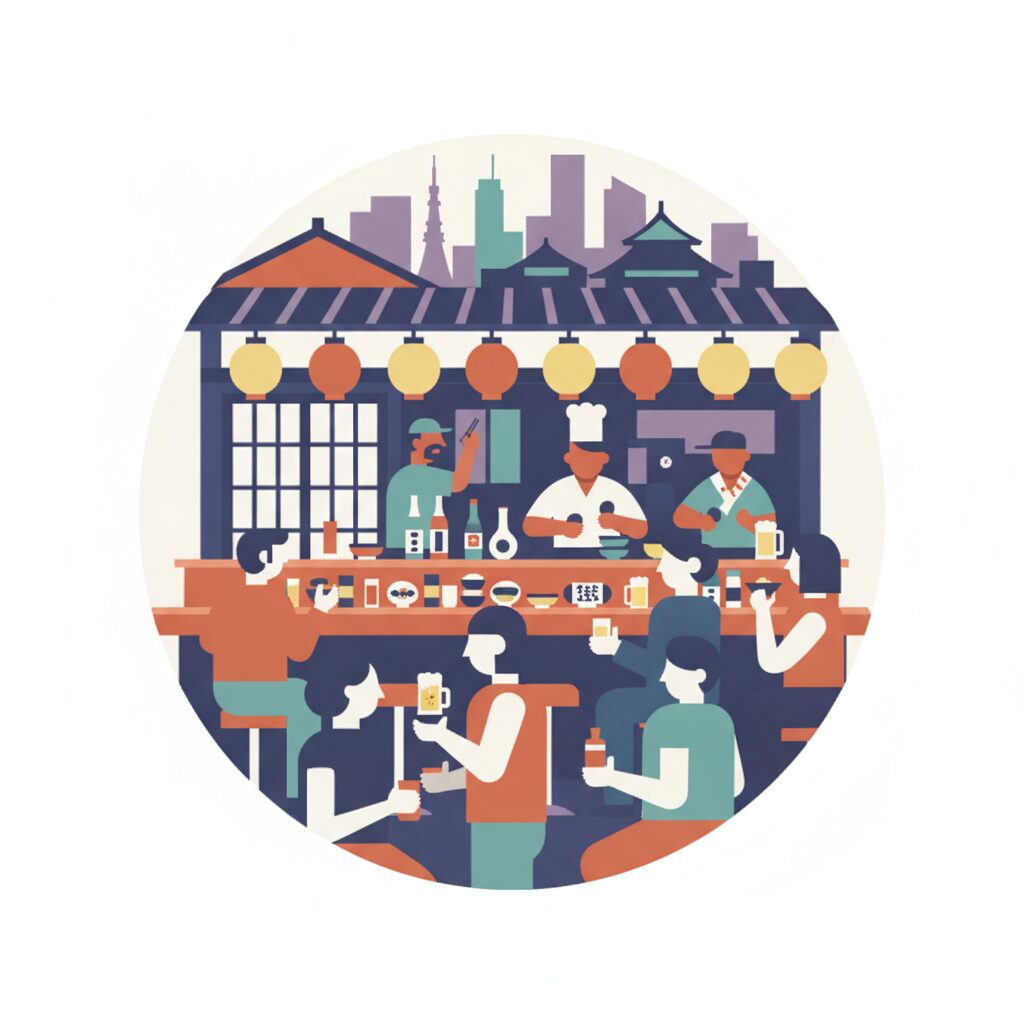
The clock strikes five, and the city of Osaka exhales. The sound isn’t a gentle sigh; it’s a raucous, clattering, joyous roar that spills from the open doorways of a thousand tiny bars. Step into one, a tachinomi, and the scene hits you like a wave. It’s a crush of bodies, a symphony of shouted orders, the sizzle of something delicious hitting a hot grill, and the collective hum of a city unwinding. People are packed shoulder-to-shoulder, balancing plates of glistening tuna and skewers of fried meat on a narrow wooden counter. There are no chairs, no tables, no pretense. This is the raw, beating heart of Osaka’s after-work culture. For a newcomer, it can look like pure chaos, an impenetrable wall of local camaraderie. The immediate question isn’t just what to order, but how to even exist in this space. Is this fleeting, frantic, and intensely social world for you? Or would you be better off finding a quiet corner booth somewhere else?
This isn’t a list of the “Top 5 Tachinomi for Tourists.” This is an exploration of the human software that makes these places run, a guide to the social dynamics of Osaka’s standing bars. We’re diving into who thrives in this environment, who might find it overwhelming, and what the unspoken rules of engagement are. Understanding the tachinomi is understanding a fundamental truth about Osaka: it’s a city that values spontaneity over structure, connection over privacy, and good value above all else. It’s where the city’s famous friendliness isn’t just a slogan; it’s a survival mechanism for navigating a crowded bar and, by extension, a crowded life. To help you locate the epicenter of this vibrant culture, here is a map pinpointing the Tenma district, an area legendary for its dense concentration of incredible tachinomi and izakayas.
Exploring Osaka’s vibrant tachinomi scene can be as invigorating as finding the right place to call home, especially when securing apartments with no key money opens up a whole new perspective on life in this dynamic city.
The Tachinomi Archetype: Who Thrives Here?
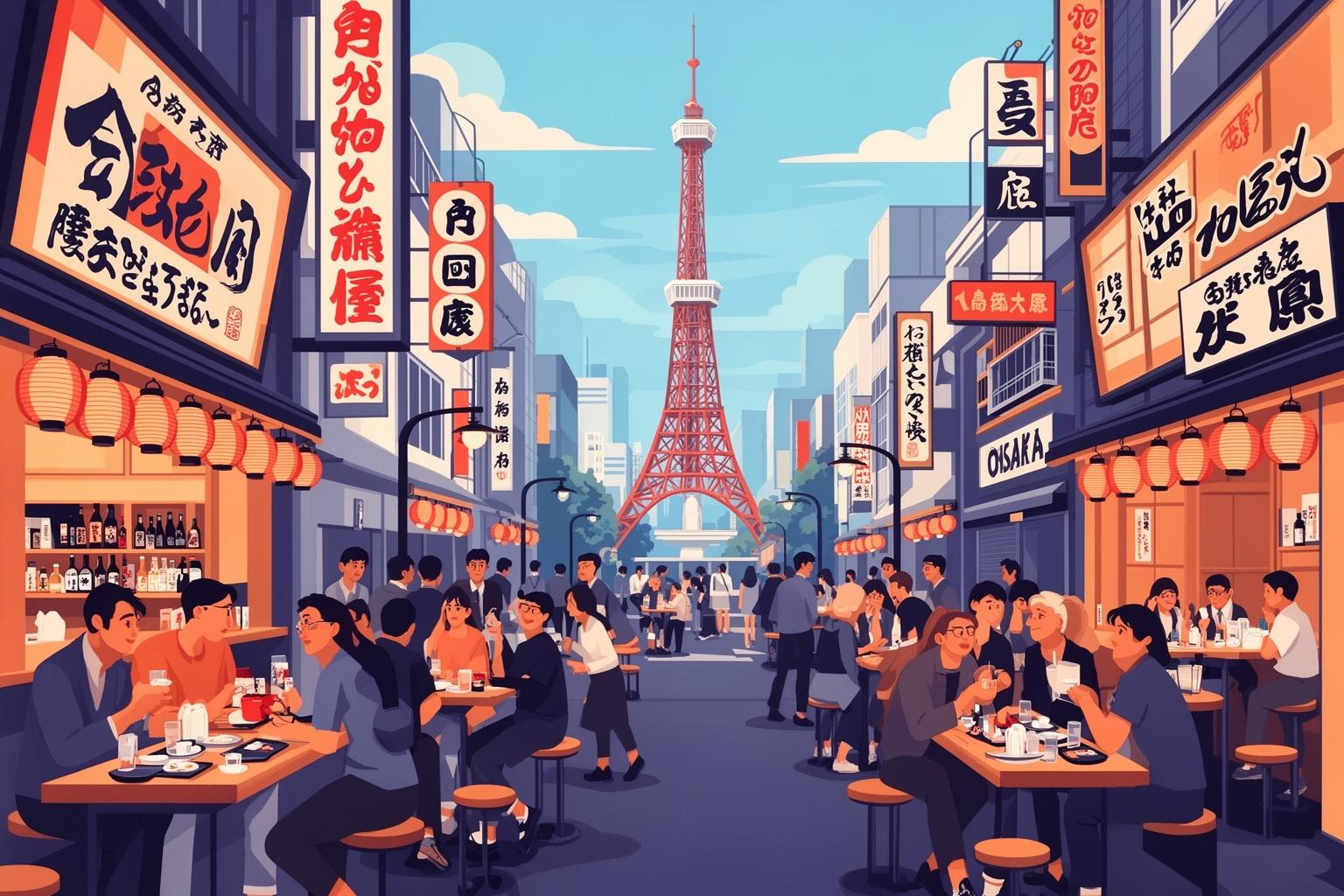
Not everyone is made for the lively chaos of a standing bar. These spots attract a particular type of personality, one that perfectly matches the city’s own spirit. To thrive in a tachinomi, you need a unique mix of social finesse, economic practicality, and a sincere appreciation for straightforward fun. It’s a self-selecting atmosphere where the customers become as integral to the vibe as the food and drinks.
The Social Butterfly with No Agenda
The ideal tachinomi visitor arrives with an open mind and no set plans. They come for the experience, not merely for a meal. This is the individual who thrives on chance encounters. They’re not there to engage in deep, meaningful talks with a companion they brought along; instead, they’re ready to share a brief, funny chat with a stranger about the Hanshin Tigers‘ latest game, the best way to eat kushikatsu (no double-dipping the sauce!), or the absurdity of their boss’s newest demand. The conversations are light, casual, and fleeting. You might share a laugh with an elderly man on your right and a group of young office workers on your left, then never see either again. And that’s exactly the point.
The social agreement is one of temporary community. For the twenty or thirty minutes you’re there, you become part of the collective. The close quarters encourage connection, breaking down the invisible walls common in other social settings. The experience is designed around this impermanence. Often, it follows a “one-cup, one-plate” approach. You pop in, have a quick drink and bite, soak in the energy, and move on. It’s a social pit stop, a brief pause in the evening, not the whole story. Those who prefer a predictable, controlled social scene may find it difficult. But for those who enjoy the excitement of the unknown and savor collecting small, memorable interactions, the tachinomi is a playground.
The Economically Savvy Drinker
Let’s be frank: tachinomi are inexpensive. This isn’t just a feature; it’s a fundamental principle. Osaka is a merchant city at its core, and the idea of value for money is almost a creed. A tachinomi is the shrine where this principle is practiced daily. The person who thrives here feels genuine excitement over a great deal. They recognize that lacking chairs, fancy decor, and extensive service staff directly leads to lower prices. Why pay for extras you don’t need?
This is the home of senbero—a blend of sen-en (1,000 yen) and berobero (drunk). The concept is both a challenge and a badge of honor: how much enjoyment can you pack into a single crisp 1,000-yen bill? For many regulars, it’s a game. A draft beer for 300 yen, a highball for 250, a plate of simmered beef tendon (doteyaki) for 350. They can calculate the perfect mix to get a pleasant buzz and a full stomach without overspending. This pragmatic approach to pleasure is quintessentially Osaka. It’s not about being cheap in a bad way; it’s about being smart, efficient, and averse to being ripped off. Someone who appreciates the simple brilliance of a high-quality, affordable experience will feel at home. They know the real luxury isn’t a plush seat but leaving with a full wallet at night’s end.
The Explorer of Culinary Backstreets
Though the drinks are inexpensive, the food is often remarkably outstanding. The tachinomi regular is a foodie who has moved past Michelin stars and picture-perfect plating. They seek something more genuine, more straightforward. They understand that the best food in Osaka often comes from a small kitchen run by one seasoned master who has spent decades perfecting just a few dishes. The menu might have only five items, but each is a masterpiece in its category.
With minimal overhead, all resources—the money, effort, passion—go directly into the ingredients and cooking. You’ll find incredibly fresh sashimi, perfectly fried skewers, richly flavored oden, and other simple, honest dishes. The explorer revels in this discovery. They love that there’s no fancy menu, just strips of paper posted on the wall. They enjoy pointing at something mysterious simmering in a pot and asking, “What’s that?” The thrill lies in the hunt—finding that unassuming spot beneath the train tracks serving the city’s best grilled squid. For them, the standing-room-only setup isn’t a drawback; it signals that the focus is on what truly counts: the food. This is Osaka’s kuidaore (eat ’til you drop) spirit in its rawest, most unfiltered form.
The Unspoken Rules of the Standing Game
Entering a tachinomi for the first time can feel like stumbling into a private party. Everyone seems familiar with each other, the staff moves at lightning speed, and there’s no clear instruction manual. However, there are unspoken rules—a social choreography that keeps the lively chaos flowing smoothly. Mastering these is essential to fully appreciating the experience.
Reading the Air: When to Talk and When to Sip
This is perhaps the most vital skill in a tachinomi, and it distinguishes a great night from an awkward one. The Japanese concept of kuuki wo yomu, or “reading the air,” is clearly demonstrated here. While Osaka’s tachinomi are much more open to spontaneous conversation than those in Tokyo, it’s not a complete free-for-all. You need to assess the situation. Is the person next to you deeply engaged in conversation with a friend? Are they focused on their phone? Or are their eyes scanning the room, occasionally meeting the staff’s or other patrons’ gaze? The latter is an invitation.
A simple nod, a raised glass in a silent “cheers,” or a comment on the delicious-looking dish they’re enjoying can serve as an easy way in. A common approach is to ask the staff a question loud enough for your neighbor to hear, such as “What do you recommend today?” This often encourages the person nearby to share their own suggestion. The key is to stay observant. Unlike many Western bars where starting a conversation with a stranger might seem forward or intrusive, in an Osaka tachinomi, it’s often expected. The default assumption is that everyone is open to a bit of friendly banter. The challenge lies in recognizing the subtle signals that indicate when to engage and, just as importantly, when to step back and savor your drink in peace.
The Art of the Quick Exit
A tachinomi thrives on high turnover. The entire concept relies on a steady stream of patrons. This makes one of the most important social graces knowing when to leave. Lingering for two hours over a single beer is a major faux pas. It takes up valuable counter space and disrupts the lively energy of the room. The unspoken rule is to be efficient. You arrive, find a spot, order a drink and a dish or two. You enjoy the atmosphere, engage in light conversation, then settle your bill and make your exit. Most regulars come and go within 45 minutes.
The payment system often supports this swift departure. Many establishments use a cash-on-delivery system, where you place your money in a small tray on the counter, and the staff deducts the cost of each item as it’s served. There’s no waiting for a check at the end. When your money runs out, or when you’re ready to leave, you simply nod to the staff and slip out, making room for the next person. This rhythm is crucial. It prevents the bar from feeling stagnant and ensures there’s always space for newcomers to join the fun. A good tachinomi patron remains mindful of both their physical and temporal footprint.
Personal Space is a Luxury, Not a Right
If you have a large personal bubble, a tachinomi will burst it. The experience is intimate by necessity. You’ll be elbow-to-elbow with your neighbors. Your coat will hang on a hook beneath the counter, and your bag will be squeezed between your feet or placed on a tiny overhead shelf. Complaining about the tight space is like complaining that water is wet; it’s an inherent, unchangeable part of the experience. But this physical closeness serves an important social purpose. It’s an equalizer.
It’s impossible to maintain aloofness or social distance when you’re literally brushing shoulders with a construction worker on one side and a salaryman on the other. This enforced proximity breaks down social hierarchies and fosters a shared experience. Everyone is in the same crowded, slightly uncomfortable, yet thoroughly enjoyable situation. This reflects a broader Osaka mindset—a preference for directness and a disdain for pretense. The physical reality of the tachinomi demands a level of unguarded interaction you won’t find in a spacious, seated bar. To enjoy it, you must embrace the crush and accept that, for the next hour, your personal space becomes communal property.
Who Might Want to Sit This One Out?
For all its appeal, the tachinomi is not a universal fit for every night out. Its distinct style of social interaction, rapid pace, and unique setup can be challenging for those with different preferences. Understanding that a standing bar might not suit you is just as crucial as knowing how to navigate one.
The Seeker of Quiet Intimacy
If your aim is a deep, heartfelt conversation with a close friend, a tachinomi is arguably the worst place for it. The atmosphere is designed for the opposite: it’s loud, filled with the buzz of many conversations competing with the clatter of the kitchen and staff calls. You’ll find yourself leaning close and raising your voice just to be heard. Conversations are frequently interrupted by new arrivals, plate clearing, and the general room noise.
Tachinomi are meant for light, casual, and public exchanges. They’re ideal for quick catch-ups, pre-dinner drinks, or solo visits but falter when it comes to serious talks. For those seeking a calm spot to connect deeply, Osaka offers many alternatives. Cozy izakayas hidden in side streets, refined cocktail bars with quiet moods, or classic, time-honored kissaten (coffee shops) provide havens for meaningful conversation. The tachinomi is a stage for social performance, not a private sanctuary.
The Meticulous Planner
The tachinomi culture thrives on spontaneity. This is a nightmare for anyone who prefers sticking to a schedule and detailed plans. You can’t reserve a place at a tachinomi; you simply arrive and hope for the best. On busy Friday nights, your first few choices may be packed, with lines spilling onto the street. Your only option is to shrug it off and try the next spot.
This need for flexibility is part of the thrill for some, but a significant stressor for others. Larger groups face an even greater challenge. Finding space for four or five people to stand together at a popular tachinomi is nearly impossible. The experience rewards adaptability and a go-with-the-flow attitude, reflecting the city’s general nantoka naru (“it’ll work out somehow”) spirit. However, for those who value reservations and guaranteed seating, the tachinomi’s unpredictability may be frustrating rather than enjoyable.
The Non-Drinker or Light Drinker? It’s Complicated.
Can you visit a tachinomi without drinking alcohol? Technically yes—most places offer oolong tea and other soft drinks. But doing so can feel like attending a concert while wearing noise-canceling headphones. The entire social rhythm depends on alcohol. The nomi in tachinomi means “drink,” and the business relies on selling a high volume of affordable alcoholic beverages. The food exists to complement the drinks, not vice versa.
Taking up a spot at the counter with a single glass of tea means occupying valuable space that could be used by someone ordering multiple rounds of beer or sake. While no one will outright ask you to leave, there’s often polite pressure to order more or move along. The unspoken social contract revolves around participation in the drinking culture. For those who abstain for personal, religious, or health reasons, the experience can feel exclusionary. Although some newer, more food-centric standing bars are becoming more inclusive, the traditional tachinomi remains fundamentally a drinker’s haven.
Osaka vs. Tokyo: A Tale of Two Standing Bars
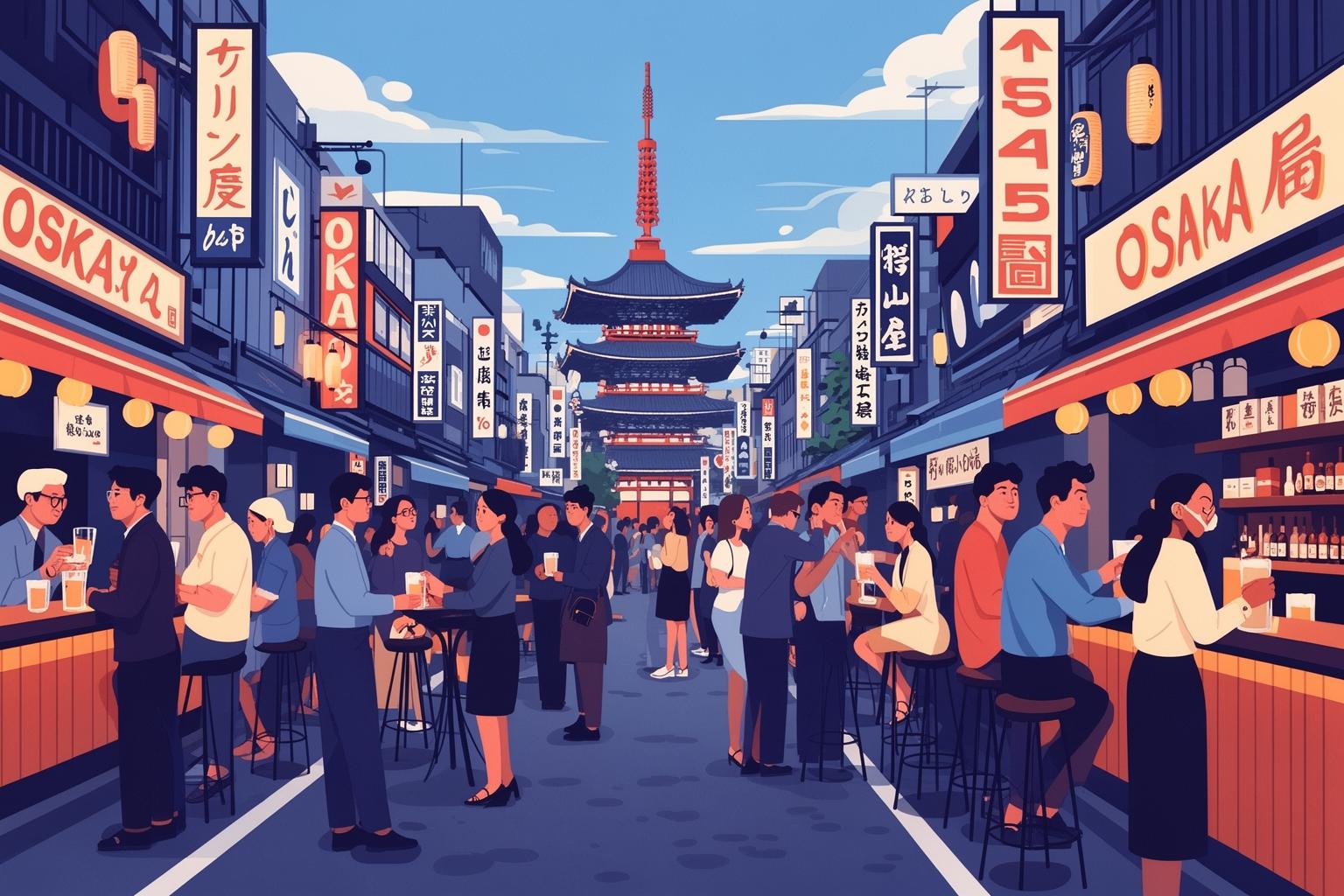
While Tokyo also offers standing bars, the experience can be vastly different. The distinction goes beyond just the patrons’ accents or the soy sauce’s flavor; it lies in the core social contract of the space. Comparing the two sheds light on the cultural divides between Japan’s two largest cities.
The Social Contract
The most notable difference is in the permeability of social bubbles. In Osaka, a tachinomi is a communal environment. The unspoken understanding is that you share the experience not only with your own friends but with everyone at the counter. Starting a conversation with a stranger is common and even encouraged. The bar master often serves as a social nexus, connecting customers and keeping the group conversation alive. The aim is a shared, vibrant atmosphere—a nigiyaka vibe.
In Tokyo, a standing bar often feels more like a conventional bar without seats. People usually remain within their own groups. Invisible barriers separate patrons, and striking up conversations with strangers is much less frequent. The standing aspect often serves a practical purpose—saving space in a crowded, costly city—rather than promoting a particular social interaction. Tokyo tachinomi can be chic and fashionable, found in trendy areas like Ebisu, but they sometimes lack the raw, communal essence found in Osaka. The Osaka tachinomi traces its roots to the kaku-uchi, modest liquor shops where working-class laborers would stop for an inexpensive drink poured straight from the cask. That gritty, simple, and communal spirit remains alive.
The Role of the “Taisho” (Master)
The bar master, or taisho, plays a pivotal role in the Osaka tachinomi experience. They are more than just a service provider; they act as the conductor of the orchestra, the host of the gathering, and a vital element of the entertainment. An excellent Osaka taisho has a sharp memory for faces, quick wit, and a talent for making everyone feel at home. They might gently tease a regular, present a recommendation with flair, or introduce two solo patrons they think will hit it off.
In Tokyo, standing bar staff are often more reserved, reflecting professional efficiency. Their focus is on taking and delivering orders swiftly. Though polite, they rarely engage actively in the social atmosphere. The Osaka taisho, by contrast, is a character. They embody the city’s merchant culture: professional and efficient, yes, but also warm, humorous, and deeply human. Picking a tachinomi in Osaka often means choosing which taisho you want to spend time with. Their personality defines the bar and is a major reason why regulars return.
A Foreigner’s Field Guide: How to Dip Your Toes In
For a non-Japanese resident, tachinomi can represent the ultimate challenge of social integration in Osaka. Entering that world may feel intimidating, but with the right approach, it becomes one of the city’s most rewarding experiences. It offers an immersive crash course in the local dialect, culture, and humor.
Start with a “Gateway” Tachinomi
Avoid jumping straight into the deep end. Your first tachinomi outing shouldn’t be a cramped, ten-person bar underneath the JR tracks that’s been run by the same family since 1950. Begin with a more accessible spot. Department store basement food halls (depachika) often feature clean, well-lit standing bars with picture menus. The popular covered shopping arcades (shotengai), like the one in Tenma, offer many options accustomed to heavier foot traffic and diverse customers. These “gateway” tachinomi provide a gentler introduction, letting you observe the atmosphere and learn the etiquette in a less intense setting.
Learn the Lingo, Master the Move
Fluency isn’t necessary, but a handful of phrases will go far. A classic way to start is “Toriaezu, nama” (“A draft beer to start, for now”). To settle the bill, say “Okanjo, onegaishimasu” (“Check, please”). More crucial than language, however, is physical confidence. Don’t linger uncertainly by the entrance—that immediately marks you as a lost tourist. Locate any small gap at the counter and slip in. Make eye contact with the staff to signal you’re ready to order. Projecting a sense of belonging, even if you’re faking it at first, is half the battle. Locals appreciate the effort and are more likely to welcome you.
Go Early, Go Solo (or with One Friend)
Navigating a packed tachinomi during peak hours (7–9 PM) is an advanced skill. Instead, aim to arrive right at opening time, usually around 4 or 5 PM. The atmosphere will be calmer, giving you a better chance to chat with the staff and get a feel for the place before the rush. Additionally, go alone or with just one companion. A solo visitor is far more approachable than a pair, and a pair more than a group of three or more. Larger groups of foreigners can unintentionally create an intimidating bubble, altering the small bar’s dynamic. Going solo clearly signals: “I’m here to be part of this scene, not to form a separate party.”
Embrace the Impermanence
Lastly, the most important advice is to relax and accept the temporary nature of tachinomi. It’s a low-pressure social experiment. Some nights, you’ll share a fantastic, memorable conversation with a new friend. Other nights, you might quietly enjoy a tasty, inexpensive snack and a beer. Both are genuine and successful tachinomi experiences. Don’t pressure yourself to perform or seek profound cultural moments every time. The goal is simply to be present—to momentarily become part of the lively, warm, and wonderfully human flow of Osaka life. For a brief time, you’re not an outsider looking in; you’re just another person standing at the counter, sharing a drink and a bite. And in Osaka, that’s more than enough.