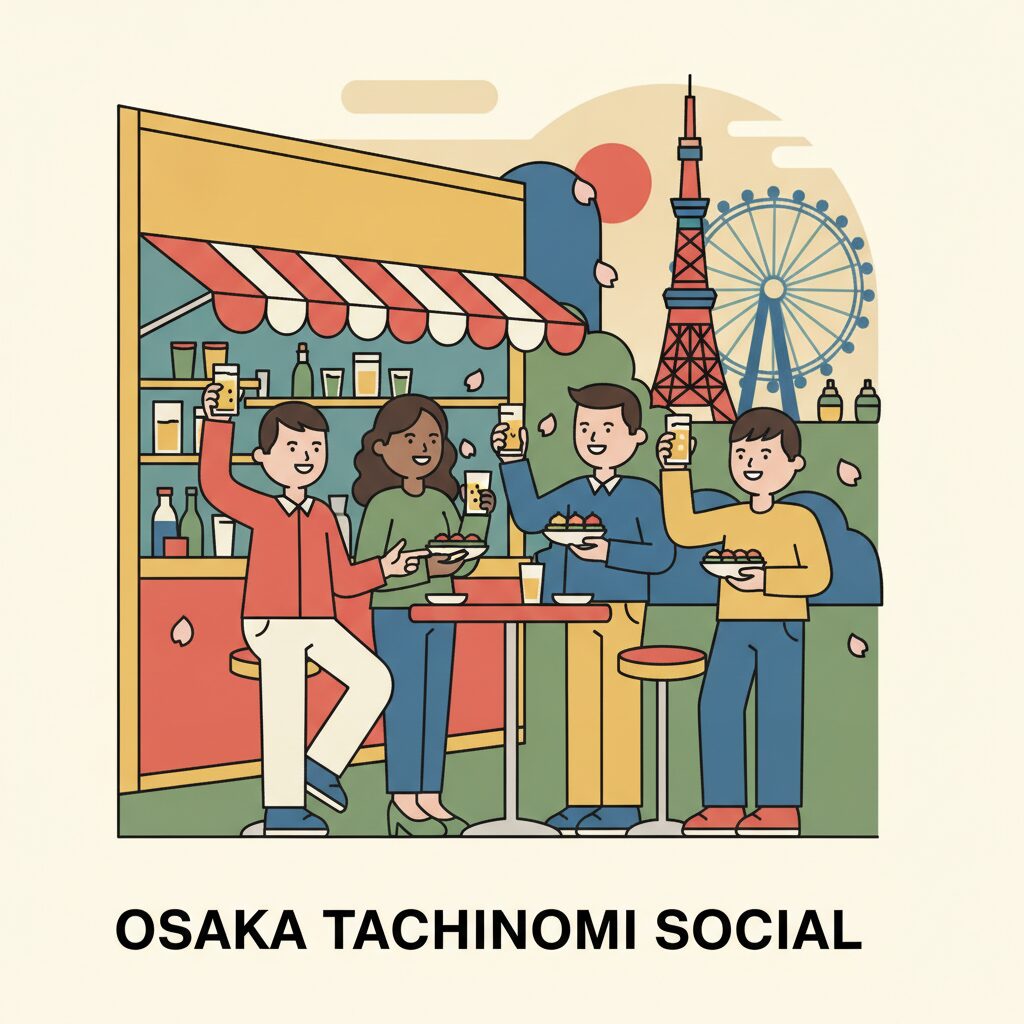
Walk through the side streets of Kyobashi, Namba, or Tenma after five PM, and you’ll feel it. A current of energy spills out from under faded noren curtains, carrying the scent of grilled skewers and the sound of clinking glasses. This is the world of the tachinomi, the standing bar. It’s not just a place to drink; it’s Osaka’s unofficial community center, a proving ground for social skills, and maybe, just maybe, the fastest way to feel like you actually live here. For a newcomer, the scene can be a wall of sound and motion. A tight cluster of salarymen, shopkeepers, and local grandmas, all packed shoulder-to-shoulder, laughing, sipping, and pointing at bubbling pots of stew. You stand at the entrance, a beer in your hand feeling a million miles away. The question isn’t if you can get a drink. The question is how you cross that invisible line from silent observer to active participant. In Tokyo, you might stand in a polished bar for an hour and leave without saying a word to anyone but the bartender. The city’s energy is often a cool, polite hum. But Osaka? Osaka is a conversation waiting to happen. The challenge, and the magic, lies in finding the right way to join in. It’s less about a flawless command of the Japanese language and more about understanding the city’s unique social rhythm. This is where you learn that in Osaka, friendliness isn’t a passive state; it’s an active sport.
For those ready to transition from a quiet observer to an engaged participant, exploring Osaka tachinomi networking strategies can reveal fresh ways to blend effortlessly into the local scene.
The Tachinomi Code: Reading the Room Before You Speak

Before you can win over the locals, you need to understand the landscape. A tachinomi is a finely tuned system, built on decades of unspoken rules. It’s not a chaotic free-for-all, despite appearances. Your first task is to observe and get a feel for the place. Each bar has its own character and flow, and your success depends on your ability to blend into that rhythm without causing disruption.
Space is Sacred (and Extremely Limited)
The first thing you’ll notice is the tight space. Personal space is a luxury Osaka’s tachinomi simply cannot provide. You’ll be close—very close—to others. The counter is the main stage, and finding your spot is the initial challenge. Don’t just push your way in. Catch the eye of the bar master, the `taisho`, and offer a small nod. Point to a narrow gap. A quiet “Koko, ii desu ka?” (Is here okay?) works wonders. Once settled, claim your space but only your space. Hang your bag on a hook beneath the counter or tuck it between your feet. Don’t spread out. The person next to you is lending you a slice of their temporary territory; respect that boundary. The constant, polite “Sumimasen” (Excuse me) as people squeeze past to order or pay forms the bar’s background rhythm. This physical closeness is intentional. It encourages interaction and breaks down the formal barriers that shape much of Japanese life. You’re literally in it together.
The Rhythm of the Order
This isn’t the place to deliberate over the menu for ten minutes. Tachinomi are designed for speed and efficiency, a holdover from their roots as quick stops for laborers and merchants. Observe what the regulars do. Most people enter, state their drink order straight away—”Nama hitotsu!” (One draft beer!)—then scan the food options. The menu often consists of handwritten strips of paper pasted on the wall. If your Japanese reading isn’t strong, this is your chance to engage. Point at your neighbor’s plate and ask the master, “Are, kudasai” (I’ll have that). No one will bat an eye. Payment methods vary. Some use `kyasshu on` (cash on delivery), where you place money in a small tray and the staff deducts the cost as items are served. Others run a tab, paid at the end. Learn the system by watching someone else. Adapting to this brisk, straightforward rhythm shows you’re not just a tourist seeking novelty; you’re someone eager to fit into the local way of life. It’s a sign of respect, and in Osaka, respect is earned through participation.
The Master as Conductor
At the heart of this dynamic space is the `taisho`, the bar master. This person is more than a bartender; they are the conductor of the orchestra, the keeper of the atmosphere. They know everyone’s name, usual drink, and probably their work troubles too. Your relationship with the master is vital. Greet them upon arrival (“Konnichiwa” or “Doumo”). Thank them when you leave (“Gochisousama deshita, oishikatta desu”). Make eye contact. Be patient if they’re busy. The master sets the tone. A good master will notice you, a new face, and might even help bridge conversation between you and a regular. They are the gatekeepers of this community. If the `taisho` accepts you, the regulars are more likely to follow. Their approval acts as your silent, unwritten recommendation into this small, temporary society.
Breaking the Sound Barrier: How to Actually Start Talking
Okay, you’ve claimed your spot, ordered a drink, and are casually sipping it while trying to blend in. Now what? The air buzzes with conversations you’re not part of. This is the crucial moment. The good news is, in Osaka, getting in is easier than you might think. People are generally open and even curious. But you still need the right approach. A blunt “Hello, let’s be friends” won’t cut it. You need a more thoughtful, Osaka-style strategy.
The Ultimate Icebreaker: Compliment the Food
Forget witty pickup lines or deep questions. The safest and most effective way to break the ice in a tachinomi is by talking about the food. Everyone is there to eat and drink—it’s the one thing you all share. Lean slightly toward the person next to you, gesture at their plate, and say, “Sore, oishisou desu ne. Nan desu ka?” (That looks delicious. What is it?). This is your golden key. First, it’s a compliment, which is always appreciated. Second, it’s a question that puts them in the expert role. Osakans love to chat about food and share their knowledge. They take pride in local dishes and favorite spots. This simple question can lead to a passionate monologue about the history of `doteyaki` (beef sinew stew), a top recommendation from the menu, or even an offer of a small taste. It’s an indirect, low-pressure opener centered on a shared experience. You’re not asking about them; you’re asking about the food in front of them. The conversation naturally flows from there.
The “Are You a Regular?” Gambit
Another classic approach is the question, “Koko, yoku kimasu ka?” (Do you come here often?). This works especially well in Osaka for reasons tied to the city’s mindset. Unlike Tokyo, where anonymity and privacy are highly valued, Osaka identity often revolves around a sense of place and community. Being a regular—a `jouren-san`—is a mark of honor. It shows you’re in the know and part of a group. Asking this flatters them by implying they fit in. The answer will almost always be yes, followed by why they love the bar. This is often followed by the question turned back to you: “Anata wa?” (What about you?). This is your chance to respond that you’re new or exploring, and ask for their recommendations. Just like that, a simple question becomes a genuine exchange.
Leverage Your Foreign-ness (Wisely)
Being a foreigner makes you stand out. You can either let this make you shy and isolated or turn it to your advantage. Osakans are known for their curiosity and good-natured meddling spirit, called `sewagaki`. They genuinely enjoy helping and explaining things. So, embrace the role of curious newcomer. Look puzzled over a menu item. Ask for help with your order. A friendly “Sumimasen, osusume wa nan desu ka?” (Excuse me, what do you recommend?) addressed to another customer can be a great conversation starter. They’ll likely be eager to assist. The key is sincerity. You’re not pretending to be clueless for attention; you’re a resident trying to learn. This sets you apart from tourists. Frame your questions around living in Osaka, not just visiting. This shows you’re invested in the culture, something Osakans deeply value.
The Osaka Mindset: Why This All Works Here
These techniques aren’t just random social tricks; they work because they tap directly into Osaka’s cultural DNA. Understanding the historical and social context is what separates simply copying phrases from genuinely connecting with people. Osaka’s social fabric is woven differently than Tokyo’s, and tachinomi is where you can observe those threads up close.
The Merchant’s Soul: Banter as Business
Osaka has always been Japan’s kitchen, a city of merchants (`shounin no machi`). Its culture was shaped not by stoic samurai or courtly nobles, but by practical, quick-witted businesspeople. In this environment, communication is a tool—meant to be fast, efficient, and effective. This mindset extends into social life. Small talk isn’t just for enjoyment; it’s a way to build rapport, assess someone, and facilitate smooth interactions. The back-and-forth banter, the quick jokes, the teasing—all form a kind of social commerce. Tokyo relies on subtlety and reading the air (`kuuki wo yomu`), a more passive skill. Osaka focuses on actively creating the atmosphere. This distinction is key. You’re expected to add to the room’s energy, not just quietly take it in.
“Nori”: The Art of Getting on the Wavelength
Spend enough time in Osaka, and you’ll hear the word `nori` (ノリ). It’s a concept that’s notoriously hard to translate: a mix of vibe, rhythm, and participation. Having good `nori` means understanding the joke and joining in. You match the energy of your conversation partner. If someone makes a silly pun, you groan and laugh. If a group raises their glasses for an impromptu “Kanpai!”, you raise yours—even if you don’t know them. It’s about being a good sport. Being `nori ga warui` (having bad `nori`) is a serious social faux pas—it means you’re a wet blanket who doesn’t get it. In a tachinomi, the `nori` is contagious. Someone might crack a joke with the `taisho`, and the whole bar will erupt in laughter. The key is to join in. Your Japanese doesn’t have to be flawless. A smile, a laugh, or a nod—all are ways to show you have good `nori`. It’s a non-verbal way of saying, “I’m with you.”
The Thin Line Between Nosy and Neighborly
Foreigners often mistake Osaka’s directness for nosiness. Questions like “How old are you?”, “Are you married?”, or “How much is your rent?” can feel intrusive. In the West, these are private matters. In Osaka, they’re often data points to find common ground. They’re mapping you out. Knowing your age might lead to a chat about shared generational experiences. Learning your neighborhood could prompt a recommendation for a local supermarket. This comes from a deeply rooted communal mindset, a relic of a time when your neighbors’ business was closely intertwined with your own. It’s less about prying and more about connecting your story to theirs. The key is not to become defensive. Answer with a bit of humor, then turn the question back on them. It’s all part of the rapid-fire exchange that defines Osaka communication.
From Stranger to “Itsumo no Hito” (The Regular)

A great conversation is just the beginning; building a genuine connection requires time and repeated visits. The aim isn’t merely to have one memorable night but to become a familiar face—the `itsumo no hito` (the usual person). This is the ultimate stage, where you shift from being a guest to becoming part of the setting.
The Art of the Graceful Exit
Equally important as your entrance is how you leave. A tachinomi is a transient space where people stop briefly for a drink and a snack on their way home. Few linger for hours. Knowing when to depart is an essential skill. Avoid being the person who stays long after the conversation has peaked. An ideal visit lasts between 45 minutes and an hour and a half. When it’s time to go, make a clean exit. Catch the `taisho`’s eye, signal for the check (“Okanjou, onegaishimasu”), and pay promptly. To those you were speaking with, a simple “Ja, osaki ni” (Well, I’m heading out first) or “Mata doumo” (See you again) works perfectly. Leaving on a high note ensures you’re remembered warmly. You were a welcome addition to the evening, not someone who overstayed their welcome.
Consistency is Everything
Becoming a regular is a marathon, not a sprint. The most vital factor is consistency. Make an effort to return to the same bar. If possible, visit on the same day of the week. Soon, the `taisho` will greet you with a nod, followed by a “まいど” (`maido`), the classic Osaka merchant greeting. Other regulars will start to recognize you too. You don’t have to engage in long conversations every time. Some days you might just have a quiet drink. But your presence is noted. You’re building familiarity—transitioning from a random foreigner to “that American guy who comes in on Tuesdays.” This is progress. This is how community is formed, not through grand gestures but through small, repeated acts of showing up.
Final Pour: What You’re Really Learning
Mastering the social scene of an Osaka tachinomi goes beyond simply finding a drinking companion. It serves as an immersive introduction to the city’s heart and soul. Here, communication is a lively, energetic exchange filled with humor and an unexpected warmth. Beneath the loud and sometimes brash surface lies a genuine desire to connect, share, and welcome you in—provided you’re willing to embrace the local customs and join the fun.
The standing bar reflects Osaka itself: efficient, somewhat crowded, and unbothered by formalities. It values laughter over polite silence and shared dishes over personal space. As you learn to navigate this world, read the atmosphere, spark conversations over grilled chicken skin, and become a familiar face among strangers, you’re doing more than just making friends. You’re discovering the rhythm of Osaka, learning to stand firmly on your own two feet—in every sense—in one of Japan’s most vibrant and rewarding cities.