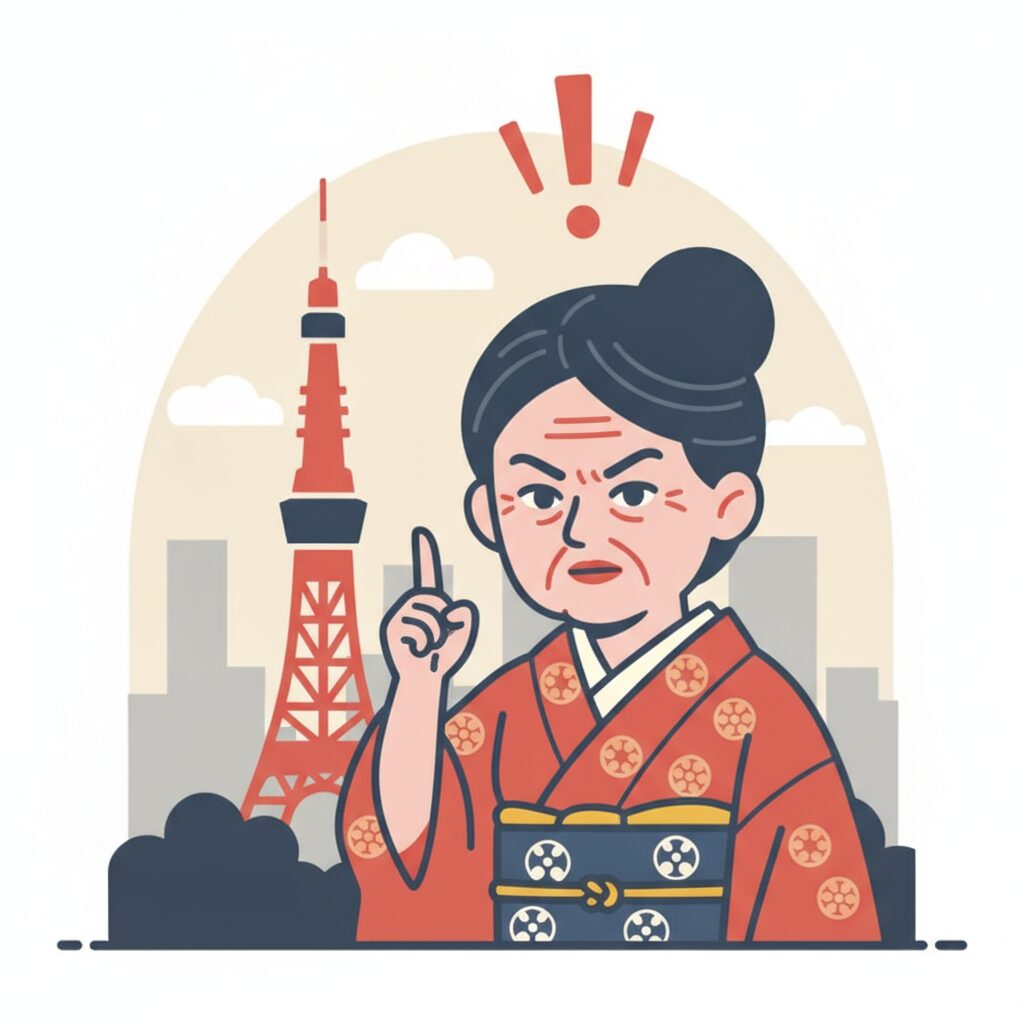
Your first real conversation in Osaka will probably leave you blinking. Not because of a language barrier, but because of a culture shock that happens mid-sentence. You might be at a checkout counter, fumbling for change, and the cashier says, “Hurry up, you’re holding up the line!” Or maybe you’re admiring a shirt in a store and the shop owner walks over, looks you up and down, and declares, “Nah, not for you. The color will wash you out completely.” In Tokyo, such a direct comment would be a social atom bomb. In Osaka, it’s just Tuesday. For anyone moving here from the polished, indirect world of Tokyo—or indeed, from most other places on the planet—the city’s communication style can feel like a splash of cold water. It feels abrupt. It feels personal. It feels… rude. But to leave it there is to fundamentally misunderstand the rhythm and soul of this city. What sounds like a lack of manners is actually a different system of politeness altogether, one built on a foundation of speed, honesty, and a relentless, life-affirming humor. This isn’t about being impolite; it’s about a deep-seated cultural preference for cutting through the noise to get to what’s real. To understand life in Osaka, you have to first learn to hear the music behind the words.
For a deeper dive into how Osaka’s candid charm influences even everyday transactions, exploring conversation shopping in Osaka offers a unique window into local life.
The Tokyo Standard: The Art of the Elegant Evasion
To understand how different Osaka is, you first need to recognize the default setting for much of Japan: the Tokyo standard. In Tokyo, communication resembles a carefully choreographed ballet. The ultimate aim is maintaining `wa`, or group harmony. This results in conversations layered with politeness, deference, and a generous dose of ambiguity. Direct statements, particularly negative ones, are regarded as disruptive and immature. You don’t say “no.” Instead, you might say `chotto…` (“it’s a little…”) and let your voice trail off, allowing the other person to fill in the gap and sparing both from the discomfort of outright rejection. You don’t say “I disagree.” You say, “That is one way to look at it, certainly,” before gently proposing an alternative perspective worth considering. This is the world of `tatemae`, the public face one shows to the world, often concealing one’s true feelings, or `honne`. It’s not about being fake. It’s a highly refined social skill, a method of softening the sharp edges of human interaction to ensure society functions smoothly. If you ask a colleague in Tokyo for their opinion on your report, they will find something to commend. “Your use of data on page three was very thorough,” they might say, skillfully avoiding any mention of the glaring typo on page one or the weak conclusion. The feedback exists, but it’s hidden in what remains unsaid. For an outsider, this can be frustratingly hard to interpret. You’re left trying to read the air, interpreting subtle changes in tone and posture to grasp what’s truly being communicated. It is a quiet, elegant, and often exhausting dance of social preservation.
Osaka’s Counterpoint: Honesty, Humor, and a Dash of ‘Akan!’
Now, crash-land in Osaka. The ballet has ended; the mosh pit is just beginning. Here, the line between `honne` and `tatemae` disappears. People embrace directness, not as a weapon, but as a tool for efficiency and connection. The Osakan mindset sees ambiguity as a waste of time. Why beat around the bush when you can get straight to the point, share a laugh, and move on? This attitude surfaces in countless everyday interactions that would be unthinkable in the capital. That shopkeeper telling you a shirt looks bad isn’t trying to insult your taste; they’re trying to save you from wasting your money and looking ridiculous. In their own way, they’re being genuinely helpful. It’s a service. They’re offering their honest opinion, something a Tokyo shopkeeper would never risk for fear of causing offence. The straightforward refusal is another key aspect of Osaka communication. The word `akan` means “no good,” “don’t,” or “impossible,” and it’s delivered with swift, definitive finality, leaving no room for doubt. Ask for a discount that’s too steep? `Akan!` Try to bend a rule? `Akan!` It’s not harsh or aggressive; it’s simply clear. This clarity is regarded as a form of kindness. A quick, honest “no” allows everyone to understand their position. It’s considered far more respectful than the indecisive Tokyo-style `kangaete okimasu` (“I’ll think about it”), which usually means “no” but drags the process out for days. In Osaka, the truth may be blunt, but at least it’s the truth.
The Currency of the Tease
More than just directness, a defining feature of Osaka speech is the `tsukkomi`, a quick-witted retort or jab that’s central to Japan’s `manzai` stand-up comedy—a genre born and perfected here. But `manzai` isn’t limited to the stage; it’s woven into the fabric of everyday conversation. The dynamic involves a `boke` (the funny fool who says or does something silly) and a `tsukkomi` (the straight man who points it out with a sharp comment). In daily life, people are always playfully searching for the `boke` moment. If you trip on the sidewalk, a friend in Tokyo might look away to spare you embarrassment. A friend in Osaka will shout, `Nani yatten nen!` (“What the heck are you doing!”) before helping you up. It’s not criticism; it’s acknowledgment—a way to share the moment and diffuse the awkwardness with laughter. This playful teasing signals affection. If someone jokes at your expense, it means they feel at ease with you. They’re including you in the exchange. A stranger might tease you about your poor Japanese, or a friend might mock your new haircut. It’s an invitation to volley back with a clever retort of your own. Silence or a polite, thin-lipped smile in response can feel more alienating than a sharp comeback. Joining in this banter is how relationships are built. It’s a conversational style that values wit and engagement over passive politeness.
The Merchant’s Mindset: Where Time is Money and Clarity is King
To understand why Osaka is the way it is, you need to look back in history. For centuries, while Tokyo (then Edo) served as the center of samurai government and strict social hierarchies, Osaka was Japan’s commercial hub. It was the `tenka no daidokoro`, the “nation’s kitchen,” a lively port city full of merchants, artisans, and traders. In the world of commerce, the samurai’s flowery, indirect speech was a disadvantage. Business called for speed, efficiency, and negotiation. It was crucial to know right away if a deal was feasible. Prices had to be negotiated. Trust with strangers needed to be established quickly. This history ingrained a deep-rooted pragmatism into the city’s cultural DNA. The merchant spirit endures. Osakans are famously savvy with money and value securing a good deal. Their communication style reflects this: transactional in the best sense—clear, purposeful, and aiming for a mutually understood outcome. There’s a reason the stereotype of an Osakan is someone who greets another with `Mokari makka?` (“Are you makin’ a profit?”) instead of small talk about the weather. It’s a caricature, of course, but it highlights a culture where practicality and tangible results are highly prized. The social niceties of Tokyo, shaped in the courts and castles of the shogun, were ill-suited for Osaka’s noisy, crowded markets. Here, a different set of social rules developed, prioritizing economic and social function over performative politeness.
Humor as the Ultimate Social Lubricant
If directness drives communication in Osaka, then humor is the lubricant that keeps it running smoothly. The city is undeniably Japan’s comedy capital. Yoshimoto Kogyo, the entertainment giant managing most of the nation’s top comedians, is based here. Yet comedy is more than just a performance; it’s a way of seeing the world. In Osaka, being funny is a highly valued social skill. Conversations aren’t merely information exchanges; they’re opportunities to perform and land a clever line. The aim is often to make the other person laugh. This theatrical quality explains the loud voices, exaggerated gestures, and playful insults—they’re all part of the act. This humorous culture plays a vital role. It softens the sharp edges of the city’s famous bluntness. The shopkeeper who critiques your fashion choice does so with a sparkle in her eye. The friend who teases you for tripping does it with a smile. The humor indicates that the directness isn’t meant to hurt. It’s a social contract: “I’ll be completely honest with you, and to show no harm is intended, I’ll make it funny.” It builds instant rapport, breaks down barriers between strangers, and transforms a routine transaction into a memorable human encounter. A checkout line isn’t just a queue; it’s an audience. Everyone is expected to play their part. This is why Osakans often seem louder and more expressive than their Tokyo counterparts. They’re constantly performing for one another, and laughter is the applause they seek.
Navigating Daily Life: What to Expect from the Streets to the Shops
So what does this mean for everyday life? It means your experience of Japan will be fundamentally different here. In a Tokyo supermarket, the cashier’s interaction is perfectly scripted: polite, efficient, and completely impersonal. In Osaka, the cashier might notice you’re just buying instant noodles and say, “Just this? You need to eat some vegetables or you’ll get sick!” This isn’t a judgment on your choices; it’s a grandmotherly concern from a complete stranger. It’s a brief, fleeting moment of connection. Visit a neighborhood `tachinomi` (standing bar), and the person next to you won’t ignore you. They’ll ask where you’re from, what you’re doing in Osaka, and then offer you some of their fried chicken. The lines between social groups are porous. The default assumption is that everyone is open to conversation. Even interactions with neighbors have a distinct flavor. The concept of `osusowake`, or sharing food with neighbors, remains alive and well, but it might come with a side of unsolicited advice. “I made too much curry, here you go. By the way, your laundry has been out for two days, you should bring it in before it rains.” It’s a mix of generosity and nosiness that is quintessentially Osaka. The boundaries of personal space, both physical and conversational, are simply drawn differently. It takes some adjustment—a willingness to be a bit more open and less private than you might be used to.
The ‘Ame-chan’ Philosophy
Perhaps nothing captures Osaka’s spirit better than the culture of `ame-chan`. This refers to the hard candies that many older women, or `obachan`, carry in their purses to give out to others. They hand them to children, shopkeepers, and the person sitting next to them on the train. An `obachan` might deliver a brutally honest critique of your Japanese accent and then, in the very next moment, press a handful of candies into your palm with a warm, crinkly-eyed smile. This gesture encapsulates the whole philosophy. The direct, sometimes startling comment is the `tsukkomi`. The candy is the warmth, the follow-up saying, “We’re okay. We’re connected.” It’s the mix of sharp and sweet that defines this place. The bluntness is rarely, if ever, meant to be cruel. It’s almost always paired with an act of generosity, humor, or kindness. The key is to wait for the `ame-chan`, whether it’s a literal piece of candy, a shared laugh, or genuinely helpful advice.
From ‘Rude’ to ‘Real’: Cracking the Osaka Code
For a foreigner, the initial adjustment period in Osaka can be challenging. The communication style may come across as invasive and aggressive if you’re unprepared for it. It breaks the unspoken rules of politeness that many of us were brought up with. However, over time, something remarkable often occurs. You begin to appreciate the advantages of this transparency. You realize you never have to guess what an Osakan is thinking—they’ll tell you directly. You discover that a quick, spirited debate over the best way to make `okonomiyaki` isn’t a fight; it’s a passionate way of socializing. You find that the nosy questions from strangers come from a place of genuine curiosity. You start to value the freedom of not having to constantly read between the lines. It can be incredibly liberating. What once felt rude now feels authentic. What seemed like an intrusion transforms into a sense of community. You find yourself becoming a bit more direct, quicker with a joke, and more willing to engage with strangers around you. You start to speak Osaka. The city doesn’t expect you to be polite in the traditional sense—it asks you to be present, engaged, and not to take yourself too seriously. It invites you to join the lively, chaotic, and deeply human comedy of everyday life. For those willing to learn the language and rhythms of its distinctive style of communication, Osaka doesn’t just feel like a place to live—it feels like home.