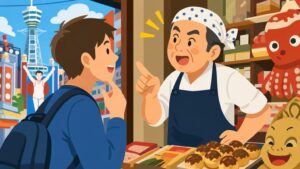
So you’ve landed in Osaka. You’ve mastered the train lines, found your favorite takoyaki stand, and maybe even picked up a few phrases in the local dialect. But something still feels… off. You’re in a conversation, everything seems fine, and then someone cracks a weird joke, another person slaps their arm and shouts, “Nande ya nen!” (Why the heck?!), and everyone erupts in laughter. You’re left standing there, smiling politely, wondering if you missed a vital piece of the cultural puzzle. Or maybe a shopkeeper bluntly told you that the shirt you’re trying on looks terrible, only to pull out a different one with a grin, declaring it perfect. Was that an insult? A compliment? A sales tactic? Welcome to the beautiful, bewildering world of Osaka communication. It’s a high-speed train of humor, directness, and lightning-fast retorts that often leaves newcomers from other parts of Japan, let alone other countries, completely baffled. Forget the quiet, reserved stereotypes you might have about Japan. In Osaka, conversation isn’t just a transaction of information; it’s a performance, a sport, and the primary way people connect. It’s louder, faster, and follows a different set of rules. This isn’t Tokyo, where subtlety is an art form. Here, the art is in the punchline. To truly live here and not just reside, you have to learn the rhythm of the city’s heartbeat, and that rhythm is a stand-up comedy routine disguised as everyday life.
Embracing every quirk of Osaka also means uncovering the lived reality behind its exuberant humor, as seen in shotengai apartment living that provides a raw glimpse into local life.
The Comedy Club That Never Closes: Humor in Everyday Life
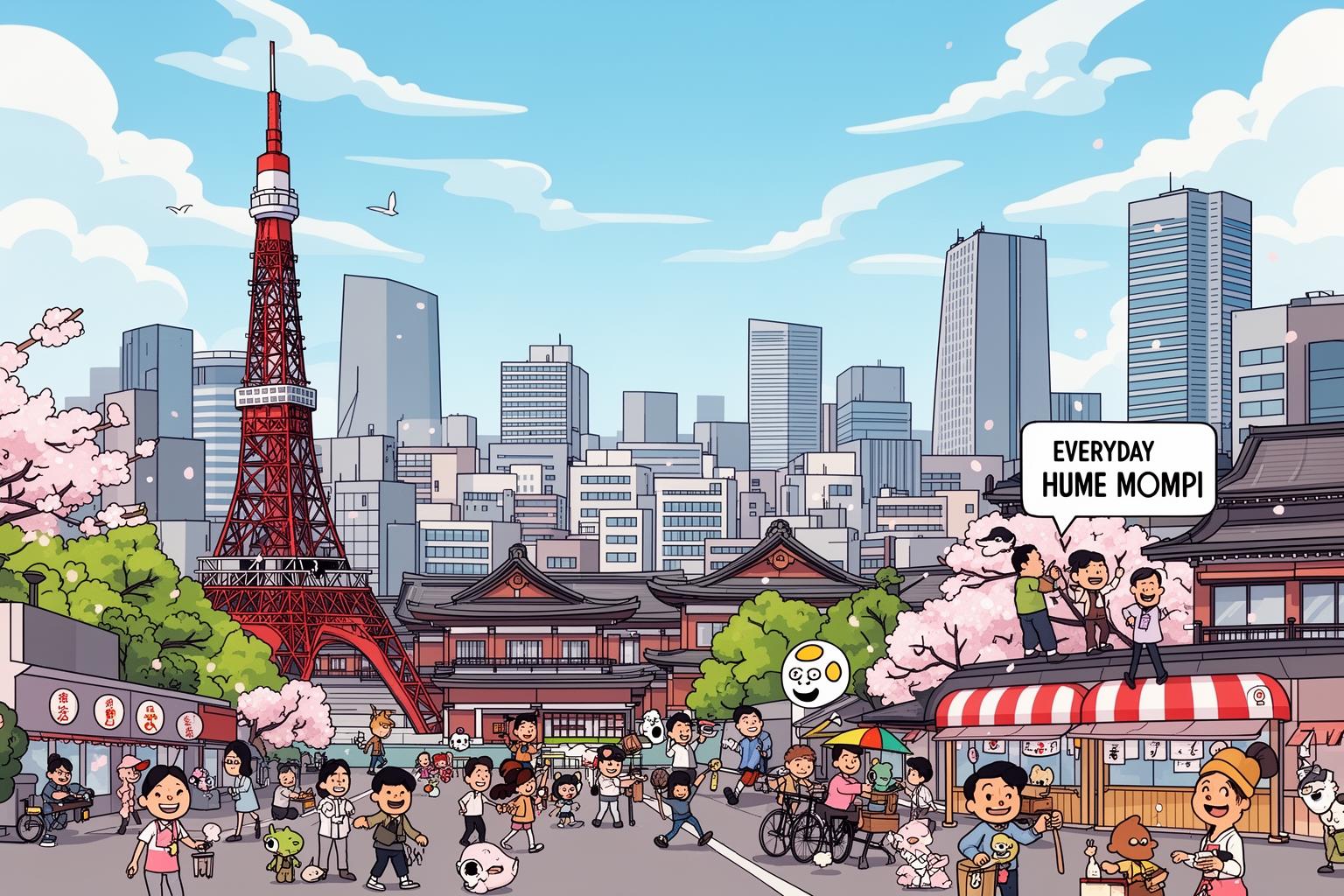
First things first: in Osaka, humor is the default mode—it’s the air people breathe. While comedy, or owarai, is a huge industry throughout Japan, in Osaka it’s a grassroots phenomenon deeply woven into everyday interactions. A trip to the grocery store, a chat with your landlord, or a ride on the Midosuji line—all become potential stages for a quick laugh. This isn’t about delivering structured jokes with a clear setup and punchline; it’s about spotting the absurdity in the ordinary and highlighting it, often at your own expense.
More Than Just Jokes: The ‘Owarai’ Mindset
This commitment to humor stems from Osaka’s history as a merchant city. In a competitive commercial environment, building rapport and trust swiftly was essential. Humor served as the ultimate icebreaker. It was a strategy to disarm customers, put them at ease, and seal deals with a smile. That spirit remains alive today. For instance, a shopkeeper in a shōtengai (shopping arcade) might notice you eyeing an expensive item and joke, “Be careful, if you buy that, you’ll have nothing left for dinner! Maybe just enjoy this free sample instead?” This self-deprecating humor makes you laugh, eases the tension, and paradoxically encourages you to buy even more. Here, a good laugh is valued far more than maintaining a serious demeanor. While business and professional encounters in Tokyo often require formality and seriousness, in Osaka, landing a witty line that makes someone chuckle is frequently seen as a sign of social savvy and can be more effective than the most polished pitch. It signals that you don’t take yourself too seriously, which in turn builds trust.
The ‘Boke’ and ‘Tsukkomi’ Dynamic
To grasp Osaka’s humor, you must understand the iconic pair of boke and tsukkomi. This forms the foundation of Japanese stand-up comedy (manzai), but in Osaka, it’s also how friends, family, and even strangers interact. It’s a conversational dance.
The ‘Boke’ (ボケ): The Airhead
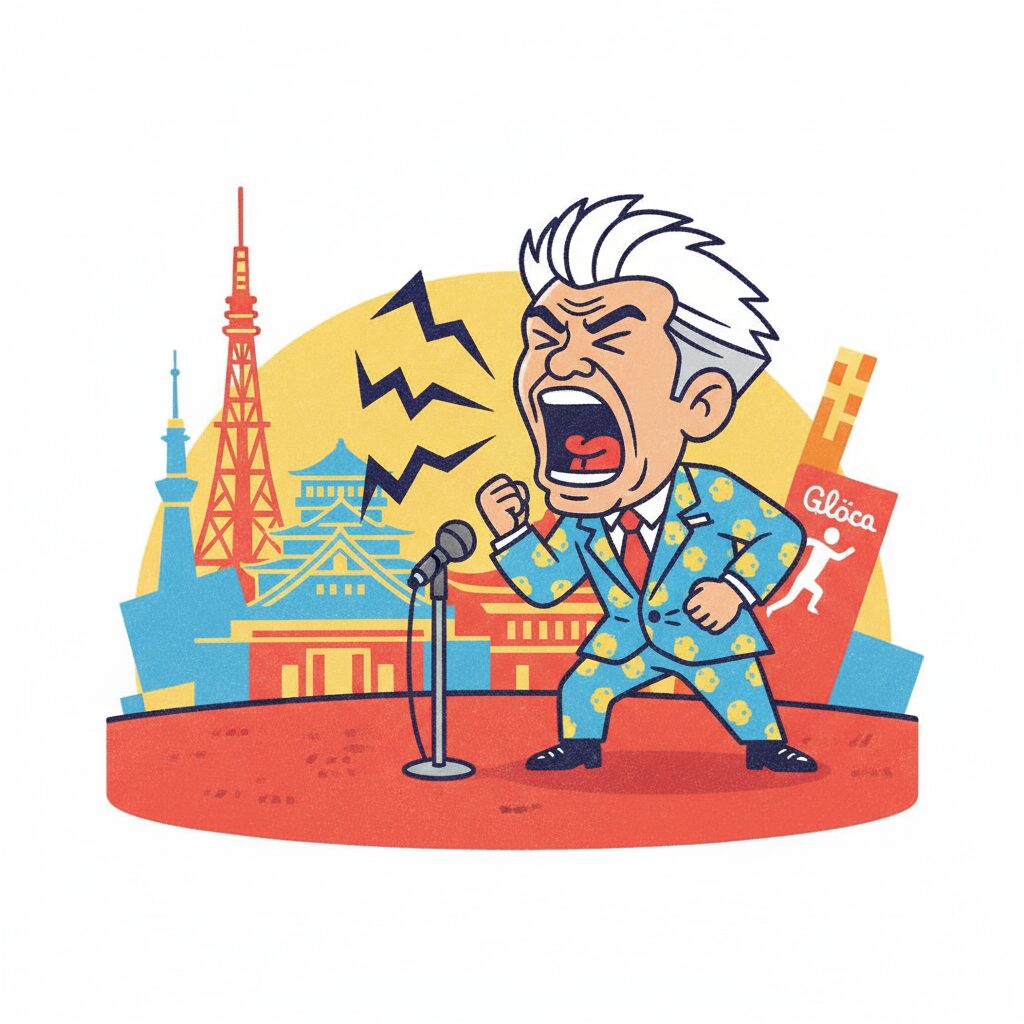
The boke is the fool, the funny one, who says or does something absurd, incorrect, or just plain silly—often intentionally. The role of the boke is to create a comic opening, a softball to be hit by someone else’s wit. For example, while looking at the Glico running man sign in Dotonbori, a boke might say, dead serious, “Wow, he’s been running for so long, he must be thirsty. Should we get him a drink?”
The ‘Tsukkomi’ (ツッコミ): The Straight Man
The tsukkomi is the responder, the straight man. Their job is to quickly point out the absurdity of the boke’s comment with a sharp, witty comeback. It’s a correction, but a comedic one. In response to the Glico man remark, the tsukkomi might snap back, “He’s a sign, idiot! What are you gonna do, climb up there with a bottle of water? Get a grip!” This is often accompanied by a light, playful tap on the head or shoulder. The classic tsukkomi phrase is “Nande ya nen!” which roughly means “What the hell?!” or “You’ve got to be kidding me!”
For outsiders, this dynamic can seem confusing. The tsukkomi might sound harsh or aggressive, but it’s actually a sign of affection and engagement—it means “I’m listening, and I’m joining in.” The true social misstep in Osaka isn’t the tsukkomi itself, but failing to respond with one. If your Osakan friend takes the boke role and you simply nod or offer a weak laugh, the exchange feels incomplete. You’ve dropped the comedic ball. They might assume you’re bored, upset, or didn’t understand. You don’t need to be a comedy expert, but recognizing the setup and responding with a simple “No way!” or a playful eye-roll shows you’re in on the game.
“Just Say It!” The Power of Osaka Directness
If humor is Osaka’s favorite pastime, directness is its native tongue. This distinction perhaps stands as the most significant contrast with Tokyo and the rest of Japan, often leading to misunderstandings among foreigners. The well-known Japanese concepts of tatemae (one’s public face) and honne (one’s true feelings) highlight how people often diplomatically avoid confrontation or offense. Osaka, however, discards that unwritten rule entirely.
Cutting Through the ‘Tatemae’
In Osaka, people generally speak their minds. This can be surprising at first. If you ask for an opinion, you’ll get an honest one. An acquaintance might bluntly say, “That haircut doesn’t suit you at all,” or “Your Japanese has gotten worse since I last saw you.” Such comments would be almost unthinkable in Tokyo, where they’re considered extremely rude. But in Osaka, this honesty often conveys care. The underlying message is, “I’m telling you this because I’m your friend and want the best for you,” or “I’m comfortable enough with you to be frank.” They’re sparing you from having to figure it out on your own. This sincerity extends to compliments as well. An Osakan compliment feels deeply genuine since you know they wouldn’t say it unless they meant it. This straightforwardness promotes transparency, meaning you seldom have to guess what an Osakan is thinking—a refreshing break from the subtle dance of implied meaning common elsewhere.
The Art of the Deal: Conversation as Negotiation
This straightforwardness echoes Osaka’s mercantile spirit. Efficiency and clarity benefit business. Haggling, or at least playful negotiation, remains vibrant in many of the city’s sprawling shōtengai. This isn’t about being cheap; it’s a mode of communication and entertainment. It’s a test of wit and a way to build rapport with the vendor. The exchange might go like this:
You: “This is nice, but a little expensive…” Vendor: “It’s the best quality! But for you, since you have such a nice smile, maybe I can do a little something.”
The real purpose is in this back-and-forth. Securing a 100-yen discount isn’t the main achievement. The triumph lies in the shared laughter and the human connection formed. Engaging in this kind of banter shows your understanding of local culture, and vendors often respond warmly right away. It turns a simple purchase into a memorable experience.
Navigating the Nuances: A Foreigner’s Survival Guide
Understanding the theory is one thing, but applying it in real life is another. It takes time to tune your senses to Osaka’s distinctive conversational rhythm. Here are some tips to help you avoid common mistakes and start engaging.
Don’t Confuse Passion with Anger
People in Osaka speak with a strong, melodic dialect called Osaka-ben. It features pronounced intonations and a louder volume compared to other areas. A friendly and enthusiastic chat about the Hanshin Tigers baseball team or the best okonomiyaki spot can easily sound like a heated argument to those unfamiliar with the style. Foreigners often mistake this passion for anger or hostility. The trick is to focus beyond the volume and consider the context. Are they laughing? Is their body language relaxed? Are they making eye contact and smiling? Most of the time, they’re just genuinely excited. It’s the sound of people being fully engaged, not angry.
How to Try Your Own ‘Tsukkomi’
Jumping into the boke and tsukkomi interaction might seem daunting, but it’s the quickest way to build connections. You don’t need flawless Japanese or perfect comedic timing. What matters is the effort.
Start small. When a friend says something noticeably silly, just give them a playful, incredulous look and say, “Nande ya nen!” They will almost certainly be pleased. It’s like a secret passcode to the Osaka club. As you gain confidence, try more specific comebacks. If someone complains about being tired after sleeping ten hours, you can say, “You slept too much!” (Nesugi ya!). The key is the tone—keep it light and friendly. Osakans are usually very forgiving of foreigners trying to join in. Your awkward tsukkomi will most likely receive laughter and encouragement, not criticism.
When Silence Isn’t Golden
In many cultures, including other parts of Japan, silence can mean respect, reflection, or agreement. But in Osaka conversations, prolonged silence can be a conversation killer. It might be seen as boredom, confusion, or disinterest. The pace is rapid, and you’re expected to keep up. This means using more energetic aizuchi (interjections showing you’re listening). Instead of a quiet “un” (yes), try a livelier “Honma ni?” (Really?) or “Eeeh, uso!” (Whaat, no way!). Active participation is essential. Ask questions, share your own opinions openly, and don’t hesitate to interrupt with a point or a joke. It’s not rude—it’s just part of Osaka’s fast, overlapping conversational style.
Why This Matters for Daily Life in Osaka
So why is it so crucial to understand this seemingly chaotic communication style? Because it’s the key to everything that makes life in Osaka unique. It’s the difference between being a tourist and becoming a local, between merely observing the culture and truly being part of it.
Beyond the Stereotypes
The well-known Osaka stereotypes—the loud aunties (obachan) donned in leopard print, the obsession with food, the fierce local pride—aren’t just random traits. They are outward manifestations of this deeply rooted communication culture. The obachan who offers you a free candy on the street isn’t just being kind; she’s starting a conversation. She’s throwing out a boke, waiting for you to respond. The passionate debates over the best takoyaki shop aren’t really about octopus balls; they’re about community and shared enthusiasm, expressed in the most direct and humorous way possible. These stereotypes are merely the surface of a culture that values warmth, humor, and sincere human connection over formality and pretense.
Building Real Connections
In Tokyo, you could live for years without ever speaking to your neighbors. Relationships often develop slowly within structured settings like work or school. In Osaka, you can make a new best friend while waiting in line for ramen. The communication style is meant to break down barriers quickly. By being direct and sharing a laugh, you can skip months of polite formalities and start connecting with the real person almost immediately. When you learn to banter with the fruit stand owner, joke with the staff at your local izakaya, and deliver a sharp tsukkomi with your friends, you’re no longer just a foreigner living in a Japanese city. You become part of the fabric of Osaka. You’re in on the joke. And in a city that’s essentially one big, hilarious, never-ending conversation, being in on the joke is the best place to be.