So, you’ve been in Osaka for a bit. You’ve mastered the train map, you can tell the difference between shoyu and shio ramen, and you no longer flinch when a shopkeeper yells “Maido!” as you walk in. You’re starting to feel the rhythm of the city. Now, you’re thinking about putting down some roots, finding a place to call your own for the long haul. You start looking at apartments online. You see the slick, modern high-rises in Umeda, the shoebox-sized studios in Shinsaibashi, all with price tags that make your eyes water. And then you see them. Sprawling complexes of identical, concrete buildings, usually a bit further out on the train line. They look like something out of a history book, a stark contrast to the gleaming glass towers. This, my friend, is the ‘Danchi.’
You’ve probably wondered what goes on inside those uniform walls. Are they just cheap, rundown blocks for people who can’t afford better? Or is there something more to them? The answer, like most things in Osaka, is complicated, fascinating, and a whole lot more human than you’d expect. Danchi aren’t just buildings; they’re living museums of Japan’s post-war dream, and today, they’re home to some of the most unique and tightly-knit communities in the country. Forget the tourist guides. If you want to understand a raw, unfiltered slice of Osaka life—the way people really live, interact, and build communities—you need to understand the Danchi. It’s a world of low rent, high expectations of neighborliness, and cultural quirks you won’t find in any shiny new condo. This is the reality of renting in Osaka’s legacy apartment blocks, a deep dive into the costs, the community, and the culture that defines them.
Discovering the unexpected charm of Osaka’s Danchi often leaves you eager to explore other local traditions, such as finding the perfect meal in Osaka’s depachika to fully embrace the city’s vibrant culture.
The Ghost of Japan’s Economic Miracle: What Exactly IS a Danchi?
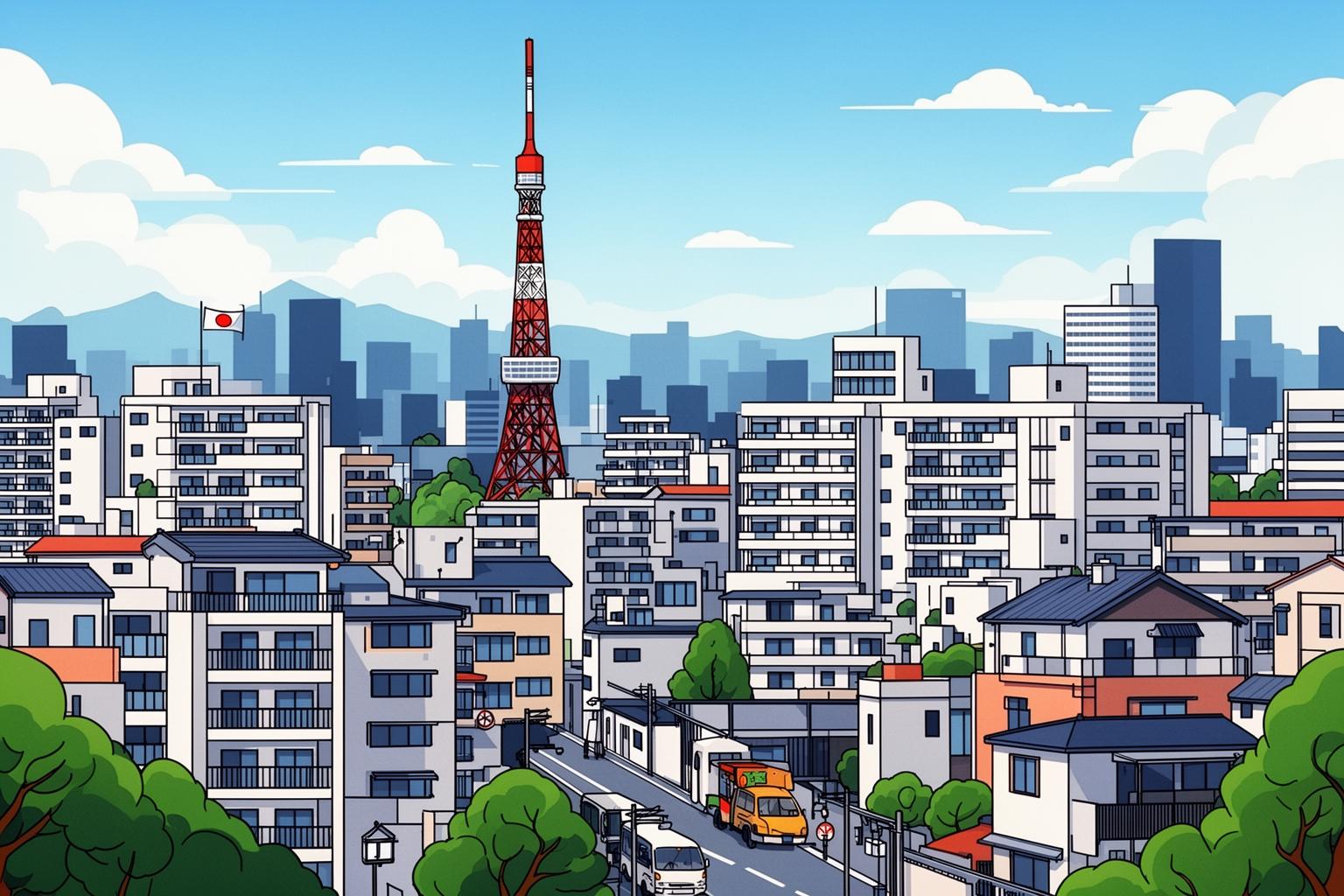
Before we discuss what it’s like to live in one, you need to understand where they originated. These concrete giants didn’t just emerge out of nowhere—they are the marks of a past era, the tangible symbol of Japan’s determination to rebuild and modernize after the devastation of war. They embody a story of hope, transformation, and the steady passage of time.
A Quick Trip Back in the Day
Imagine Japan in the 1950s and 60s. The war has ended, and the country is experiencing rapid economic growth. People are streaming from rural areas to cities like Osaka to work in the flourishing factories and offices. However, there was a problem: nowhere to live. The cities were overcrowded, and traditional wooden houses couldn’t meet the housing demand. The government’s answer was bold and unprecedented in scale: the Danchi. These public housing projects were on a scale Japan had never encountered before.
For the generation moving in, a Danchi represented the peak of modern living—it was the dream. Consider that many came from old farmhouses with dirt floors and shared toilets. Suddenly, they had their own private apartment, complete with a clean stainless-steel kitchen, a private bathroom with a flush toilet, and separate rooms for sleeping and dining. It was revolutionary. The classic Danchi layout, the ‘nDK’ (number of rooms plus Dining Kitchen), became the model for Japanese family life. Owning the ‘Three Sacred Treasures’—a television, refrigerator, and washing machine—and living in a Danchi defined middle-class success.
The Danchi Look and Feel
Stroll through a Danchi complex today, and you can still sense that mid-century ambition. The architecture prioritizes function over form. Rows upon rows of five-story walk-ups or taller buildings with elevators, all constructed of reinforced concrete, look strikingly similar. There is a certain brutalist honesty to them. They weren’t designed to be pretty; they were built to be efficient, durable, and house millions of residents.
But it isn’t just about the structures. The master plan for these complexes was comprehensive. The designers didn’t just create apartments; they crafted entire neighborhoods. Between the buildings, you’ll find expansive green spaces, parks with aging but still-used playground equipment, and perhaps a small covered shopping arcade, a ‘shotengai,’ at the center. Spaces were set aside for the local clinic, post office, and elementary school. The goal was to build self-sufficient communities where families had everything they needed within walking distance. This layout encouraged interaction—you couldn’t live in a Danchi and remain invisible; the very design fostered engagement with your neighbors.
Danchi Today: A Tale of Two Realities
Skip ahead to today, and Danchi are at a turning point. The young families who moved in with hope during the ‘60s have grown old. Their children have long since left, often relocating to modern private apartments or houses. As a result, many Danchi complexes now house a rapidly aging population. This demographic shift has transformed their atmosphere—now quieter, slower-paced, and shaped by the rhythms of elderly residents.
At the same time, a new chapter is emerging. Organizations like the UR (Urban Renaissance Agency), which manages many of these properties, have started renovating them. They’re updating interiors with modern kitchens and bathrooms, removing walls to create open-plan living spaces, and even collaborating with brands like MUJI to develop stylish, minimalist apartments. These renovated units attract a new generation: young people, artists, and increasingly, foreigners drawn by affordable rent and a unique community vibe. So, when you look at a Danchi today, you’re seeing two realities at once: a quiet retirement community alongside a growing hub for a diverse new generation seeking an alternative to mainstream rental options.
The Brass Tacks: Cost, Space, and Getting a Key
Let’s get down to the practical details. Why would you, a foreigner living in the 21st century, choose to reside in a 50-year-old concrete apartment block? For many, the answer begins with one simple, beautiful word: money. But the appeal of Danchi, especially those managed by UR, goes well beyond just the affordable rent. It’s about avoiding the entire soul-crushing, wallet-draining ordeal that is the standard Japanese rental process.
The Price is Right… Usually
The most obvious attraction of Danchi living is the cost. It’s inexpensive. Seriously inexpensive. In a city like Osaka, where a tiny, modern 1K (one room and a kitchen) in a central area can easily cost ¥70,000 or more per month, a Danchi provides a welcome relief. You can often find a spacious 2DK or even 3DK (two or three rooms plus a dining/kitchen area) in a Danchi for anywhere between ¥40,000 and ¥60,000. Yes, you might be a bit farther from the city center, perhaps a 15-minute walk to the closest station, but the trade-off in space and cost is huge. For the price of a tiny place downtown, you get a unit with separate rooms, actual storage space, and a balcony you can stroll on without holding your breath.
No Key Money, No Agent Fee, No Guarantor? The UR Danchi Dream
This is the real game-changer, the holy grail for foreign renters in Japan. The usual process of renting a private apartment is a gauntlet of fees. First, there’s the real estate agent’s fee (‘chukai tesuryo’), generally one month’s rent. Then there’s the notorious ‘reikin’ or key money—a non-refundable gift to the landlord, often one or two months’ rent. Then comes the ‘shikikin’ or security deposit, another one or two months’ rent. On top of that, you almost always need a Japanese guarantor (‘hoshonin’) or a guarantor company, which costs even more money. Before moving in, you could be paying the equivalent of five or six months’ rent upfront.
UR Danchi eliminates all of that. When you rent directly from UR, there is:
- No key money.
- No agent fee.
- No guarantor needed.
- No lease renewal fees.
You just pay your security deposit (usually two months’ rent) and the first month’s rent. That’s it. This single factor makes Danchi highly accessible to foreigners, who often struggle with the guarantor requirement and the huge upfront costs of private rentals. It removes the biggest barriers and makes the entire process much less stressful.
The Catch: The Paperwork and the Waiting Game
Of course, it’s not all smooth sailing. This is still Japan, after all, and bureaucracy is unavoidable. To rent a UR apartment, you must meet a specific income requirement, typically four times the monthly rent. You’ll need to provide official documents to prove this, such as tax slips (‘gensen-choshu-hyo’) or a certificate of income (‘shotomei shomeisho’). The process can be somewhat rigid, and since all the forms are in Japanese, you might need language assistance if you aren’t fluent.
Additionally, the most desirable apartments—the newly renovated ones in prime locations—are highly sought after. You can’t simply walk in and sign a lease. Often, there’s a lottery system and you have to hope your number is picked. For other units, you might be placed on a waiting list. Patience is essential. This isn’t like the private market where agents are eager to get you in tomorrow. The UR runs on its own timetable.
What You Get for Your Yen
So, you’ve managed the paperwork and obtained the key. What’s the apartment actually like? Entering an older, unrenovated Danchi unit can feel like stepping back in time. You’ll probably find one or two rooms with tatami mats, which have a distinctive, grassy smell that may be either charming or off-putting, depending on your preference. The walls might be divided by ‘fusuma,’ traditional paper sliding doors, which offer flexibility but poor soundproofing. The kitchen could be somewhat outdated, and the bathroom might be a ‘unit bath’—a single molded plastic unit containing the tub, sink, and toilet. But the main advantage is space. The rooms tend to be a good size, and the layouts are practical for everyday living. You get a sense of permanence and sturdiness that’s missing in the flimsy, plasterboard-walled apartments so common today.
The Heart of the Matter: The Danchi Community
If you believe renting a Danchi is merely a financial transaction, you are profoundly and fundamentally mistaken. You aren’t just handed the keys to an apartment; you are implicitly entering into a social contract. You become part of an established, deeply rooted community with its own rules, rhythms, and relationships. In an impersonal modern city, the Danchi stands as an island of traditional neighborliness. Whether that’s a paradise or a prison depends entirely on your personality.
You’re Not Just Renting, You’re Enlisting
In a typical Tokyo high-rise, you could live for years without ever learning your next-door neighbor’s name. That is unthinkable in an Osaka Danchi. Life here is communal by both design and culture. Shared hallways, central courtyards, communal garbage collection points, and the local ‘shotengai’—all these spaces are intended to encourage encounters with your neighbors. And in Osaka, simply crossing paths means interacting. This isn’t about polite, distant nods; it’s about genuine, daily engagement.
This strong community spirit is known as ‘gokinjo-zukiai’—roughly translated as ‘neighborly relations’—and in a Danchi, it’s not an optional elective; it’s a mandatory part of life. Your existence is intertwined with those around you. They will know your schedule. They will know when you have visitors. They will even know what you’re cooking because they can smell it in the hallway. This can be an incredible support system, especially if you’re a foreigner feeling isolated. But if you are fiercely private, it can feel suffocating.
The Unspoken Rules of Neighborliness
Life in a Danchi is governed by a complex web of unspoken but strictly enforced social rules, mastering which is essential for a peaceful coexistence.
First, greetings (‘aisatsu’) are absolutely obligatory. Walking through the complex, you are expected to greet everyone you meet with a cheerful ‘Konnichiwa’ or ‘Ohayo gozaimasu.’ You greet the elderly man tending his bonsai on the balcony, the mother watching her children at the playground, and the person sharing the elevator with you. Silence is considered rude and antisocial. A simple greeting shows you are part of the community, that you pose no threat, and that you belong.
Second, be ready for the neighborhood watch. The Danchi is full of retirees, particularly keen-eyed ‘oba-chans’ (aunties) who have lived there for decades. They serve as the unofficial security system, social glue, and keepers of neighborhood knowledge. They know who is new, who is unwell, and whose son is struggling with exams. They will notice if your newspapers pile up and might check on you. This can be genuinely caring but can also feel like living under constant, benevolent surveillance.
Finally, shared responsibilities come with the territory. Many Danchi have a residents’ association, the ‘jichikai.’ You’re expected to join and pay a small monthly fee. This group organizes community events and manages communal tasks. You might be assigned to ‘soji toban’—a rotating cleaning duty for common areas like hallways and stairwells. Skipping this is a major social faux pas; it’s a tangible expression of the idea that everyone must contribute to the group’s well-being.
Festivals, Fire Drills, and Forced Fun?
The jichikai also arranges a steady flow of community events. There will be a summer ‘matsuri’ (festival) in the central park, complete with food stalls and games for children. There might be a ‘mochi-tsuki’ (rice cake pounding) event at New Year’s. And without fail, there will be mandatory disaster preparedness drills. While technically optional, your absence will not go unnoticed. For many, these events offer a wonderful way to meet neighbors and feel connected. You share food, engage in small talk, and build bonds. For more introverted individuals, these occasions can seem like unavoidable social obligations. It’s an essential part of the Danchi experience: you benefit from affordable rent, but you’re also expected to show up for the events.
Osaka Flavor: How Danchi Life is Different Here
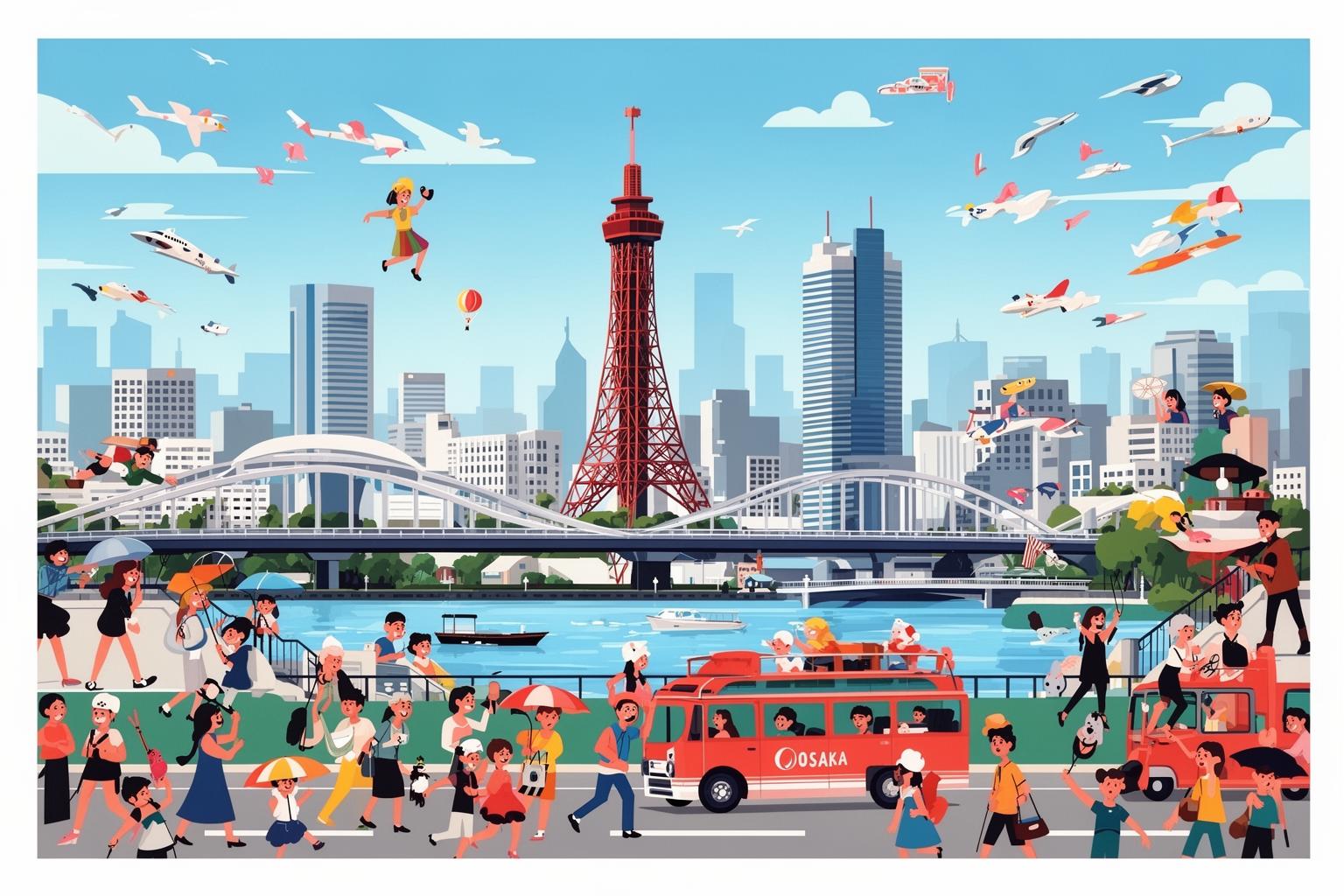
Now, Danchi communities can be found throughout Japan, but those in Osaka have a unique character. They represent the typical Japanese model of community living, yet with amplified energy and a strong dose of Osaka’s renowned directness and practicality. The core principles remain the same, but the way they are carried out is louder, messier, and often more intrusive—an approach many people find charming.
Louder, Closer, and More Meddlesome
If the standard for ‘gokinjo-zukiai’ in a Tokyo Danchi is polite and reserved, the Osaka version is quite the opposite. Osakans are known for breaking down the social barriers that often shape Japanese interactions. Neighbors won’t just exchange greetings; they’ll engage you in a full conversation right in the hallway. They’ll ask where you’re from, what you do for work, and whether you’re eating well. The focus is less on respecting personal boundaries and more on actively fostering connection.
This attitude extends to a lovely custom called ‘osusowake,’ which involves sharing food. If your neighbor cooks a large pot of curry or receives a box of oranges from their countryside relatives, expect them to come by with a portion for you. This gesture conveys goodwill and a sense of togetherness. The proper response is to accept it warmly and return the container later, possibly with a small thank-you gift of your own. This ongoing, casual exchange of little kindnesses forms the lifeblood of an Osaka Danchi.
The Shotengai Spirit
Many older Danchi are anchored by their own small ‘shotengai,’ a local shopping street that serves as the community’s heart and soul. It’s not a sterile, air-conditioned mall, but a collection of small, family-run shops: the butcher who knows exactly which cuts you prefer, the tofu maker whose goods sell out by noon, and the gruff yet kind vegetable vendor who throws in an extra onion for free. This is where social life in the Danchi unfolds. The oba-chans gather here to gossip, share news, and keep watch on the neighborhood. Shopping is not merely a transaction; it’s a social event. You’re not just a customer—you’re a neighbor. This intimate, relationship-driven commerce is a quintessential Osaka experience, thriving within the enclosed world of the Danchi.
“Ame-chan?” The Universal Osaka Greeting
Here’s a classic scene that perfectly embodies the spirit of an Osaka Danchi. As you walk through the courtyard, a local oba-chan will stop you with a smile, say hello, and inevitably dig into her purse or pocket to offer you a piece of hard candy, asking, “Ame-chan?” This isn’t a random kindness—it’s a cultural ritual. ‘Ame-chan’ (a cute term for ‘candy’) acts as Osaka’s social lubricant. It’s a small, edible icebreaker, a gesture that says, “I see you. You belong here.” Refusing it is nearly unthinkable. You accept the candy, say thank you, and affirm your place in the community—one sweet piece at a time.
The Quirks and Challenges: Is Danchi Life for You?
This may all sound incredibly charming, evoking a nostalgic return to a simpler, more connected era. And in many respects, it is. However, it’s essential to approach it with your eyes wide open. Living in a Danchi presents a distinct set of challenges and peculiarities that can be deal-breakers for some. It’s a way of life, not just a place to reside, and it doesn’t suit everyone.
The Generation Gap is Real
The most significant factor shaping Danchi life today is its aging population. The majority of your neighbors will likely be over 65. They are wonderful, kind individuals, but they follow a different set of rules and rhythms. The entire complex is usually silent by 9 p.m. If you enjoy having friends over late or playing music, you are likely to encounter problems. The standards for what counts as ‘noise’ are much stricter. The community’s values largely reflect those of retired Japanese people from the Showa era. This can result in cultural friction, especially around modern habits that seem perfectly normal to you but are disruptive to them.
Old Buildings, Old Problems
Let’s be frank about the buildings themselves. They are old. Even the renovated units feature just new interiors within a 50-year-old concrete shell. This means you have to accept certain realities. Soundproofing is typically nonexistent. You will hear your neighbor’s television, their arguments, and their vacuum cleaner. Insulation can be poor, making the apartments cold in winter and hot in summer. Most units don’t include air conditioners, so you’ll need to purchase and install your own. You might also face old plumbing or electrical wiring that can’t handle many modern appliances simultaneously. You’re trading modern convenience for space and affordability.
The Goldfish Bowl Effect
The lack of anonymity cannot be overstated. In a Danchi, you live life in full view of your neighbors. They’ll see you bring home groceries, notice who visits you, and pay attention if you put out your garbage on the wrong day. There is very little privacy in the Western sense of the word. For someone from a culture that highly values individualism and personal space, this ‘goldfish bowl’ effect can feel extremely intrusive. If you value anonymity in a big city, living in a Danchi will be very challenging. However, if you’re combating loneliness and seeking connection, this very environment can be a lifesaver.
The Rules, Oh, the Rules
Finally, Danchi life is ruled by numerous very specific and strict regulations. Garbage disposal is the most well-known example. Different days exist for burnables, plastics, cans, bottles, and oversized items. You must use designated bags and place your trash in a specific location at a specific time. Getting this wrong is a cardinal sin, and neighbors will gently (or not so gently) correct you. There are also rules about what you can store on your balcony, regulations regarding pets, and guidelines for common area use. These are not mere suggestions; they are the law of the land, enforced by the ever-watchful eyes of the community. Order and harmony take precedence, with your personal desires often coming second.
A Concrete Choice: Finding a Home in Osaka’s Past
So, after all this, is living in a Danchi a good idea? The answer is a classic ‘it depends.’ It is neither objectively ‘good’ nor ‘bad’; rather, it’s a trade-off. It’s a deliberate choice to step away from the default path of modern urban living and embrace a different lifestyle, with all its advantages and disadvantages.
You give up the sleek amenities, soundproofing, and anonymity of a new ‘mansion’ for something far more substantial: space, affordability, and a strong, built-in community. You exchange the freedom of privacy for the reassurance of knowing your neighbors are watching out for you. You trade the convenience of living downtown for a slower, more intentional way of life, grounded in the rhythms of a multi-generational neighborhood.
For the wrong person—someone fiercely independent, who values privacy above all else, and resents rules and social obligations—Danchi life would be a frustrating, claustrophobic experience. But for the right person—someone open-minded, patient, perhaps a bit weary of the impersonal nature of city living, and genuinely seeking to connect more deeply with Japanese culture—it can be an incredibly rich and fulfilling experience. It offers a chance to live in a real neighborhood, build genuine relationships, and discover a side of Osaka that most foreigners, and even many young Japanese, rarely experience. Choosing a Danchi means choosing to live in a community, not just beside it. It’s a concrete choice, in every sense of the word.