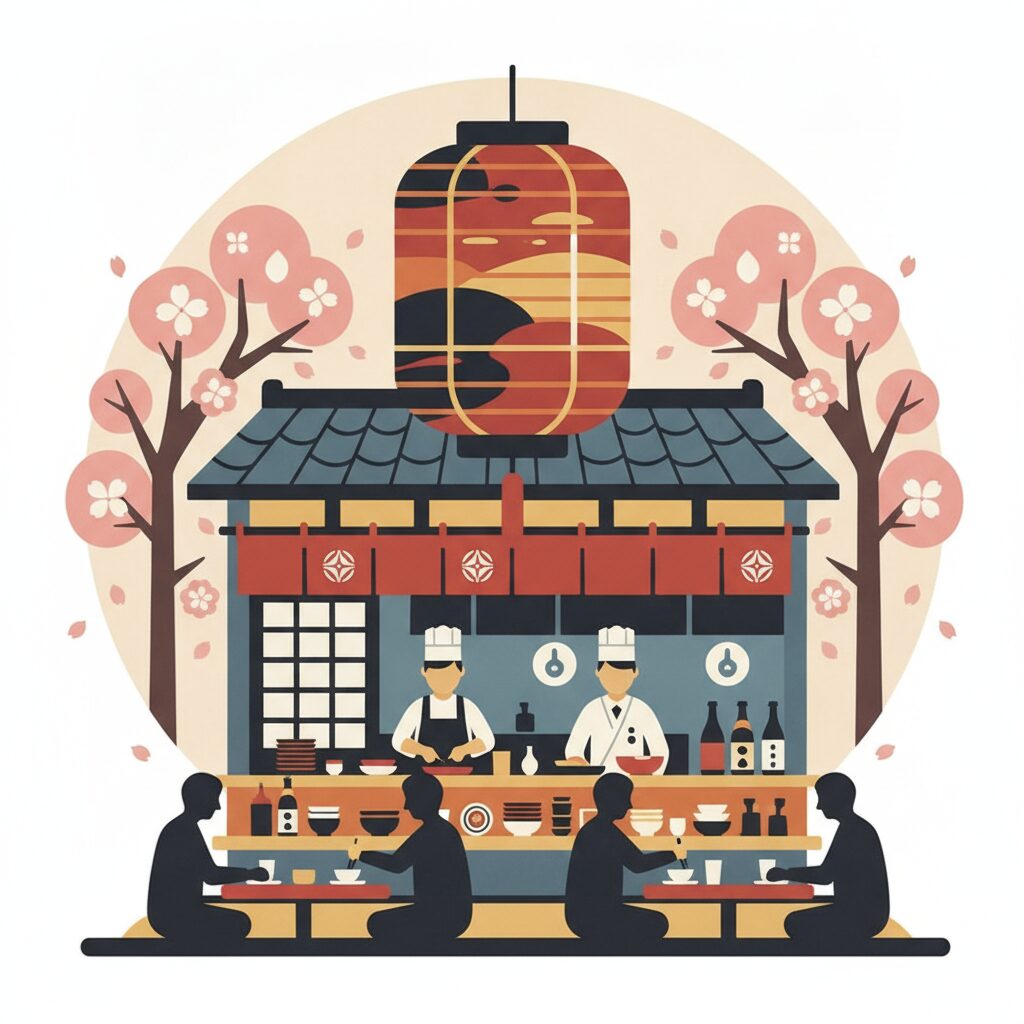
There’s a moment every newcomer to Osaka faces. You’re walking down a lantern-lit shotengai, a covered shopping arcade buzzing with life. You peek through the noren curtain of a tiny, ten-seater spot. Inside, a master with rolled-up sleeves expertly slices fish, locals are laughing over beers, and the air is thick with the savory smoke of something delicious grilling. This is the heart of Osaka’s culinary soul: the counter. It’s intimate, it’s authentic, and for anyone with a dietary restriction, it can feel utterly impenetrable. Your mind races. How do you explain you’re vegetarian in a place with no menu? How do you ask about nut allergies without causing a scene? In a city that lives and breathes food, feeling like you can’t participate is a heavy kind of loneliness. But here’s the secret, the thing you only learn by living here: in Osaka, the counter isn’t a barrier. It’s a stage for conversation. And learning the script is your ticket to the best food, and the warmest welcomes, the city has to offer. This isn’t about finding a vegan-certified cafe; it’s about learning the language of negotiation and respect that unlocks the city’s truest flavors, right where the locals eat. It’s about turning a potential moment of anxiety into a genuine connection.
The journey of breaking down cultural barriers doesn’t stop at the counter, as locals also cherish communal spaces like neighborhood sentōs where traditional social bonds are nurtured.
Decoding the Counter: Kappo vs. Izakaya
First, let’s set the scene. Not all counters are the same. In Osaka, you’ll primarily find two types: the Kappo and the Izakaya. Knowing the difference is essential because it shapes the atmosphere, the expectations, and how you approach discussing your dietary needs. Think of it like knowing whether you’re attending a symphony or a rock concert. Both involve music, but the etiquette could not be more different.
The Kappo Counter: A Culinary Theater
A Kappo (割烹) is a refined dining experience. The term means “to cut and to cook,” which perfectly describes what you’re there to observe. The counter offers a front-row seat to a performance. The chef, often called the taisho (master), is the star. Their movements are precise, deliberate, and honed through years of experience. Ingredients are seasonal, exquisite, and frequently sourced fresh that same morning. Many Kappo restaurants operate on an omakase basis, meaning “I leave it up to you.” There is no menu; you entrust your entire meal to the chef.
The atmosphere is one of quiet appreciation. Conversations tend to be low-key. Guests are there to savor the chef’s artistry. While this might feel intimidating, it also offers a special opportunity. Because the experience is highly personalized, a skilled Kappo chef is essentially a culinary artist crafting a bespoke experience for each diner. Adjusting that experience is possible but requires advance notice and a genuine respect for their craft. A last-minute request is like asking a painter to change the sky’s color after the canvas is finished.
The Izakaya Counter: A Communal Living Room
An Izakaya (居酒屋) is Osaka’s communal living room. The name means “a shop to stay and drink,” and the atmosphere is just that: casual, friendly, and social. The counter here isn’t a stage; it’s a shared space. Regulars chat with the taisho, newcomers strike up conversations with their neighbors, and there’s an overall lively, relaxed energy. The food is usually a la carte, featuring small plates designed for sharing and pairing with drinks. It’s hearty, flavorful, and more about comfort and satisfaction than delicate artistry.
At an Izakaya counter, the taisho is more of a warm host than a silent performer. They take orders, pour drinks, grill skewers, and keep conversations going. The dynamic is flexible and forgiving. While the kitchen might be as small and specialized as a Kappo’s, the a la carte menu and social setting make it easier to discuss dietary restrictions. The goal here isn’t to witness a flawless, pre-planned show; it’s to enjoy yourself, and a good host wants to make that happen.
The Osaka Mindset: A Dialogue, Not a Transaction
This is where we reach the core of what sets Osaka apart, especially from Tokyo. In Tokyo, systems and rules often take precedence. Customer service is flawless, polite, and efficient, but can also be inflexible. A request that falls outside the established system is usually met with a polite but firm, “I’m sorry, we cannot do that.” It’s not intended to be unhelpful; it’s simply the way things are designed to function. It’s a transaction, flawlessly executed.
Osaka operates on a different wavelength. The city was founded by merchants, and the akindo (商人気質) spirit—a mix of pragmatism, flexibility, and an emphasis on relationships—remains very much alive. Here, dining is less of a transaction and more of a dialogue. The ultimate aim for an Osaka chef or owner is for you to leave satisfied and, most importantly, to return. They’re not merely selling you a meal; they’re cultivating a relationship, even if it’s only for one night. This is the culture of maido ookini, a phrase you’ll hear everywhere that roughly means, “Thanks for your continued patronage.”
This mindset transforms everything when it comes to dietary restrictions. An Osaka taisho is more likely to view your request not as an inconvenience, but as a challenge to be addressed. They might scratch their head, check what’s in the fridge, and say, “Okay, you can’t have fish stock… how about I prepare a special vegetable soup with a kombu base instead?” This isn’t just about being friendly; it’s a practical business choice grounded in a culture of hospitality. They want to make the sale and ensure you become a regular. Your problem becomes their problem to solve.
This is a frequent misunderstanding among foreigners. They confuse Osaka’s directness and casual manner for a lack of professionalism, when in reality it’s quite the opposite. It’s a deeply personal and adaptable form of service. They’re willing to step outside the script because, in Osaka, there often isn’t a script. There’s just a conversation between two people trying to make something work.
The Language of Limitation: How to Communicate Your Needs
Understanding the cultural context is one thing; having the proper tools is another. Successfully managing dietary needs within the counter culture relies on a few key strategies, thoughtfully timed and phrased. It’s a delicate balance of respect, clarity, and realistic expectations.
Before You Go: The Power of Preparation
For any serious dietary restriction—severe allergies, veganism, celiac disease, or religious dietary rules—and especially if you plan to visit a Kappo or a small, highly-rated establishment, calling ahead is not only courteous but essential. This shows respect for the chef, whose entire operation, from morning market runs to evening preparations, is finely tuned. A last-minute request for a completely different menu can disrupt that rhythm. Calling ahead turns you from a difficult customer into a thoughtful guest they can prepare for.
When you call, keep it simple and direct. Equip yourself with a few key phrases.
- For general restrictions: “〇〇は食べられません。” (〇〇 wa taberaremasen. – I cannot eat 〇〇.)
- For allergies: “〇〇のアレルギーがあります。” (〇〇 no arerugii ga arimasu. – I have a 〇〇 allergy.)
- For vegetarian/vegan: “ベジタリアンです。” (Bejitarian desu.) or “ヴィーガンです。” (Viigan desu.). Be ready to clarify what this means, as definitions may vary.
A simple script might be: “Hello, I’d like to make a reservation for two tomorrow night. However, I have a shellfish allergy. Would it be possible to accommodate that?” This respectful approach gives them the chance to accept or politely decline if they cannot safely serve you.
At the Counter: The Art of the Ask
If you haven’t called ahead or are at a more casual Izakaya, timing and phrasing are crucial. Don’t sit down and immediately state your restrictions. Take a moment. Observe the atmosphere. Review the menu. Wait for the natural pause when the taisho asks for your order. That’s your moment.
The key is to frame your needs as a collaborative problem rather than a demand. Instead of saying, “What do you have that’s gluten-free?” which may sound demanding and put them on the spot, try a softer, more open-ended approach:
“すみません、小麦アレルギーがあるんですけど、何か食べられるものはありますか?” (Sumimasen, komugi arerugii ga arun desu kedo, nanika taberareru mono wa arimasu ka? – Excuse me, I have a wheat allergy, is there something I might be able to eat?)
This phrasing works wonders. The “…n desu kedo” ending softens the statement into a gentle request for assistance. It invites the chef to understand your situation and empowers them to be the one who finds a solution. You’re not challenging the menu; you’re asking for their guidance. It’s a subtle yet powerful tonal shift that resonates deeply within Japanese culture.
Understanding the “No”
Sometimes, despite both your efforts and theirs, the answer will be no. It’s important to understand that this is rarely personal. In a high-end Kappo, the chef may decline because altering a dish would compromise the integrity of a carefully crafted course. This is a matter of artistic pride. In a tiny Izakaya, the reason is often practical: the kitchen may be too small to avoid cross-contamination for severe allergies, or they simply might lack suitable alternative ingredients. An Osaka-style “no” often comes with genuine regret: “ああ、ごめんなあ、今日はちょっと難しいわ。” (Aa, gomen naa, kyou wa chotto muzukashii wa. – Oh, I’m sorry, that’s a bit difficult today.). Accept it graciously, thank them, and move on. Pressing the issue is a cultural faux pas and reinforces the stereotype of the demanding foreigner.
Case Studies: Navigating Common Dietary Restrictions
Let’s apply these principles to some of the most common challenges.
The Vegetarian & Vegan Challenge
This is arguably the most difficult dietary restriction to manage in Japan because of one hidden ingredient: dashi. This fish-based broth forms the base of countless dishes, from miso soup to sauces and simmered vegetables. A dish might appear entirely vegetarian but still be made with bonito flake broth (katsuo dashi). You must be very clear. Beyond simply stating you are vegetarian, you might need to specify “魚の出汁もダメです。” (Sakana no dashi mo dame desu. – Fish stock is also not acceptable.).
Your best options are usually specialty restaurants. A tempura place can work well if you confirm they use vegetable-based oil. You can order just vegetable tempura. Yakitori restaurants are another viable option. You can get skewers of shiitake mushrooms, leeks (negi), and ginkgo nuts (ginnan), but be sure to say “塩でお願いします。” (Shio de onegaishimasu. – With salt, please.), since the usual tare sauce often contains dashi and mirin (rice wine).
Gluten-Free & Allergies
For those with celiac disease or gluten intolerance, the primary concern is soy sauce (shoyu), which contains wheat and is used widely. In such cases, careful preparation is essential. Having a detailed allergy card written in Japanese is invaluable. It should clearly list what you cannot consume (wheat, barley, rye) and include key ingredients like soy sauce, miso (which sometimes contains barley), and malt.
Dishes like sashimi (request no soy sauce), yakitori with salt, and simply grilled fish can be safe choices. Bringing your own small bottle of tamari (gluten-free soy sauce) is a savvy move, but one that needs sensitivity. Offer it not as a demand but as a helpful solution: “I have a severe wheat allergy and brought my own special soy sauce. Would it be alright if I used it?” Present it as a health necessity, and most places will be understanding.
Religious Diets (Halal & Pork-Free)
Avoiding pork (butaniku) is more straightforward than avoiding dashi, but still requires caution. Pork is common in Izakaya dishes, from ramen broth to gyoza filling and kushikatsu. Even if pork isn’t explicitly listed, watch out for cross-contamination. The same grill used for pork belly skewers might be used for your chicken, and lard may be used for frying.
Again, clear and polite communication is key. “豚肉は食べられません。” (Butaniku wa taberaremasen. – I cannot eat pork.). You can then inquire if a particular dish, like chicken karaage, is prepared in the same oil as pork dishes. Most chefs will be honest. They respect the importance of religious dietary restrictions and would rather tell you they cannot guarantee safety than risk causing illness or offense. In Osaka, straightforwardness and honesty are valued.
What This Says About Osaka Life
Navigating the counter culture of Osaka is a small-scale reflection of learning to live in the city itself. It’s a place that values active engagement and shows that rules are often just starting points for dialogue. Unlike Tokyo’s more reserved and formal culture, daily life in Osaka involves constant, fluid negotiation—whether you’re ordering dinner, buying a bicycle from a local shop, or asking for directions.
People here cherish genuine, human-to-human connections. They appreciate when you make an effort, are direct yet polite, and approach situations with a collaborative mindset. Mastering the art of asking at a crowded Izakaya counter will boost your confidence to handle numerous other social situations throughout the city. You learn to read the atmosphere, pick your moment, and express your needs in a way that encourages cooperation rather than conflict.
It might seem like a lot of effort just to get a meal. But the reward goes beyond a delicious dish customized to your tastes. It’s the moment when the taisho slides that plate in front of you with a knowing grin and says, “Here you go, I made this just for you.” In that instant, you’re not a tourist or an outsider with a problem—you’re a participant, part of the conversation, and you’ve found your seat at the counter, truly at home in the heart of Osaka.