You see them tucked away on quiet side streets, their presence announced by a short, split curtain, the noren, bearing the character for hot water (ゆ, yu). Steam escapes from a high window, carrying the faint, clean scent of soap and cypress wood. To the uninitiated, the neighborhood sentō, or public bathhouse, looks like a relic. It’s a throwback, a place for people who live in old apartments without their own private bath. And while that was once its primary function, to see it only as that is to miss the point entirely. In Osaka, the sentō isn’t just a place to get clean. It’s the neighborhood’s living room, its newsroom, its therapy couch, and its most brutally honest social stage. It’s where the city’s soul soaks, unfiltered and unadorned. Forget the polite facades and social hierarchies; inside these steamy walls, you’re not a manager, a student, or a foreigner. You’re just another body in the water, and that’s where the real Osaka begins to reveal itself. This isn’t about sightseeing; it’s about seeing the city’s social engine at work.
The sentō’s intimate atmosphere is just one expression of Osaka’s commitment to genuine community, a spirit also evident in the art of Tachibanashi, where impromptu street chats build lasting bonds.
The Unspoken Rules of the Neighborhood’s Living Room
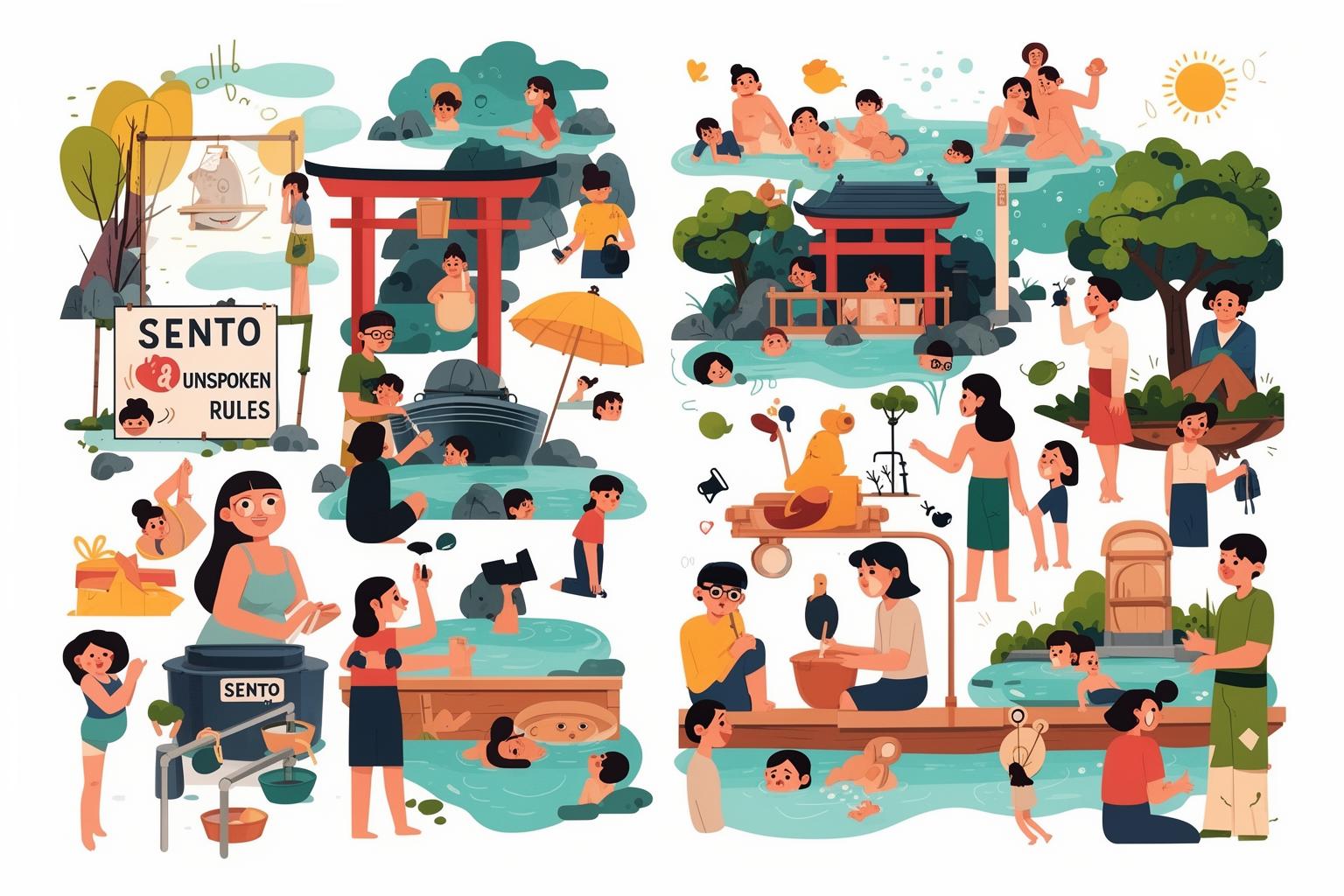
Step into a typical Osaka sentō, and you enter a well-tuned social machine that has been operating for generations. On the surface, its purpose is hygiene, but its deeper, more crucial role is fostering connection. For many locals, particularly older residents, making a daily or weekly visit to the sentō is as vital a ritual as their morning tea. It serves as a fixed point in the day, ensuring human interaction in an increasingly isolating world. Here, you catch up on news such as the new baby born down the street, who’s been hospitalized, and why the local butcher’s son suddenly drives a fancy new car. It is the original hyperlocal social network, functioning entirely offline.
Beyond Hygiene: The Real Reason People Go
It took me some time to understand this. My first visits were purely practical. I entered, washed, soaked, and left. Though I noticed the lively conversations, easy laughter, and gruff disputes around me, I dismissed them as background noise. The realization struck when I saw an old man from my neighborhood spend forty-five minutes chatting in the changing room before even stepping into the water. He was catching up, holding court, making himself seen. The bath was secondary; the community was the main attraction. People don’t go to the sentō to escape their cramped apartment bathrooms. They go to escape the silence and loneliness of their apartments. They come for the shared experience, the casual intimacy of complaining about the summer heat or the Hanshin Tigers‘ latest defeat with a dozen neighbors. This dedication to the social side is a quintessentially Osakan trait—a pragmatic approach to community-building woven into everyday routines.
The Art of “Hadaka no Tsukiai” (Naked Communication)
Though the concept is known throughout Japan, it feels most vividly alive in an Osaka sentō. Hadaka no tsukiai literally means “naked communion” or “naked relationship.” The idea is that by shedding your clothes, you also shed social status, job titles, wealth, and other external markers. In the bath, the company president and the construction worker stand as equals. This creates a uniquely level playing field for dialogue. Typical Japanese hesitations and hierarchical language soften, making the conversation more direct, honest, and real. This is where people express their unfiltered opinions—there’s no room for pretense when sitting on a tiny plastic stool, scrubbing your back. This setting perfectly matches the Osaka character, which is famously direct and shuns pretension. People say what they mean, often loudly and with hearty laughter. While a Tokyo sentō might offer serene, almost reverent silence, an Osaka sentō buzzes with the lively, chaotic energy of a family reunion.
What to Expect: The Cast of Characters
The regulars form the core of every sentō community. You’ll soon recognize the familiar archetypes. There’s the obachan matriarch, an elderly woman who has appointed herself the guardian of bathhouse etiquette. She’s the first to gently but firmly remind you to rinse your stool after using it. She knows everyone’s family stories and isn’t shy about asking you probing questions about your own. Then, there’s the group of old men who solve the world’s problems from the hottest bath, their voices echoing off tiled walls as they debate politics or sumo wrestling. You’ll notice the local craftsman, his body adorned with traditional tattoos (irezumi) that might seem intimidating elsewhere but here blend into the backdrop. He’s often the quietest among them, a reminder of a different facet of Japanese life. And there are the young fathers, patiently and sometimes awkwardly washing their toddlers, passing on the ritual to the next generation. These aren’t just fellow bathers; they are the living, breathing heart of the neighborhood.
How Osaka’s Sentō Culture Feels Different
If you’ve visited a bathhouse in Tokyo, you might believe you know what to expect. However, the atmosphere in Osaka is quite different. It focuses less on aesthetics and more on raw function and community. These differences underscore the fundamental cultural contrast between the two cities: Tokyo’s polished presentation versus Osaka’s pragmatic, people-centered approach.
Tokyo’s “Designer Sentō” vs. Osaka’s “Daily Grind” Bathhouse
Lately, Tokyo has experienced a rise in “designer sentō.” Traditional bathhouses have been revamped by stylish architects, featuring modern art, craft beer bars, saunas with ambient music, and a generally trendy, Instagram-worthy ambiance. They serve as destinations, places to visit for a carefully curated experience. While impressive, they feel different. Osaka’s sentō, by contrast, have mostly resisted this trend. They tend to be older, with cracked tiles, faded murals of Mount Fuji, and decidedly outdated plumbing. Their charm lies not in design but in their continuity. The lockers remain from the 1970s. The wheezing massage chair in the corner still costs the same 100 yen. There is no pretense. These establishments have not been modernized to attract new customers; they have been perfectly content serving the same clientele for decades. Their value lies not in aesthetics but in their steadfast reliability as community pillars. They are stubborn, practical, and a bit rough around the edges—much like Osaka itself.
The “Osekkai” Spirit in the Steam
The well-known Osaka trait of osekkai—a kind of caring, well-meaning meddling—is nowhere more evident than in the sentō. As a foreigner, you will stand out. In Tokyo, this might earn polite, curious glances but mostly silence. In Osaka, it serves as an invitation to engage. An elderly woman might approach you and, using gestures and a few broken English words, show you the “correct” way to use the wash bucket. Someone might notice your confusion and take it upon themselves to guide you through the various baths—the electric bath (denki-buro), the herbal bath (kusuri-yu), the cold plunge. This isn’t intended to be intrusive; it’s a form of active welcoming. They see you not as a tourist to be ignored, but as a potential neighbor who just needs a little assistance learning the ropes. It’s a practical expression of hospitality. They want you to fully enjoy the experience because it’s their experience, and they take pride in sharing it. Responding with a smile and a grateful “Ookini!” (Osaka dialect for “thank you”) will instantly make you part of the temporary, steamy family.
Navigating Your First Visit: A Practical Guide to Fitting In
Feeling convinced? Great. The sentō is one of the most authentic cultural experiences you can enjoy in Osaka. However, it comes with a strict, unspoken etiquette that may feel intimidating to first-timers. Following the rules isn’t just about courtesy; it’s about respecting the shared space and fellow bathers. It’s a system founded on mutual consideration.
It’s Not a Spa, It’s a System
Forget the plush robes and soothing music of a spa. A sentō serves a purpose. Here’s how it works:
- The Entrance: Upon arrival, you’ll find either a traditional elevated platform desk called a bandai or a modern front counter. Here, you pay an officially regulated and typically affordable fee (around 500 yen). You’ll receive a locker key, often attached to an elastic wristband.
- The Changing Room (Datsuijo): Separate entrances exist for men (男) and women (女). Locate your locker, undress completely, and store your large towel inside. Only bring your small towel and washing supplies into the bathing area.
- The Cardinal Rule: Wash First!: This is the most crucial guideline. Before even touching the bathwater, head to the washing area. Find an empty stool and faucet. Use the bucket to pour hot water over yourself and thoroughly rinse. Then, soap up and wash completely—hair, body, everything. Only after rinsing off all soap are you deemed clean enough to enter the communal baths.
- Soak and Relax: Now you may enjoy the baths. Enter slowly and avoid splashing. The small towel can be placed on your head or beside the tub, but never, under any circumstances, in the water.
What to Bring (and What Not to Worry About)
Ideally, bring your own “sentō set”: a small towel for washing, a large towel for drying, soap, and shampoo. Many carry these in a small plastic basket. But if you visit spontaneously, don’t fret. Almost every sentō offers a tebura setto, or “empty-handed set,” for a modest additional fee. This includes a rental towel plus single-use packets of soap and shampoo. You’ll never be left unprepared. The small towel serves multiple purposes: you use it for scrubbing your body (though many opt for a nylon cloth), and it doubles as a modesty cover while walking between the washing area and the baths.
The Post-Bath Ritual: The Other Half of the Experience
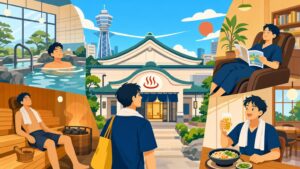
The sentō experience doesn’t end when you step out of the water. The cooldown period in the changing room is an essential part of the social ritual. After drying off, people linger—standing by large fans, chatting with the owner at the bandai, and rehydrating. This is when the vending machine becomes the center of attention. Classic post-sentō drinks include a small glass bottle of fruit milk (furutsu gyunyu) or coffee milk (kohi gyunyu), best enjoyed with one hand on your hip. Others might choose a cold beer or a bottle of Pocari Sweat. Visitors weigh themselves on old, massive scales. They sit on vinyl benches, reading a newspaper or quietly staring into space, allowing the warmth to slowly leave their bodies. This is the bath’s epilogue—a moment of shared, peaceful exhaustion where conversations resume and new ones begin. Don’t rush this part; it’s a gentle transition back into the outside world.
Why Sentō Persist in an Age of Private Baths
Logically, sentō should be a thing of the past. With over 95% of Japanese homes equipped with a bath or shower, their existence seems redundant. Yet, hundreds of these bathhouses continue to thrive, especially in the dense, close-knit neighborhoods of Osaka. Their endurance reflects a deep human need that modern life often overlooks. They survive not because people simply need to wash, but because they seek a place to belong.
A Remedy for Modern Loneliness
In a city of millions, loneliness is surprisingly easy to encounter. You might live in the same apartment building for years without ever learning your neighbors’ names. Sentō offer a powerful remedy to this isolation by providing a consistent, low-pressure face-to-face connection. For many elderly people, it may be the only meaningful social interaction of their day. It’s a place where someone will notice your absence after a few days and check in on you. This simple experience of being seen and being part of a group is vital for mental and emotional health. It forms a tangible support system that operates without relying on apps or algorithms.
The Economic and Social Fabric of a Neighborhood
Sentō are more than just social spaces; they serve as economic and informational anchors. Often run by families who have lived on-site for generations, the owners are pillars of the community who know everyone and everything. The bathhouse acts as a neighborhood bulletin board, with local festival posters, political notices, and ads for nearby shops displayed on its walls. It sustains its own micro-economy, as people frequently plan their errands around bath time, stopping at local tofu shops, bakeries, or greengrocers, helping to keep these small independent businesses afloat. When a sentō closes, a neighborhood loses more than a place to bathe — it loses its heart. It loses a central hub where gossip circulates, friendships are nurtured, and the simple, unspoken bonds of community are renewed every day.
To truly understand Osaka, you must appreciate what its people refuse to let go of. The sentō is one of these cherished traditions. It is not a tourist attraction or a carefully preserved relic of the past. It is a lively, steamy, and deeply human institution that is as essential to Osaka’s identity as its food and dialect. So next time you see a little noren curtain fluttering in a side street, don’t just pass by. Grab a towel, step inside, and immerse yourself in the warm, welcoming waters of real, everyday Osaka.