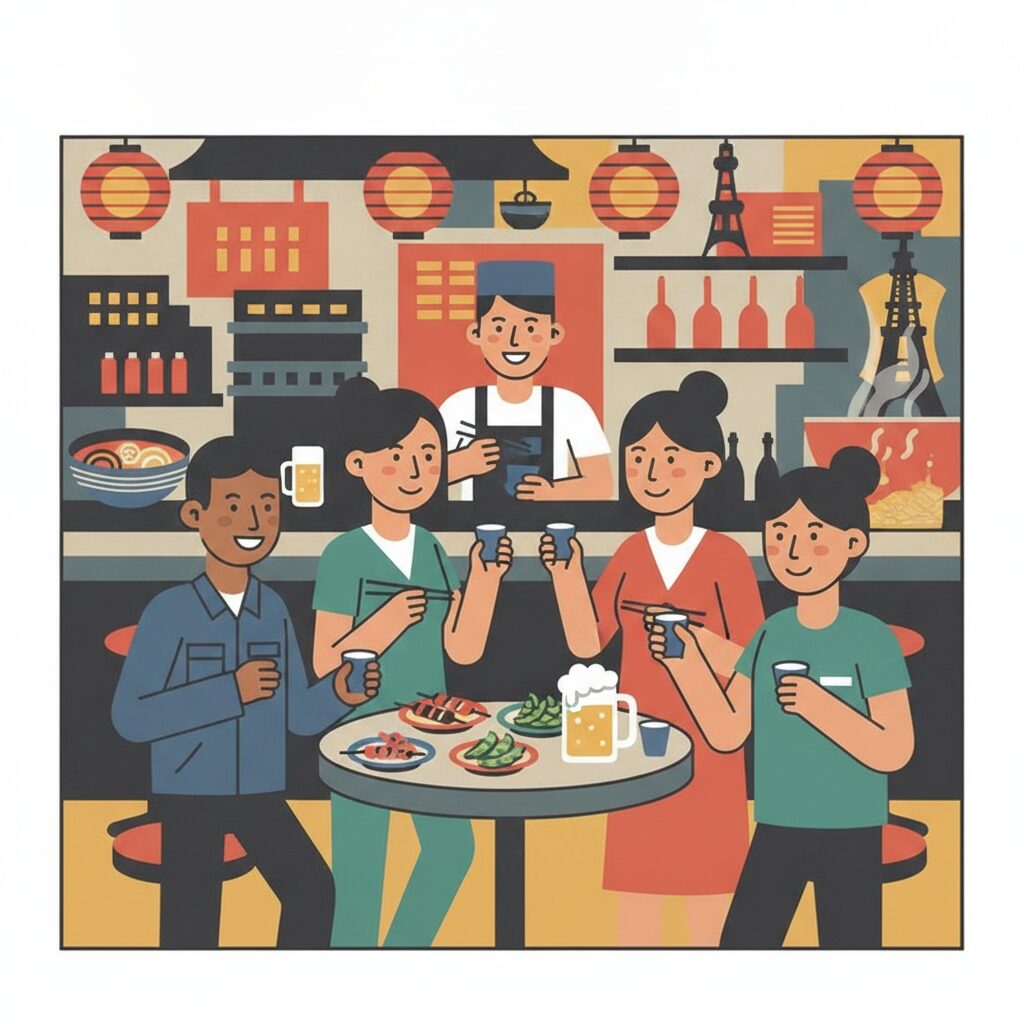
Step off the train at Kyobashi or Tenma station around 6 PM, and you’ll witness a daily urban magic trick. A river of salarymen and office workers flows from the ticket gates, and then, without warning, dozens of them simply vanish. They don’t head for sprawling restaurants or chic bistros. Instead, they peel off into tiny, brightly-lit storefronts, spaces barely big enough for a counter and a handful of people. Inside, there are no chairs. They stand, they drink, they eat, and often, within twenty minutes, they’re gone, disappearing back into the city’s current. This is the world of tachinomi, or standing bars, and for anyone trying to understand the pulse of Osaka, this ritual is more revealing than any castle or glittering skyscraper. It’s not just about getting a cheap, fast drink. It’s a philosophy, a finely tuned social mechanism that reveals everything about how Osakans navigate work, life, and the precious minutes in between. Forget the stereotype of the loud, boisterous Osakan who loves a long party. The tachinomi tells a different story: one of supreme efficiency, temporary community, and the art of mastering the perfect pit stop. To truly get it, you have to understand the unwritten rules and the deep-seated mindset that makes a simple standing bar the quintessential Osaka experience.
For those intrigued by Osaka’s fast-paced tachinomi scene, a local guide to a Wakayama road trip offers a glimpse into a contrasting regional escape.
The Philosophy of “Saku-tto Nonde, Saku-tto Kaeru”
At the core of tachinomi culture lies a simple, rhythmic phrase: Saku-tto nonde, saku-tto kaeru. It roughly means, “Drink quick, go home quick.” This isn’t just advice; it embodies the entire operational ethos. It marks the fundamental difference between the after-work drink in Osaka and its equivalent in Tokyo. In Tokyo, the nomikai (drinking party) is often a formal, semi-mandatory event. You attend with your team, sit for hours at an izakaya, and navigate complex seating based on corporate hierarchy. It serves as an extension of the office, a group bonding experience that can feel like overtime with alcohol. Osakans, however, approach this with skepticism. Why commit to a three-hour stretch when you can reach peak relaxation in thirty minutes? The tachinomi is the solution. It’s a deliberate, personal choice to create a buffer between the structured work world and home obligations. It’s a solo venture or a quick outing with one colleague, not a full-team deployment. This mindset is quintessentially Osaka, rooted in a merchant culture that values gouriteki—rationality and pragmatism. Time is a resource, just as money is. Spending it on lengthy formalities seems inefficient. A tachinomi delivers maximum return for minimal investment of both. For 1,000 yen and half an hour, you get a cold beer, a hot snack, and a mental reset. You can be in, out, and on your train home before a Tokyo nomikai has even completed its first round of awkward toasts. It’s not antisocial; it’s surgically social. It’s about obtaining exactly what you need from the experience without any unnecessary extras.
The Unspoken Rules of the Standing Bar
Walking into a tachinomi for the first time can be intimidating. It’s a compact, fast-paced setting with a unique rhythm. However, the apparent chaos is governed by unwritten rules that everyone instinctively follows. Learning these rules is key to fully experiencing a tachinomi, and they reveal much about how Osakans peacefully coexist in one of Japan’s most densely populated urban areas.
Space is Shared, Not Owned
Take a look around a tachinomi. There are no assigned seats. The counter is a fluid space. The main rule is to make yourself small. You don’t claim space; you occupy a temporary gap. You find a spot between two people and slide in quietly, a soft “sumimasen” (excuse me) your only welcome. Your personal space shrinks to the width of your shoulders and the small section of the counter in front of you. Bags go on the floor or a low shelf, never on the counter. Your elbows stay tucked in. This isn’t about being unfriendly; it’s peak urban courtesy. It’s a physical expression of a shared social contract: we all want to be here, space is limited, so we cooperate to make it work. This is the Osaka interpretation of “friendliness” often mentioned by foreigners. It’s not about warm greetings or idle chatter. It’s practical, functional harmony born out of necessity. Respect is shown not by talking, but by minimizing your physical presence. It’s a silent dance of mutual accommodation, beautifully efficient.
The Art of the Quick Order
There’s no time to hesitate at a tachinomi counter. The staff is always busy, and the secret to the low prices is rapid turnover. You’re expected to know what you want or at least have your first order ready as soon as you catch the bartender’s eye. The universal opener is “Toriaezu biru” (“Beer for now”). It’s a magic phrase requiring no thought, instantly putting a cold draft beer in your hand. It gives you a moment to glance at the handwritten menus taped to the wall and plan your next move. Food orders follow the same principle—simple, classic, and quick. You point to the simmering pot of doteyaki (beef sinew stewed in miso) or ask for a couple of kushikatsu (deep-fried skewers). You don’t ask for complex tweaks or lengthy explanations about the menu. You trust that what you get is good, fresh, and meant to be eaten fast. This speed is an essential part of the customer’s role in the tachinomi’s business model. Your efficiency supports theirs, keeping the beer priced at 350 yen. It’s a symbiotic understanding shared by everyone at the counter.
Cash on the Counter: The Transparent Transaction
Many traditional tachinomi use a system called kyasshu on—literally “cash on delivery.” Upon arriving, you place a 1,000 yen note or some coins into a small plastic tray on the counter before you. Each time you receive a drink or food, the staff takes the exact amount from your tray. This system is brilliant psychologically. There’s no running tab or surprise bill at the end of the night. Your remaining budget is right there in front of you, shrinking with every order. It’s the most honest transaction you can imagine. This transparency naturally encourages the saku-tto nonde philosophy. When your tray is empty, you know it’s time to leave. It removes the social discomfort of splitting bills—a common headache in other drinking group settings. In Osaka, the transaction is direct, personal, and clear. It reflects a merchant’s mindset: pay for what you get, when you get it. There’s no ambiguity or social debt. It’s clean, simple, and respects everyone’s time and money.
More Than Just a Drink: The Tachinomi as a Social Hub
While the tachinomi is a haven of efficiency, it would be mistaken to view it as a cold or lonely place. In fact, it fulfills an important social role, functioning as a vital “third place” for city residents—a neutral zone distinct from both the structured environment of work and the private sphere of home. It is a setting of controlled anonymity and brief encounters.
The “Third Place” for the Osaka Salaryman
At work, you are defined by your job title. At home, you take on the roles of spouse or parent. At a tachinomi, you are simply a customer. For the 30 minutes you spend standing at the counter, the pressures and identities of your other lives slip away. No one cares which department you belong to or whether you met your sales goals. The person standing beside you could be a CEO or a construction worker. In the compact, democratic space of the standing bar, such distinctions lose their meaning. This temporary release from social roles offers significant mental relief. It acts as a reset button at the end of a long day. The focus shifts to simple, tangible pleasures: a cold drink, a tasty snack, a moment of calm. It is an urban refuge where you can simply be without the need to perform.
Conversations That Drift and Dissolve
Social interactions in a tachinomi are as distinct as the space itself. You might start chatting with your neighbor about the Hanshin Tigers’ latest game, complain about the muggy weather, or laugh together at a news story on the small TV often mounted in a corner. These conversations are light, easy, and above all, fleeting. They exist only for the here and now. It is considered a serious breach of etiquette to ask someone what they do for a living or where they live. Business cards are not exchanged. Plans to meet again are not made. The beauty of tachinomi conversation lies in its total lack of obligation. When your drink is finished and your tray is empty, a quiet “gochisousama” (thanks for the meal) and a nod are enough to end the encounter. The connection belongs only to that time and place. This sharply contrasts with the networking-driven socializing common in other cities’ professional worlds. Here, the interaction itself is the purpose, not a means to an end. It forms a temporary community, a pop-up village of strangers sharing a brief moment of respite.
A Note for Women and Solo Drinkers
Historically, the tachinomi was a domain dominated by middle-aged salarymen. The image of a smoky, gritty, all-male enclave still lingers. While such places certainly remain, the scene has changed significantly. Today, you’ll find a new wave of tachinomi that are brighter, cleaner, and explicitly welcoming to everyone. Wine bars, sake specialists, and venues with more inventive food menus attract a varied crowd of men, women, young people, and couples. For anyone, especially solo women who may feel uncertain, the key is to trust your instincts. Walk by, take a peek inside. Does the atmosphere feel inviting? Is the crowd diverse? Many of the best spots are now run by female owners (josan) who foster a safe and welcoming environment. The core rules of efficiency and respect for shared space remain universal. Once you discover a place that feels right, you’ll find the experience just as approachable and rewarding.
Why Tokyo Can’t Replicate the Osaka Tachinomi Vibe
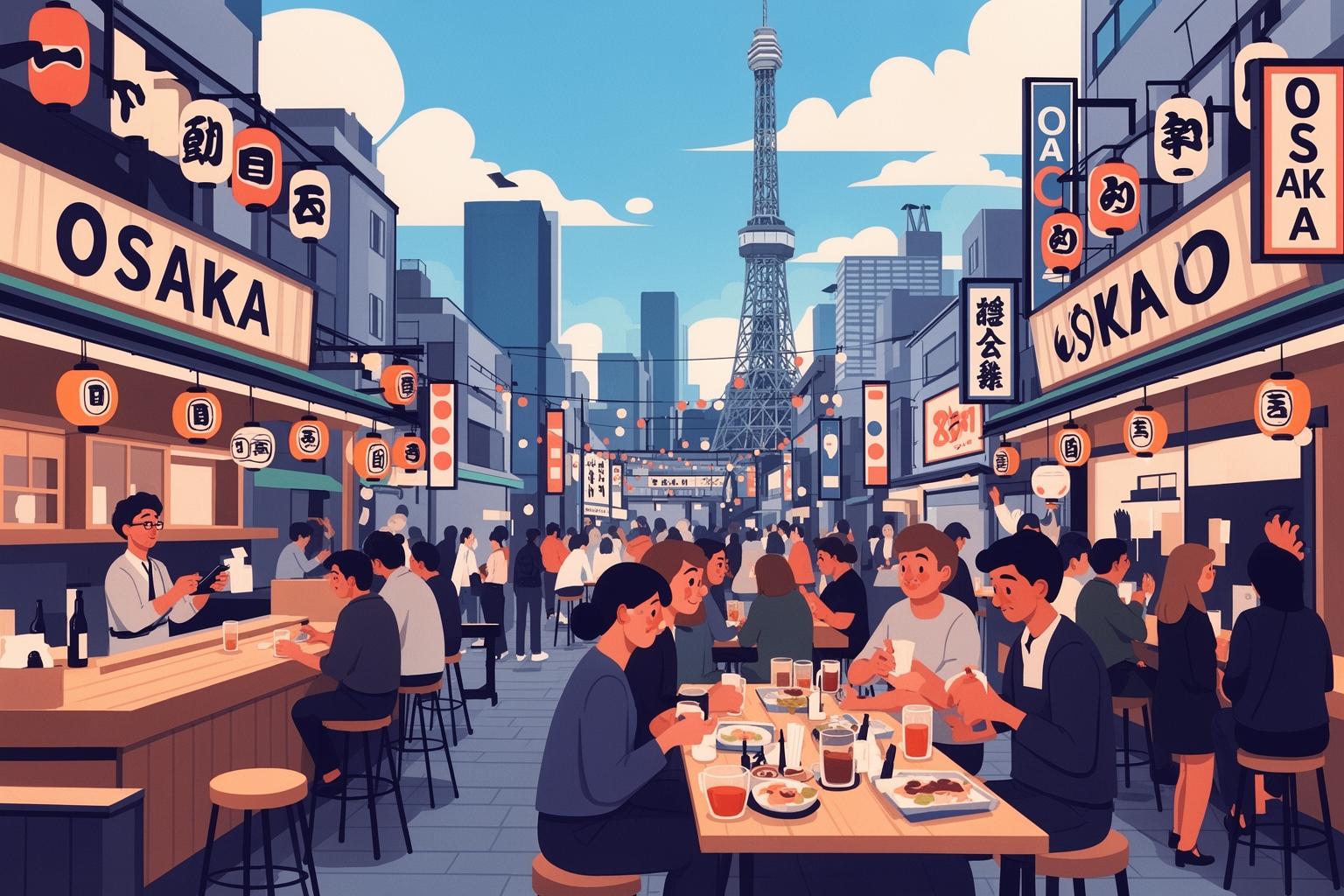
Yes, Tokyo has standing bars, found in Shinjuku and Shimbashi, ranging from sleek and modern to charmingly old-fashioned. However, they do not share the same atmosphere as their Osaka counterparts, as the cultural context is different. In Tokyo, a standing bar is often chosen for its trendiness or novelty—a stylish craft beer venue or a chic sake bar. It tends to feel like a curated experience, a distinct scene to see and be seen in, often serving as just the first stop in a longer, planned evening. In contrast, the tachinomi in Osaka is not a novelty but an integral part of daily life. The best ones are tucked beneath the elevated tracks of the JR Loop Line, packed into the maze-like basements of the Ekimae Buildings near Osaka Station, or spilling out onto the sidewalks of local shotengai (shopping arcades). Their locations are strategic, intended to catch commuters at their most vulnerable moment—the exact point when the workday ends and the journey home begins. This difference reflects the inherent nature of the two cities. Tokyo, historically the center of samurai government and modern bureaucracy, has a social fabric that tends to be more formal, hierarchical, and image-conscious. Meanwhile, Osaka, known as the nation’s merchant capital, operates on a different logic: practicality, straightforwardness, and an emphasis on kosupa (cost-performance). An Osakan visits a tachinomi not to be trendy but because it offers the most logical, time-efficient, and cost-effective way to unwind after work. It is a solution to a daily routine, and in Osaka, a good solution is truly something beautiful.
Finding Your Tachinomi: A Practical Guide to the Urban Oasis
Rather than focusing on a list of “must-visit” bars, it’s more valuable to understand the geography and visual language of tachinomi. The aim is to discover a spot that matches your own pace. Learning how to recognize them is an essential urban skill for any local.
The Holy Trinity: Tenma, Kyobashi, and Umeda
Though tachinomi can be found throughout the city, a few neighborhoods stand out as their core. Tenma, just one station north of Osaka Station, is a sprawling, vibrant haven of food and drink. The area around the station forms a labyrinth of covered arcades and narrow lanes filled with hundreds of choices, from long-established landmarks to trendy newcomers. It’s a place to wander and stumble upon joyful surprises. Kyobashi, located on the east side of the Loop Line, epitomizes the salaryman’s playground. It’s grittier, louder, and proudly old-school. Here, you’ll find iconic venues with lines out the door, serving tuna and beer as early as 9 AM. This is the raw, unfiltered heart of tachinomi culture. Umeda/Osaka Station offers a wider variety. The vast, interconnected station complex and the retro underground malls of the four Osaka Ekimae Buildings conceal a wealth of standing bars. They range from sleek and modern to tiny, weathered nooks, all catering to the huge flow of commuters passing through Japan’s busiest train hub.
How to Read the Signs
You’ll soon learn to spot a promising tachinomi from afar. Watch for the classic red lantern (akachochin) hanging outside. Look out for handwritten menus taped to windows or displayed on easels near the entrance. The prices give you an early hint. If draft beer (nama biiru) is under 400 yen and small plates (koyori) start around 200 or 300 yen, you’re in the right area. The most crucial sign, though, is the scene through the door. Is there a steady, low hum of activity? Do patrons seem to be making quick, purposeful stops rather than lingering for hours? Can you sense the rhythm of people coming and going, ordering and leaving? That calm, intentional vibe is the hallmark of an authentic tachinomi. Don’t shy away from a crowd; a busy spot is usually a good one. Just spot a small gap at the counter and be ready to order.
The Takeaway: A Masterclass in Urban Living
Ultimately, the art of tachinomi embodies the very essence of Osaka. It is much more than just an inexpensive spot to drink. It serves as a living, breathing lesson on the city’s fundamental values: its unwavering pursuit of practicality, its sharp focus on cost-effectiveness, and its talent for fostering community in the most unexpected places. Tachinomi shows that social connection doesn’t need to be a long-term commitment; it can be a brief, pleasant encounter with a stranger, a shared moment of humanity over a beer before both of you disappear back into the anonymity of the metropolis. It reveals the renowned Osaka character—often labeled as friendly but better understood as direct, pragmatic, and unpretentious. They’ll share a counter with you, but they won’t waste your time. If you really want to grasp what drives Osaka, overlook the tourist guides. Find your way to a standing bar beneath the rumbling train tracks in Kyobashi. Order a beer and some doteyaki. Stand, observe, and listen to the city breathe out. In that twenty-minute pause, you’ll discover more about the city’s soul than a week of sightseeing could teach you. You’ll see the artful, efficient, and deeply human way Osakans navigate the rhythm of everyday life.