
I remember my first real dose of Osaka whiplash. I was walking through my neighborhood, a cozy corner of Tenma, heading to a little standing bar I’d grown fond of. It was a tiny place, barely wide enough for three people at the counter, run by an old woman who specialized in obscure hot sake and even more obscure stories. But when I got there, the familiar weathered sign was gone. In its place was a shockingly pink facade with a neon sign that buzzed “K-Pop Kream.” Inside, a young guy with fluorescent hair was meticulously piping whipped cream onto a waffle. The sake bar, my quiet sanctuary, had vanished in less than a week. Confused, I peeked in. The kid saw me, grinned, and waved me over. “Sake lady? Oh, she’s taking a break,” he said, not missing a beat with his piping bag. “Her grandson—that’s me—told her K-Pop waffles were the future. We’re giving it a try for a couple of months. Wanna be our first customer? Tameshi-ni.”
Tameshi-ni. Try it. Give it a shot. It’s a phrase you hear everywhere in Osaka, and it’s the key to unlocking the city’s entire operational mindset. It’s not just about trying a new food; it’s a fundamental business and life philosophy. In a country famed for its meticulous planning, its risk-averse corporate culture, and its pursuit of perfection, Osaka operates on a different, more chaotic frequency. It’s a city built for people who embrace the messy, glorious, and sometimes disastrous process of just doing something. It’s a place where the perfect five-year plan is often seen as a charming but ultimately useless fantasy. This isn’t the Japan of boardrooms and consensus-building you read about. This is the Japan of the back-alley entrepreneur, the weekend pop-up, and the wild idea that’s just crazy enough to work. This is the culture of ‘tameshi-ni,’ and if you want to understand what makes Osaka tick, you have to understand its deep, unshakable belief in the power of the trial run.
This unpredictable ethos extends into vibrant neighborhoods, where exploring the charm of local shotengai reveals another facet of Osaka’s spirited embrace of the unconventional.
The Merchant’s DNA: Where ‘Tameshi-ni’ Comes From
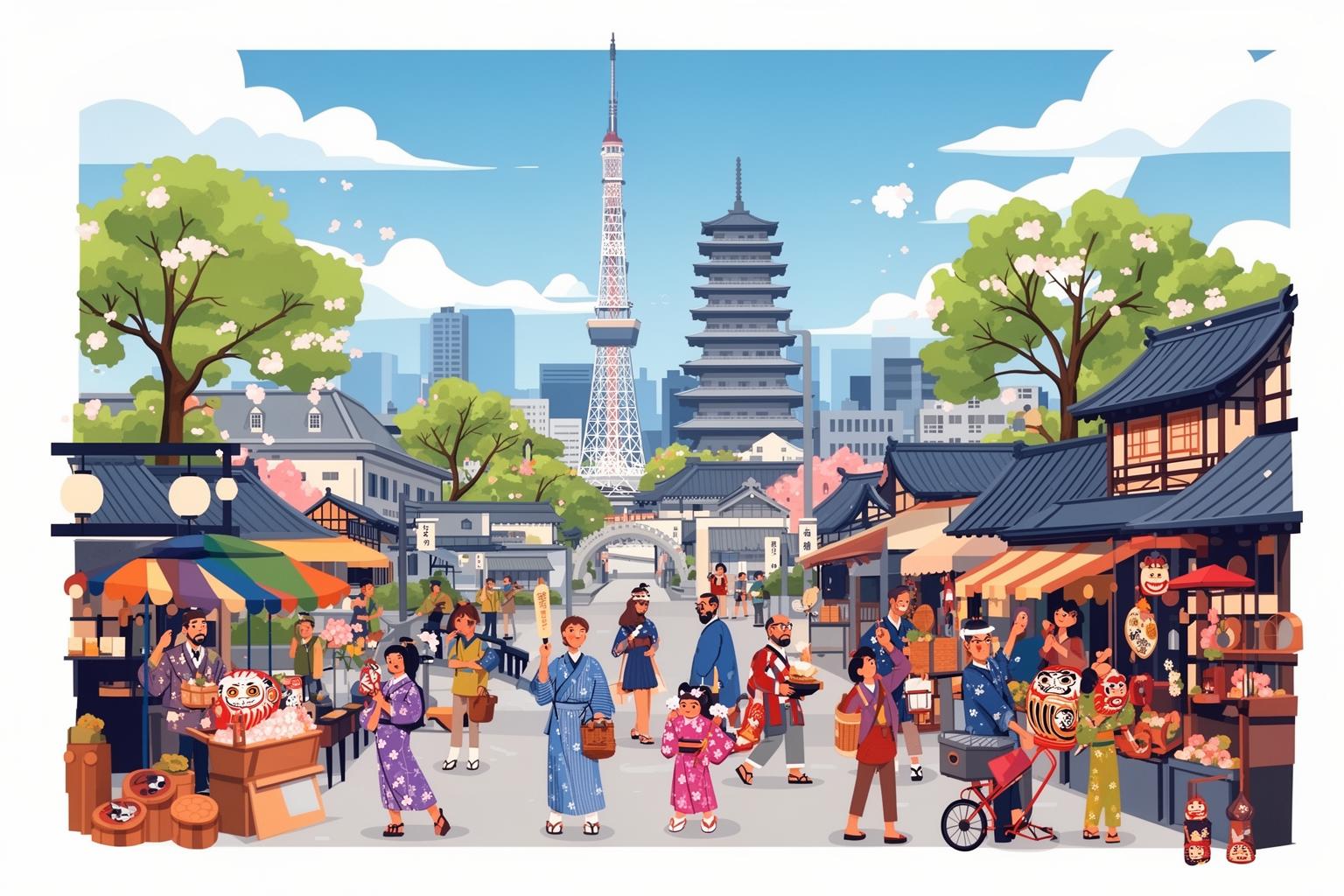
To understand Osaka, you need to turn back time. Tokyo’s identity was shaped within corridors of power—it was the city of the shogun, samurai, and bureaucrats. Its culture is grounded in hierarchy, protocol, and top-down decision-making. Rules were essential because they preserved order and authority. In Edo, you didn’t merely ‘try’ things; you adhered strictly to the plans set by your superiors. This mindset still pulses through modern Tokyo, where corporate culture values meticulous planning, exhaustive meetings, and risk aversion. The aim is to produce a flawless, indisputable product or system.
Osaka, however, was never such a city. It was the Tenka no Daidokoro—the Nation’s Kitchen. It was a hub for merchants, traders, and artisans. Power wasn’t bestowed from a castle; it was won in the marketplace. An Osaka merchant’s survival hinged not on rule-following but on adaptability, speed, and an acute sense of what customers wanted right now. Spending a year in committee meetings was a luxury they couldn’t afford. When new goods arrived from Nagasaki, they had to quickly figure out how to sell them. If a competitor set up shop nearby, they had to innovate, not resort to litigation. This environment fostered a mindset that is pragmatic, somewhat impatient, and fundamentally experimental.
This historical distinction is more than just a scholarly detail; it’s embedded in the very structure and atmosphere of the city today. Stroll through the extensive covered shopping arcades—the shotengai—such as Shinsaibashi-suji or Tenjinbashisuji. They serve as living museums of this merchant spirit. You’ll find an age-old kimono shop beside a brand-new bubble tea stand experimenting with five unusual new flavors. A few doors away, a traditional knife-maker might share space with a pop-up gallery showcasing art made from recycled pachinko machines. The street’s logic is not one of curated perfection but a lively, chaotic ecosystem of commercial experiments. Every stall and tiny eatery is a hypothesis: ‘I bet people will buy takoyaki with parmesan cheese.’ ‘I bet I can sell vintage American college sweatshirts in this area.’ Some of these bets succeed, many don’t. Yet the churn is constant, and the energy generated is the city’s lifeblood.
Outsiders often misinterpret this as a lack of quality or seriousness. A friend from New York once visited and remarked that parts of Osaka felt “unfinished” compared to the polished elegance of Ginza in Tokyo. He viewed the rapid turnover of shops, hand-painted signs, and sometimes clashing aesthetics as signs of instability. But he was judging it through a Tokyo perspective. In Osaka, being “finished” is a death sentence. It means you’ve stopped adapting, stopped listening, stopped trying. The merchant spirit insists you are never finished. You are perpetually in beta. Your business is a dialogue with customers, not a monologue. And the only way to sustain that dialogue is by constantly putting out new ideas and seeing what resonates. That is the heart of tameshi-ni.
How ‘Tameshi-ni’ Shows Up in Daily Life
The merchant spirit in Osaka isn’t limited to the marketplace; it infuses every facet of life in the city, from its economy to social interactions. This philosophy influences how people launch businesses, make plans, and even engage in conversation. Once you learn to recognize its rhythm, you’ll notice it everywhere.
The Pop-Up Economy
In Tokyo, opening a shop feels like a monumental feat. It requires substantial capital, a solid business plan, and a long-term lease. In Osaka, however, you might only need a good idea and a weekend. The threshold for launching a commercial experiment is surprisingly low. This has fostered what could be called a ‘pop-up economy,’ where businesses appear and vanish with astonishing speed. This isn’t necessarily a sign of failure; often, it’s the strategy.
Consider the concept of ‘magari’ (間借り), which literally means ‘borrowing space.’ It’s common for a bar that operates only at night to rent out its counter during the day to another business, like a specialty curry shop or a coffee roaster. This is a classic tameshi-ni arrangement. The aspiring chef can test recipes, build a following, and gauge demand without risking a huge investment in their own restaurant. Meanwhile, the bar owner earns extra income and keeps the space active. It’s a low-risk, high-reward experiment for both parties. Neighborhoods like Kitashinchi and Fukushima abound with such symbiotic business partnerships, where you can eat at different establishments in the exact same spot depending on the time of day.
This principle extends beyond food. In creative districts like Nakazakicho, nestled among old wooden houses, you’ll find rental spaces where designers and artists can lease a small room for a single weekend to sell their creations. They’re testing the market. Do their jewelry pieces sell? Are their illustrations popular? It’s market research in its purest, most immediate form. This constant flux is what makes exploring Osaka so rewarding. The city you visited last month isn’t the same one you’ll experience today. It’s a living organism, constantly evolving through thousands of small-scale experiments happening in real time.
Conversations and Commitments
This mindset also spills over into social and professional communication, which can cause confusion for outsiders, especially those used to Tokyo’s more reserved and deliberate style. When you pitch an idea to someone from Osaka—whether it’s a new work project or a weekend plan—their response is often an enthusiastic, “Ee yan! Yarou!” (“Sounds great! Let’s do it!”). To an American ear, this sounds like a firm commitment—an agreement sealed. In Tokyo, however, you’d rarely get such a quick and unqualified ‘yes.’ Instead, you’d hear a thoughtful, “kentou shimasu” (“I will consider it”), followed by multiple meetings to analyze the idea.
But the Osaka ‘yes’ is different. It’s not a final or binding contract. It’s a tameshi-ni ‘yes.’ It means, “The idea sounds interesting, and I’m open to exploring it further. Let’s give it a try and see what happens.” It’s a commitment to start, not a guarantee to finish. Details can be worked out along the way. This can be frustrating if you expect a linear, structured process. Plans might pivot, change, or even be abandoned if the initial trial doesn’t feel right. It might seem unreliable, but it stems from optimism and openness. It’s a willingness to engage with an idea before it’s fully developed. The unspoken understanding is that both parties see the initial agreement as a commitment to experiment, not necessarily to a final outcome.
The Glorification of the ‘Interesting’ Failure
Perhaps the most refreshing element of Osaka’s tameshi-ni culture is its attitude toward failure. In much of Japan, and many Western societies, failure carries a heavy stigma and is something to be avoided at all costs. In Osaka, while no one enjoys losing money, there’s a distinct appreciation for a glorious, interesting failure. The worst offense isn’t failing; it’s being boring—not trying anything at all.
You hear this often from shop owners. I once spoke with a man running a small bar in Namba who spent a whole month creating a cocktail menu inspired by historical figures from the Sengoku period. “It was a total disaster,” he laughed heartily. “Nobody wanted to drink the ‘Oda Nobunaga’; it was too bitter. We lost a lot of money on strange ingredients.” He wasn’t embarrassed. He shared the story with pride. The underlying message was clear: he had the courage and creativity to try something utterly outlandish. The story itself became a kind of social capital.
This idea ties into the concept of being omoiroi (面白い), meaning ‘interesting’ or ‘funny.’ In Osaka, being called omoiroi is one of the highest compliments, more valued than being called wealthy or successful. An interesting failure makes for a great story, and in a city that treasures sharp, witty conversation, a good story is a form of currency. This creates a psychological safety net that encourages small risks. If the experiment succeeds, fantastic. If not, you gain a hilarious anecdote to share over drinks. This is a world apart from the pressure to maintain a perfect, unblemished record of success. It’s a culture that recognizes innovation and creativity as inherently messy processes.
Tokyo’s Plan vs. Osaka’s Pivot: The Great Urban Divide
The core distinction between Tokyo and Osaka can be summarized as follows: Tokyo builds systems, while Osaka experiments with the variables. Tokyo aims to perfect and scale an idea, whereas Osaka focuses on testing and adapting it.
Picture two entrepreneurs, one in Tokyo and the other in Osaka, both planning to open a new ramen restaurant. The Tokyo entrepreneur is likely to spend months, if not years, preparing. They will carry out extensive market research, analyze demographic data, and develop a precise, repeatable recipe through numerous rounds of testing. They’ll design a detailed brand guide covering everything from the logo to the exact hue of staff uniforms. Their business plan will feature a five-year projection for expanding to multiple locations. The objective is to minimize as many variables as possible before the first customer arrives. The restaurant is the final product of a long, meticulous process.
Now, consider the Osaka entrepreneur. They might have an idea on a Tuesday: “You know what? No one’s making a decent spicy miso ramen in my area.” By Friday, they’ve rented an empty counter space for a month. They spend the weekend experimenting with a recipe, and by Monday, the restaurant opens. The menu is handwritten on a piece of cardboard. The broth is a little inconsistent during the first week. They talk with every customer: “Too spicy? Not enough garlic? What do you think?” Feedback is immediately incorporated. Maybe someone suggests adding cheese as a topping. The owner thinks, “Why not? Tameshi-ni.” The next day, cheese ramen becomes a special. The restaurant isn’t a finished product; it’s a living prototype. The business plan is the ongoing conversation with the community. If the spicy miso concept doesn’t succeed after a month, no problem. They’ll laugh it off and try something new, perhaps a gyoza stand or a natural wine bar.
This is why living in Osaka can feel so dynamic and grassroots. You witness the creative process unfolding in public. It’s less polished, more chaotic, and infinitely more transparent. A foreigner might view the constant changes and lack of rigid corporate structure as unprofessional or unreliable. They may wonder why things don’t seem as “perfect” as they do in Tokyo. The misunderstanding stems from assuming the goal is perfection. The real goal is connection. The goal is responsiveness. The plan is to pivot. It’s a fundamentally more agile, more human-centered approach to business and life. Tokyo values flawless systems; Osaka values clever hustle.
Thriving in a ‘Tameshi-ni’ World: A Guide for Newcomers
So, how do you navigate—and even thrive in—this environment of constant experimentation? It requires a shift in mindset, especially if you come from a culture that values careful planning and long-term stability. However, if you can tune into the local rhythm, it can become an incredibly freeing and empowering place to live.
Embrace the Imperfect Start
If you have an idea—whether it’s a creative project, a community group, or a small business—the Osaka way is to just get started. Don’t wait until you have the perfect website, a complete business plan, or a year’s worth of funding. Your first step should be the smallest, cheapest, and fastest possible test of your core concept. Want to start a baking business? Don’t rent a storefront; book a table at a local farmers market for one Sunday and see if people buy your cookies. Want to start a language exchange group? Don’t create a curriculum; post a notice on a local forum and invite five people to a café. The feedback you receive from that first, small-scale trial is far more valuable than months of theoretical planning. In Osaka, momentum matters more than perfection. Action is prioritized over analysis.
Learn to Read the ‘Maybe’
When working with people in Osaka, it’s important to grasp the nature of their commitments. As mentioned earlier, an enthusiastic initial ‘yes’ often signifies an agreement to embark on a journey together, rather than a promise to reach a fixed destination. This means you need to stay adaptable. Don’t be surprised if the project evolves or shifts direction based on early results or a sudden new idea. The key is to keep communication open. Check in frequently. Ask questions like, “How is this feeling so far? Should we make any adjustments?” This collaborative, iterative approach is far more effective than trying to hold someone to a strict plan agreed upon weeks earlier. The energy lies in creation, not administration. Ride the wave of initial excitement and be ready to steer in a new direction if necessary.
Find Your Niche Experiment
The best way to grasp the tameshi-ni spirit is to become a participant in it. Make it a point to explore the city with an eye for the new, the unusual, and the temporary. Instead of visiting the well-known, established restaurant, try the place that just opened last week with the hand-painted sign. Step into the tiny art gallery in an old house. Stop by the weekend-only coffee stand operating out of a shared office space. Talk to the owners. Ask them why they started. You’ll discover that the city is full of passionate people testing their dreams on a small scale. By supporting these ventures, you not only gain a unique experience, but also connect directly to the city’s creative, entrepreneurial pulse. Osaka rewards curiosity. The more you explore its hidden corners, the more it reveals its true, wonderfully experimental character.
Is This Spirit for You? The Honest Take
Living in Osaka isn’t ideal for everyone. What feels vibrant and liberating to some can seem chaotic and unsettling to others. It’s important to be honest with yourself about the type of environment where you thrive. This isn’t about one city being better than another, but about two cities operating on fundamentally different systems.
If you prefer structure, predictability, and clear long-term plans, Osaka may cause a steady undercurrent of anxiety. The fast pace of change, flexible commitments, and ‘build it as you go’ mindset might feel unstable if you seek the security of a well-defined framework. The polished efficiency and meticulous planning characteristic of Tokyo’s culture may align better with your temperament. There is comfort and strength in that kind of order.
On the other hand, if you feel restricted by rigid rules and endless planning sessions, Osaka could be a refreshing change. For entrepreneurs, artists, creators, or anyone who enjoys experimenting and seeing what unfolds, this city offers a playground. It values the courage to try over the certainty of success. It gives you the freedom to launch an imperfect version, learn openly, and pivot without penalty. Osaka understands that the most interesting discoveries often come not from following a map, but from taking an unexpected detour. For those who embrace risk—not recklessly, but as a necessary step for innovation and discovery—Osaka doesn’t just welcome you; it truly makes sense.